
Welding innovations changing rework rates in 2026





In 2026, welding innovations are doing more than improving speed—they are directly reducing rework rates, strengthening safety compliance, and sharpening quality control across industries. For QC teams and safety managers, understanding how smart welding systems, laser processes, and data-driven monitoring reshape defect prevention is now essential. This article explores the technologies and operational shifts that are turning welding performance into a measurable competitive advantage.
For manufacturers working in automotive parts, structural fabrication, pressure equipment, maintenance, aerospace support, heavy machinery, and contract metal assembly, rework is no longer just a production nuisance. A single weld defect can trigger 3 downstream losses at once: inspection delays, safety exposure, and margin erosion. That is why welding innovations are increasingly evaluated not only by deposition rate or arc stability, but by how effectively they reduce porosity, distortion, undercut, inconsistent penetration, and documentation gaps.
For the audience GPTWM serves, the practical question is clear: which welding innovations actually lower rework rates in real operating environments, and how should quality control and safety leaders prioritize them? The answer lies in a mix of process selection, operator support, digital traceability, and safer human-machine interaction.
Why Rework Rates Are Becoming a Board-Level Welding Metric
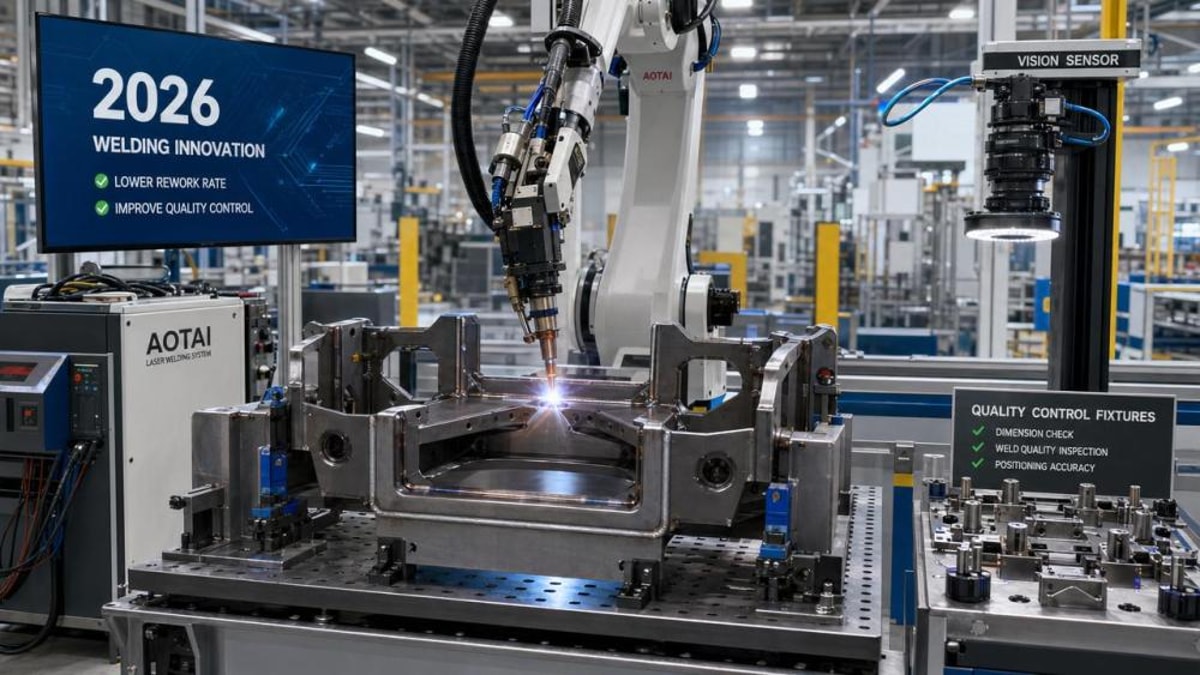
In many plants, rework on welded assemblies typically shows up within 4 checkpoints: visual inspection, dimensional verification, non-destructive testing, and final fit-up. When defects are detected late, the cost multiplier can rise from 2x at the weld station to 5x or more after coating, machining, or field installation. This is why welding innovations now attract attention from operations, quality, procurement, and EHS teams at the same time.
QC personnel are under pressure to tighten acceptance windows, often within ±0.5 mm to ±2.0 mm depending on assembly class and end-use tolerance. Safety managers face a parallel challenge: as productivity targets increase, the probability of unsafe workarounds also rises unless welding cells are designed with better monitoring, guarding, extraction, and training logic. In 2026, the strongest welding innovations are those that solve both problems together.
The Main Rework Drivers Seen Across Industries
Although every sector has its own standards, most welding rework still comes from a familiar set of causes. Heat input variation, poor joint preparation, consumable contamination, parameter drift, and inconsistent torch positioning remain among the top contributors. In mixed-model production, changeovers every 20 to 60 minutes make these risks worse, especially when setups rely too heavily on operator memory.
- Inconsistent weld penetration during multi-shift production
- Spatter-related cleanup adding 10–25 minutes per batch
- Dimensional distortion after high-heat joining on thin materials
- Missed traceability records affecting corrective action closure
- Safety incidents linked to fumes, glare, hot work exposure, or unguarded automation
Why Traditional KPI Sets Are No Longer Enough
Tracking only arc-on time, output volume, or labor hours gives an incomplete picture. Rework prevention in 2026 depends on combining 5 operational data points: first-pass yield, repair frequency per 100 joints, weld parameter stability, incident near-miss rate, and documentation completeness. Plants that still separate these indicators by department often struggle to identify whether a defect originated from process variation, training, or environmental exposure.
A More Useful Decision Frame for QC and Safety Teams
The most effective review framework asks three questions. First, can the technology narrow variation before defects appear? Second, can it create auditable records within seconds rather than at the end of the shift? Third, can it reduce operator risk while maintaining throughput? If a welding innovation cannot address at least 2 of these 3 areas, its impact on rework rates is usually limited.
Which Welding Innovations Are Reducing Rework in 2026
Not every new process delivers the same value. The welding innovations gaining the most attention in 2026 share one feature: they convert variable human execution into more stable, measurable process control. That matters in both high-volume production and high-mix repair settings.
1. Smart Power Sources With Adaptive Parameter Control
Modern inverter-based systems can now adjust current, voltage, wire feed, and waveform behavior in near real time as joint conditions change. For QC teams, this means fewer cold starts and fewer defects caused by operator-to-operator variation. In practical terms, adaptive control is especially useful where material thickness ranges from 1 mm to 12 mm within the same production cell.
These systems also support recipe locking, reducing unauthorized parameter changes. For safety managers, controlled settings lower the chance of overheating, excessive spatter, or unstable arcs that can increase exposure to burns and fumes.
2. Handheld and Semi-Automated Laser Welding
Laser processes are among the most discussed welding innovations because they can reduce heat-affected zones, lower distortion, and shorten post-weld finishing time. In applications such as stainless housings, battery enclosures, thin-gauge cabinets, and decorative structural components, lower thermal input often translates into fewer dimensional corrections after welding.
However, quality gains depend on strict safety integration. Laser welding requires controlled access, eye protection protocols, fume extraction, interlocks, and operator qualification. A faster process without these controls can shift risk rather than reduce it. For many facilities, the best results come from combining laser adoption with a 2-stage validation plan: process qualification first, then operator and safety qualification.
3. Vision-Assisted Seam Tracking and Joint Recognition
For robotic and mechanized welding, seam tracking cuts rework by helping the torch follow actual joint position rather than assumed coordinates. This becomes critical when part variation exceeds 0.8 mm, fixtures wear over time, or heat distortion shifts alignment during longer cycles. Cameras and sensors can detect joint gap changes, edge location, and fit-up mismatch before the bead quality drops below acceptance criteria.
4. Integrated Weld Data Logging and Traceability
A major source of repeat defects is poor feedback timing. When weld data is captured automatically per part, lot, or operator, corrective actions can be launched within the same shift rather than 24 to 72 hours later. Data logging is one of the most practical welding innovations because it supports both root-cause analysis and compliance documentation without slowing production as much as manual records do.
The table below shows how common welding innovations compare when the decision focus is rework reduction, safety impact, and inspection value.
The main takeaway is that the best welding innovations are not always the most advanced in appearance. The strongest performers are usually the ones that reduce variation at the source and create usable evidence for both QC and EHS decision-making.
How QC and Safety Managers Should Evaluate New Welding Systems
A buying decision should not begin with brochure claims. It should begin with defect patterns, production constraints, and risk exposure. In most facilities, evaluating welding innovations through 4 filters leads to better investment decisions: defect mode, material range, operator skill variability, and compliance burden.
Four Evaluation Filters That Matter Most
- Identify the top 3 rework causes by frequency and cost per month.
- Separate cosmetic defects from structural or code-critical defects.
- Map where safety risk increases during setup, welding, inspection, and repair.
- Confirm whether the proposed solution shortens feedback loops to less than 1 shift.
For example, if a plant’s main problem is distortion on 1.5 mm to 3 mm stainless sheet, laser-based welding innovations may offer more value than higher-output arc equipment. If the problem is inconsistent penetration on thicker carbon steel brackets welded by multiple operators, adaptive power sources and digital work instructions may produce a faster return.
What to Request During Vendor Trials
Vendor demonstrations should be structured around your real defect history, not generic samples. Ask for trial runs using your material grades, your joint design, and at least 20 to 50 parts if possible. A valid test should include inspection records, operator usability observations, and safety controls under normal shift conditions.
The following table can be used as a practical scorecard when comparing welding innovations before purchase or rollout.
This scorecard helps teams avoid a common mistake: choosing welding innovations based on speed alone. Rework rates usually improve most when process control, operator usability, and safety infrastructure are evaluated as one system.
Implementation Steps That Turn Technology Into Lower Rework
Even the best equipment can fail to reduce rework if deployment is rushed. A practical implementation plan usually follows 5 steps over 2 to 8 weeks, depending on process complexity and validation requirements.
Step 1: Baseline the Existing Defect Pattern
Start with 30 to 90 days of data. Count defect type, rework labor time, scrap exposure, and detection point. Without this baseline, it is difficult to measure whether welding innovations are truly reducing repair frequency or just moving defects to another checkpoint.
Step 2: Define Acceptance Criteria Before the Trial
Set clear targets such as a 15% to 30% reduction in rework hours, fewer repairs per 100 welds, or a measurable drop in finishing time. QC and safety should both sign off on these targets to prevent competing priorities during rollout.
Step 3: Train for Process Discipline, Not Just Operation
Operator training should cover more than button sequences. It must include joint prep standards, parameter lock rules, safe handling, inspection checkpoints, and escalation criteria. In many plants, a 4-hour technical session plus supervised shift-side coaching produces better control than a single classroom briefing.
Step 4: Connect Welding Data to Inspection and CAPA
If logged data remains isolated inside the machine, its value is limited. The stronger approach is to tie weld records to nonconformance reports, corrective actions, and maintenance observations. This helps teams see whether a defect spike came from fit-up, environment, consumables, or machine drift.
Step 5: Review at 2 Intervals
Run a first review after 7 to 14 days to catch startup issues, then a second review after 30 to 45 days to confirm stable gains. This two-stage review is especially important for welding innovations involving lasers, robotics, or sensor-driven automation, where early success can hide later maintenance or usability gaps.
Common Mistakes That Keep Rework High Despite New Technology
Many organizations invest in welding innovations but see only modest improvement because the technology is not matched to the true defect mechanism. Rework stays high when implementation focuses on machine capability while ignoring preparation discipline, fixturing, or inspection timing.
Mistake 1: Upgrading the Arc Without Upgrading the Process
A smart power source cannot compensate for contaminated surfaces, unstable clamping, or poor consumable storage. If wire, gas, or base material handling remains inconsistent, defect rates may decline only slightly. In some cases, basic housekeeping and fixture control deliver the first 10% to 15% improvement before advanced welding innovations add further gains.
Mistake 2: Treating Safety Controls as an Add-On
This is particularly risky with laser and automated systems. If guarding, extraction, PPE logic, and access control are installed after process launch, teams often create workarounds that affect both safety and quality. A safer line is usually a more repeatable line because operator movement, exposure, and interruption are better controlled.
Mistake 3: No Closed-Loop Response to Parameter Drift
Digital logging has little value unless someone reviews it. Assign trigger thresholds, such as sudden changes in current profile, repeated repairs by shift, or sensor alerts beyond a defined limit. Once thresholds are set, supervisors can intervene before small instability becomes a batch-level quality event.
What 2026 Means for Industrial Decision-Makers
The direction is clear: welding innovations are moving from isolated hardware upgrades to connected quality-and-safety systems. Facilities that reduce rework most effectively are not simply welding faster. They are controlling variables earlier, documenting performance better, and creating safer conditions for repeatable execution.
For QC leaders, the priority is traceable consistency. For safety managers, the priority is controlled adoption of higher-energy and more automated processes. For both groups, the shared objective is fewer defects per shift, fewer repairs after inspection, and fewer hidden risks in the last mile of manufacturing.
GPTWM continues to track the welding innovations shaping this shift, from handheld laser safety practices to data-driven torque and joining intelligence across industrial assembly environments. If your team is reviewing new welding systems, comparing process options, or building a lower-rework implementation roadmap, now is the right time to align quality, safety, and process engineering around measurable criteria. Contact us to discuss your application, request a tailored evaluation framework, or learn more solutions for precision joining and inspection improvement.
Related News
Smart manufacturing gains often stall after pilot projects
Smart manufacturing gains often stall after pilots. Learn how to assess integration, ROI, data quality, safety, and scale readiness to turn early wins into lasting factory performance.
Industrial innovation is moving faster than supplier lead times
Industrial innovation is reshaping procurement faster than supplier lead times can adapt. Learn how buyers can reduce risk, secure smarter sourcing, and keep production moving.
Precision engineering mistakes that lead to scrap
Precision engineering mistakes can turn quality parts into costly scrap fast. Learn the key checks operators need to reduce waste, improve yield, and keep production stable.
When industrial solutions create new supply chain risks
Industrial solutions can boost efficiency but also create hidden supply chain risks. Learn how to assess compliance, supplier dependency, and resilience before investing.
Metalworking tools: repair less or replace sooner?
Metalworking tools: learn when repair saves money and when early replacement protects uptime, safety, and precision with a practical checklist for maintenance teams.
What industrial research says about shorter production runs
Industrial research reveals why shorter production runs are becoming a smart strategy for volatile demand, customization, and supply chain resilience. Discover the key trends and business impact.
Advanced manufacturing costs that rarely show up early
Advanced manufacturing budgets often miss hidden costs like rework, calibration, compliance, and training. Learn the checklist finance teams need to cut risk and protect ROI.
Industrial applications that still resist automation
Industrial applications that still resist automation: learn where human skill still wins, how to avoid costly automation mistakes, and how to improve ROI with smarter, selective investment.
Where technology integration fails on the factory floor
Technology integration fails on the factory floor when tools, data flow, and operator needs don’t align. Learn the root causes and smart fixes that turn digital investment into real uptime, quality, and control.
Welding Metallurgy Expert
Weekly Insights
Stay ahead with our curated technology reports delivered every Monday.