
When industrial solutions create new supply chain risks





As manufacturers adopt advanced industrial solutions to boost efficiency, they often expose their supply chains to new vulnerabilities—from raw material volatility to compliance bottlenecks and technology dependence. For business evaluators, understanding where these risks emerge is essential to balancing innovation with resilience, especially in sectors where precision, continuity, and global coordination directly shape competitive performance.
This challenge is no longer limited to heavy industry or high-tech manufacturing. Across tooling, welding, metrology, logistics equipment, industrial software, and maintenance ecosystems, industrial solutions are reshaping how companies source components, qualify suppliers, control quality, and deliver on time. The gains can be significant: cycle times may fall by 10%–30%, labor dependence can be reduced, and traceability may improve across 3 or 4 production stages. Yet the same transformation can create hidden concentration risk, longer approval cycles, and new exposure to software, sensor, and standards-related disruption.
For business evaluation professionals, the key question is not whether to adopt industrial solutions, but how to assess their full supply-chain impact before capital is committed. That means looking beyond machine specifications or short-term productivity claims and evaluating procurement flexibility, spare-parts continuity, compliance readiness, integration complexity, and recovery speed when one node in the chain fails.
Why advanced industrial solutions introduce new supply chain exposure
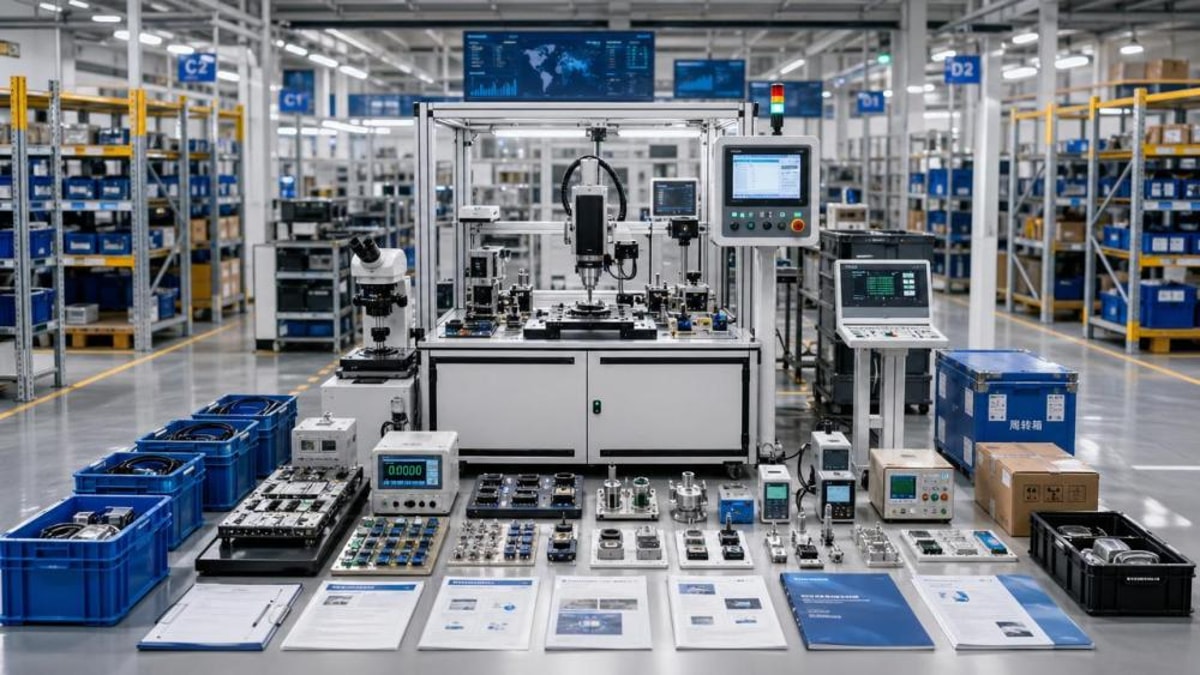
Many modern industrial solutions are marketed as direct answers to rising labor costs, tighter tolerances, and the need for digital visibility. In practice, they often replace one form of operational inefficiency with 4 new dependency layers: specialized components, proprietary software, compliance documentation, and service-network availability. This is especially visible in industrial assembly, metal joining, and precision measurement environments, where uptime targets can exceed 95% and even a 24-hour delay can affect shipment commitments.
From local sourcing to multi-layer dependency
A conventional hand tool or analog measuring instrument may have relatively simple sourcing logic. By contrast, connected industrial solutions often depend on imported chips, brushless motors, sensor modules, firmware updates, calibration tools, and trained service personnel. What appears to be a single purchase can actually involve 6 to 8 supply nodes across different countries or regions.
For example, a smart torque system may improve fastening consistency within a tolerance band such as ±3% to ±5%, but its supply continuity may rely on encoder availability, communication protocols, battery-cell lead times, and periodic software licensing. If one supplier changes specifications or an export restriction affects one subsystem, the entire deployment schedule can slip by 2–6 weeks.
Typical risk multipliers
- Single-source electronic parts with replenishment cycles of 30–90 days
- Calibration or compliance documents that must be renewed every 6–12 months
- Embedded software that requires vendor support for upgrades or fault diagnosis
- Operator training windows of 3–10 working days before full utilization
Business evaluators should treat these multipliers as structural risk indicators, not minor implementation details. In sectors served by GPTWM intelligence, such as construction equipment support, automotive maintenance, aerospace repair, and industrial distribution, a supply disruption is rarely isolated. It can cascade into warranty claims, delayed commissioning, higher safety review burdens, and margin erosion at the distributor level.
Risk categories that often go underestimated
The most common mistake in evaluating industrial solutions is to focus too heavily on the purchase price and nominal productivity increase. A stronger approach is to map risk across at least 5 dimensions: component continuity, standards compliance, service response, integration compatibility, and substitution flexibility. The table below highlights how these risks usually emerge.
The key conclusion is that industrial solutions create risk not only through physical supply shortages, but also through documentation delay, ecosystem dependence, and service fragility. A sourcing model that looks efficient on paper may still be weak if it cannot absorb a 15-day disruption without affecting customer delivery or regulatory obligations.
Where business evaluators should look first
A disciplined review starts with the commercial and operational assumptions behind the proposed industrial solutions. Evaluators should verify whether expected gains are based on stable operating conditions or on ideal scenarios that ignore downtime, retraining, consumable shortages, and qualification loops. In many projects, the real return on investment is determined less by peak performance than by supply predictability over the first 12–24 months.
Five core checkpoints before approval
- Map every critical component with its lead time range, preferred origin, and substitute options.
- Confirm whether software, firmware, calibration, or licensing are required annually or quarterly.
- Review the supplier’s local service footprint, including average response time and spare-parts stock policy.
- Test compatibility with existing ERP, MES, quality, and traceability workflows.
- Model a disruption scenario lasting 7, 15, and 30 days to estimate output, revenue, and delivery impact.
These checkpoints are useful across industries because they separate equipment value from ecosystem resilience. In precision tools and welding environments, for instance, a handheld laser unit, automated joining cell, or digital metrology platform can all show strong technical performance. However, if shield components, optical accessories, software support, or calibration services are concentrated in one region, the buyer inherits a hidden continuity risk.
Questions that reveal true procurement resilience
Many vendor proposals emphasize throughput, energy efficiency, or accuracy. Those are important, but business evaluators should add 6 practical questions during review. How many qualified component suppliers support the bill of materials? What is the typical spare-parts fulfillment cycle: 48 hours, 7 days, or 21 days? Which items are standard and which are proprietary? Can the system function in manual or degraded mode if connectivity fails? What operator skill level is needed after 1 week versus after 1 month? Which parts of the solution require export-sensitive paperwork?
Answers to these questions often determine whether industrial solutions strengthen a supply chain or make it brittle. A platform with moderate automation but broad parts availability can be commercially safer than a high-end system that depends on one specialist vendor and 3 imported modules.
Common risk scenarios across industrial supply chains
Not all risk scenarios carry the same financial weight. Business evaluators should classify them by probability, time to impact, and ease of mitigation. In general, the highest-value analysis comes from scenarios that affect both continuity and reputation, especially in applications where quality records, torque history, weld integrity, or measurement traceability matter to downstream customers.
Scenario 1: Material and component volatility
Industrial solutions with motors, sensors, optics, hydraulic elements, or precision-machined parts are exposed to price and availability shifts in metals, electronics, and specialty polymers. A 5%–12% increase in input cost may be manageable if contracts allow periodic adjustment. The larger threat is a delayed shipment that stalls assembly, testing, or final delivery for 2–8 weeks.
Scenario 2: Standards and compliance bottlenecks
As industrial solutions become smarter and more globally deployed, they must satisfy more documentation requirements: safety labels, calibration records, country-specific electrical rules, shipment declarations, software traceability, and in some cases operator certification evidence. Even where the equipment itself is available, missing paperwork can hold inventory in transit or postpone commissioning by 5–15 working days.
Scenario 3: Service and skills gap
A digital tool is only as reliable as the service model behind it. If a supplier offers advanced industrial solutions but has thin local support, minor issues can become serious bottlenecks. This is common when software settings, calibration routines, or replacement modules require factory authorization. What should be a 2-hour service task may turn into a 5-day wait for remote approval and a 10-day wait for parts.
The matrix below helps evaluators compare disruption patterns and choose proportionate controls instead of applying the same response to every risk.
A practical reading of this table is that not every risk requires stockpiling or major redesign. Some can be controlled through process discipline, contract terms, and clearer documentation. Others require structural changes, such as vendor diversification or modular standardization.
How to evaluate industrial solutions without slowing innovation
The goal of risk review is not to discourage modernization. It is to help companies adopt industrial solutions with enough resilience to survive volatility. A strong evaluation model balances 3 objectives at the same time: performance improvement, supply continuity, and recoverability. If one of these is missing, the investment case is incomplete.
Build a 4-part evaluation framework
1. Technical fit
Verify throughput, accuracy, duty cycle, safety features, and process compatibility. In precision-related operations, acceptable ranges may include repeatability thresholds, torque accuracy bands, or measurement stability across temperature changes such as 10°C–35°C.
2. Supply fit
Check component commonality, consumable availability, and spare-parts coverage. A solution is more robust if 60% or more of wearable or service parts can be sourced regionally or substituted without recertifying the full process.
3. Commercial fit
Review total cost across 12, 24, and 36 months, including maintenance visits, software fees, calibration intervals, freight exposure, and training time. This prevents underestimating lifecycle cost by focusing only on the initial quotation.
4. Recovery fit
Ask how quickly operations can recover if one supplier fails. Can the line shift to manual mode? Is there a backup tool family? Can metrology data still be recorded offline? Recovery planning matters because many industrial solutions fail not at launch, but during the first unexpected interruption.
A practical implementation sequence
For most organizations, a phased rollout is safer than a full immediate replacement. A 3-stage sequence is often effective: pilot for 30–60 days, controlled expansion across one business unit for 60–90 days, then broader adoption after supplier and service performance are validated. This creates evidence before exposure scales.
Intelligence platforms such as GPTWM are particularly valuable in this stage because evaluators need more than vendor brochures. They need ongoing signals about raw material fluctuations, export standard restrictions, handheld laser welding safety adoption, power tool motor efficiency limits, and IoT-based torque control developments. These indicators help decision-makers judge whether a solution’s operating environment is becoming more stable or more fragile.
What stronger decisions look like in practice
Better decisions do not always mean choosing the most advanced industrial solutions. They mean selecting options that deliver measurable gains while keeping disruption within acceptable limits. For some buyers, that means preferring open-interface systems over closed ecosystems. For others, it means splitting procurement between 2 qualified suppliers, pre-booking critical spare parts for 90 days, or requiring a documented service SLA before approval.
In industrial assembly, metal joining, and precision metrology, the last mile of manufacturing is where risk becomes visible. A line can meet design intent and still fail commercially if tools cannot be serviced, if calibration lapses stop shipment, or if one export-sensitive component blocks delivery. Business evaluators therefore create value not only by screening cost, but by protecting continuity, margin, and customer confidence.
Final decision checklist
- Confirm 2 or more acceptable supply paths for critical items where possible
- Document lead times for parts, service, software, and compliance approval separately
- Define acceptable downtime thresholds such as 24 hours, 72 hours, and 7 days
- Include calibration, training, and integration in the investment case
- Reassess vendor concentration risk every 6–12 months
When industrial solutions are evaluated through the lens of resilience as well as efficiency, organizations gain a clearer path to sustainable modernization. GPTWM supports that effort by connecting technical intelligence, market movement, and operational decision-making across the industrial value chain. If you are assessing new tooling, welding, metrology, or intelligent assembly investments, now is the right time to obtain a more risk-aware view of your options. Contact us to explore tailored insights, compare solution pathways, and get a more grounded basis for your next procurement or investment decision.
Related News
Smart manufacturing gains often stall after pilot projects
Smart manufacturing gains often stall after pilots. Learn how to assess integration, ROI, data quality, safety, and scale readiness to turn early wins into lasting factory performance.
Industrial innovation is moving faster than supplier lead times
Industrial innovation is reshaping procurement faster than supplier lead times can adapt. Learn how buyers can reduce risk, secure smarter sourcing, and keep production moving.
Precision engineering mistakes that lead to scrap
Precision engineering mistakes can turn quality parts into costly scrap fast. Learn the key checks operators need to reduce waste, improve yield, and keep production stable.
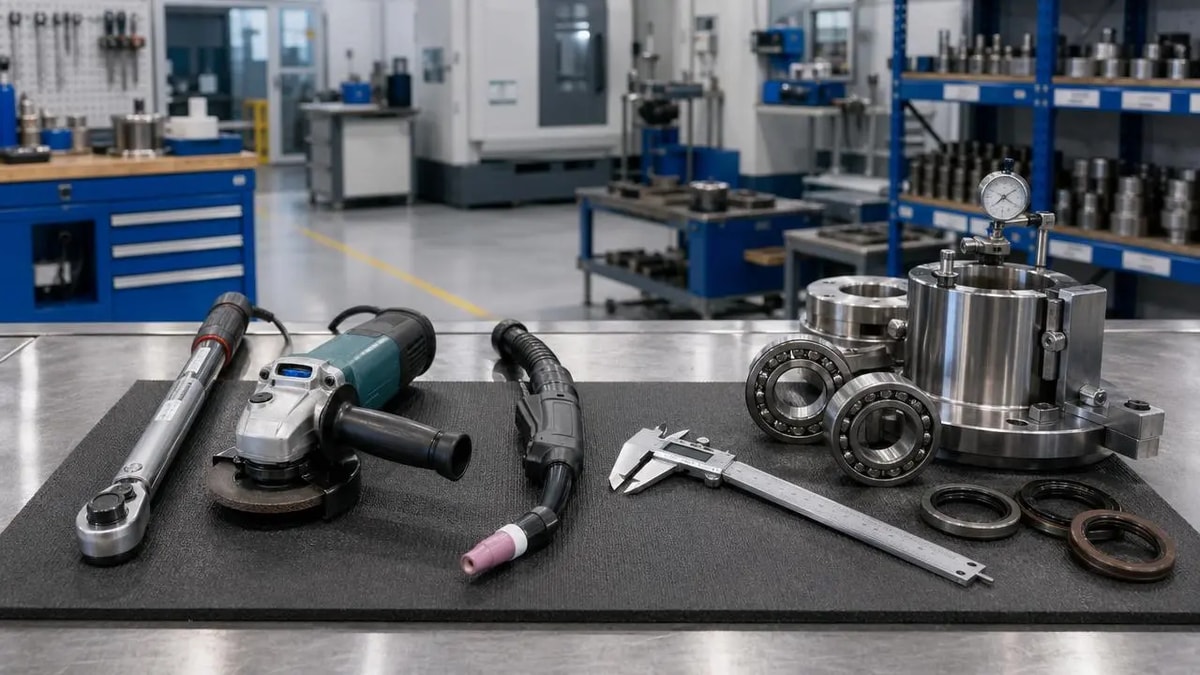
Metalworking tools: repair less or replace sooner?
Metalworking tools: learn when repair saves money and when early replacement protects uptime, safety, and precision with a practical checklist for maintenance teams.
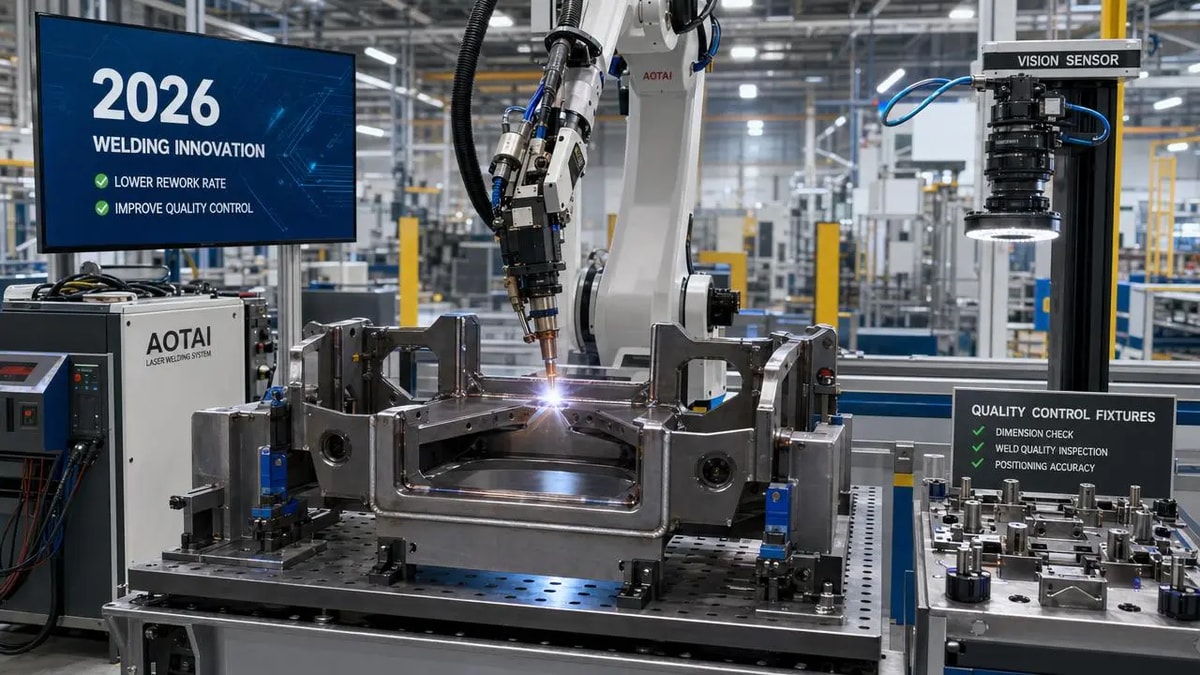
Welding innovations changing rework rates in 2026
Welding innovations in 2026 are cutting rework rates, improving safety compliance, and boosting QC traceability. Discover which smart systems deliver measurable gains.

What industrial research says about shorter production runs
Industrial research reveals why shorter production runs are becoming a smart strategy for volatile demand, customization, and supply chain resilience. Discover the key trends and business impact.
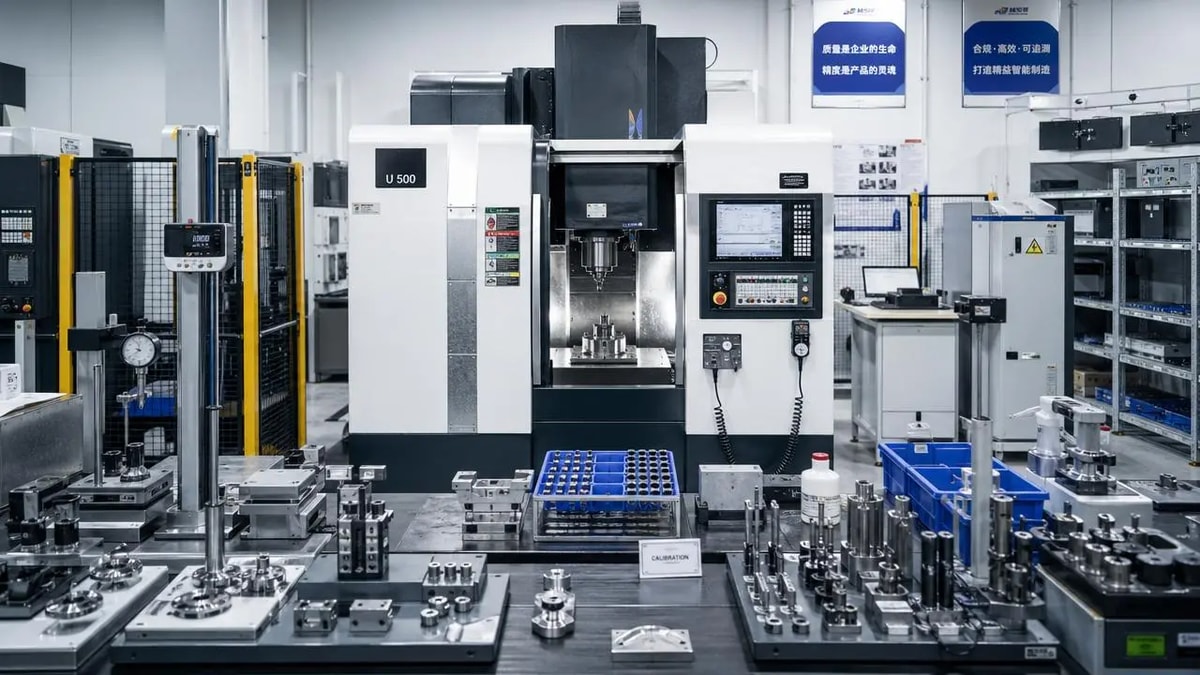
Advanced manufacturing costs that rarely show up early
Advanced manufacturing budgets often miss hidden costs like rework, calibration, compliance, and training. Learn the checklist finance teams need to cut risk and protect ROI.
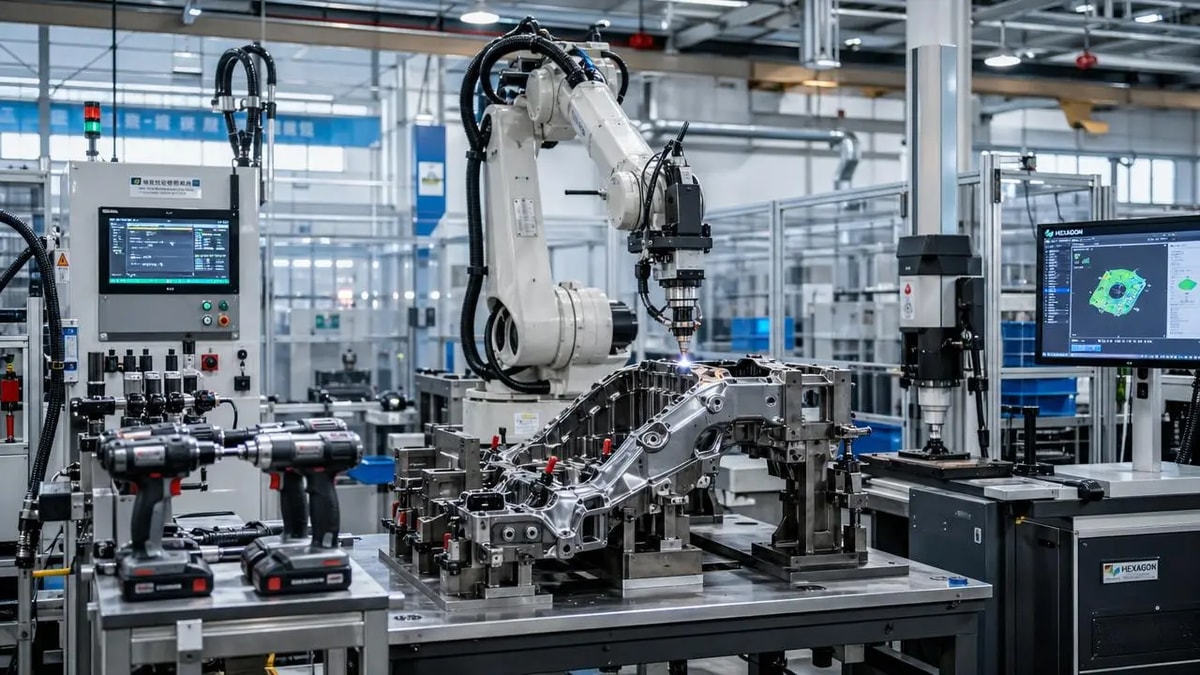
Industrial applications that still resist automation
Industrial applications that still resist automation: learn where human skill still wins, how to avoid costly automation mistakes, and how to improve ROI with smarter, selective investment.
Where technology integration fails on the factory floor
Technology integration fails on the factory floor when tools, data flow, and operator needs don’t align. Learn the root causes and smart fixes that turn digital investment into real uptime, quality, and control.
Dr. Alistair Vaughn
Weekly Insights
Stay ahead with our curated technology reports delivered every Monday.