
Industrial innovation is moving faster than supplier lead times





Industrial innovation is accelerating across every sector, yet many procurement teams still face supplier lead times that slow critical decisions and disrupt production plans. For buyers navigating cost pressure, quality demands, and global sourcing risks, understanding this gap is no longer optional. This article explores how industrial innovation is reshaping procurement priorities and what it takes to secure faster, smarter, and more resilient supply strategies.
Why is industrial innovation outpacing supplier lead times?
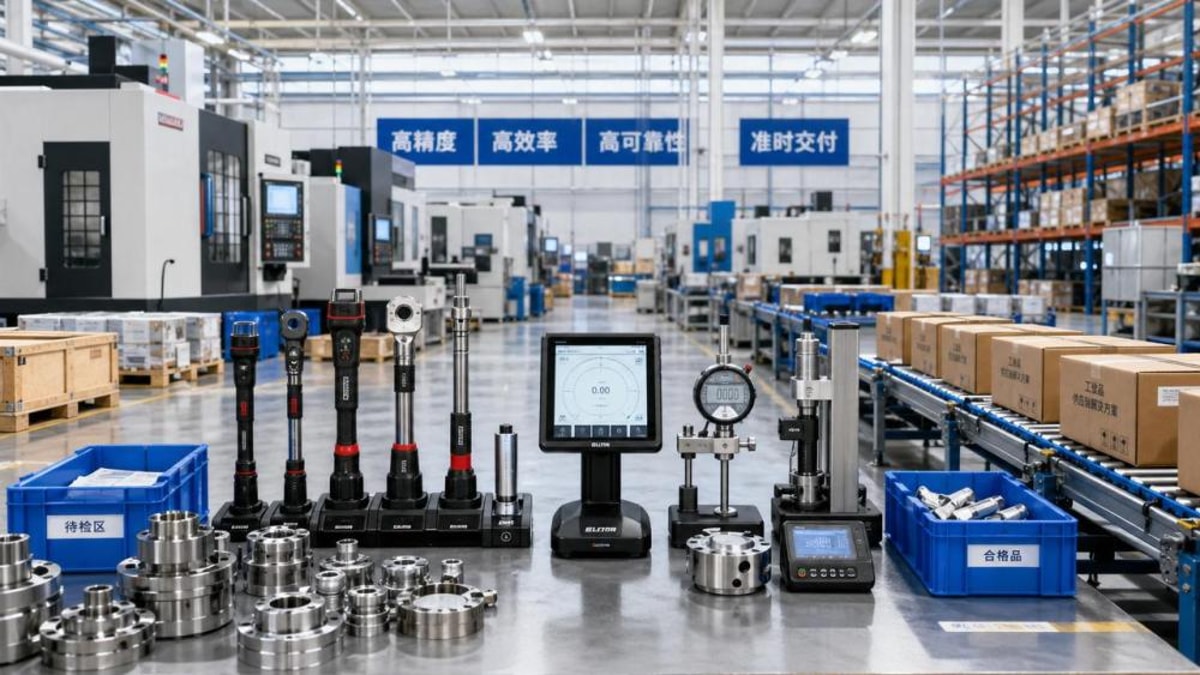
Across manufacturing, construction, automotive service, aerospace maintenance, electronics assembly, and energy infrastructure, industrial innovation is no longer a slow cycle of equipment replacement. It is a rolling process of tool upgrades, safety revisions, digital integration, and tighter process control. Procurement teams are now expected to secure products that support traceability, operator safety, ergonomic efficiency, and data connectivity, often within timelines shaped by customer orders rather than supplier capacity.
The problem is not simply that suppliers are “too slow.” In many cases, supply chains were built for stable demand and predictable specifications, while industrial innovation creates frequent changes in material requirements, performance expectations, certification checks, and regional compliance. A buyer may need torque tools compatible with IoT monitoring, measuring instruments with tighter tolerances, or welding-related equipment that aligns with updated safety practices. If upstream planning remains traditional, lead time becomes the bottleneck.
This is where procurement becomes a strategic function rather than a transactional one. Buyers must evaluate not only price and delivery date, but also whether a supplier can adapt to design shifts, documentation demands, and demand volatility. For organizations sourcing industrial assembly, metal joining, hydraulic equipment, precision metrology, or powered hand tools, industrial innovation changes the shortlist criteria.
- Product cycles are shorter, especially where digital factories require connected tools and process visibility.
- Raw material fluctuations affect cost and availability, which directly influences quoted lead times.
- Export controls and regional standards can delay shipments even when production capacity exists.
- Customization requests, such as voltage, labeling, interfaces, or documentation, add hidden time.
For procurement personnel, the practical question is not whether industrial innovation will continue. It will. The real question is how to buy with enough market intelligence to reduce surprises before they become production losses.
What changes most for procurement when industrial innovation accelerates?
When innovation moves faster than supplier response, procurement risk shifts from visible cost to hidden disruption. A lower unit price may no longer represent the best value if the supplier cannot maintain consistency across revised specifications, replacement parts, technical files, or after-sales response. In fast-moving industrial environments, a delayed measurement device or joining tool can stop inspection, maintenance, or assembly work far beyond its own purchase value.
Buyers also face a broader sourcing challenge. Traditional procurement often separated categories: tools, measuring instruments, welding equipment, hydraulics, and accessories. But industrial innovation connects them. A new assembly line may require updated fastening tools, calibration routines, safety consumables, operator training content, and revised spare parts planning at the same time. This creates cross-category lead time exposure.
Key decision shifts for buyers
- From unit price focus to total supply assurance, including documentation, serviceability, and continuity.
- From single-source convenience to risk-balanced sourcing with qualified alternatives.
- From annual review cycles to rolling intelligence on standards, demand signals, and component availability.
- From category buying to application-based buying, where the end-use scenario determines the selection logic.
GPTWM is valuable in this environment because procurement needs more than catalog data. It needs stitched intelligence: sector news, demand shifts, raw material signals, export restrictions, and technology trend interpretation. For buyers dealing with the last mile of industrial manufacturing, that combination improves timing, specification accuracy, and supplier evaluation.
Which supply chain signals should buyers track first?
Industrial innovation affects many variables at once, but not all variables matter equally in every purchase. Procurement teams need a practical filter. The following table highlights common signals that often explain why supplier lead times expand even when demand appears normal. It also shows how buyers can respond before the delay reaches production or service teams.
These signals are especially relevant in cross-border sourcing, where delays often come from poor anticipation rather than factory inactivity. GPTWM’s intelligence approach helps procurement teams connect upstream news with downstream buying decisions, which is critical when industrial innovation alters demand faster than standard replenishment cycles can respond.
How should buyers compare suppliers when lead time pressure rises?
A supplier that looks competitive on paper may still create operational drag if it cannot support changing specifications, regional compliance, or mixed-order complexity. Buyers need a broader comparison method that reflects current industrial innovation realities. The table below is useful for RFQ reviews, supplier meetings, and internal sourcing approval.
For procurement teams, the strongest suppliers are not simply the fastest. They are the clearest, the most adaptable, and the easiest to coordinate across engineering, quality, logistics, and maintenance. That distinction becomes more important as industrial innovation increases the cost of wrong assumptions.
What should a procurement guide include for industrial tools and precision equipment?
Many lead time issues begin with incomplete requirement definition. Buyers may issue a request based on product name alone, while the real application requires a more precise technical and operational profile. In industrial innovation environments, procurement needs a selection guide that captures not just the item, but the context in which the item must work.
Core specification points to confirm early
- Application environment: indoor line use, field maintenance, construction site, clean area, heat exposure, or high-duty cycle conditions.
- Performance target: torque range, measurement accuracy, pressure capacity, duty cycle, power source, or required control interface.
- Operator and safety needs: ergonomics, training level, protective accessories, and handling risks for welding or powered devices.
- Documentation scope: manuals, calibration records, certificates, packing details, and destination compliance declarations.
- Lifecycle support: spare parts, consumables, maintenance intervals, service access, and replacement planning.
For example, a procurement request for a torque tool is weak if it includes only torque value and quantity. It becomes stronger when it also states cycle frequency, traceability needs, data output expectations, workstation conditions, and acceptable substitute ranges. The same logic applies to measuring instruments, hydraulic tools, and metal joining equipment.
GPTWM supports this decision quality by combining sector trends with application-level understanding. That matters because industrial innovation often changes what “fit for purpose” means. A tool that was acceptable three years ago may now fail an efficiency, safety, or digital traceability expectation.
How can buyers reduce cost without creating future delays?
Under budget pressure, procurement teams often seek lower-cost alternatives. That is reasonable, but industrial innovation makes substitution more sensitive. A cheaper option may increase downtime, fail to meet documentation requirements, or create inconsistency between sites. The best savings usually come from smarter category design rather than lowest visible price.
Practical cost-control methods
- Standardize where possible. Reduce unnecessary variation in accessories, voltage versions, labels, or packaging.
- Separate critical and non-critical items. Keep premium requirements for process-critical tools while simplifying lower-risk purchases.
- Use phased delivery. Ship urgent quantities first and consolidate less time-sensitive items later.
- Review total operating cost. Include calibration, maintenance, training, consumables, and replacement intervals.
- Qualify alternatives in advance. Do not wait for disruption to begin substitute evaluation.
This is especially important in precision metrology and industrial assembly, where an apparently small specification difference can affect inspection acceptance, process repeatability, or worker fatigue. Procurement gains real leverage when it understands where cost can move safely and where it should not.
Which standards and compliance points should not be ignored?
Industrial innovation often brings new materials, higher automation, and more connected devices, all of which can introduce documentation and compliance complexity. Procurement does not need to become a certification authority, but it does need a disciplined checklist. Missing one document or misunderstanding one market requirement can erase any lead time advantage won during sourcing.
Requirements differ by product and destination, but buyers commonly need to verify safety instructions, electrical compatibility, origin information, packing details, and any relevant conformity documentation required by the target market. For precision measuring devices, traceability expectations and calibration-related records may also matter depending on application. For welding and powered tools, user safety information and operating limitations should be reviewed before order release.
A simple compliance checklist for procurement
- Confirm destination market requirements before quotation approval, not after production starts.
- Request document lists with the offer, including manuals, declarations, and shipping-related files.
- Align technical data with end-use conditions such as voltage, operating environment, and safety handling.
- Check whether calibration or inspection records must accompany the shipment or be arranged separately.
The advantage of an intelligence-driven sourcing partner is that these checks can be anticipated. GPTWM’s focus on industrial assembly, metal joining, and precision metrology is useful because those categories often sit at the intersection of technical detail and operational urgency.
Common misconceptions that slow procurement decisions
“A short quoted lead time means low supply risk”
Not always. A short lead time without breakdown, documentation clarity, or substitute planning may be fragile. Buyers should ask what assumptions support the date and what can change it.
“Innovation only matters for engineers, not procurement”
In reality, industrial innovation changes buying criteria directly. New safety expectations, smart tool integration, and tighter measurement requirements all influence supplier selection, cost structure, and replenishment planning.
“Switching suppliers always reduces delays”
A new supplier can solve one bottleneck and create another if qualification, documentation, or service support is weak. The better approach is structured comparison, risk segmentation, and pre-approved alternatives.
FAQ: procurement questions buyers ask when industrial innovation speeds up
How should we prioritize purchases when supplier lead times are unstable?
Start by separating mission-critical items from routine replenishment. Focus first on products that can stop production, inspection, installation, or maintenance if delayed. Then review whether those items need dual sourcing, forecast locking, or earlier documentation checks. This keeps industrial innovation from turning into unplanned downtime.
What is the biggest mistake in sourcing precision tools and metrology equipment?
The most common mistake is buying by name instead of application. Accuracy, range, environment, handling, calibration expectations, and data needs all affect suitability. A generic RFQ often results in delays, re-quotation, or receiving issues.
How can we discuss faster delivery without forcing suppliers into unrealistic promises?
Ask suppliers to separate manufacturing time, testing time, paperwork time, and shipping time. Then discuss what can be parallelized, phased, or simplified. This creates a workable acceleration plan instead of a risky verbal commitment.
When does it make sense to consult an industry intelligence platform?
It makes sense when procurement decisions are affected by changing standards, material volatility, export conditions, or technology adoption. In those cases, the cost of buying with incomplete information is often higher than the cost of obtaining better market visibility.
Why choose us for intelligence-led procurement support?
GPTWM is positioned around the last mile of industrial manufacturing, where delivery speed, tool suitability, joining safety, and measurement confidence directly affect real operations. Our Strategic Intelligence Center tracks sector movements that matter to buyers: raw material shifts, export standard restrictions, demand patterns in construction and maintenance markets, and technology evolution in power tools, handheld laser welding safety, and intelligent torque control.
For procurement personnel, this means practical support rather than generic commentary. You can consult us on parameter confirmation, product selection logic, likely lead time pressure points, replacement and alternative strategies, destination compliance considerations, sample evaluation priorities, and quotation planning based on current market context.
- Need help narrowing specifications for industrial tools, welding-related equipment, or precision metrology items? We can help structure the requirement set.
- Need a clearer view of delivery cycle risk across categories? We can help identify where lead times are likely to tighten first.
- Need to compare sourcing options for technical suitability, not just price? We can help define the right evaluation matrix.
- Need to prepare for certification, documentation, or sample review? We can help map the checkpoints before order release.
When industrial innovation moves faster than supplier lead times, better buying decisions depend on better intelligence. If your team is reviewing specifications, checking alternative sourcing paths, validating application fit, or planning around delivery uncertainty, contact GPTWM to discuss the parameters, lead time assumptions, compliance needs, sample support, and quotation scope that matter most to your next procurement decision.
- industrial assembly
- metal joining
- precision metrology
- handheld laser welding
- hydraulic equipment
- industrial tools
- digital factories
- precision tools
- industrial manufacturing
- sector news
- raw material fluctuations
- export standard restrictions
- aerospace maintenance
- welding equipment
- torque tools
- laser welding
- industrial innovation
Related News

Smart manufacturing gains often stall after pilot projects
Smart manufacturing gains often stall after pilots. Learn how to assess integration, ROI, data quality, safety, and scale readiness to turn early wins into lasting factory performance.
Precision engineering mistakes that lead to scrap
Precision engineering mistakes can turn quality parts into costly scrap fast. Learn the key checks operators need to reduce waste, improve yield, and keep production stable.
When industrial solutions create new supply chain risks
Industrial solutions can boost efficiency but also create hidden supply chain risks. Learn how to assess compliance, supplier dependency, and resilience before investing.
Metalworking tools: repair less or replace sooner?
Metalworking tools: learn when repair saves money and when early replacement protects uptime, safety, and precision with a practical checklist for maintenance teams.
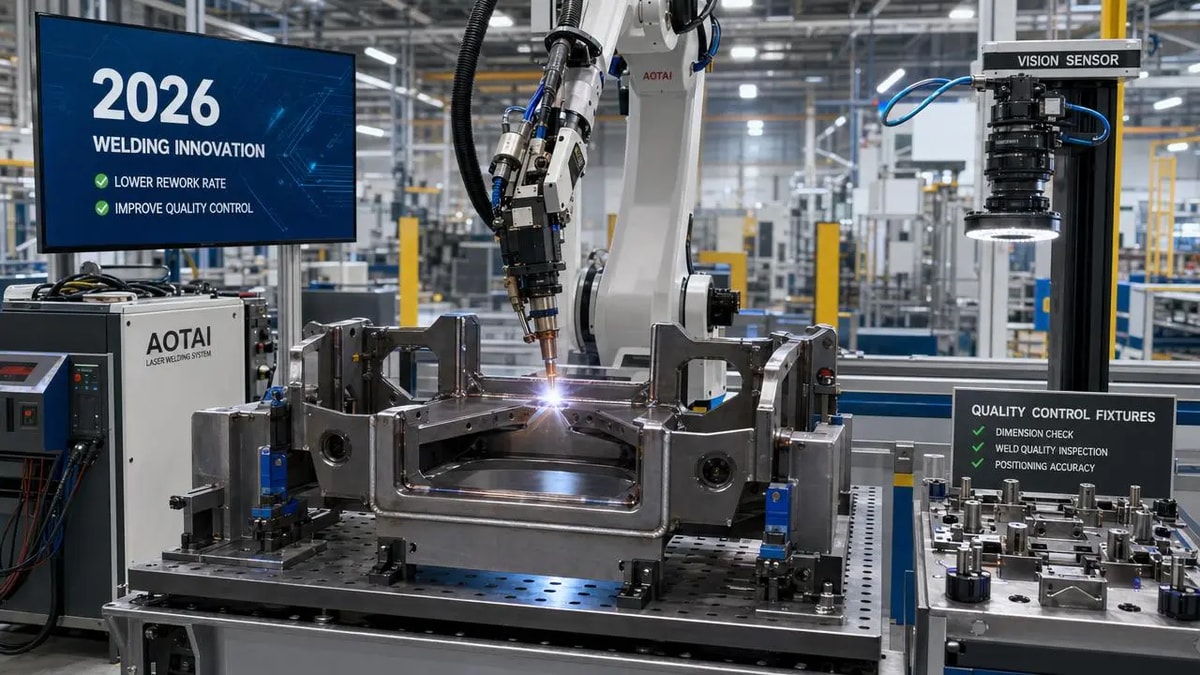
Welding innovations changing rework rates in 2026
Welding innovations in 2026 are cutting rework rates, improving safety compliance, and boosting QC traceability. Discover which smart systems deliver measurable gains.

What industrial research says about shorter production runs
Industrial research reveals why shorter production runs are becoming a smart strategy for volatile demand, customization, and supply chain resilience. Discover the key trends and business impact.
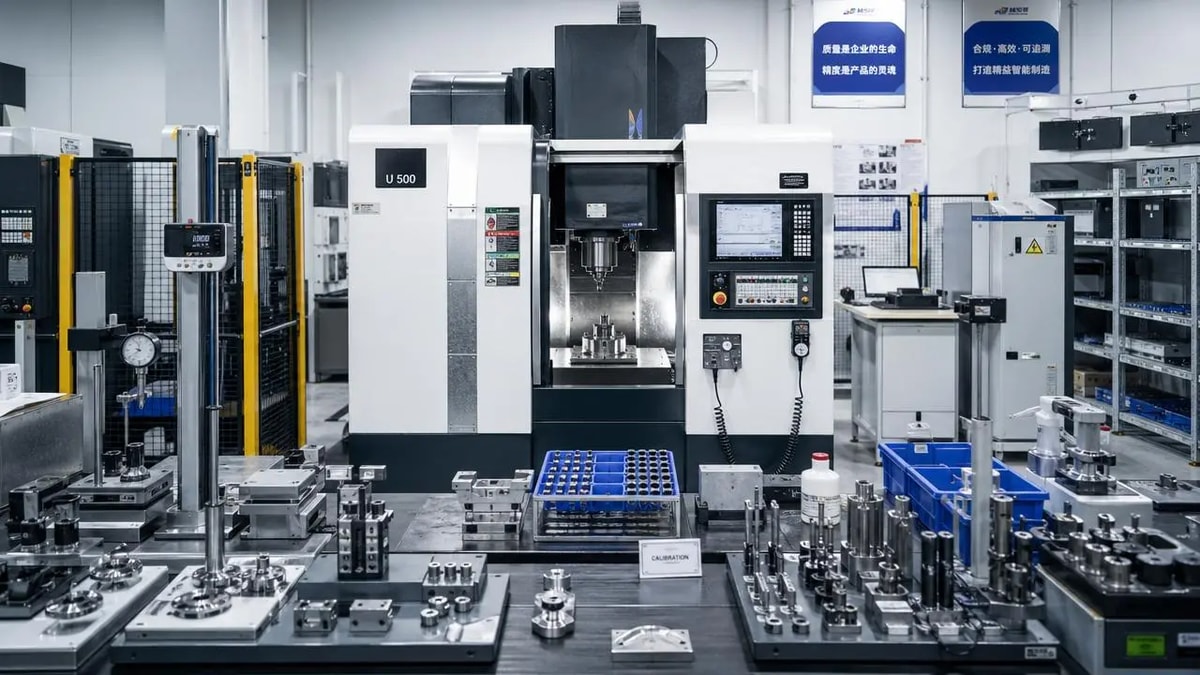
Advanced manufacturing costs that rarely show up early
Advanced manufacturing budgets often miss hidden costs like rework, calibration, compliance, and training. Learn the checklist finance teams need to cut risk and protect ROI.
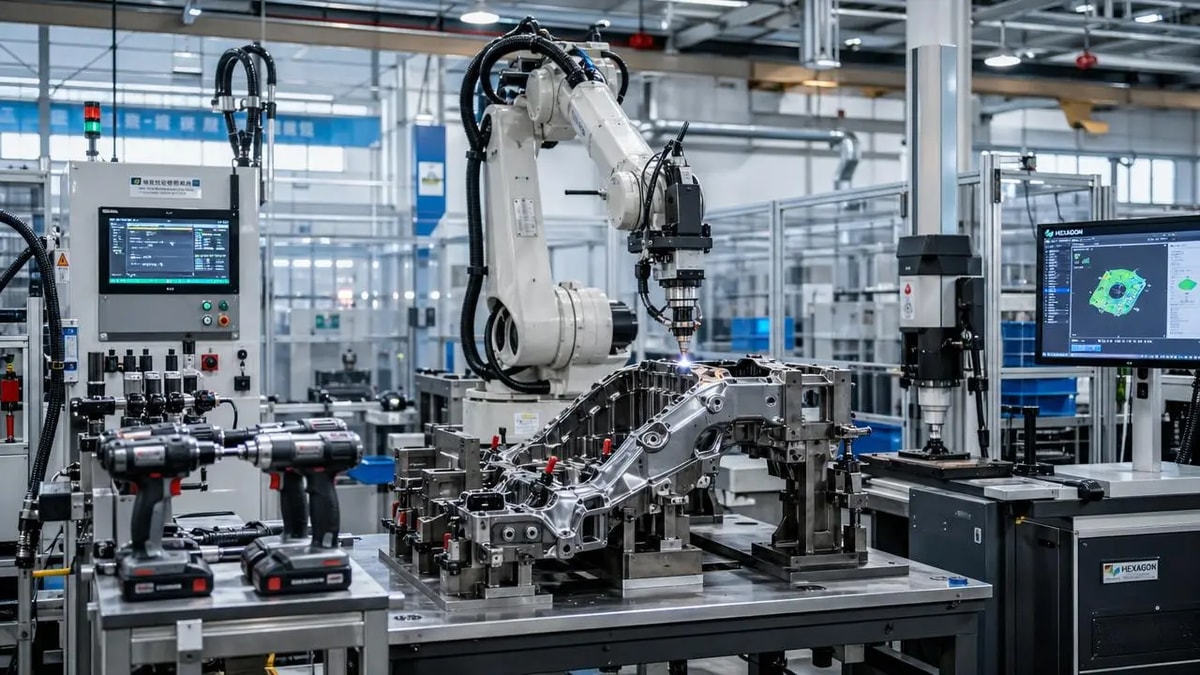
Industrial applications that still resist automation
Industrial applications that still resist automation: learn where human skill still wins, how to avoid costly automation mistakes, and how to improve ROI with smarter, selective investment.

Where technology integration fails on the factory floor
Technology integration fails on the factory floor when tools, data flow, and operator needs don’t align. Learn the root causes and smart fixes that turn digital investment into real uptime, quality, and control.
Dr. Alistair Vaughn
Weekly Insights
Stay ahead with our curated technology reports delivered every Monday.