
How to Verify Semiconductor Equipment Supports Required Product Specifications





How to Verify Semiconductor Equipment Supports Required Product Specifications
Verifying product specification support semiconductor equipment is a critical task for technical evaluators responsible for process capability, yield protection, and procurement risk control.
A supplier datasheet is only a starting point. Real verification requires evidence that equipment can repeatedly meet required specifications within the intended production environment.
Technical teams should compare requirements against documented capability, configured options, process results, interface compatibility, service conditions, and acceptance-test commitments before approving a purchase.
The strongest decisions come from a traceable verification matrix. It links every product specification to supplier evidence, validation methods, ownership, risk level, and final approval status.
Start With the Actual Product and Process Requirements
Do not begin with a preferred equipment model. Begin with the semiconductor product, process flow, target volume, customer commitments, and quality risks the tool must support.
Translate broad statements such as “high precision” or “advanced packaging compatible” into measurable requirements that can be assessed during supplier evaluation and factory acceptance.
For wafer-processing equipment, define wafer diameter, thickness range, bow, warp, notch orientation, backside condition, edge exclusion, and permitted material types.
For assembly and packaging tools, specify package families, substrate formats, die sizes, bond-pad geometry, component tolerances, and allowable handling force.
Each specification should include a target value, acceptable tolerance, measurement method, sample size, operating conditions, and the consequence of nonconformance.
This structure prevents misleading comparisons. A tool may meet a nominal accuracy claim while failing the repeatability, thermal stability, or throughput needed for production.
Separate Mandatory Requirements From Preferences
Classify requirements as mandatory, preferred, future-facing, or optional. Mandatory items become approval gates, while preferences can be evaluated through cost, schedule, and operational tradeoffs.
For example, support for 300 mm wafers may be mandatory today, while compatibility with a future carrier format may be strategically valuable but negotiable.
Technical evaluators should also identify hidden dependencies. A performance target may require a particular chuck, vision package, software license, or factory automation module.
These dependencies matter because quoted base configurations often omit the options required to achieve published performance under real production conditions.
Build a Specification-to-Capability Verification Matrix
A verification matrix is the most practical way to determine whether semiconductor equipment genuinely supports required product specifications without relying on sales-language interpretation.
Create one row for every critical requirement. Use columns for requirement source, target value, supplier claim, evidence type, validation result, risk, and approval decision.
Requirement sources may include customer drawings, process-of-record documentation, internal design rules, regulatory requirements, quality plans, and future capacity roadmaps.
Evidence should be ranked by strength. Controlled test data, acceptance records, and customer references usually carry more weight than brochures or presentation slides.
Ask suppliers to identify the exact equipment configuration associated with each claim. Model names alone are insufficient when performance depends on installed options.
The matrix should clearly distinguish between “supported,” “supported with option,” “requires engineering validation,” and “not supported” rather than using vague yes-or-no labels.
Use Evidence That Can Survive a Technical Review
Acceptable evidence usually includes configuration-specific datasheets, calibration certificates, application notes, process capability studies, factory acceptance test records, and controlled software documentation.
Request the revision date and document owner for every important record. Outdated information can describe capabilities removed from current equipment or software releases.
Where possible, compare supplier data with results from an application laboratory, existing production installation, or a representative customer site using similar materials.
Supplier demonstrations are useful, but they should follow a predefined test plan. Informal demonstrations can conceal setup time, operator intervention, or rejected samples.
For high-risk requirements, require witnessed testing with production-representative wafers, dies, substrates, consumables, recipes, and environmental conditions.
Verify Wafer, Material, and Product-Handling Compatibility
Physical compatibility is often treated as basic screening, yet many late-stage integration problems begin with incomplete assumptions about wafers, carriers, materials, or package geometry.
Confirm the supported wafer sizes and thicknesses, but also verify fragile wafer handling, temporary bonding materials, backside films, patterned surfaces, and warped substrates.
Check whether robotic end effectors, chucks, clamps, vacuum paths, and alignment systems can safely handle the actual product without scratching, contamination, or breakage.
For compound semiconductors, silicon carbide, gallium nitride, glass, or ceramic substrates, review material-specific thermal behavior, particle sensitivity, and electrostatic discharge controls.
Equipment may support a substrate dimension mechanically while lacking process recipes, vacuum compatibility, cleaning methods, or metrology algorithms for that material type.
Ask for documented restrictions involving porosity, surface roughness, metallization stacks, adhesive residues, edge damage, and moisture-sensitive packaging materials.
Evaluate Product Changeover Conditions
Support is not complete when a tool can process one product after extensive manual adjustment. Evaluate changeover time, fixture replacement, recipe control, and operator skill requirements.
Determine whether change parts are uniquely identified, stored safely, qualified through software interlocks, and available within the supplier’s standard service model.
For mixed-product factories, assess cross-contamination controls. Residual particles, chemical carryover, optical calibration drift, or incorrect recipe selection can undermine otherwise compatible equipment.
Require the supplier to describe product qualification boundaries explicitly. This is especially important when processing newly designed packages, advanced substrates, or thin wafers.
Test Process Performance Beyond Headline Specifications
Headline specifications often describe ideal performance. Production qualification must examine accuracy, repeatability, reproducibility, stability, yield impact, and cycle time together.
Accuracy describes closeness to a reference value, while repeatability measures variation under repeated identical conditions. Both are necessary for dependable semiconductor manufacturing decisions.
Reproducibility adds further complexity by considering different operators, shifts, machines, material lots, maintenance states, and software versions across the operating life.
Ask whether claimed positioning accuracy applies before or after calibration, at what temperature, over what travel range, and with what measurement uncertainty.
For inspection and metrology equipment, verify gauge repeatability and reproducibility, detection sensitivity, false-call rate, review workflow, and defect classification performance.
For bonding, dispensing, welding, cutting, or placement tools, assess process windows rather than one successful sample. The process must tolerate normal material variation.
Use Capability Studies for Critical Characteristics
For critical dimensions or process outcomes, request capability evidence such as Cp, Cpk, Pp, and Ppk studies with clearly stated limits and sampling conditions.
A favorable capability index is meaningful only when measurement systems are validated and data represents normal operation rather than a carefully optimized demonstration run.
Review warm-up behavior, maintenance recovery, tool-to-tool matching, and long-run drift. These factors frequently affect yield more than initial acceptance measurements.
Where relevant, confirm that the equipment can maintain required specifications at the planned throughput, rather than only at slower engineering or laboratory settings.
Technical evaluators should document the performance margin. Equipment operating near a specification limit may become unacceptable after wear, product variation, or environmental changes.
Confirm Throughput, Availability, and Capacity Assumptions
Throughput claims should be decomposed into productive cycle time, loading time, inspection time, recipe changes, calibration, preventive maintenance, and expected recovery events.
Nominal units per hour can be misleading when suppliers exclude consumable replacement, manual inspection, traceability checks, reject handling, or planned quality verification.
Calculate effective capacity using realistic uptime assumptions. Include scheduled maintenance, unplanned downtime, qualification runs, engineering lots, and staffing constraints.
Confirm whether performance changes with product complexity. A system may process simple wafers rapidly while slowing materially for dense patterns, multiple measurements, or difficult alignments.
Evaluate buffer capacity and material flow between tools. Semiconductor equipment can meet individual throughput targets while creating bottlenecks at loading, inspection, or downstream handling stages.
Review Maintainability Before Final Selection
Availability depends on more than mechanical reliability. Service response, spare-parts location, diagnostic access, operator maintenance tasks, and preventive-maintenance duration all affect output.
Request mean time between failures, mean time to repair, recommended maintenance intervals, critical spare-parts lists, and historical field reliability for comparable installations.
Clarify which maintenance activities require supplier engineers and which can be performed by trained site personnel. Long external-service dependencies can undermine production resilience.
Also verify calibration requirements, reference artifacts, and recertification schedules. Measurement drift can cause hidden quality exposure before a visible equipment failure occurs.
Validate Automation, Software, and Factory Integration
Modern semiconductor equipment must often support more than process capability. It must integrate safely with factory automation, manufacturing execution systems, data platforms, and cybersecurity controls.
Identify required communication standards early, including SECS/GEM, GEM300, EDA, OPC UA, custom APIs, barcode systems, and host-command requirements.
Confirm that supported protocols are available in the quoted configuration, not merely on a product roadmap or through a future software development project.
Review equipment state models, alarms, event reporting, trace-data availability, remote control permissions, and recovery behavior after network interruptions or host-system failures.
For automated material handling, verify carrier compatibility, load-port requirements, mapping logic, handoff positions, interlock behavior, and recovery procedures for abnormal transactions.
Software validation should include recipe revision control, electronic approvals, audit trails, access roles, backup methods, and rollback procedures following updates or configuration changes.
Protect Traceability and Data Integrity
When products serve automotive, medical, aerospace, or regulated markets, traceability requirements may be as important as physical process performance and cycle-time capability.
Confirm whether the tool records lot, wafer, carrier, operator, recipe, calibration, alarm, and maintenance data at the required level of detail.
Ask how records are retained, exported, protected, and reconciled after communication failures. A system that loses traceability may create costly disposition work.
Cybersecurity review should cover user authentication, patch management, remote service access, network segmentation, vulnerability disclosure, and supported operating-system lifecycle.
Check Facility, Safety, and Compliance Requirements
Equipment support can fail after delivery when facility requirements were underestimated. Technical evaluation must include utilities, footprint, vibration, exhaust, safety, and cleanroom constraints.
Verify electrical load, voltage tolerance, compressed air quality, process gases, cooling water, vacuum capacity, chemical distribution, drainage, and exhaust-flow requirements.
Consider peak demand, not only average consumption. Utility instability can reduce process performance, trigger alarms, or invalidate results during demanding production cycles.
Review environmental limits for temperature, humidity, airborne particles, vibration, electromagnetic interference, and floor loading. Precision tools can be sensitive to small deviations.
Safety documentation should address interlocks, guarding, laser classification, chemical containment, emergency stops, lockout procedures, and required operator protective equipment.
Confirm applicable certifications and regional obligations, such as CE marking, UL requirements, SEMI guidance, RoHS obligations, or site-specific environmental health standards.
Turn Validation Into Contractual Acceptance Criteria
Technical verification is incomplete unless critical supplier commitments appear in purchase specifications, acceptance protocols, service agreements, and change-control provisions.
Define factory acceptance testing before purchase order release. The test should specify products, samples, methods, target values, retest rules, and responsibility for failures.
Site acceptance testing should confirm that equipment still supports required product specifications after installation, facility connection, automation integration, and local operator training.
Include clear remedies when mandatory performance is not achieved. These may include corrective action, additional engineering support, delayed acceptance, price retention, or return provisions.
Control configuration changes after qualification. Hardware substitutions, software updates, altered consumables, and revised recipes can affect validated performance without obvious warning.
Maintain the verification matrix as a living record. It becomes valuable during audits, product transfers, engineering changes, recurring issues, and future equipment expansion decisions.
Make the Final Decision on Evidence, Not Optimism
The central question is not whether a supplier says its equipment is capable. It is whether documented evidence proves the quoted configuration meets your requirements consistently.
Approve equipment when mandatory specifications are supported by strong evidence, residual risks are understood, integration dependencies are funded, and acceptance criteria are enforceable.
Escalate or defer approval when key claims depend on untested options, future software releases, nonrepresentative demonstrations, or process conditions outside documented operating limits.
For technical evaluators, a disciplined verification process reduces yield risk, protects schedules, and creates a defensible basis for capital-equipment selection in complex semiconductor environments.
By linking every requirement to evidence, validation, and contractual accountability, teams can verify semiconductor equipment support with confidence rather than relying on specification claims alone.
Related News

Equipment Application Guidance for the Middle East: Managing Heat and Dust
Explore application guidance Middle East teams can use to manage heat and dust, protect welding equipment, batteries and precision tools, and reduce downtime. Get practical tips.
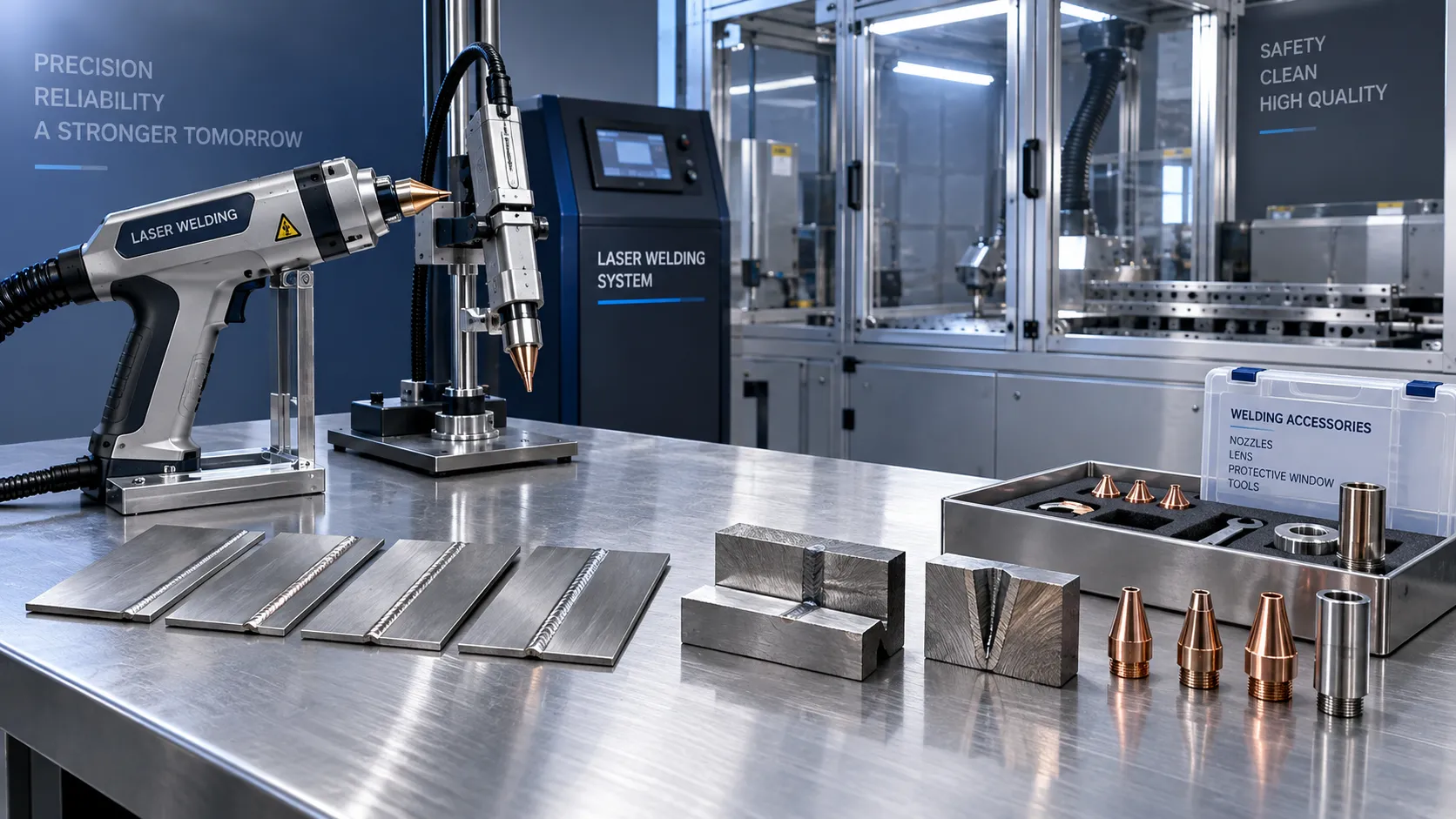
Choosing a Handheld Laser Welding Supplier: Weld Trials, Training, and Service
Choose a handheld laser welding supplier with proven weld trials, safety training, and reliable service. Learn what to verify before buying to reduce downtime and protect your investment.
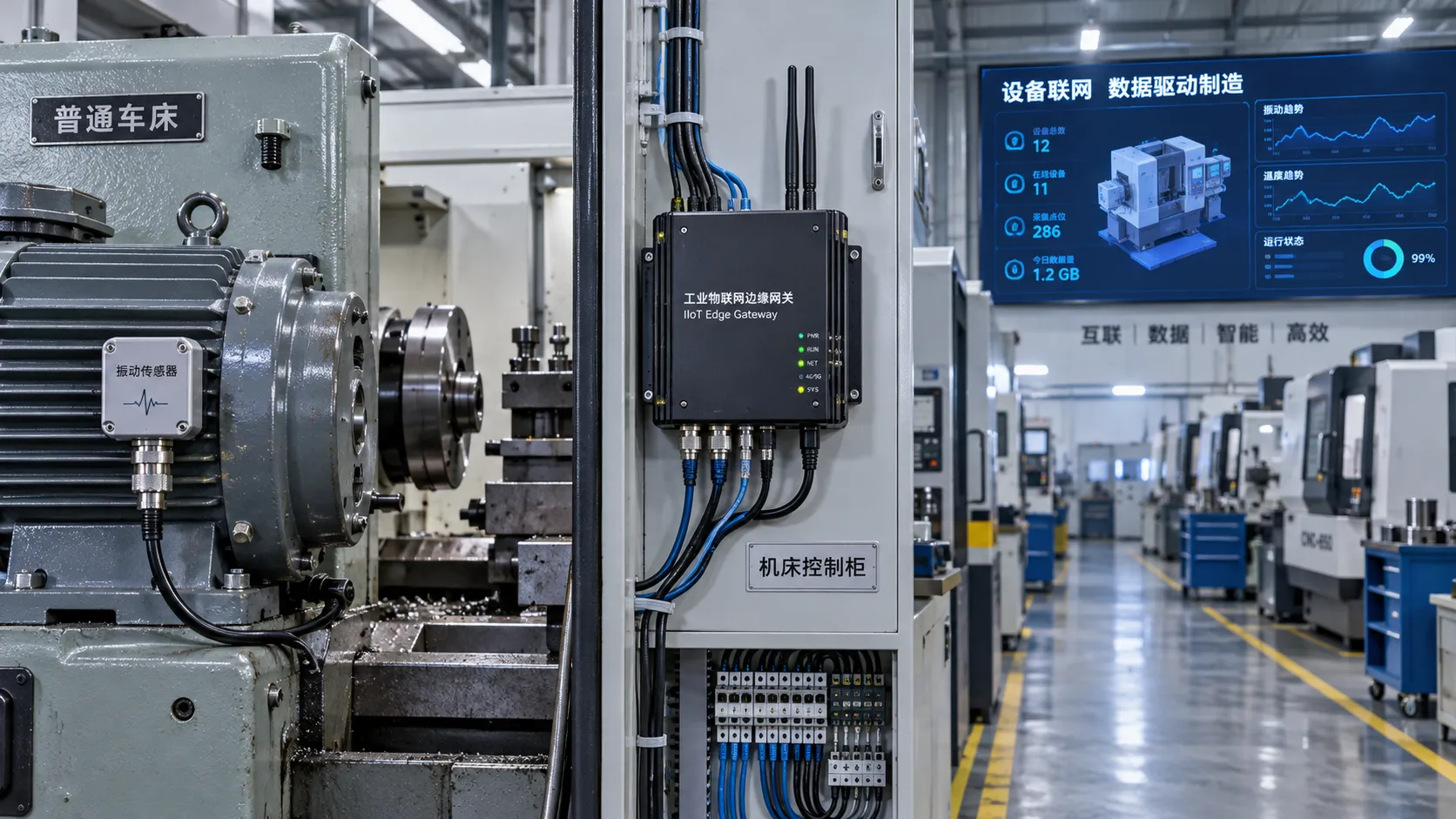
Choosing an Industrial IoT Platform: Key Criteria for Legacy Equipment
Choose an industrial IoT platform for legacy equipment with confidence. Discover key checks for connectivity, data integrity, security, and lifecycle costs before investing.

In-House vs. Outsourced Aircraft Maintenance: Comparing Total Costs
Compare aerospace maintenance cost for in-house vs. outsourced aircraft upkeep. Discover hidden expenses, downtime impacts, and break-even factors to find the best fit for your fleet.
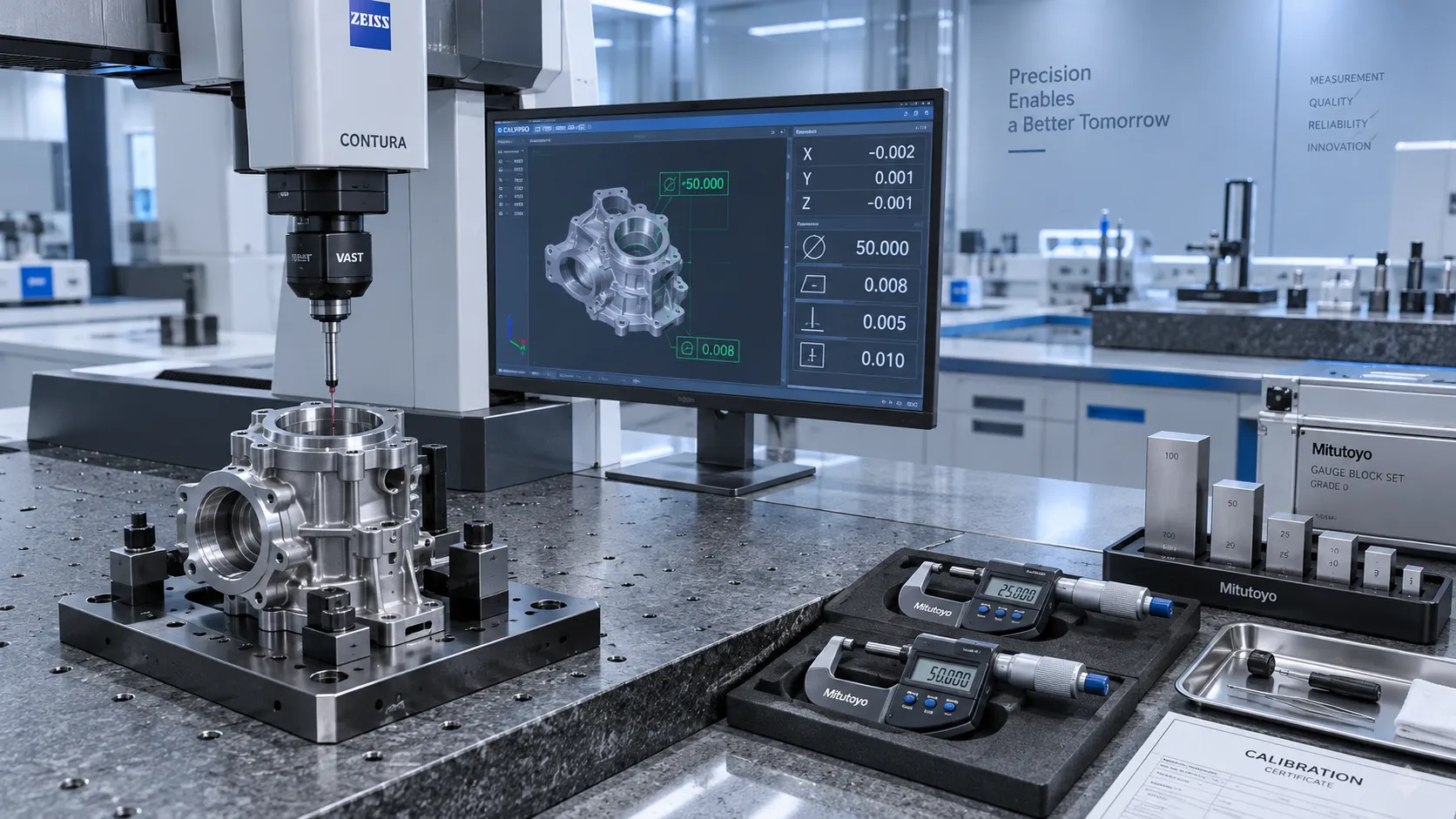
How to Select High-Precision Measuring Instruments for Tight-Tolerance Production?
High-precision measuring instruments are essential for tight-tolerance production. Learn how to evaluate accuracy, repeatability, environment, calibration, and data integration.
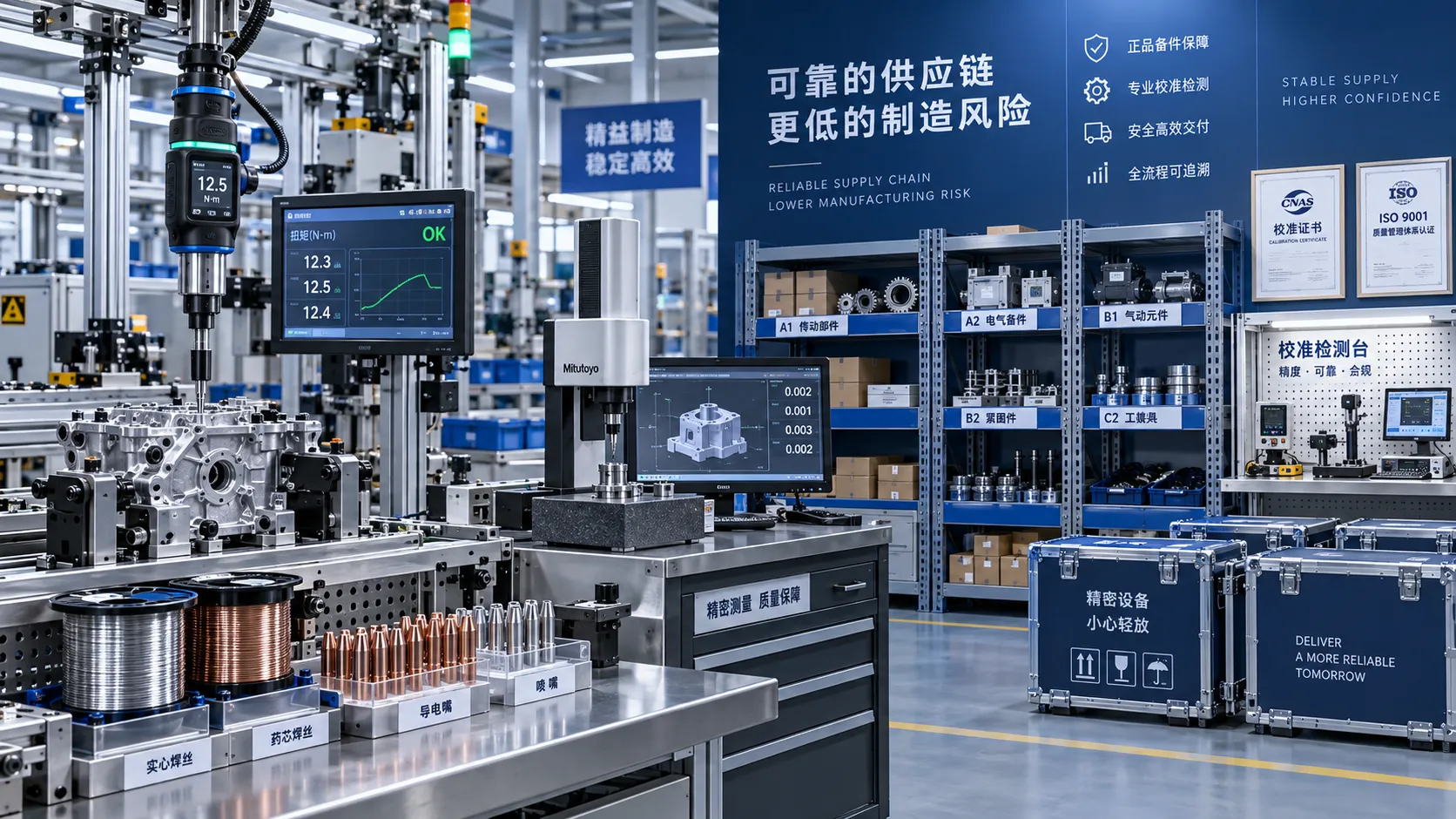
How Industrial Innovation Supplier Networks Reduce Sourcing Risk for Manufacturers
industrial innovation supplier network insights help manufacturers reduce sourcing risk, control lifecycle costs, and choose reliable tools, services, and suppliers with confidence.
Are Lower-Cost Metalworking Tools More Likely to Fail Early?
Are cheaper metalworking tools more likely to fail early? Explore duty cycle, build quality, and total ownership costs to make smarter buying decisions.

How Do Advanced Manufacturing Methods Improve Batch Consistency?
How do advanced manufacturing methods improve batch consistency? Discover how precision metrology, intelligent torque control, welding automation, and traceable data reduce variation and improve quality.

South East Asia Machine Tools Market: Demand Outlook by Manufacturing Industry
South East Asia machine tools market outlook: explore demand from automotive, electronics, fabrication, and infrastructure, plus smart sourcing priorities for manufacturers.
Related News
- 00
0000-00
Equipment Application Guidance for the Middle East: Managing Heat and Dust - 00
0000-00
Choosing an Industrial IoT Platform: Key Criteria for Legacy Equipment - 00
0000-00
How to Select High-Precision Measuring Instruments for Tight-Tolerance Production? - 00
0000-00
How Do Advanced Manufacturing Methods Improve Batch Consistency? - 00
0000-00
How to Prototype Electronic and Semiconductor Parts for Early Performance Testing
Prof. Marcus Chen
Weekly Insights
Stay ahead with our curated technology reports delivered every Monday.