
What is slowing global construction demand despite major projects?





Major infrastructure announcements may suggest resilience, yet global construction demand is slowing under the weight of high financing costs, labor shortages, volatile material prices, and uneven regional recovery. For business evaluation across industrial supply chains, the gap between headline megaprojects and broad market activity matters more than headlines alone. It affects equipment utilization, order timing, contractor confidence, maintenance cycles, and the demand outlook for tools, welding systems, hydraulic equipment, and precision measurement technologies tied to the real pace of site execution.
Global construction is sending mixed signals, not a simple growth story
The current cycle in global construction is defined by contradiction. Governments continue to promote transport corridors, power networks, housing programs, and industrial parks, while private developers and regional contractors face tighter credit conditions and slower project conversion. In many markets, the announced value of construction pipelines remains large, but actual ground-breaking, procurement release, and payment flow are weaker than expected.
This divergence explains why broad demand looks softer even when media coverage focuses on airports, data centers, ports, renewable energy sites, or reconstruction programs. Large projects do support selective demand for steelwork, fabrication, welding, fastening, metrology, and heavy equipment. However, they do not always compensate for delayed residential starts, weak commercial property investment, local budget stress, and cautious mid-sized industrial expansion. As a result, global construction demand is not collapsing, but it is fragmenting by region, funding model, and project type.
The slowdown is being shaped by several reinforcing pressures
A few major projects can create the impression of resilience, yet the broader market depends on thousands of smaller and medium-scale decisions. The following factors are slowing global construction demand even where strategic infrastructure remains active:
These pressures do not operate separately. Expensive credit amplifies the damage from material inflation. Labor scarcity makes delay costs more severe. Compliance burdens become harder to absorb when margins are already compressed. That is why global construction can appear stable in total announced value while becoming weaker in actual purchasing rhythm.
Why major projects do not automatically lift the wider market
Megaprojects are influential but narrow. They often require specialized engineering, long planning cycles, state-backed financing, and concentrated supplier ecosystems. Their scale makes them visible, but their benefits do not spread evenly across all segments of global construction. A railway expansion, LNG terminal, or utility-scale energy project may sustain demand for structural fabrication and heavy joining technologies, yet it may do little for urban fit-out, low-rise housing, municipal renovation, or small contractor workloads.
Another constraint is timing. Major projects tend to consume funds over many phases, from design and permitting to civil works, mechanical installation, and final commissioning. The market often counts the full project value early, but suppliers only experience demand in stages. This creates a misleading perception that high-value announcements should already be lifting overall consumption in global construction, when in practice spending is delayed, gated, or revised.
A concentrated pipeline creates selective rather than broad demand
- Public infrastructure can support steel joining, surveying, torque control, and maintenance tools, but often through approved vendor lists rather than open-market demand.
- Energy and industrial projects favor high-specification procurement, which narrows participation.
- Residential and commercial weakness has a larger impact on volume-driven categories within global construction.
- Cross-border projects are increasingly affected by localization requirements and standards compliance.
The effects are spreading across the industrial value chain
A slower global construction market does not only affect builders. It changes the behavior of metal fabricators, rental fleets, maintenance providers, distributors, and component producers. When project starts slow, customers defer capital purchases and extend equipment service intervals. Demand shifts from expansion to efficiency, from speculative inventory to targeted replacement, and from broad consumption to project-linked procurement.
This is especially important for industrial categories connected to jobsite productivity and quality assurance. Welding equipment may still benefit where repair, retrofit, and infrastructure reinforcement continue, but buyers become more selective about duty cycle, safety, energy efficiency, and training support. Precision measurement tools may see steady relevance because tighter margins increase the cost of rework, misalignment, and failed inspection. In a constrained global construction environment, products that reduce waste, shorten installation time, and improve compliance tend to defend value better than purely volume-dependent offerings.
Areas most exposed to slower momentum
- General building materials tied to private development cycles
- Standard power tools dependent on rapid new-site turnover
- Equipment categories reliant on easy project financing
- Suppliers with long cash-conversion cycles or heavy inventory exposure
Areas with relative resilience
- Infrastructure maintenance, retrofitting, and safety upgrades
- Precision metrology supporting quality control and installation accuracy
- Advanced joining applications where labor scarcity favors higher productivity tools
- Aftermarket service linked to installed assets in global construction
What deserves the closest attention in the next phase
Interpreting global construction now requires more than reading top-line spending forecasts. The more useful signals are operational and financial. Several indicators deserve close monitoring because they reveal whether announced projects are turning into broad-based activity or remaining isolated exceptions:
- Bid-to-award conversion: A rising pipeline means little if tender activity does not translate into signed work.
- Payment discipline: Slow receivables often signal stress before cancellations become public.
- Labor availability: Persistent shortages limit execution even when budgets exist.
- Material lead-time normalization: Stability supports confidence; renewed volatility suppresses commitment.
- Public-private balance: The health of global construction is stronger when public programs are matched by private follow-through.
- Retrofit share: Rising renovation and reinforcement activity may indicate a shift from expansion to asset preservation.
A practical framework for judging risk and opportunity
The most effective response is not to assume uniform weakness or uniform recovery. It is to map where construction budgets are real, where schedules are credible, and where execution quality matters enough to preserve demand for higher-performance industrial tools and measurement systems.
The next move is better intelligence, not louder optimism
The slowdown in global construction is less about a lack of projects than a lack of smooth conversion from announcement to execution. Capital costs, labor constraints, standards compliance, and regional unevenness are limiting how much demand actually reaches the market. That creates risk for anyone reading the sector through megaproject headlines alone.
A stronger next step is to evaluate global construction through project phase visibility, regional funding durability, and the categories most tied to efficiency and accuracy. GPTWM tracks these shifts through sector intelligence on industrial assembly, metal joining, and precision metrology, helping interpret where demand is slowing, where it is merely delayed, and where specialized capability still creates durable opportunity. In a fragmented cycle, informed timing is often more valuable than aggressive expansion.
Related News

Selecting Adjustable Torque Tools for Repeatable Fastener Assembly
Adjustable torque tools: learn how to match range, accuracy, control methods, calibration, and ergonomics for repeatable, reliable fastener assembly.

How to Select Aerospace Inspection Tools for Aircraft Maintenance Tasks
Aerospace maintenance inspection tools: learn how to select reliable, traceable equipment for aircraft access, accuracy, calibration, and compliant maintenance decisions.

How to Select Wire Bonding Tools for Fine-Pitch Semiconductor Packaging
Explore semiconductor manufacturing tools for wire bonding and learn how to select precision solutions for fine-pitch packaging, reliable loops, accuracy, and yield.
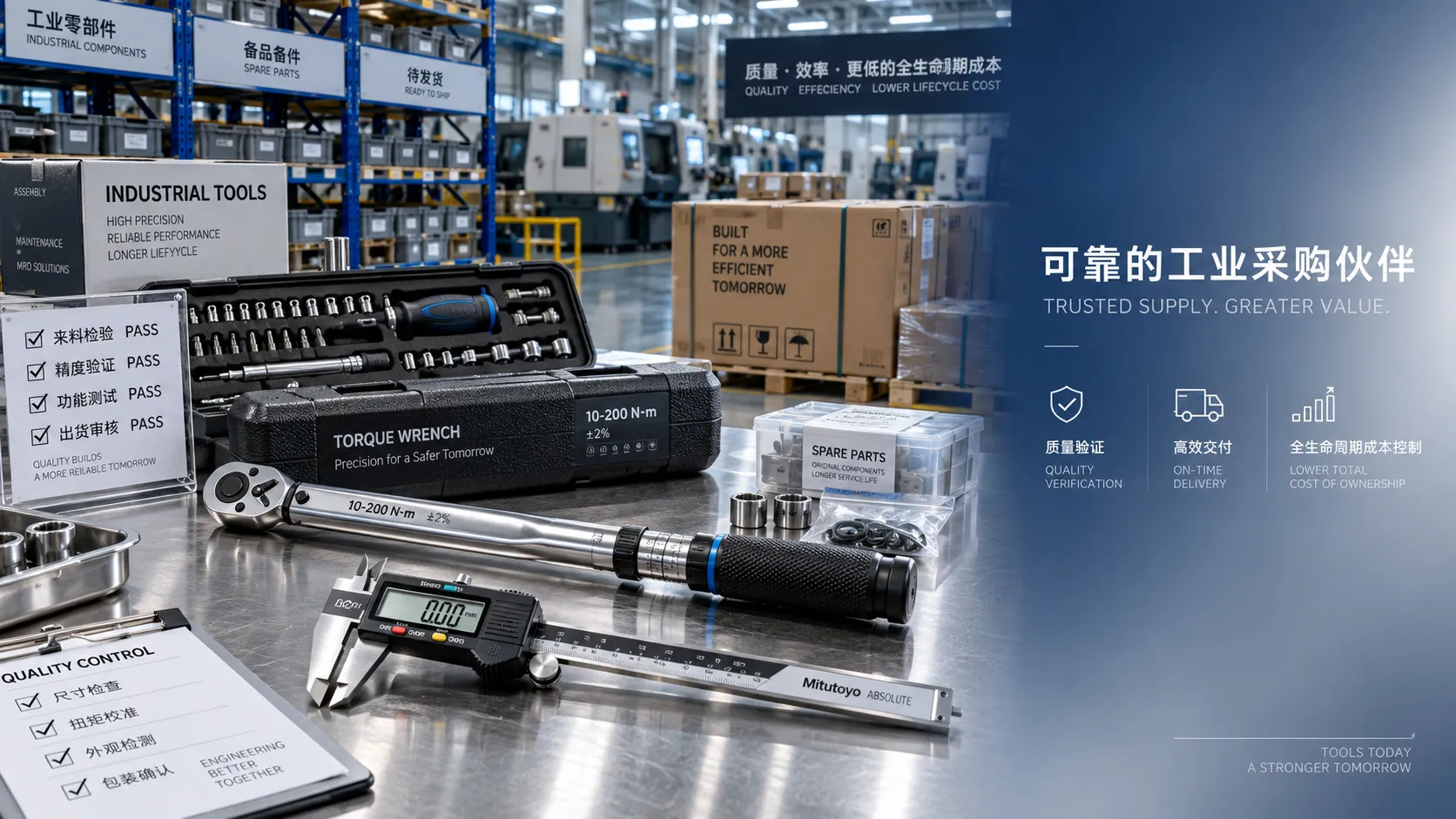
How to Compare Industrial Tool Suppliers for Quality, Lead Time, and Total Cost
Industrial tool selection supplier comparison made simple: evaluate quality, lead times, total cost, service, and supply resilience for confident sourcing decisions.

Industrial Equipment Application Guidance: Match Machines to Operating Conditions
Application guidance industrial equipment: match capacity, duty cycle, materials, site conditions, safety, and lifecycle cost to improve reliable output. Read the guide.

Selecting High-Speed Brushless Tool Motors for Torque, Heat, and Duty Cycle
High speed brushless tool motors: learn how to balance torque, heat, gearing, and duty cycle for reliable industrial tool performance and longer service life.

What Determines Industrial Hydraulic System Price for Heavy-Duty Equipment?
Industrial hydraulic system price depends on duty cycle, pressure, components, cooling, and integration. Compare quotes intelligently to secure reliable heavy-duty performance.

Welding Fume Extraction PPE: When Respirators Are Not Enough for Shop Safety
Welding fume extraction PPE: learn why respirators alone fall short and how source capture, ventilation, and layered controls improve shop safety.

How to Select Optical Metrology Solutions for Tight-Tolerance Manufacturing
Optical industrial metrology solutions for tight-tolerance manufacturing: evaluate accuracy, surface compatibility, workflow, and traceability to select with confidence.
Related News
- 00
0000-00
How Middle East Manufacturers Can Improve Production Efficiency Under Heat and Labor Constraints - 00
0000-00
Why Are Specification-Oriented Articles Gaining Traction in Europe’s B2B Markets? - 00
0000-00
Industrial Solutions in Latin America: Key Growth Sectors and Market Entry Risks - 00
0000-00
What Is Driving Manufacturing Efficiency in Europe’s Industrial Sectors? - 00
0000-00
Industrial Market Trends in 2025: What Buyers Should Watch Across Supply and Demand
Dr. Alistair Vaughn
Weekly Insights
Stay ahead with our curated technology reports delivered every Monday.