
Commercial insights that reveal where tool margins are tightening





For distributors, agents, and channel partners in industrial tools, the most useful commercial insights are not abstract market updates. They are early signals showing which product lines are losing pricing power, where input costs are rising faster than sell-through, and which categories still support value-based selling. In today’s market, tool margins are tightening fastest in segments where specification overlap is high, replacement cycles are longer, and buyers can compare prices instantly across channels.
That overall judgment matters because margin pressure rarely appears all at once. It usually starts with small changes: more discount requests on mid-range power tools, slower movement in standard measuring products, higher logistics or compliance costs on imported items, and intensified competition from low-cost alternatives. For channel partners, the goal is to identify these shifts early enough to protect profitability rather than react after margins have already been compressed.
In practical terms, the categories most exposed to tightening margins are often the ones with weak differentiation, unstable sourcing costs, or growing channel saturation. By contrast, products tied to precision performance, safety compliance, calibration credibility, or application-specific expertise tend to defend margin better. That is why commercial insights should be used not only for pricing decisions, but also for assortment strategy, supplier negotiation, and customer segmentation.
What margin tightening actually looks like in industrial tool distribution
Many distributors assume margin erosion is simply a pricing issue. In reality, it is usually a structural issue. Gross margin tightens when customers become more price-sensitive, when similar products flood the market, when suppliers reduce channel protection, or when operating costs rise faster than average selling price. In industrial tools, all four forces are active at once.
For example, standard cordless tools, basic hand tools, and entry-level accessories often face aggressive comparison shopping. Buyers can switch brands more easily when technical differences are hard to explain or do not materially affect the job. Once this happens, sales teams spend more time defending price and less time selling value, which lowers both margin and selling efficiency.
Another common pattern appears in welding and metal joining equipment. Entry and mid-tier machines may attract strong demand, but that does not always translate into healthy margin. When similar-feature products from multiple origins compete for the same distributor shelf space, channels are pushed toward rebates, bundled promotions, extended credit, or after-sales concessions. Margin is then reduced even before invoice pricing changes.
In metrology, the picture is more nuanced. Basic calipers, gauges, and standard shop-floor measuring tools may experience price compression, especially when buyers view them as interchangeable. But higher-precision instruments, calibrated systems, and application-critical devices usually retain stronger margins because trust, traceability, and technical support matter more than headline price.
Which signals tell distributors where tool margins are tightening first
The best commercial insights come from tracking a small number of operational signals consistently. One of the clearest is quote-to-order conversion by product family. If quotations remain high but conversion falls unless discounts are offered, that category is likely losing pricing power. This is often the earliest warning sign before reported margin visibly drops.
A second signal is supplier behavior. If manufacturers increase deal registration disputes, narrow geographic protection, or push similar stock through multiple channels, distributors should assume future price discipline will weaken. Margin compression is often triggered not only by end-market softness, but by channel crowding created upstream.
Third, monitor how often customers ask for brand substitution. When maintenance buyers, contractors, or workshops become more willing to switch to lower-cost equivalents, it usually means product differentiation has weakened in their eyes. That is especially dangerous in categories where service expectations remain high but willingness to pay is falling.
Inventory age is another highly practical signal. Slow-moving stock in mainstream SKUs often leads to reactive discounting, which becomes a direct margin drain. If a product line increasingly requires promotions to clear, the issue may not be short-term demand fluctuation. It may indicate permanent pricing pressure in that segment.
Finally, cost-to-serve should be watched as closely as unit margin. A category may still look acceptable on paper, but if it involves heavy technical support, high warranty claims, calibration administration, export documentation, or fragmented order volumes, net profitability can tighten quickly. Commercial insights are most valuable when they reveal the full margin picture, not just the invoice spread.
Why some tool categories are more vulnerable than others
Not all industrial tool segments behave the same way. Margin pressure tends to intensify first in categories with three characteristics: low differentiation, easy cross-brand comparison, and broad channel availability. These markets reward scale and price speed more than consultative selling, which makes it difficult for distributors to preserve premium positioning.
Basic power tools are a strong example. In many markets, the shift toward brushless motors has improved performance, but it has also narrowed visible performance gaps among brands in mid-range models. Once product features appear standardized, buyers focus more heavily on price, battery compatibility, bundle offers, and delivery terms. The result is margin pressure for distributors who cannot demonstrate a clear lifecycle cost advantage.
Standard welding consumables can face similar pressure. Unless backed by application-specific expertise, certification relevance, or reliability in difficult environments, many consumable lines are vulnerable to substitution. Customers may accept lower-cost options if immediate purchase price becomes their main criterion. Distributors then lose room to defend premium brands unless they can tie product choice to weld quality, rework reduction, or operator safety.
By contrast, high-precision metrology, safety-related welding systems, hydraulic tools for specialized maintenance, and torque-controlled assembly solutions often maintain stronger economics. These categories depend more on accuracy, compliance, uptime, documentation, and integration into the customer’s process. Buyers are less likely to switch based on unit price alone when operational risk is visible.
How raw material volatility and trade rules quietly squeeze channel profit
Many margin problems start outside the sales team’s control. Steel, copper, aluminum, electronics components, batteries, and transport costs all influence industrial tool pricing. When these inputs become volatile, suppliers may respond with surcharges, shorter quote validity, or selective price adjustments. Distributors that rely on fixed-price commitments then absorb the shock.
Export controls, certification updates, and market-specific compliance rules can create a second layer of pressure. Even when invoice prices remain stable, the landed cost of selling certain tools may rise through documentation burdens, testing requirements, labeling changes, or customs delays. These hidden costs are especially relevant for agents and distributors managing multi-country portfolios.
The problem is that customers do not always recognize these upstream changes as legitimate reasons for higher pricing. If a product category is already competitive, passing through cost increases becomes difficult. That is why commercial insights must combine market intelligence with operational data. It is not enough to know that raw material costs are moving; distributors need to know which product groups can actually carry those increases without volume damage.
In sectors such as aerospace maintenance, automotive service, and infrastructure construction, demand for precision and reliability can offset some of these pressures. But in general-purpose trade categories, cost inflation tends to be absorbed by the channel first. Distributors who do not segment products by pass-through capacity risk applying the same pricing logic to very different margin realities.
Where better margin opportunities are still available
If some margins are tightening, the next question is where channel partners should look for healthier returns. The answer is usually not “more products,” but better-positioned products. Categories with stronger margin resilience often combine technical complexity, service dependency, and customer risk sensitivity.
Precision measuring instruments are one example. When buyers need documented accuracy, repeatability, calibration support, and confidence in inspection results, low-price substitution becomes less attractive. Distributors that can provide application guidance, calibration coordination, and product training often create a defendable value layer around the instrument itself.
Handheld laser welding safety products and related protective systems are another opportunity area. As adoption expands, buyers are increasingly concerned about standards, operator protection, and practical implementation. This creates room for specialist distributors to sell not only equipment but also compliance-oriented solution packages, which are much less exposed to pure price comparison.
IoT-enabled torque control, traceable fastening systems, and workflow-connected assembly tools also offer stronger potential. These products support quality control, data capture, and process validation, making them relevant to manufacturers pursuing digital factory goals. In such cases, value is linked to reduced defects, traceability, and production consistency, not just the tool itself.
Hydraulic maintenance tools and specialized service equipment can also defend margin when they address downtime-critical tasks. If the cost of equipment failure or repair delay is high, buyers care more about reliability, support availability, and fit-for-purpose design. That gives distributors more room to compete on technical confidence instead of unit price.
How distributors should respond when margins begin to tighten
The first response should not be blanket discounting. It should be category diagnosis. Separate your portfolio into three groups: products that are becoming transactional, products that can still be value-sold, and products that require repositioning. This prevents pricing decisions from being driven by short-term sales pressure alone.
For transactional categories, focus on procurement discipline, inventory efficiency, and account selectivity. If the market treats a line as interchangeable, margin defense depends on cost control, order size, and fast turnover. It may still be worth carrying, but only with clear rules around minimum margin, promotional frequency, and stock exposure.
For value-sell categories, equip the sales team with evidence. They need tools to explain lifecycle cost, calibration reliability, safety performance, energy efficiency, rework reduction, or process consistency. Margin is easier to defend when benefits are quantified in customer terms rather than presented as technical features alone.
For repositioning categories, consider narrowing the SKU range, shifting supplier mix, or bundling products with service. Some lines lose margin because they are sold too broadly with too little differentiation. Adding commissioning, training, calibration management, or application support can turn a price-led offer into a solution-led one.
It is also critical to improve account segmentation. Not every customer should receive the same terms. High-service accounts buying specialist products may justify deeper support, while price-led buyers of standard tools may need stricter discount boundaries. Commercial insights become profitable only when translated into account-level actions.
What good commercial insights should include in 2025 and beyond
For channel partners in industrial tools, useful commercial insights should connect market movement with decision relevance. That means tracking not only demand trends, but also pricing discipline, channel saturation, input cost sensitivity, compliance exposure, and service intensity by product family.
The strongest insight models combine external and internal data. External inputs include raw material movements, export rule changes, sector demand by end market, and competitive product launches. Internal inputs include win rates, discount depth, return rates, inventory age, warranty costs, and sales cycle length. When these are viewed together, distributors can see where margin tightening is cyclical and where it is structural.
This matters because not all margin pressure should be fought. In some categories, the smartest move is to accept lower margin only if turnover, attachment sales, or strategic account access justify it. In others, protecting profit means exiting low-quality volume and investing harder in technically differentiated lines.
For distributors, agents, and channel partners, the central lesson is clear: margin pressure is easiest to manage before it becomes visible in quarterly results. The right commercial insights reveal where pricing power is fading, which categories still support premium positioning, and how to shift the portfolio toward more resilient value creation.
In industrial assembly, welding, and metrology markets, tighter margins are most dangerous where products are easy to compare and hard to differentiate. They are more defendable where accuracy, safety, compliance, uptime, and process integration matter. Distributors that act on this distinction early will not only protect profitability, but also build a more strategic role in the manufacturing value chain.
Related News
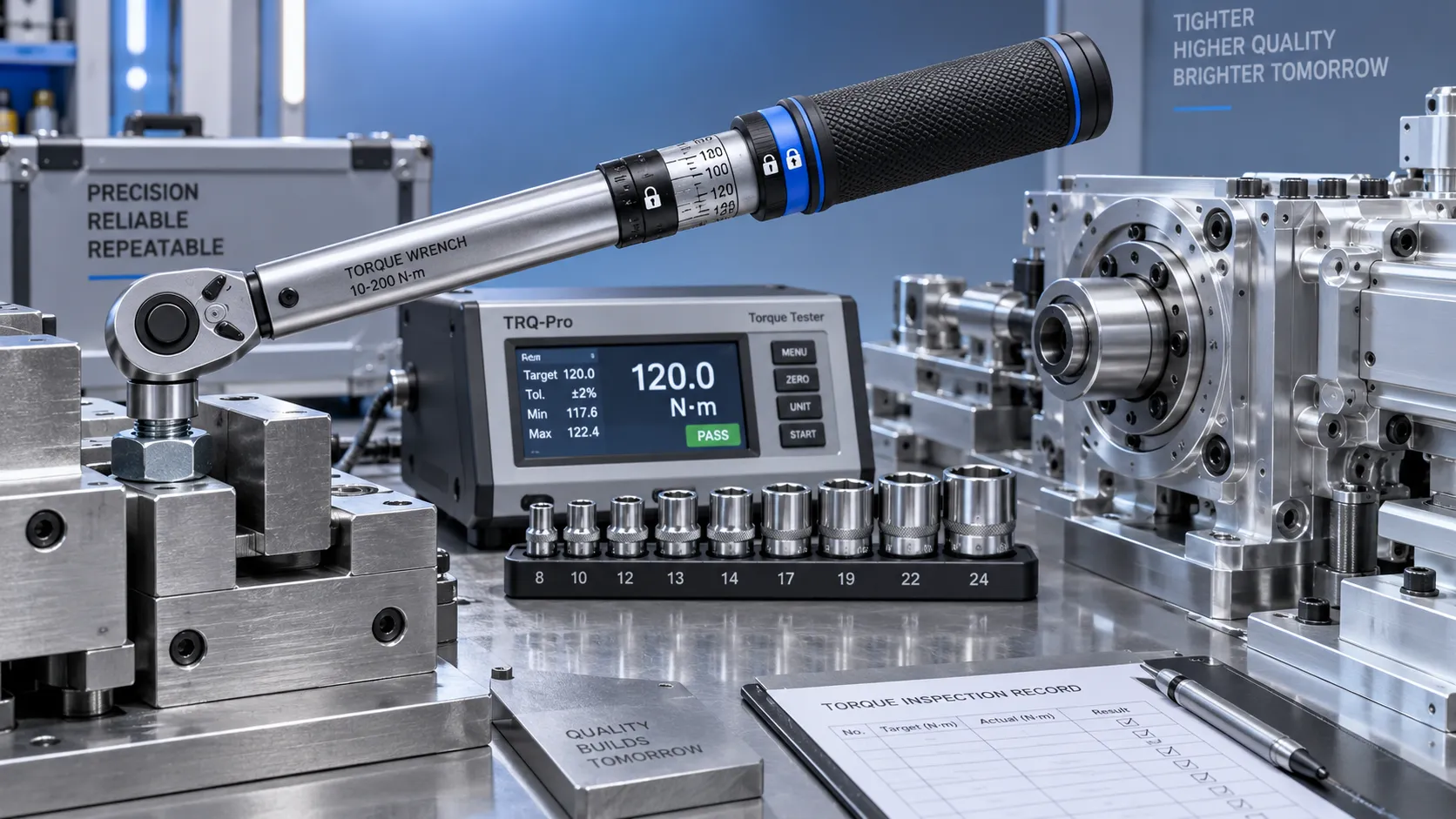
Selecting Adjustable Torque Tools for Repeatable Fastener Assembly
Adjustable torque tools: learn how to match range, accuracy, control methods, calibration, and ergonomics for repeatable, reliable fastener assembly.

How to Select Aerospace Inspection Tools for Aircraft Maintenance Tasks
Aerospace maintenance inspection tools: learn how to select reliable, traceable equipment for aircraft access, accuracy, calibration, and compliant maintenance decisions.

How to Select Wire Bonding Tools for Fine-Pitch Semiconductor Packaging
Explore semiconductor manufacturing tools for wire bonding and learn how to select precision solutions for fine-pitch packaging, reliable loops, accuracy, and yield.
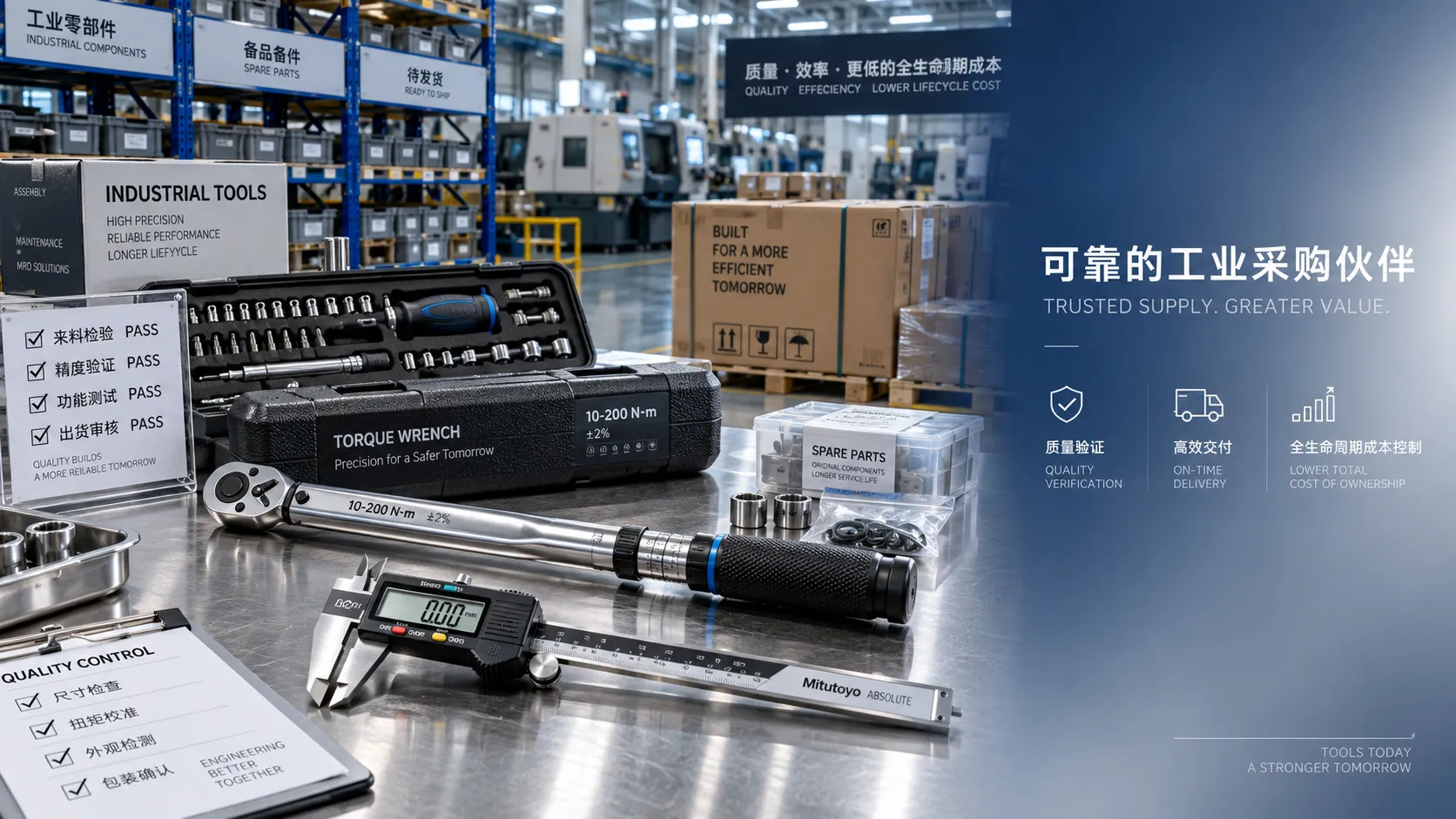
How to Compare Industrial Tool Suppliers for Quality, Lead Time, and Total Cost
Industrial tool selection supplier comparison made simple: evaluate quality, lead times, total cost, service, and supply resilience for confident sourcing decisions.

Industrial Equipment Application Guidance: Match Machines to Operating Conditions
Application guidance industrial equipment: match capacity, duty cycle, materials, site conditions, safety, and lifecycle cost to improve reliable output. Read the guide.

Selecting High-Speed Brushless Tool Motors for Torque, Heat, and Duty Cycle
High speed brushless tool motors: learn how to balance torque, heat, gearing, and duty cycle for reliable industrial tool performance and longer service life.

What Determines Industrial Hydraulic System Price for Heavy-Duty Equipment?
Industrial hydraulic system price depends on duty cycle, pressure, components, cooling, and integration. Compare quotes intelligently to secure reliable heavy-duty performance.

Welding Fume Extraction PPE: When Respirators Are Not Enough for Shop Safety
Welding fume extraction PPE: learn why respirators alone fall short and how source capture, ventilation, and layered controls improve shop safety.

How to Select Optical Metrology Solutions for Tight-Tolerance Manufacturing
Optical industrial metrology solutions for tight-tolerance manufacturing: evaluate accuracy, surface compatibility, workflow, and traceability to select with confidence.
Related News
- 00
0000-00
How Procurement Teams Can Map the Industrial Value Chain to Reduce Supply Risk - 00
0000-00
How Industry Category Guides Help Global Sourcing Teams Compare Suppliers Faster - 00
0000-00
Intelligent Tools in Southeast Asia: Key Market Trends, Buyers, and Supply Chain Shifts - 00
0000-00
Industrial Value Chain Europe: Where Sourcing Risks and Lead-Time Pressure Are Rising - 00
0000-00
North America's Industrial Value Chain: Key Shifts in Sourcing, Labor, and Logistics
Dr. Alistair Vaughn
Weekly Insights
Stay ahead with our curated technology reports delivered every Monday.