
How industrial assembly costs shift with modular design





How industrial assembly costs shift with modular design
Modular design is reshaping how project budgets define industrial assembly costs across planning, procurement, quality, logistics, and lifecycle adaptation.
The key issue is not whether modules reduce labor hours. The stronger question is where cost moves, who controls it, and when savings appear.
In modern industrial assembly, value increasingly depends on repeatable interfaces, verified subassemblies, faster site execution, and lower uncertainty during commissioning.
Scenario background: why modular cost logic changes by project condition
A modular strategy rarely lowers every line item. It often increases early engineering, interface definition, supplier coordination, and pre-production validation.
However, it can reduce field labor, inspection variability, rework exposure, schedule compression costs, and downtime during expansion or replacement.
The cost shift is strongest when industrial assembly occurs under tight access, high safety requirements, compressed schedules, or strict traceability expectations.
It is weaker when products are unique, interfaces are unstable, demand volumes are low, or logistics limits make module handling expensive.
For GPTWM’s intelligence perspective, the decision belongs to the “last mile” of manufacturing efficiency, where tools, joining methods, and measurement discipline converge.
Scenario 1: high-volume equipment platforms need repeatable industrial assembly
High-volume platforms gain from modular industrial assembly because design repetition converts engineering effort into controlled process knowledge.
Standard brackets, wiring harnesses, torque sequences, welded frames, and inspection routines can be documented once and reused across many builds.
The main cost increase appears before production. Drawings, tolerances, assembly instructions, and supplier capability checks require more discipline.
The saving appears during repetition. Fewer decisions reach the shop floor, and fewer parts require custom fitting during industrial assembly.
Core judgment points for platform-based builds
- Is annual volume high enough to justify interface standardization?
- Can tooling, welding fixtures, and gauges support repeated module geometry?
- Will future variants reuse at least 60% of the module structure?
- Can suppliers hold dimensions without repeated emergency correction?
If these conditions are positive, modular industrial assembly usually improves cost predictability and reduces downstream firefighting.
Scenario 2: field-installed systems shift cost away from the site
Field-installed systems often suffer from limited access, weather exposure, permit delays, safety controls, and scarce skilled labor availability.
In this setting, modular industrial assembly moves more work into controlled workshops, where welding, fastening, metrology, and testing are easier to stabilize.
The budget may show higher freight, lifting, packaging, and pre-assembly costs. These visible increases can create resistance.
Yet the hidden savings often come from shorter shutdown windows, fewer site corrections, faster acceptance, and lower supervision intensity.
This scenario is common in energy facilities, mining support systems, water treatment skids, construction equipment upgrades, and maintenance retrofits.
When modularization pays in field environments
Modular industrial assembly is attractive when site labor is expensive, access is constrained, or downtime carries a measurable penalty.
It is less attractive when transport routes are limited, module dimensions exceed lifting capacity, or final alignment cannot be guaranteed.
Scenario 3: precision-critical products need quality cost visibility
Precision-critical applications change the cost discussion because failure risk matters more than direct labor arithmetic.
Aerospace maintenance fixtures, medical production equipment, automotive test rigs, and robotic tooling depend on repeatable dimensional control.
For these projects, modular industrial assembly can reduce quality cost by isolating errors inside smaller, measurable units.
Each module can receive torque verification, weld inspection, calibration checks, functional testing, and digital traceability before final integration.
The cost increase appears in measurement planning, gauge design, inspection records, and sometimes tighter supplier qualification.
The benefit appears when nonconformities are detected earlier, before full-system disassembly makes correction expensive.
Quality-centered decision rule
If rework after final integration is costly, modular industrial assembly should be evaluated as a risk-control method, not just a productivity method.
Scenario 4: customized orders require selective modularity
Customized products do not automatically reject modular design. They need a clearer boundary between standard cores and flexible edges.
Selective modular industrial assembly keeps stable elements standardized while allowing customer-specific connections, panels, controls, or workholding features.
This approach works in packaging equipment, workshop automation, hydraulic stations, special vehicles, and industrial tool integration projects.
Costs rise if customization forces every module to become unique. In that case, modular labels hide conventional engineering effort.
The strongest savings appear when configurable modules share mounting patterns, electrical interfaces, safety zones, and inspection references.
Different cost needs across industrial assembly scenarios
This comparison shows why industrial assembly decisions should be evaluated by scenario, not by a universal modularization percentage.
Scenario adaptation: how to build a practical cost model
A useful model separates visible spending from avoided losses. This prevents early engineering costs from hiding later operational gains.
- Map the current industrial assembly sequence from parts receipt to final acceptance.
- Identify tasks affected by access, skill scarcity, inspection delay, or rework probability.
- Define module boundaries around stable interfaces, not around department convenience.
- Estimate pre-assembly cost, transport cost, site reduction, and quality risk reduction separately.
- Run sensitivity checks for volume changes, supplier variation, and schedule compression.
For industrial assembly, the model should include labor hours, defect cost, inspection effort, handling equipment, packaging, documentation, and commissioning time.
It should also include opportunity cost when faster installation allows earlier production, earlier rental use, or shorter facility shutdown.
Recommended cost categories
- Engineering: module definition, tolerance stack-up, safety review, and drawing control.
- Procurement: supplier readiness, standard parts, lead-time buffering, and contract clarity.
- Production: fixtures, welding preparation, torque control, and subassembly testing.
- Logistics: packaging, lifting plans, route checks, and damage prevention.
- Lifecycle: replaceability, upgrade paths, spare modules, and documentation reuse.
Common misjudgments in modular industrial assembly
The first mistake is counting only direct labor. Modular design often improves industrial assembly by reducing uncertainty, not only minutes.
The second mistake is ignoring tolerance stack-up. Perfect modules can still fail if final interfaces accumulate small dimensional errors.
The third mistake is treating suppliers as passive part sources. Modular industrial assembly needs suppliers able to measure, document, and protect interfaces.
The fourth mistake is underestimating logistics. A module that saves ten shop hours may lose value through damage, oversize freight, or difficult lifting.
The fifth mistake is over-standardization. If modular rules block practical improvement, the system becomes rigid rather than efficient.
Where costs rise, and where savings usually emerge
The best modular industrial assembly programs make these movements visible before procurement locks the design into costly assumptions.
Action guide: turning modular design into measurable assembly value
Start with one pilot module that carries repeated labor, frequent rework, or high inspection burden.
Define success through measurable indicators, including assembly time, defect rate, site duration, lifting events, and acceptance delay.
Build interface standards before expanding the method. Without stable interfaces, industrial assembly modularity becomes a documentation exercise.
Use metrology data, welding quality records, torque control results, and supplier performance evidence to validate each cost assumption.
Then compare the pilot against a conventional build, including rework, waiting time, inspection load, and commissioning disruption.
GPTWM’s focus on precision tools, joining intelligence, and manufacturing economics supports this kind of evidence-based industrial assembly decision.
When modular design is matched to the right scenario, it does more than cut cost. It makes industrial assembly faster, safer, and easier to scale.
Related News

In-House vs. Outsourced Aircraft Maintenance: Comparing Total Costs
Compare aerospace maintenance cost for in-house vs. outsourced aircraft upkeep. Discover hidden expenses, downtime impacts, and break-even factors to find the best fit for your fleet.
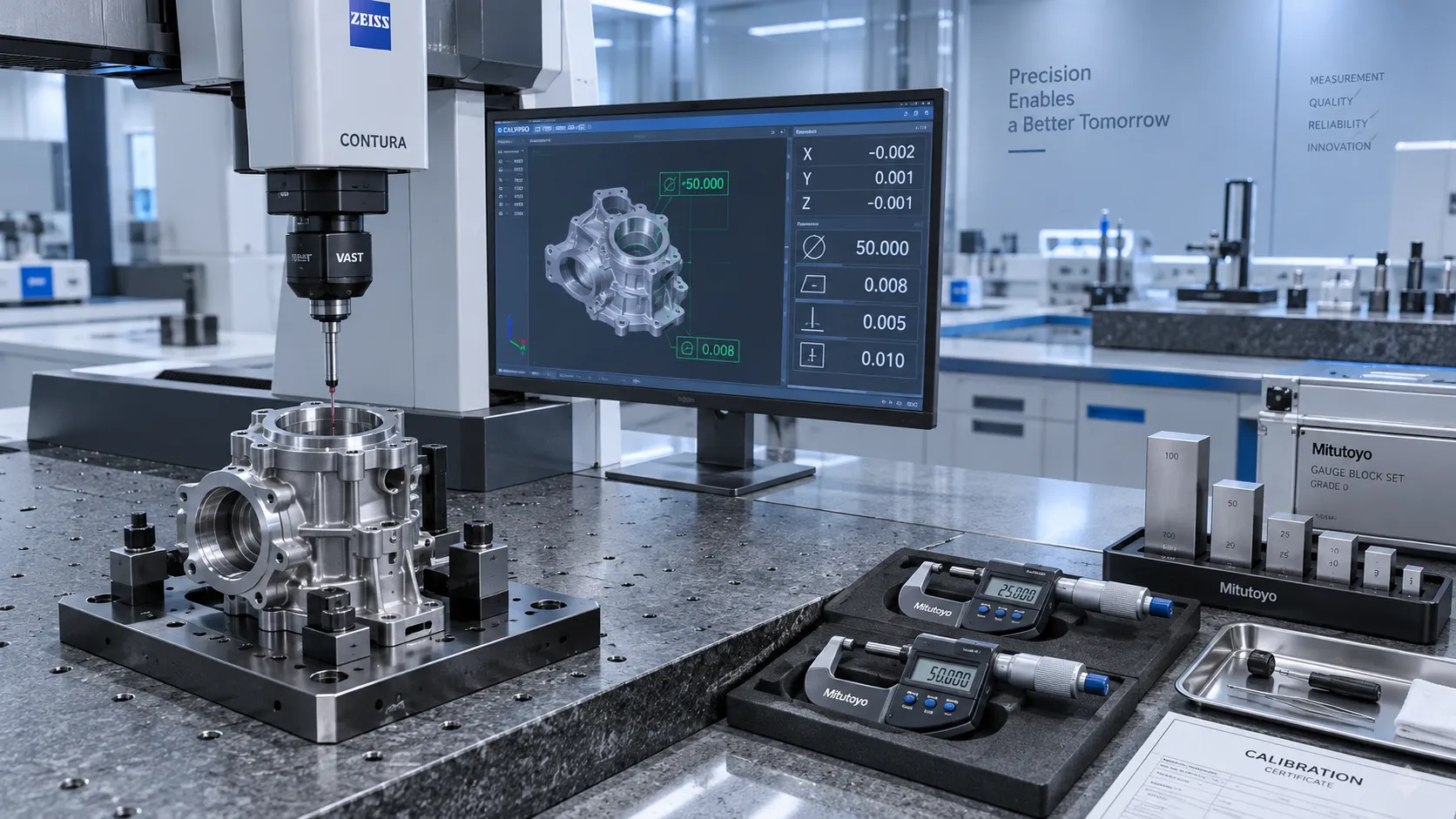
How to Select High-Precision Measuring Instruments for Tight-Tolerance Production?
High-precision measuring instruments are essential for tight-tolerance production. Learn how to evaluate accuracy, repeatability, environment, calibration, and data integration.
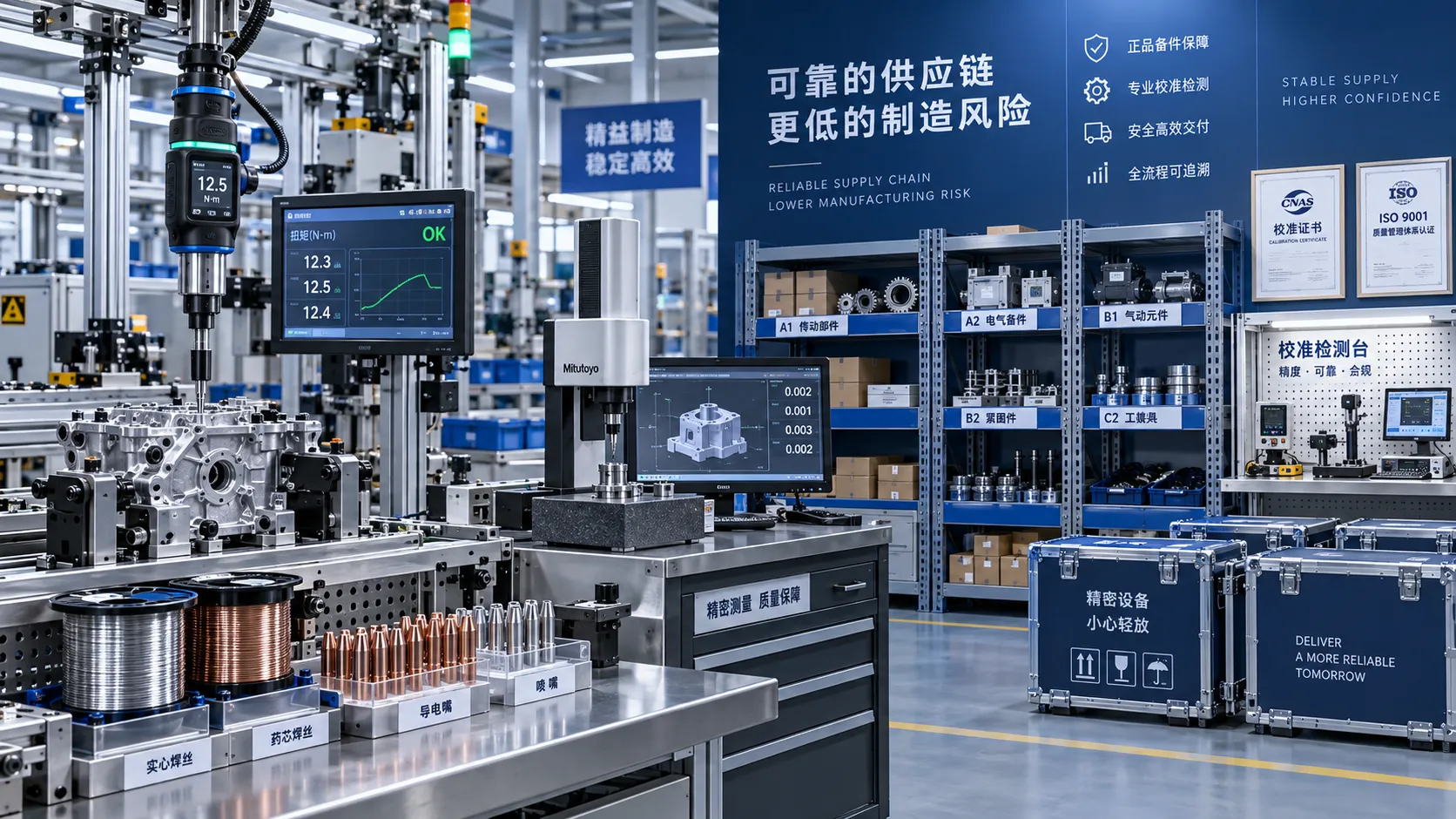
How Industrial Innovation Supplier Networks Reduce Sourcing Risk for Manufacturers
industrial innovation supplier network insights help manufacturers reduce sourcing risk, control lifecycle costs, and choose reliable tools, services, and suppliers with confidence.
Which Industrial Standards Should Be Checked Before Export?
Which industrial standards should be checked before export? Discover essential compliance steps for industrial tools, welding equipment, laser systems, and metrology products.
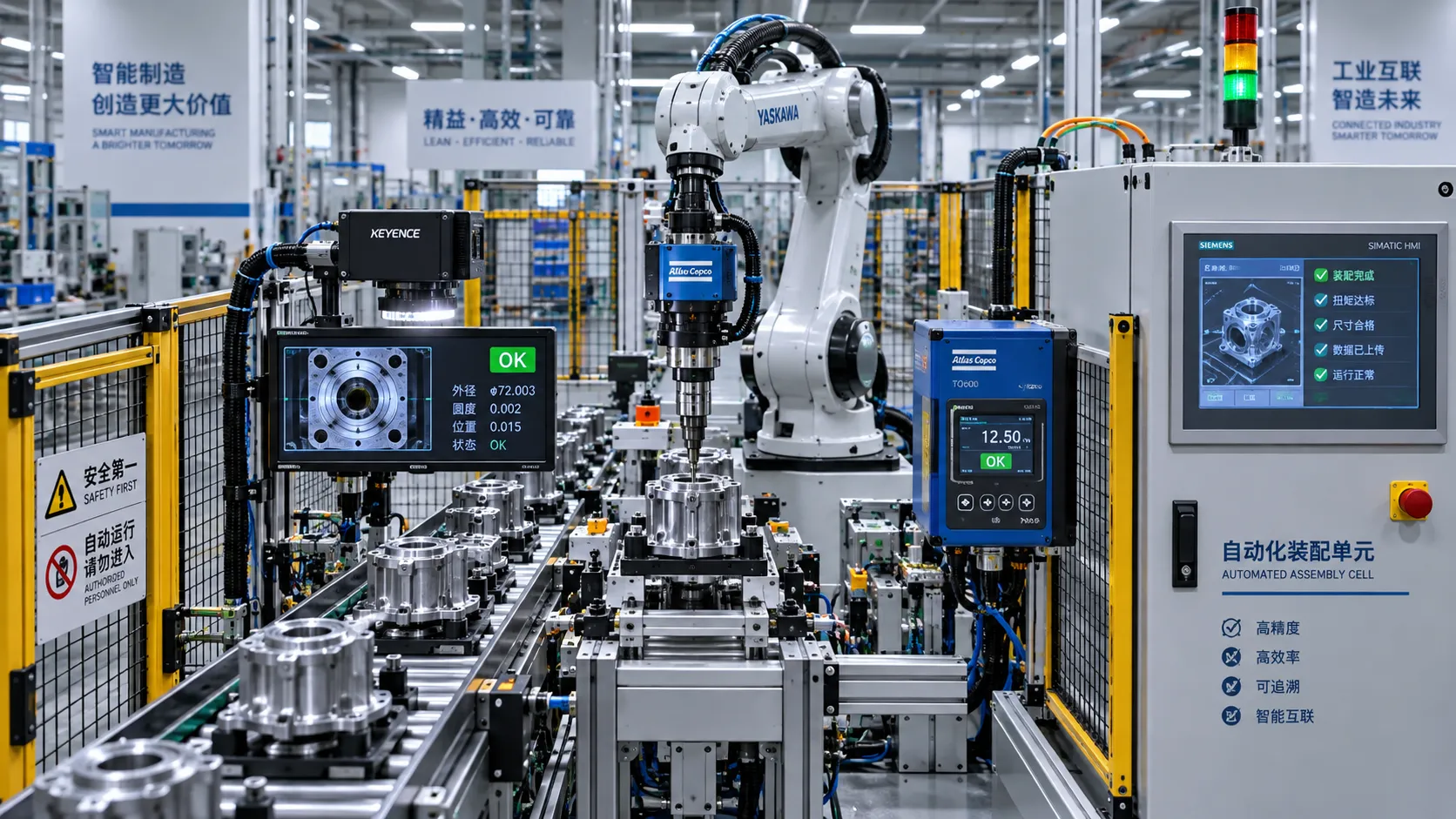
What Industrial Automation Exporters Need to Know Before Entering ASEAN Markets
Industrial automation exporter to ASEAN: learn how to navigate compliance, local service, digital readiness, pricing, and market entry for scalable growth.
Prototype PCB Manufacturing Equipment: What Engineers Should Evaluate Before Purchase
Prototype PCB manufacturing equipment: discover the key factors engineers should evaluate—from accuracy and materials to software, safety, and ROI—before buying.
Workplace Ergonomics for Manufacturing: Reducing Repetitive-Strain Risks on Assembly Lines
Workplace ergonomics for manufacturing helps reduce repetitive-strain risks on assembly lines through smarter workstation design, tool selection, task analysis, and quality-focused improvements.
Selecting Adjustable Torque Tools for Repeatable Fastener Assembly
Adjustable torque tools: learn how to match range, accuracy, control methods, calibration, and ergonomics for repeatable, reliable fastener assembly.

How to Select Aerospace Inspection Tools for Aircraft Maintenance Tasks
Aerospace maintenance inspection tools: learn how to select reliable, traceable equipment for aircraft access, accuracy, calibration, and compliant maintenance decisions.
Related News
- 00
0000-00
How to Select High-Precision Measuring Instruments for Tight-Tolerance Production? - 00
0000-00
Prototype PCB Manufacturing Equipment: What Engineers Should Evaluate Before Purchase - 00
0000-00
Workplace Ergonomics for Manufacturing: Reducing Repetitive-Strain Risks on Assembly Lines - 00
0000-00
Selecting Adjustable Torque Tools for Repeatable Fastener Assembly - 00
0000-00
How to Select Aerospace Inspection Tools for Aircraft Maintenance Tasks
Prof. Marcus Chen
Weekly Insights
Stay ahead with our curated technology reports delivered every Monday.