
Choosing a Laser Welding Equipment Supplier: Weld Trials, Warranty, and Support





A laser welding equipment supplier should be judged on three things before price becomes decisive: whether the proposed system can repeatedly produce acceptable welds on your parts, what the warranty actually pays for, and how production will be restored after a failure. A successful demonstration and a long warranty period are not enough if neither translates into an enforceable delivery obligation.
The strongest purchasing decision connects these issues. Trial results define the performance being purchased; acceptance terms establish how that performance will be verified; warranty and service commitments determine who carries the cost when equipment fails. Comparing suppliers without that connection can make a low quotation look more competitive than it really is.
Make the weld trial represent the production problem
A demonstration on clean, flat coupons establishes basic capability, not production suitability. Laser welding performance depends on material composition, surface condition, joint fit-up, accessibility, and heat dissipation. A system that joins a carefully prepared sample may struggle with a formed assembly whose gaps vary or whose fixture draws heat away from the seam.
Send representative parts and identify the conditions the supplier must reproduce. The trial brief should specify:
- Material grades, thickness combinations, coatings, and permitted surface preparation.
- Joint geometry, weld location, accessibility, and the expected range of fit-up variation.
- Required penetration or fusion, strength, leak tightness, appearance, and distortion limits, as applicable.
- Production requirements, including loading, repositioning, inspection, and intended operating duration.
- Whether filler wire, shielding gas, fixtures, or additional preparation are permitted.
Do not let the supplier quietly improve the application during the trial. Removing a coating, tightening a joint gap, or adding an expensive fixture may produce a sound weld, but it changes the process being purchased. Such changes may be justified; their cost and production implications need explicit approval.
Include parts near the limits of the agreed production tolerances, not only ideal samples. The useful question is whether acceptable results remain achievable within realistic variation. A narrow operating window can create inspection and rework costs even when nominal weld quality is excellent.
Separate appearance from evidence of joint performance
A smooth bead does not prove adequate fusion, penetration, or freedom from internal defects. Select inspection methods according to the joint’s function and applicable product requirements. Visual inspection may need to be supplemented by macrosections, mechanical testing, leak testing, or suitable nondestructive examination. No single method establishes every aspect of weld quality.
Agree on pass/fail criteria before testing, including who prepares specimens, who evaluates them, and which laboratory resolves disputed results. For code-controlled or safety-critical work, equipment trials do not replace required welding procedure or personnel qualification. The supplier should distinguish equipment capability from the qualifications needed to manufacture the finished product.
Request a trial report that links each inspected sample to its process settings. Useful records include power settings, travel speed, focus position, beam oscillation settings where used, shielding gas, wire specification and feed rate, fixture arrangement, and relevant preparation conditions. Record the tested machine configuration and software version as well. Without traceability, an attractive sample is difficult to reproduce or turn into an acceptance requirement.
Test repeatability and usable throughput
A single successful seam proves less than a sequence of acceptable parts. Ask the supplier to repeat the agreed process over a representative run and report rejects, adjustments, interruptions, and consumable changes—not just the best samples.
Measure total cycle time rather than beam-on time alone. Loading, clamping, repositioning, cleaning, and inspection can determine output more than welding speed. For handheld systems, operator technique and fatigue also affect repeatability; for automated systems, fixture consistency and motion control require attention.
Record cooling conditions, ambient limits, and any duty-cycle restrictions. A short demonstration cannot establish sustained production capability if thermal limits appear only after extended operation. Where a full-duration test is impractical before ordering, make it a defined acceptance condition rather than leaving it as an assumption.
Ensure the quotation covers the system that passed the trial
The trial machine and the quoted machine must be technically equivalent in all performance-critical respects. Confirm the laser source, welding head, cooling system, wire feeder, controls, software options, and fixtures. Require approval for substitutions that could affect performance, serviceability, or compliance.
System boundaries deserve particular attention. A quotation may exclude extraction, protective enclosures, interlocks, gas equipment, electrical work, or integration. Those omissions affect both installed cost and readiness for use.
For high-power laser welding, safety is not satisfied by supplying eyewear. Accessible laser radiation and reflections require an application-specific risk assessment and appropriate engineering controls. Handheld equipment warrants particular scrutiny because beam direction and the work environment can change during use. Define who is responsible for the protective installation, operator training, and verification before operation.
Ask for compliance documents applicable to the exact model, configuration, and destination market. A component certificate or a generic test report is not evidence that the complete installed system meets all relevant requirements. Assign responsibility for machine-level documentation and integration changes in writing, especially when the manufacturer, exporter, distributor, and installer are different organizations.
Read the warranty as a cost-allocation agreement
“Two-year warranty” says little without its start date, scope, exclusions, and remedy. Coverage beginning at shipment can lose practical value during international transport, customs clearance, installation, or delayed commissioning. Negotiate a start point tied to commissioning or acceptance, with a reasonable contractual limit if site readiness is delayed.
Check whether different assemblies carry different coverage. The laser source, welding head, chiller, controls, and purchased accessories may have separate terms. If the supplier relies on an upstream manufacturer’s warranty, establish who handles the claim and whether the seller remains responsible for coordinating repair.
Protective windows and other optical components require careful wording. Their service life depends partly on contamination and process conditions, so unlimited coverage is unlikely to be realistic. However, a blanket “optics excluded” clause can leave disputes over failures caused by defective assemblies. Request documented maintenance instructions and an evidence-based failure assessment process.
Also distinguish a defect warranty from a performance commitment. A machine may have no failed component yet remain incapable of the agreed weld. The contract should address failed acceptance separately, with provisions for corrective work, retesting, and an agreed commercial remedy if performance remains unacceptable.
Review exclusions for unauthorized repairs, third-party consumables, and missed maintenance. Establish which operator maintenance tasks are permitted and how emergency repairs can be authorized. Otherwise, an attempt to restore production could itself become grounds for rejecting a claim.
Evaluate support by the recovery path, not the promise
“24/7 support” can mean access to a message service rather than access to someone capable of diagnosing a fault. Ask the supplier to describe what happens when the machine stops: who answers, what information is required, when an engineer becomes involved, and how replacement parts are dispatched.
Separate response time from restoration time. A quick acknowledgment does not shorten downtime if the necessary module must be sourced internationally. Define support hours, time zone, languages, escalation contacts, and on-site availability. Where restoration cannot be guaranteed, obtain commitments for diagnosis, dispatch, and escalation instead of accepting an unrealistic repair promise.
Spare-parts claims should be specific. Ask which critical parts are held locally, who owns that stock, and how orders are handled outside normal hours. Request prices and lead-time commitments for likely wear items and important replaceable assemblies. A local distributor’s sales office is not necessarily a repair facility.
Consider whether a stocked module can actually be replaced at your site. Some work requires trained service personnel, alignment, calibration, or safety verification. Supplier guidance should distinguish operator-replaceable parts from repairs requiring specialist intervention.
Remote diagnostics can reduce troubleshooting delays, but access requirements need agreement. Determine whether service depends on an internet connection, proprietary software, paid licenses, or access to production data. Confirm an alternative diagnostic route where network policies prohibit remote access.
Training should leave behind usable capability: documented startup and shutdown procedures, approved parameter records, maintenance instructions, fault guidance, and backup methods. Clarify who owns process recipes and whether they remain accessible after a service subscription ends. For long-life equipment, request the stated support period and arrangements for software backup and component obsolescence.
Use acceptance and payment terms to preserve accountability
Turn the approved trial into a contractual reference. A factory acceptance test should verify the specified configuration and agreed performance before shipment. A site acceptance test should verify installation, utilities, safety integration, and performance under the agreed site conditions. State which tests occur at each stage and avoid treating either as a formality.
Define responsibility for test materials, measuring equipment, inspection costs, and repeat testing. If production parts change after approval, use a documented change process rather than expecting the original guarantee to cover an undefined application.
Payment milestones should reflect delivery risk and the value still to be demonstrated. Where commercially feasible, retain a meaningful balance until site acceptance. Specify how failed tests affect payment, correction deadlines, storage, shipment, and cancellation rights. Acceptance should not occur automatically through an ambiguous clause while unresolved defects remain.
For cross-border purchases, identify the legal entity providing the warranty and the party responsible for field service. Delivery terms allocate certain transport costs and risks; they do not by themselves establish warranty freight responsibilities or technical support obligations.
Compare the cost of usable production
Normalize quotations around the same accepted application and installed scope. Include fixtures, safety measures, extraction, utilities, training, inspection, consumables, maintenance, service travel, and critical spares. Keep confirmed costs separate from assumptions, particularly estimates of scrap and downtime.
A useful comparison tests a concrete failure scenario: if the welding head fails during a scheduled production run, who diagnoses it, where is the replacement, who installs it, and which costs remain yours? The answer reveals more than a broad service claim.
A competitive supplier need not offer the lowest price or the longest warranty. It should provide reproducible weld evidence, explicit commercial obligations, and a credible route back to production. When those commitments remain vague after technical discussions, the unresolved risk belongs in the purchasing decision—not outside it.
Related News
Precision Measuring Instruments for Toolmaking: Selecting for Tight Tolerances
Choose precision measuring instruments for toolmaking with confidence. Compare micrometers, CMMs, and optical systems to meet tight tolerances and reduce inspection risk. Explore the guide.

Evaluating Industrial Intelligence Solutions for Legacy Equipment Integration
Evaluate industrial intelligence solutions for legacy equipment. Discover how to verify compatibility, protect production, and compare lifecycle costs before investing.
ADAS Calibration After Vehicle Maintenance: Which Jobs Require It?
Automotive maintenance calibration: Learn which repairs may require ADAS recalibration, from windshield replacement to alignment, and how OEM guidance helps you avoid costly mistakes.

Laser vs. Resistance Spot Welding: Which Fits Automotive Body Assembly?
Choosing welding technology for automotive body assembly? Compare laser and resistance spot welding on joint access, quality, cycle time, and cost to find the right fit for your production line.
Choosing a High-Precision Measuring Instrument Supplier: Calibration and Support
Choose a high-precision measuring instruments supplier with confidence. Discover how to verify calibration, compare support, and control lifecycle costs before you buy.
What Defines Craftsmanship in Metalworking? Fit, Finish, and Precision
Discover what defines craftsmanship in metalworking: fit, finish, and precision. Learn how to spot quality, assess suppliers, and choose parts that perform reliably.
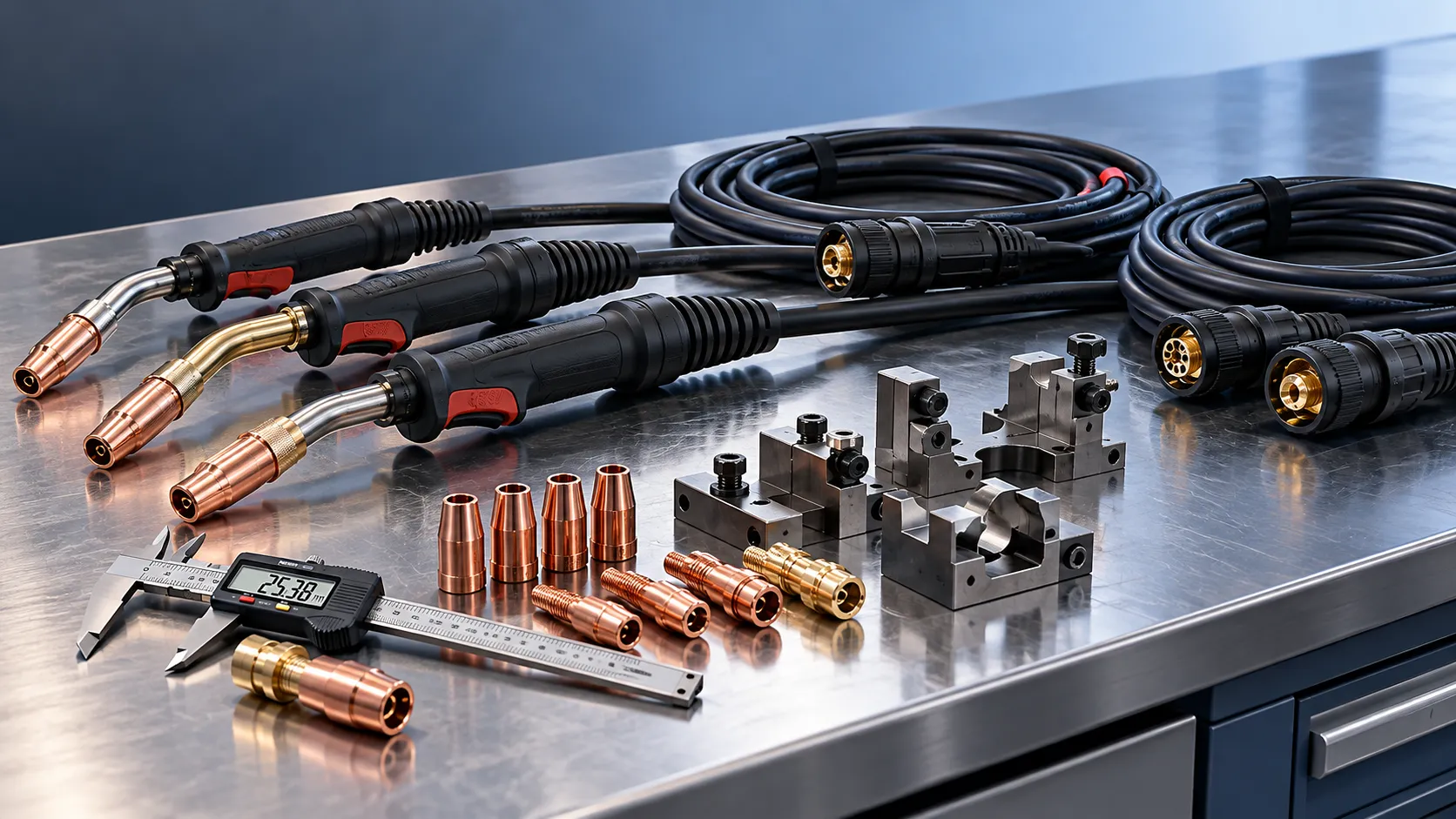
Choosing a Welding Tools Manufacturer: Quality Checks Before a Bulk Order
Choosing a welding tools manufacturer? Discover essential quality checks, sample tests, and inspection terms to reduce bulk-order risks and buy with confidence.
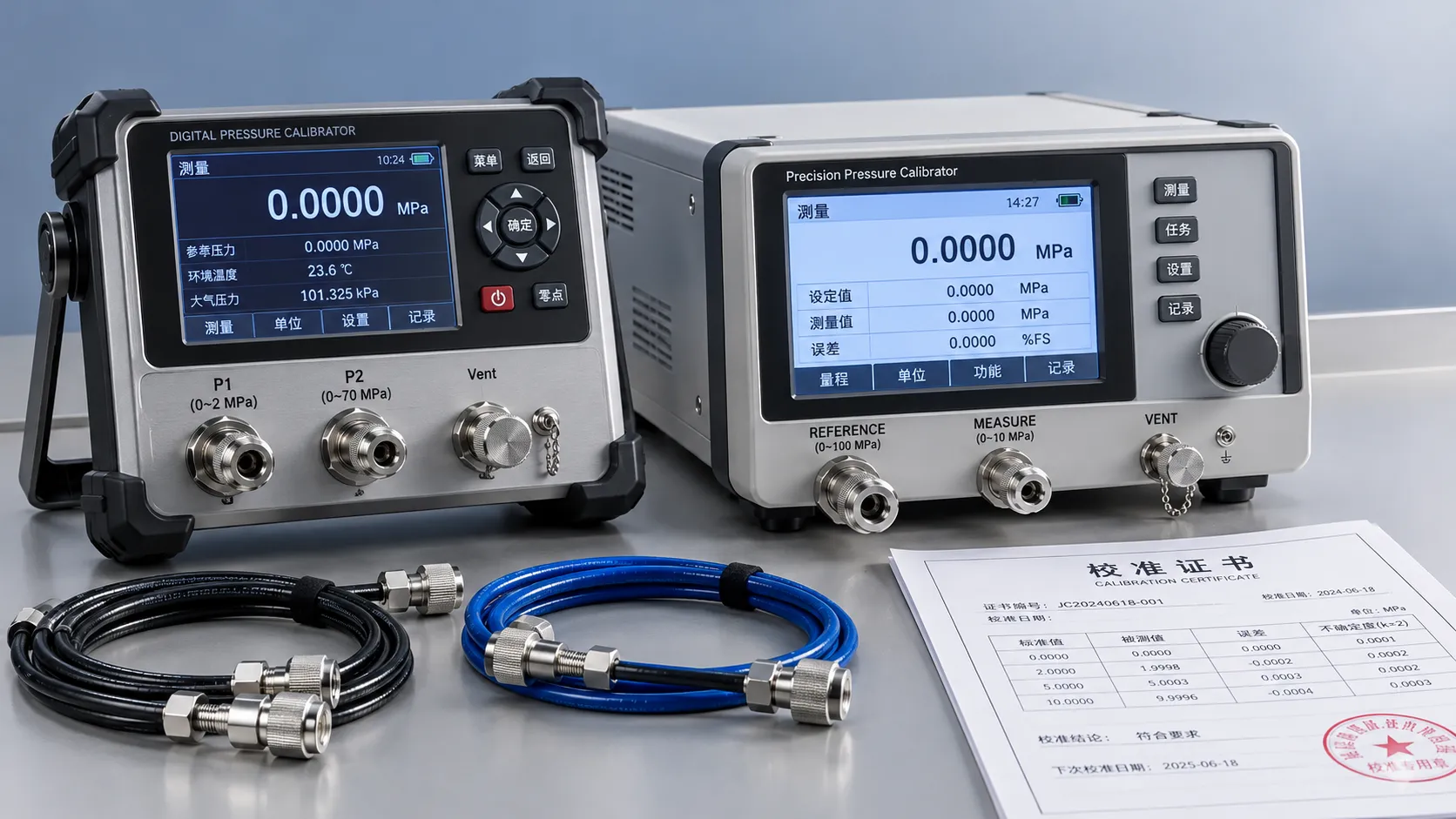
How to Compare Calibration Tools: Range, Uncertainty, and Traceability
Explore product comparison resources for calibration tools. Compare range, uncertainty, and traceability to choose confidently and support defensible measurement decisions.
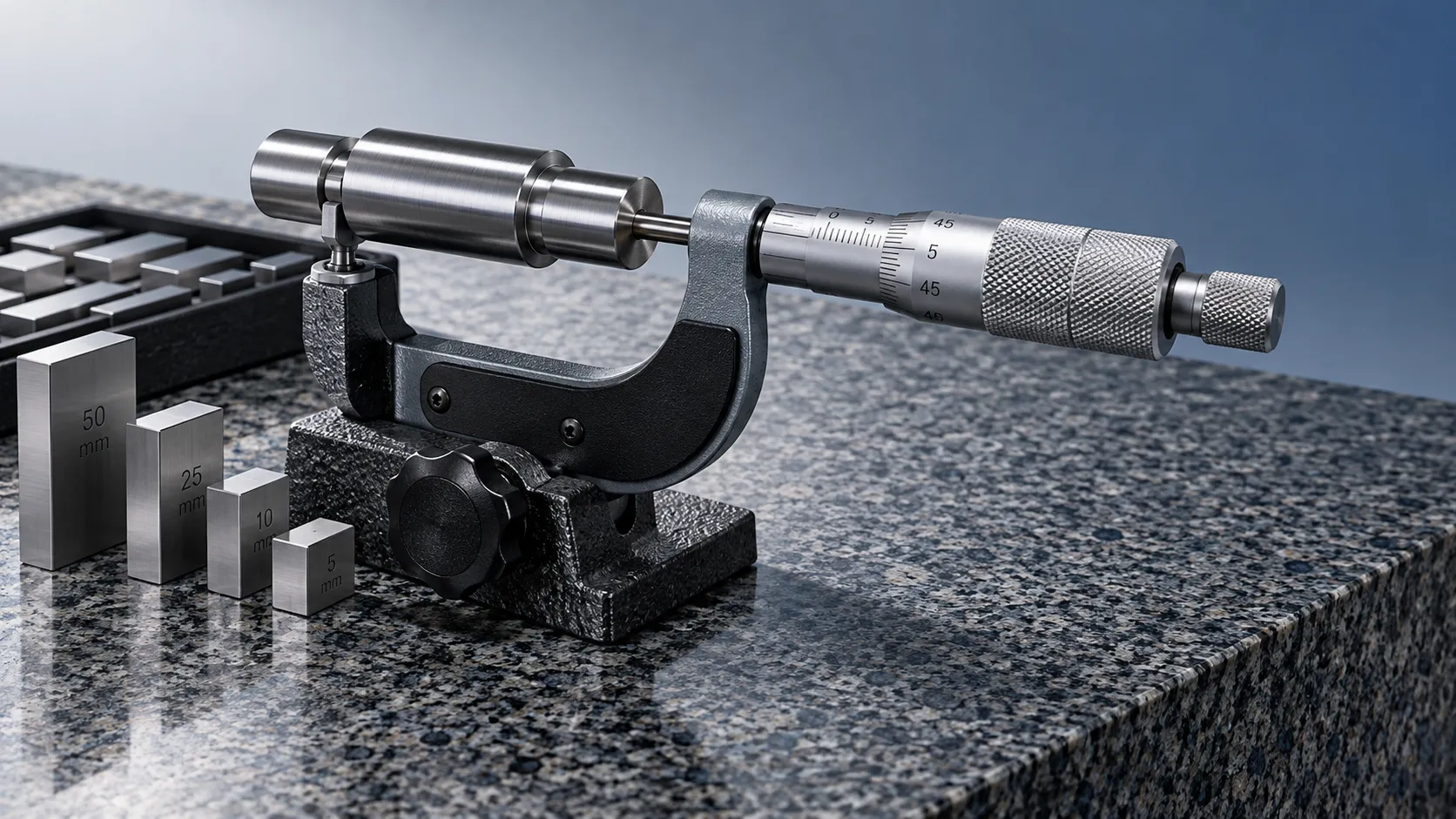
Choosing Industrial Metrology Tools: Matching Measurement Uncertainty to Tolerances
Improve industrial tool selection for metrology by matching measurement uncertainty to tolerances. Learn how to reduce inspection risk and choose equipment with confidence.
Related News
- 00
0000-00
Choosing a Laser Welding Equipment Supplier: Weld Trials, Warranty, and Support - 00
0000-00
Choosing a High-Precision Measuring Instrument Supplier: Calibration and Support - 00
0000-00
Choosing a Welding Tools Manufacturer: Quality Checks Before a Bulk Order - 00
0000-00
Torque System Suppliers: How to Assess References for Assembly Projects - 00
0000-00
Choosing a Handheld Laser Welding Supplier: Weld Trials, Training, and Service
0000-00
Dr. Alistair Vaughn
Weekly Insights
Stay ahead with our curated technology reports delivered every Monday.