
How Commercial Insights Help Distributors Evaluate Demand, Pricing, and Channel Opportunities





How Commercial Insights Help Distributors Evaluate Demand, Pricing, and Channel Opportunities
In fast-changing industrial markets, commercial insights make decision-making far less reactive.
They help businesses see where demand is real, where pricing is drifting, and where channel expansion actually makes sense.
That matters even more in precision tools, welding systems, and metrology technologies.
These markets move with raw material shifts, safety regulations, production cycles, and changing industrial investment.
Without reliable commercial insights, planning often depends on instinct, outdated reports, or isolated customer feedback.
With better intelligence, demand signals become clearer, pricing decisions become more disciplined, and channel opportunities become easier to prioritize.
Why commercial insights matter in industrial distribution
Industrial distribution rarely follows a simple pattern.
One region may increase demand for handheld laser welding systems, while another slows because compliance rules tighten.
Aerospace maintenance may require high-precision measuring instruments, while construction leans toward hydraulic equipment and durable power tools.
Commercial insights connect those scattered signals into a market view that supports action.
This is where GPTWM creates value.
Its Strategic Intelligence Center tracks sector news, technology evolution, and structural demand across global manufacturing industries.
That includes changes in export standards, raw material costs, ergonomic expectations, and tool performance limits.
For industrial channel planning, that level of commercial insight reduces guesswork and improves timing.
What strong market intelligence usually reveals
- Which product categories are seeing durable demand rather than short-term spikes
- Which price ranges customers accept under current supply and cost conditions
- Which channels deliver volume, margin, or long-term account access
- Which technical trends may reshape future buying criteria
- Which regions show hidden opportunity but low competitive coverage
Using commercial insights to evaluate real demand
Demand evaluation is often misunderstood.
Many teams treat inquiry volume as proof of market potential.
In reality, strong commercial insights separate curiosity from purchase intent.
A healthy demand signal usually combines project activity, replacement cycles, budget availability, and technical fit.
For example, rising interest in torque-controlled assembly tools means little without evidence of plant upgrades or labor efficiency targets.
The same logic applies to metrology systems, welding accessories, and brushless power tools.
A practical framework for reading demand signals
- Track end-use sectors such as construction, automotive, and aerospace maintenance.
- Compare inquiry growth with actual reorder behavior.
- Review whether demand is driven by regulation, productivity, or replacement needs.
- Check whether the local service ecosystem can support adoption.
- Watch for substitution risk from adjacent technologies.
From recent market behavior, the strongest demand often appears where efficiency and compliance meet.
That is especially visible in safety-focused welding applications and precision inspection requirements.
Commercial insights make those patterns easier to detect before competitors react.
How commercial insights improve pricing decisions
Pricing pressure is constant in industrial markets.
Costs move with steel, copper, electronics, logistics, and certification requirements.
At the same time, buyers compare offers across brands, geographies, and service levels.
That is why commercial insights should shape pricing strategy, not just support it.
Good pricing decisions are rarely about being cheapest.
They are about understanding value perception, urgency, technical differentiation, and replacement cost.
When commercial insights reveal those factors, pricing becomes more precise and more defensible.
Where pricing intelligence creates an edge
- Identify categories where premium positioning is justified by accuracy, safety, or uptime
- Spot products becoming price-sensitive because alternatives are expanding
- Adjust quotations faster when raw material swings affect margin
- Build segmented pricing by region, application, and service expectation
- Avoid discounting products that still hold strong technical authority
This also means pricing should reflect channel reality.
A product sold through specialized industrial partners can support different economics than one pushed through broader reseller networks.
Commercial insights help align margin expectations with actual channel behavior.
Finding better channel opportunities with commercial insights
Not every market opportunity deserves channel expansion.
Some channels create volume but weaken brand value.
Others look small at first, yet build stronger recurring business through technical trust.
Commercial insights help compare these paths with more discipline.
A useful channel review looks beyond customer counts.
It should measure application fit, account concentration, service demands, training needs, and local competitive intensity.
That is especially important for technical categories requiring onboarding, demonstrations, or calibration support.
Signals that a channel opportunity is worth pursuing
- The channel serves industries with visible capital investment plans
- Technical training can clearly improve product adoption
- Existing competitors offer weak service or limited product depth
- Local standards or export rules create barriers that fewer suppliers can handle
- The product supports cross-selling into adjacent industrial categories
More importantly, commercial insights can reveal when not to expand.
If service costs are too high or adoption cycles are too slow, the opportunity may look attractive only on paper.
Avoiding the wrong channel is often as valuable as entering the right one.
Turning commercial insights into action plans
Insight becomes useful only when it changes action.
That sounds obvious, yet many teams collect data without changing priorities.
A stronger approach is to convert commercial insights into a simple operating rhythm.
A workable decision routine
- Review monthly demand signals by product and sector.
- Flag pricing pressure caused by cost or channel shifts.
- Score channel opportunities by margin, service load, and market access.
- Adjust inventory, quoting, and account focus based on findings.
- Repeat the cycle before market assumptions become outdated.
This is where GPTWM fits naturally into industrial decision workflows.
Its commercial insights are not only about news collection.
They support demand assessment, pricing awareness, and channel selection through a manufacturing-first lens.
That perspective is valuable in markets where craftsmanship, compliance, and digital efficiency increasingly overlap.
In practical terms, better intelligence helps teams move earlier and with more confidence.
Final takeaway
Commercial insights are no longer optional in industrial markets shaped by volatility and specialization.
They help identify true demand, protect pricing discipline, and uncover channel opportunities with better odds of success.
For organizations working across precision tools, welding equipment, and metrology technologies, that advantage compounds over time.
The market rarely becomes simpler.
But with the right commercial insights, decisions become clearer, faster, and more profitable.
That is the real opportunity: turning fragmented signals into practical moves that strengthen growth across the industrial value chain.
Related News
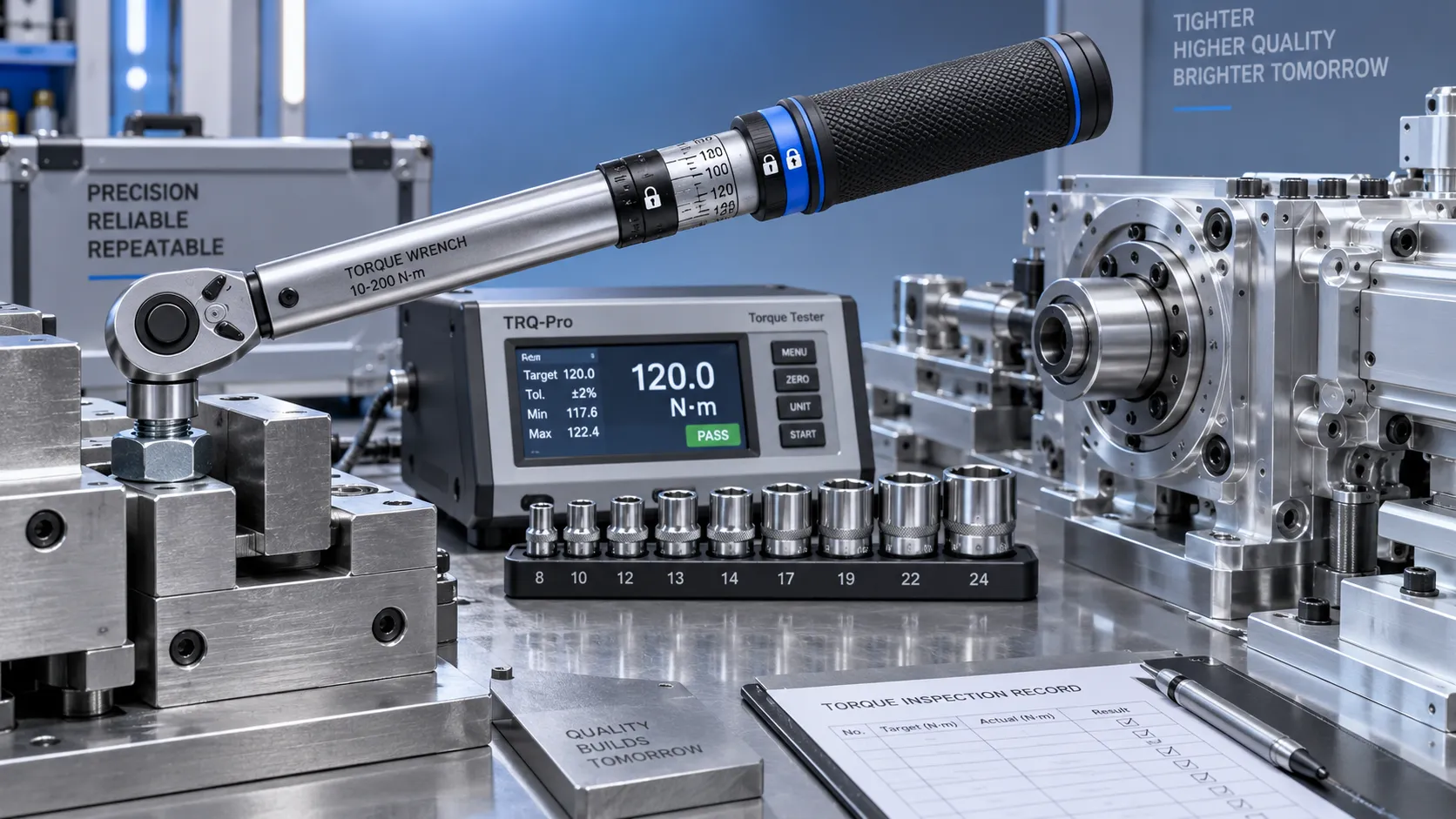
Selecting Adjustable Torque Tools for Repeatable Fastener Assembly
Adjustable torque tools: learn how to match range, accuracy, control methods, calibration, and ergonomics for repeatable, reliable fastener assembly.

How to Select Aerospace Inspection Tools for Aircraft Maintenance Tasks
Aerospace maintenance inspection tools: learn how to select reliable, traceable equipment for aircraft access, accuracy, calibration, and compliant maintenance decisions.

How to Select Wire Bonding Tools for Fine-Pitch Semiconductor Packaging
Explore semiconductor manufacturing tools for wire bonding and learn how to select precision solutions for fine-pitch packaging, reliable loops, accuracy, and yield.
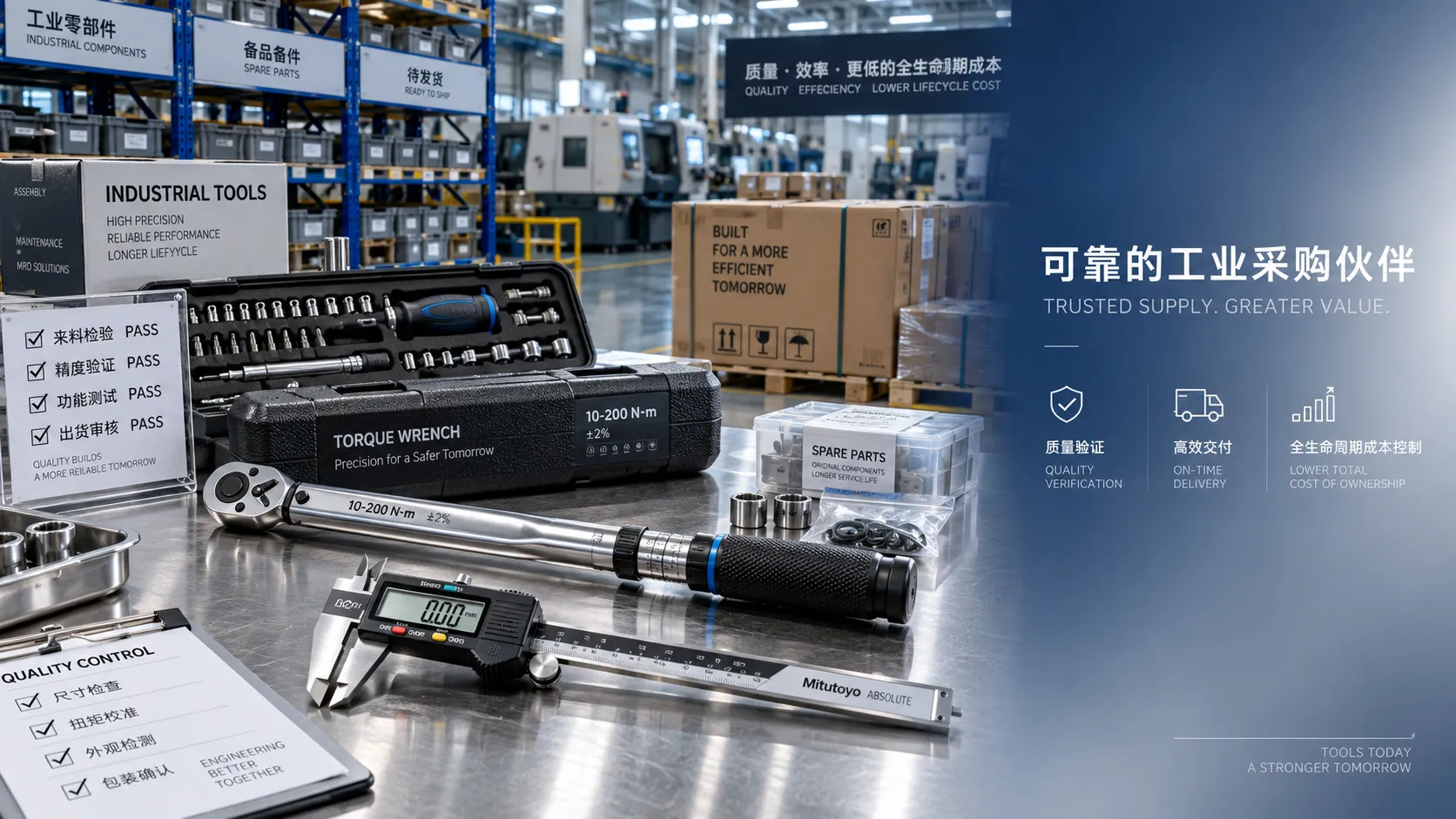
How to Compare Industrial Tool Suppliers for Quality, Lead Time, and Total Cost
Industrial tool selection supplier comparison made simple: evaluate quality, lead times, total cost, service, and supply resilience for confident sourcing decisions.

Industrial Equipment Application Guidance: Match Machines to Operating Conditions
Application guidance industrial equipment: match capacity, duty cycle, materials, site conditions, safety, and lifecycle cost to improve reliable output. Read the guide.

Selecting High-Speed Brushless Tool Motors for Torque, Heat, and Duty Cycle
High speed brushless tool motors: learn how to balance torque, heat, gearing, and duty cycle for reliable industrial tool performance and longer service life.

What Determines Industrial Hydraulic System Price for Heavy-Duty Equipment?
Industrial hydraulic system price depends on duty cycle, pressure, components, cooling, and integration. Compare quotes intelligently to secure reliable heavy-duty performance.

Welding Fume Extraction PPE: When Respirators Are Not Enough for Shop Safety
Welding fume extraction PPE: learn why respirators alone fall short and how source capture, ventilation, and layered controls improve shop safety.

How to Select Optical Metrology Solutions for Tight-Tolerance Manufacturing
Optical industrial metrology solutions for tight-tolerance manufacturing: evaluate accuracy, surface compatibility, workflow, and traceability to select with confidence.
Related News
- 00
0000-00
How Procurement Teams Can Map the Industrial Value Chain to Reduce Supply Risk - 00
0000-00
How Industry Category Guides Help Global Sourcing Teams Compare Suppliers Faster - 00
0000-00
Intelligent Tools in Southeast Asia: Key Market Trends, Buyers, and Supply Chain Shifts - 00
0000-00
Industrial Value Chain Europe: Where Sourcing Risks and Lead-Time Pressure Are Rising - 00
0000-00
North America's Industrial Value Chain: Key Shifts in Sourcing, Labor, and Logistics
Dr. Alistair Vaughn
Weekly Insights
Stay ahead with our curated technology reports delivered every Monday.