
Production Efficiency in North America: What Is Changing for Manufacturers in 2025?





Production Efficiency in North America: What Is Changing for Manufacturers in 2025?
In 2025, production efficiency North America no longer means pushing more units through a line at any cost. That older view still shows up in boardroom language, but it is no longer how well-run plants judge performance. Efficiency now sits at the intersection of throughput, labor availability, energy exposure, quality stability, and supply-chain recoverability. A factory can run fast and still be inefficient if overtime is masking a skills gap, if scrap rises when a new batch of material arrives, or if a line depends on one imported component with an unstable lead time.
That distinction matters because many North American manufacturers are operating in a very specific environment: wage pressure remains real, utility costs are less predictable than they were a few years ago, customers expect tighter traceability, and reshoring or nearshoring decisions are putting new work into plants that were not originally designed for that product mix. In that setting, efficiency is being redefined less as raw speed and more as controllable output.
Why the old efficiency model is breaking down
For a long time, manufacturers could treat efficiency as a fairly direct equation: machine uptime plus labor productivity plus purchasing discipline. Those factors still matter, but they no longer explain enough. A plant manager may improve cycle time on paper and still miss margin targets because changeovers are too slow for a more volatile order book, or because incoming material variation is forcing additional inspection and rework.
This is especially visible in sectors tied to metalworking, fabrication, industrial assembly, and maintenance supply chains. Products are becoming more customized, lot sizes are often smaller, and tolerance expectations are not loosening to compensate. In practical terms, that means more complexity is arriving at the same moment management is being asked to reduce cost per unit. The answer is rarely one large automation purchase. More often it is a series of operational adjustments: better torque control in assembly, faster in-process measurement, safer use of higher-productivity joining methods, and tighter integration between production data and planning decisions.
This is where industrial intelligence platforms such as GPTWM have become relevant to decision-making. Not because they replace plant expertise, but because efficiency questions increasingly depend on market signals outside the factory gate: raw material swings, export restrictions, evolving safety practices in handheld laser welding, or the practical limits of brushless motor performance in power tools. Those are not abstract trend lines. They shape equipment choices, workforce training, and the payback period of process changes.
Automation is still advancing, but the target has shifted
A common mistake in current market commentary is to treat automation as synonymous with productivity. In 2025, North American manufacturers are being more selective. The central question is not whether to automate, but where automation removes recurring instability. That is a narrower and more useful test.
In high-mix environments, fully lights-out production is often less realistic than the sales pitch suggests. What companies are pursuing instead is targeted automation around bottlenecks that produce measurable disruption: repetitive fastening where torque traceability matters, material handling steps that create idle time between operations, inspection points where manual measurement slows release decisions, or weld preparation stages where inconsistency leads to downstream defects.
This is also why collaborative systems, sensor-equipped tools, and connected metrology are getting more attention than broad claims about “smart factories.” A connected torque system that catches fastening deviation before final assembly can have more immediate value than a larger digital transformation program with unclear ownership. The same is true for in-line measurement that reduces the delay between machining and quality feedback. Efficiency gains increasingly come from shortening the distance between deviation and correction.
Labor constraints are changing the definition of a good process
North American manufacturing has been discussing labor shortages for years, but in 2025 the issue is less about headcount in the abstract and more about skill concentration. Many plants can hire. What they cannot always do is hire fast enough at the exact skill level required for precision work, maintenance, welding, calibration, controls, or process engineering. That forces a redesign of the production model itself.
A process that depends on a few highly experienced operators to maintain output is now seen as fragile, even if it once looked efficient. Manufacturers are placing more value on systems that reduce operator-to-operator variability. Ergonomic tooling, guided assembly, digital work instructions, preset parameters, and easier calibration routines all become efficiency levers because they compress the training curve and stabilize output across shifts.
This is one reason why discussion around industrial tools has become more technical. The conversation is no longer only about durability. It now includes motor efficiency, tool balance, data capture, torque repeatability, service intervals, and how a tool behaves in real production conditions over time. A cheaper tool with inconsistent performance can create a hidden labor tax through rework, operator fatigue, and maintenance interruption.
Energy volatility is pulling efficiency into utility strategy
Another shift is that production efficiency North America is being discussed alongside energy management far more directly than before. This does not mean every manufacturer is turning into an energy strategist. It means energy cost volatility now has enough impact on operating margin that process choices cannot ignore it.
For metal joining, compressed air use, thermal processes, machining loads, and HVAC demands in controlled production spaces, the energy profile of a plant can materially change the economics of a process. Companies are paying closer attention to where power consumption is concentrated and whether equipment upgrades deliver usable savings under actual duty cycles, not just catalog conditions. In some facilities, scheduling and load balancing decisions are becoming part of the efficiency conversation, especially where utility pricing creates strong peak-demand penalties.
This has a second-order effect on procurement. Capital equipment that once would have been compared mainly on purchase price and cycle time is now more likely to be reviewed through lifecycle operating cost, maintenance demands, and compatibility with digital monitoring. That does not eliminate low-cost options, but it makes simplistic comparisons less defensible.
Quality is moving upstream
If there is one operational theme that cuts across sectors, it is that quality control is shifting closer to the process itself. The old pattern of producing first and inspecting later becomes expensive when labor is tight, customers expect tighter documentation, and material variation is harder to absorb.
For that reason, precision metrology is not just a quality department concern anymore. It is becoming part of the efficiency architecture. Faster gauging, better calibration discipline, in-process dimensional checks, and clearer traceability all reduce the lag between error creation and error discovery. In industries where tolerance stack-up, weld integrity, or fastening reliability matters, that lag can decide whether a line stays profitable.
This is also where decision-makers should be careful with metrics. Overall equipment effectiveness still has value, but OEE can flatter a process that is producing the wrong output well. A line that runs at high utilization while generating unstable quality or excessive sorting is not efficient in any commercially meaningful sense. The more useful question is whether the system produces saleable output predictably, with limited intervention and acceptable energy and labor intensity.
Reshoring and regionalization are helping some plants and straining others
There is a tendency to discuss supply-chain regionalization as if it automatically improves manufacturing performance in North America. The reality is more uneven. Bringing production closer to end markets can reduce transport risk, shorten replenishment cycles, and improve communication between engineering and operations. But it can also expose capacity constraints, supplier gaps, and process immaturity inside the region.
A manufacturer taking on reshored work may inherit more complexity than volume. New compliance requirements, different material specifications, or unfamiliar tolerances can offset the theoretical efficiency gains of geographic proximity. That is why regionalization is pushing companies to invest more in supplier qualification, incoming inspection, and process standardization. In other words, resilience and efficiency are becoming linked, but not because one automatically produces the other. They have to be engineered together.
Where decision-makers are misreading the market
Several misunderstandings keep showing up in 2025 planning discussions.
- Treating digital visibility as an outcome rather than a tool. Dashboards do not create efficiency unless the data changes maintenance timing, staffing, process settings, or purchasing behavior.
- Assuming labor shortages can be solved only through automation. In many plants, process simplification, ergonomics, and better tooling discipline produce faster gains.
- Evaluating tools and equipment on acquisition cost alone. This is particularly risky in fastening, welding, and precision measurement, where repeatability and downtime costs are often larger than the price difference between options.
- Confusing resilience with redundancy. Carrying more inventory or duplicate capacity can help, but if process capability is unstable, the company is only storing inefficiency.
The better reading of the market is that manufacturers are being forced to understand efficiency as a system property. It depends on tooling, process design, operator capability, quality feedback, supplier consistency, and external market conditions all at once.
What to watch through the rest of 2025
The manufacturers likely to outperform are not necessarily the ones with the most aggressive modernization stories. They are the ones building clearer operational logic. They know which processes are constrained by labor, which are exposed to energy swings, where quality escapes begin, and which supplier or tooling variables are distorting output. From there, investment decisions become more disciplined.
That is also why strategic industrial intelligence has become more valuable. A plant cannot interpret production efficiency North America in isolation from the wider equipment, compliance, and materials environment. Understanding adoption trends in safer welding methods, the performance boundaries of power tool platforms, or demand shifts for precision measuring instruments is no longer a niche exercise. It informs where productivity investments are credible and where they are likely to disappoint.
For decision-makers, the practical test is straightforward: when someone proposes an efficiency initiative, ask what source of instability it actually removes. If the answer is vague, the savings probably are too. If the answer is tied to a specific failure mode, measurable bottleneck, or repeatable quality loss, the project is already closer to real manufacturing value.
In 2025, that is what efficiency means in North American manufacturing. Not running faster in a general sense, but building operations that stay accurate, cost-aware, and adaptable under pressure.
Related News
How Procurement Teams Can Map the Industrial Value Chain to Reduce Supply Risk
Industrial value chain procurement helps teams map hidden dependencies, qualify resilient sources, and reduce supply risk before disruptions stop production.

How Specification-Driven Articles Improve Precision Measurement System Selection
Specification-oriented articles precision measurement guidance helps teams compare accuracy, repeatability, environment, and data needs to select reliable systems with confidence.

How to Evaluate a Technology Integration Service Provider for Complex Projects
Technology integration service provider selection guide: evaluate interface ownership, delivery discipline, scalable architecture, and risk control for complex projects.
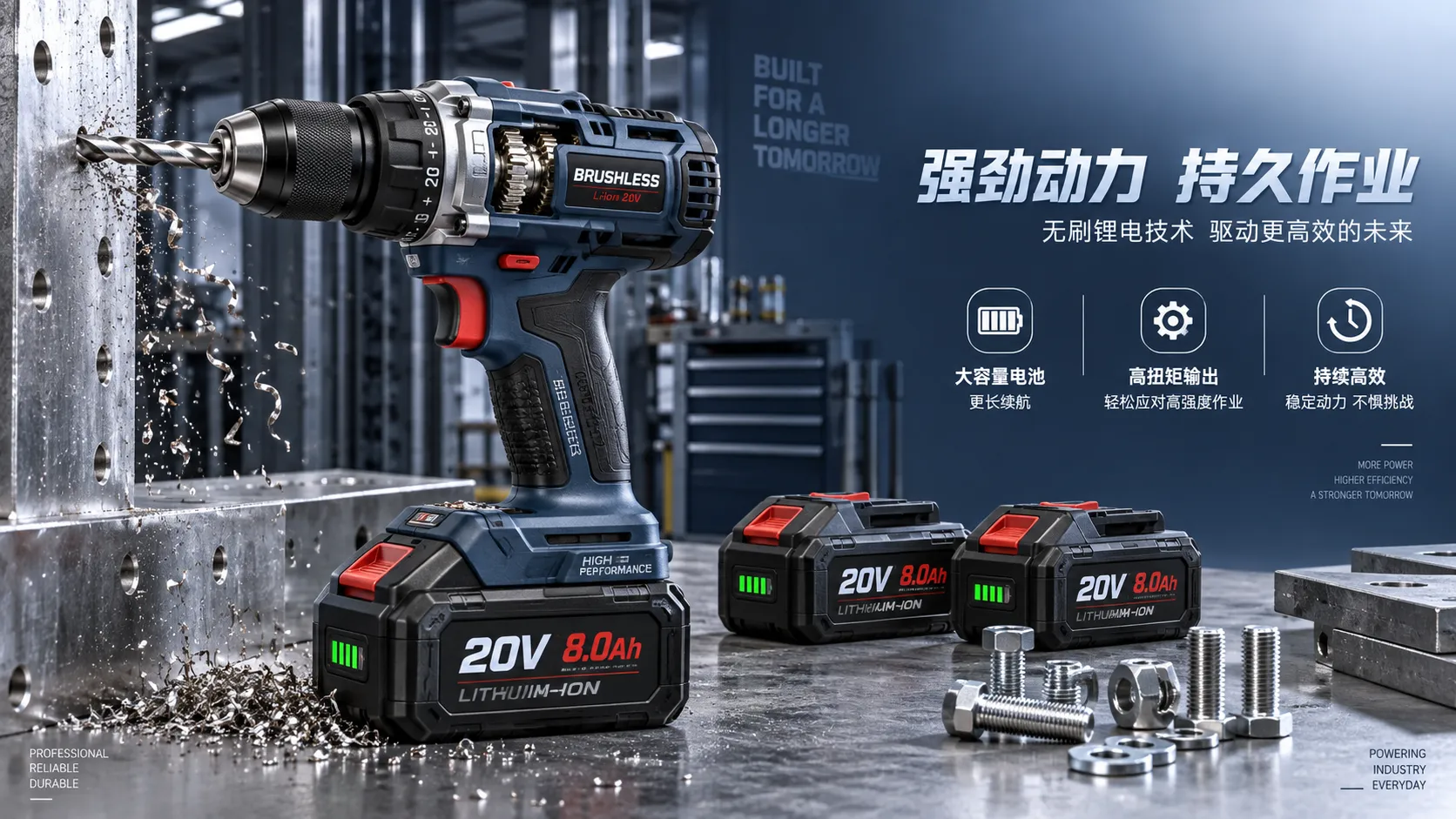
How Battery, Torque, and Duty Cycle Affect Cordless Power Tool Efficiency
Cordless power tool efficiency depends on battery output, torque, and duty cycle. Learn how to match tools to demanding jobs for stronger runtime and productivity.
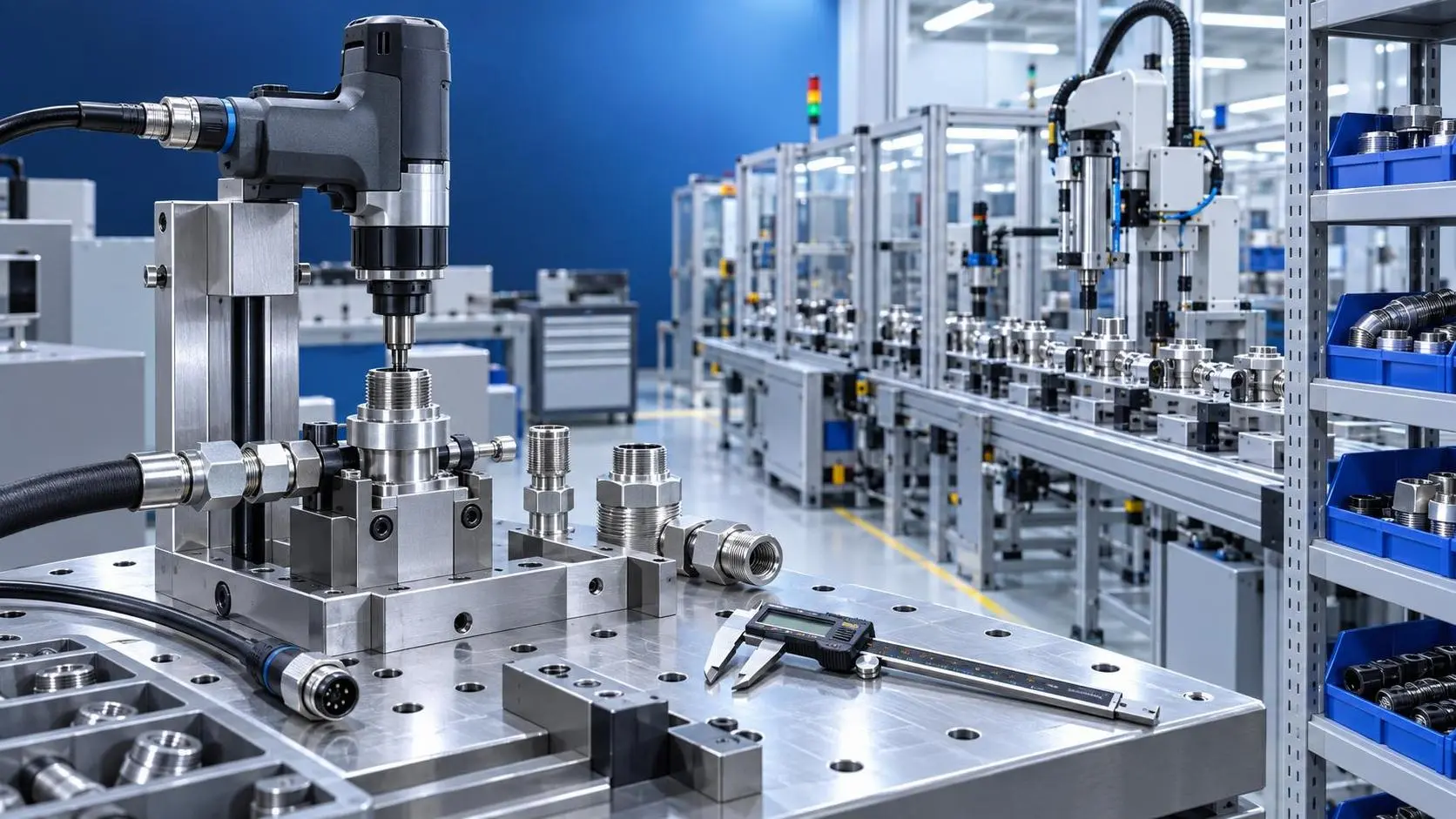
Product Comparison Resources for Component Compatibility and Lifecycle Risk
Product comparison resources for components: evaluate compatibility, interfaces, service support, and lifecycle risk to reduce downtime, avoid redesigns, and make confident sourcing decisions.
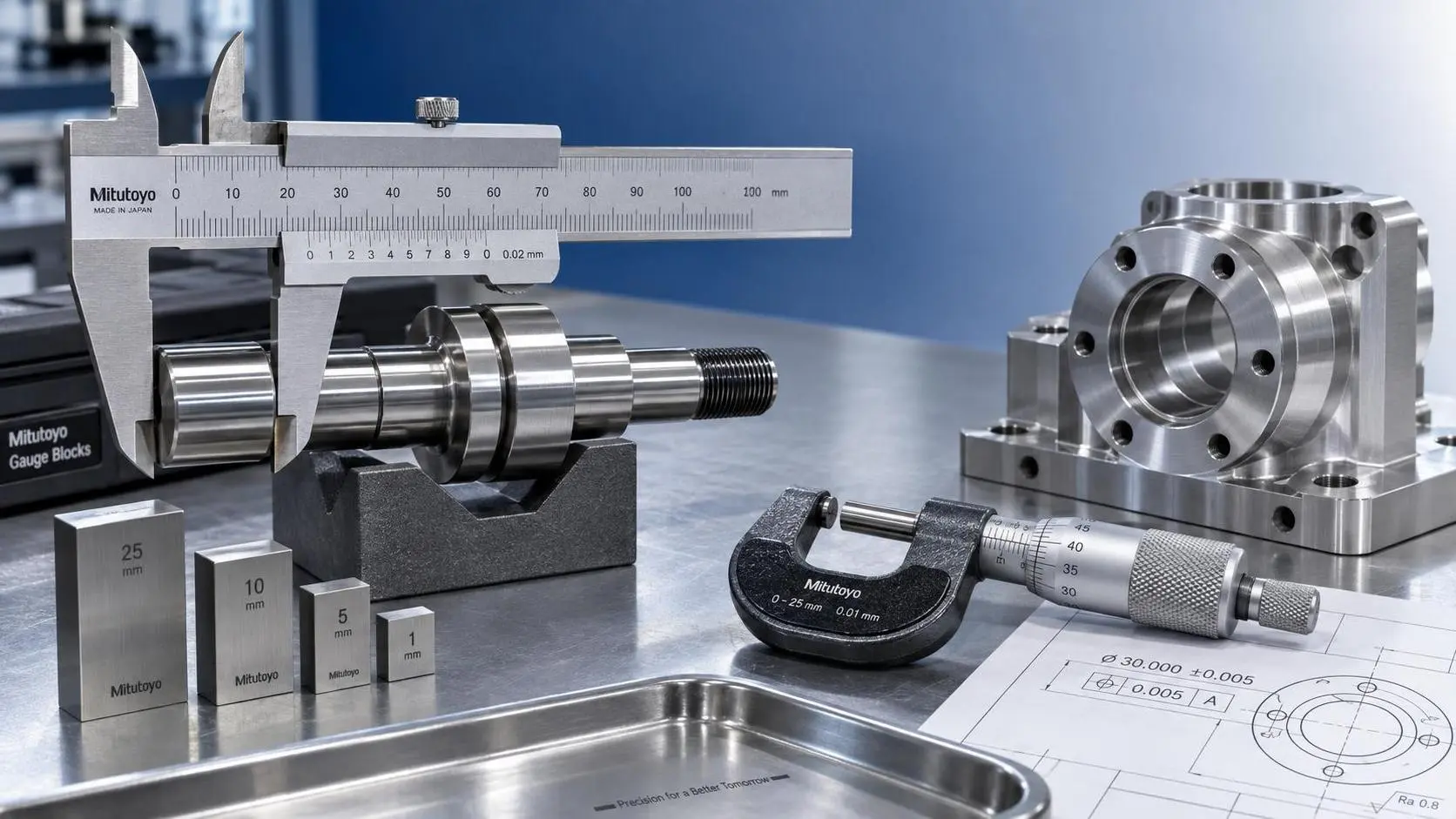
How to Select Vernier Precision Calipers for Tight-Tolerance Machining Inspection
Vernier precision calipers for tight-tolerance machining: learn how to select the right range, jaw design, accuracy, and verification process for reliable inspection.
Product Comparison Resources in Europe: How Buyers Can Verify Specs and Suppliers
Product comparison resources Europe: learn how to verify industrial specs, compliance claims, supplier credibility, and delivery risk for smarter purchasing decisions.

How to Evaluate an Industrial Metrology Solution Manufacturer for Production Use
Industrial metrology solution manufacturer evaluation guide for production: compare accuracy, traceability, automation, software, service, and acceptance testing to reduce risk.
Which ISO Standards Matter Most for Precision Engineering Quality Control?
Precision engineering ISO standards explained: discover how ISO 9001, ISO/IEC 17025, ISO 10012, GPS, and ISO 3834 strengthen quality control, traceability, and compliance.
Related News
- 00
0000-00
Why Are Specification-Oriented Articles Gaining Traction in Europe’s B2B Markets? - 00
0000-00
Industrial Solutions in Latin America: Key Growth Sectors and Market Entry Risks - 00
0000-00
What Is Driving Manufacturing Efficiency in Europe’s Industrial Sectors? - 00
0000-00
Industrial Market Trends in 2025: What Buyers Should Watch Across Supply and Demand - 00
0000-00
Production Efficiency in North America: What Is Changing for Manufacturers in 2025?
Dr. Alistair Vaughn
Weekly Insights
Stay ahead with our curated technology reports delivered every Monday.