
When do brand premiums actually pay off?





When Brand Premiums Actually Pay Off in Industrial Tools, Welding, and Metrology
Brand premiums are often defended through reliability, compliance, service support, and lower lifetime risk.
Yet not every higher-priced tool, welding system, or metrology solution delivers measurable value.
The real question is not whether brand premiums are expensive, but whether they protect productivity under pressure.
In global manufacturing, the right premium brand can reduce downtime, stabilize quality, and simplify compliance evidence.
The wrong one simply inflates spending while hiding behind reputation, packaging, and familiar distribution channels.
The Market Is Moving From Unit Price to Risk-Adjusted Value
Industrial buying has entered a phase where cost is measured across the full operating cycle.
Raw material volatility, export restrictions, and tighter safety requirements have changed how brand premiums are judged.
A torque wrench, welding torch, grinder, or caliper is no longer evaluated as an isolated item.
It is evaluated as a productivity node inside assembly, repair, inspection, and quality assurance workflows.
This shift is especially visible in aerospace maintenance, automotive repair, construction equipment, and precision fabrication.
In these environments, brand premiums pay off when they convert uncertainty into predictable output.
They fail when the premium only buys visual identity, legacy loyalty, or vague claims of professional quality.
Trend Signals Showing Where Brand Premiums Are Becoming More Valuable
Several market signals explain why brand premiums are receiving renewed attention across industrial categories.
- Handheld laser welding adoption is increasing safety scrutiny and training expectations.
- Brushless power tools are reaching efficiency limits where engineering quality matters more.
- IoT torque systems are making fastening errors easier to trace and harder to excuse.
- Metrology instruments face stronger calibration, traceability, and documentation demands.
- Global distributors are competing through service intelligence, not only catalog depth.
These signals do not prove all brand premiums are justified.
They show where brand premiums become more defensible because operating risk is becoming more expensive.
Why Premium Brands Can Outperform Cheaper Alternatives
Brand premiums usually pay off when the premium is tied to technical consistency rather than marketing visibility.
A superior tool is not only stronger on day one.
It maintains accuracy, torque, arc stability, ergonomics, and safety performance after repeated use.
The strongest brand premiums combine engineering reliability with documented support systems.
Without evidence, brand premiums become assumptions rather than defensible business decisions.
Where Brand Premiums Pay Off Most Clearly
High-Cost Downtime Environments
Brand premiums are easier to justify when a failed tool stops a line, vessel, site, or service bay.
In these cases, the price gap is small compared with idle labor and delayed delivery.
For welding systems, arc interruption can affect both productivity and rework rates.
For hydraulic tools, seal failure or pressure instability can slow heavy equipment maintenance.
Precision and Compliance-Critical Work
Brand premiums also pay off when measurements must remain traceable and repeatable.
Calipers, micrometers, gauges, and torque systems influence whether assemblies meet documented tolerances.
A cheaper instrument may appear acceptable until drift, poor calibration records, or audit gaps emerge.
In regulated industries, premium metrology can protect both output quality and compliance credibility.
Harsh or Variable Field Conditions
Brand premiums become more valuable when tools face dust, vibration, heat, moisture, or inconsistent power.
Field failure costs more than bench failure because replacement, travel, and rescheduling compound the loss.
Premium housings, better sealing, and stronger electronic protection can extend usable life significantly.
Where Brand Premiums Often Do Not Pay Off
Brand premiums do not automatically create value in low-risk, low-frequency, or non-critical applications.
If a tool is rarely used, lightly loaded, and easy to replace, a premium may be unnecessary.
The same applies when performance requirements are simple and widely achievable across qualified suppliers.
Brand premiums are also weak when after-sales coverage is poor in the actual operating region.
A famous global name has limited value if spare parts, repair centers, and calibration services are inaccessible.
- Avoid paying for reputation without local service proof.
- Question premiums unsupported by warranty transparency.
- Reject vague durability claims without field data.
- Separate packaging upgrades from engineering improvements.
Impact Across Industrial Workflows
Brand premiums influence more than purchase budgets.
They shape training, maintenance planning, inventory strategy, quality records, and supplier relationships.
In assembly, premium torque systems can reduce fastening variation and support digital traceability.
In welding, premium equipment can improve arc consistency, operator confidence, and safety management.
In metrology, premium instruments can shorten inspection disputes and strengthen acceptance documentation.
For distribution networks, credible brand premiums support stronger positioning and fewer service conflicts.
However, the impact depends on matching premium features to real operating pain points.
Key Points to Examine Before Paying Brand Premiums
A disciplined evaluation should connect brand premiums to measurable outcomes.
- Failure cost: Estimate the financial impact of stoppage, rework, or emergency replacement.
- Usage intensity: Compare duty cycle, load frequency, and environmental stress.
- Accuracy risk: Identify where measurement drift can affect acceptance or safety.
- Service access: Verify repair, calibration, spare parts, and response time.
- Documentation depth: Review certificates, test data, standards alignment, and warranty terms.
- Lifecycle cost: Include consumables, batteries, downtime, training, and replacement frequency.
This framework prevents brand premiums from becoming emotional choices.
It also reveals when a mid-tier product may deliver similar outcomes at lower cost.
A Practical Decision Matrix for Brand Premiums
The matrix shows that brand premiums should be situational, not automatic.
A premium is strongest when it reduces a specific operational exposure.
How Intelligence Changes the Premium Equation
Industrial intelligence is making brand premiums easier to verify.
Performance data, service records, calibration histories, and sector news help separate substance from positioning.
Platforms focused on precision tools, welding, and metrology can expose changing demand patterns early.
They can also identify where safety standards, export rules, or technology shifts raise the value of premium brands.
For example, intelligent torque control changes the value of data integration.
Handheld laser welding changes the value of training, shielding, and safety assurance.
Advanced metrology changes the value of calibration ecosystems and cross-border documentation.
In each case, brand premiums become defensible only when intelligence confirms the operational need.
Signals That a Premium Brand Is Truly Earning Its Price
- Failure rates decline after adoption across comparable workloads.
- Calibration intervals remain stable without hidden drift problems.
- Warranty claims are handled quickly and transparently.
- Operators report lower fatigue and more consistent handling.
- Spare parts remain available through the planned lifecycle.
- Digital tools integrate with existing quality or maintenance systems.
These signals transform brand premiums from a price debate into a performance discussion.
They also help compare premium brands against high-performing challengers.
What to Do Next
Start by ranking tools and systems according to downtime risk, compliance exposure, and replacement difficulty.
Then request evidence that links brand premiums to failure reduction, accuracy stability, or service performance.
Run controlled comparisons where risk allows, especially in general maintenance or non-critical applications.
Reserve brand premiums for categories where reliability, traceability, and support create visible lifetime value.
GPTWM tracks precision tools, welding systems, metrology trends, and industrial efficiency signals across global markets.
Use that intelligence to test assumptions, benchmark suppliers, and decide when brand premiums truly pay off.
Related News
In-House vs. Outsourced Aircraft Maintenance: Comparing Total Costs
Compare aerospace maintenance cost for in-house vs. outsourced aircraft upkeep. Discover hidden expenses, downtime impacts, and break-even factors to find the best fit for your fleet.
How to Select High-Precision Measuring Instruments for Tight-Tolerance Production?
High-precision measuring instruments are essential for tight-tolerance production. Learn how to evaluate accuracy, repeatability, environment, calibration, and data integration.
How Industrial Innovation Supplier Networks Reduce Sourcing Risk for Manufacturers
industrial innovation supplier network insights help manufacturers reduce sourcing risk, control lifecycle costs, and choose reliable tools, services, and suppliers with confidence.
South East Asia Machine Tools Market: Demand Outlook by Manufacturing Industry
South East Asia machine tools market outlook: explore demand from automotive, electronics, fabrication, and infrastructure, plus smart sourcing priorities for manufacturers.
Which Industrial Standards Should Be Checked Before Export?
Which industrial standards should be checked before export? Discover essential compliance steps for industrial tools, welding equipment, laser systems, and metrology products.
What Industrial Automation Exporters Need to Know Before Entering ASEAN Markets
Industrial automation exporter to ASEAN: learn how to navigate compliance, local service, digital readiness, pricing, and market entry for scalable growth.
PCB Prototyping Equipment Costs: Comparing In-House Machines and Outsourced Builds
PCB prototyping equipment costs compared: discover when in-house machines speed iterations and when outsourced builds deliver better value, quality, and scalability.
Prototype PCB Manufacturing Equipment: What Engineers Should Evaluate Before Purchase
Prototype PCB manufacturing equipment: discover the key factors engineers should evaluate—from accuracy and materials to software, safety, and ROI—before buying.
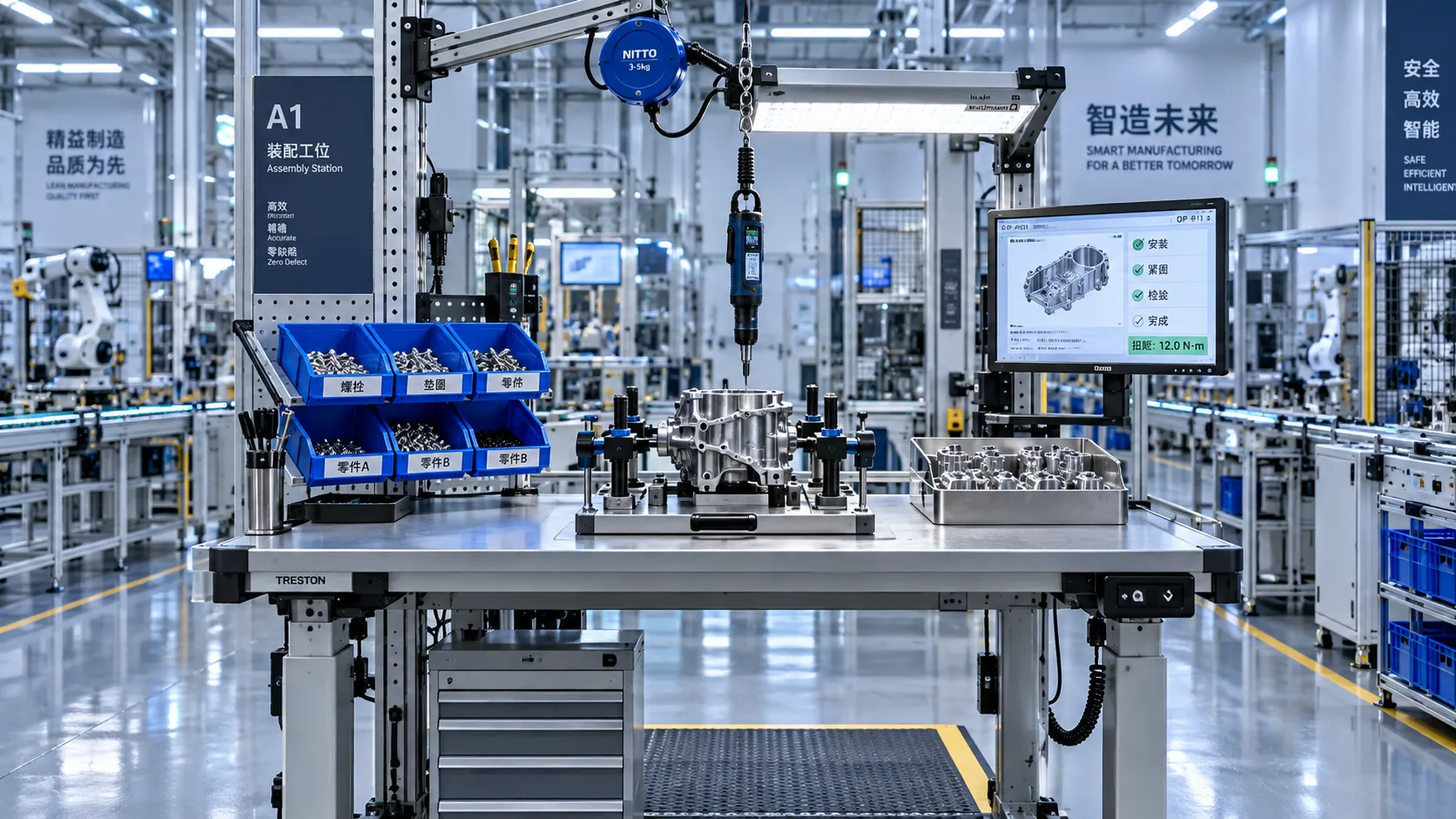
Workplace Ergonomics for Manufacturing: Reducing Repetitive-Strain Risks on Assembly Lines
Workplace ergonomics for manufacturing helps reduce repetitive-strain risks on assembly lines through smarter workstation design, tool selection, task analysis, and quality-focused improvements.
Related News
- 00
0000-00
How Industrial Innovation Supplier Networks Reduce Sourcing Risk for Manufacturers - 00
0000-00
Which Industrial Standards Should Be Checked Before Export? - 00
0000-00
What Industrial Automation Exporters Need to Know Before Entering ASEAN Markets - 00
0000-00
How Procurement Teams Can Map the Industrial Value Chain to Reduce Supply Risk - 00
0000-00
How Industry Category Guides Help Global Sourcing Teams Compare Suppliers Faster
Dr. Alistair Vaughn
Weekly Insights
Stay ahead with our curated technology reports delivered every Monday.