
How to Choose 24V Brushless Tool Motors for Torque, Runtime, and Duty Cycle?





Selecting 24V brushless tool motors starts with the load, not with the voltage label. A 24V platform can support compact fastening tools, small angle grinders, oscillating tools, drain cleaners, inspection drives, and light material handling attachments, but the motor should be matched to the torque profile the application actually demands. If the load rises sharply at startup, stalls intermittently, or sees repeated direction changes, peak output alone is a weak selection criterion. The more useful comparison is whether the motor can deliver the required torque across the intended speed range without forcing the controller into excessive current draw or repeated thermal rollback.
Torque should be separated into at least three operating states: breakaway torque, working torque, and overload torque. Breakaway torque matters in tools that must overcome static friction, adhesive drag, packed dust, thread locking compounds, or a loaded gearbox. Working torque is the stable level sustained during the main portion of the cycle. Overload torque is the short-duration reserve needed when the tool meets a knot in wood, a jammed fastener, a local hard spot in metal, or a sudden increase in contact pressure. Many selection errors come from treating these as one number. A motor that appears adequate in bench testing may still feel weak in the field if it only reaches the required torque at current levels that the battery pack or controller can hold for a few seconds.
Read the torque curve, not only the nameplate
For 24V brushless tool motors, the torque-speed curve usually reveals more than the rated wattage. Useful evaluation depends on where torque begins to fall away, how smooth the current rise is under load, and whether the efficiency band overlaps the tool’s normal operating speed. A motor intended for a drill driver behaves differently from one optimized for a blower or polishing head. The first may tolerate low-speed, high-current events; the second may be designed for longer periods near higher rotational speed with lower shaft torque.
If the supplier only provides no-load speed and a single torque figure, there is not enough information to compare options rigorously. At minimum, ask for continuous torque at a defined ambient temperature, maximum permissible winding temperature, typical efficiency over the operating range, current at stall or controller-limited near-stall, and recommended gear ratio if the motor is not meant for direct drive. Without those points, runtime and duty cycle estimates become guesswork.
Back EMF constant, torque constant, winding resistance, and inductance are also relevant when the tool uses a sensorless controller. Lower resistance can support higher current, but it may also demand stronger thermal management. Higher inductance may smooth current ripple, yet it can limit dynamic response in applications with frequent speed changes. These tradeoffs show up quickly in impact loading and start-stop work.
Runtime depends on system efficiency, not battery capacity alone
Runtime is often overestimated because the battery pack is treated as an isolated energy source. In practice, runtime is the result of the full electromechanical chain: cells, busbars, connectors, protection circuitry, controller losses, winding losses, bearing friction, gearbox losses, and the mechanical efficiency of the driven head. Two 24V brushless tool motors paired with the same nominal battery may produce very different usable operating time if one motor runs outside its efficient zone during normal work.
A motor that requires frequent high-current bursts can shorten runtime even if the average shaft power looks acceptable on paper. High current raises copper losses according to the square of current, and those losses convert directly to heat. As temperature rises, winding resistance also rises, which can further reduce efficiency. In enclosed handheld tools with limited airflow, this feedback loop can become visible after only a short series of repeated tasks.
Pay attention to gearbox matching. A motor selected with too little reduction may need to operate at low speed and high current, which is usually a poor region for runtime. A slightly faster motor paired with a suitable reduction stage may consume less energy for the same output task because it stays closer to its efficient speed range. Planetary gear sets are common in cordless tools for this reason, but they add friction, noise, lubrication requirements, and backlash. Spur stages may be simpler in some moderate-load tools, though packaging and durability may become limiting factors.
Cell chemistry and pack architecture also matter. A 24V platform may be marketed at nominal voltage while pack voltage shifts with state of charge and load. Under heavy demand, voltage sag can push the controller to draw more current to maintain output, especially in constant-power strategies. If the motor has been selected with narrow margin, performance may become inconsistent across the discharge curve. This is one reason runtime should be evaluated under realistic battery voltage windows rather than at a single fresh-charge condition.
Duty cycle is where thermal design stops being a detail
Many tools do not fail electrically because of a single high-load event. They age prematurely because the motor spends too much time near its thermal limit. Duty cycle selection should be based on the actual sequence of work: loaded seconds, unloaded seconds, cooling intervals, ambient temperature, and how much heat is trapped by the housing, overmold, or dust barriers. A motor that survives continuous testing on an open bench may derate heavily once installed inside a compact tool body with a dense battery interface and minimal ventilation.
For this reason, continuous current rating deserves more attention than short peak power. Magnets, insulation class, winding fill, lamination quality, and rotor balance all influence heat generation and heat tolerance. Neodymium magnet grade affects high-temperature demagnetization resistance. Lamination steel and stack design affect core losses, particularly in higher-speed tools. Poor rotor balance can increase bearing load and friction, adding heat and shortening service life during sustained operation.
Thermal path quality is often overlooked during selection. Some 24V brushless tool motors rely heavily on conduction through the stator mount into a metal gearbox case or front housing. Others depend more on internal airflow generated by the rotor fan geometry. If the intended installation changes that path, the same motor can show very different continuous capability. A die-cast aluminum front section usually rejects heat better than a thick polymer enclosure, but it also changes vibration transmission and user-perceived surface temperature.
Controller pairing can change the motor verdict
A motor should not be evaluated apart from its electronic control strategy. Commutation timing, current limiting, field weakening behavior, soft start, and stall protection all affect whether the motor feels strong, efficient, and durable in real use. An otherwise capable motor may perform poorly if the controller is tuned for aggressive speed holding that drives unnecessary current spikes. The reverse is also common: a conservative controller can make a motor appear undersized because peak torque is intentionally delayed or clipped.
Sensorless control can work well in medium- to high-speed tools, but low-speed startup under load may become uncertain if the rotor position estimate is weak. In fastening, tapping, or feed-control applications where precise low-speed torque matters, Hall sensors or other rotor position feedback may be justified. That choice affects wiring complexity, contamination resistance, and cost, but it can stabilize startup behavior and reduce harsh current transients.
Current limit settings should be reviewed against both the motor windings and the gearbox. The motor might survive a brief overload that the gear train cannot. Powder metal gears, sintered carriers, polymer cages, and needle bearings each have different failure modes under shock loading. If the system uses steel planetary gears with grease lubrication, attention should still go to grease separation at temperature and viscosity changes in cold environments. Runtime, torque, and duty cycle are all distorted if the transmission is absorbing energy through poor lubrication or excessive preload.
Material and construction details that affect field performance
Motor selection becomes more reliable when construction details are treated as functional parameters rather than catalog notes. Bearing type is one example. Deep groove ball bearings are common, but shield type, grease formulation, and internal clearance influence survival in dusty, high-vibration, or elevated-temperature service. A motor used in grinding or cutting may ingest abrasive fines if sealing around the shaft and cooling path is weak. Even with brushless architecture, contamination can damage bearings, interfere with sensors, or build conductive debris around electronics.
Winding insulation and impregnation quality deserve attention where tools see repeated impacts or transport vibration. Poorly secured windings may move over time, causing insulation wear and eventual shorting between turns. Potting or varnish can improve robustness, though it changes repairability and heat transfer. Shaft material and surface finish also matter when the driven element is press-fit or coupled with a pinion. A soft shaft or poorly controlled runout can create alignment issues that appear later as noise, bearing wear, or gear tooth distress.
The housing interface should be checked for stack-up tolerance. Minor concentricity errors between motor shaft, gearbox input, and front spindle can increase friction enough to alter current draw and heating. This is especially relevant where stamped parts, molded carriers, or compact one-handed tool layouts leave little room for alignment correction during assembly.
Application conditions should override generic motor rankings
A high-speed compact motor may look attractive for weight and packaging, yet it can be the wrong fit for a tool that repeatedly works near stall. Likewise, a larger low-speed motor with strong copper fill may be unnecessary in a duty cycle dominated by brief bursts and long idle periods. The intended material matters as much as the task label. Driving long screws into dense hardwood, mixing viscous compounds, trimming sheet metal, and polishing coated surfaces all create different torque ripple, speed stability, and cooling behavior.
Environmental conditions can shift the decision quickly. Cold storage, outdoor winter work, foundry heat, welding spatter, or fine metallic dust each affect the motor system differently. Low temperature can increase grease drag and reduce battery delivery. High ambient heat leaves less thermal headroom for the windings and magnets. Conductive dust may require stronger sealing around electronics and careful routing of cooling air. Where washdown or intermittent moisture exposure is possible, connector sealing and corrosion resistance should be reviewed together with motor protection, since failures often begin at interfaces rather than inside the active motor parts.
Common evaluation mistakes
- Comparing motors by peak wattage while ignoring the speed at which that power is available. A tool may rarely operate near that point.
- Using no-load speed as a proxy for productivity. Under real load, controller limits, voltage sag, and gearbox losses can narrow the difference dramatically.
- Assuming brushless means maintenance-free. Bearings, seals, gear lubrication, cooling passages, and connectors still govern service life.
- Treating bench tests with short bursts as proof of duty cycle suitability. Thermal soak and repetitive overload usually expose the real boundary.
- Estimating runtime from amp-hour rating without logging current over the actual work cycle, including startup spikes and stalled or near-stalled events.
Supply chain and replacement considerations also affect selection quality, even when the motor itself is technically sound. Rotor magnets, bearing grades, laminations, and controller semiconductors may vary by source and lead time. If second-source substitution is possible, dimensional interchangeability is not enough; the electrical constants and thermal behavior should also be close enough that the same controller tuning remains valid. Shipping and storage can matter as well. Long storage in humid conditions can degrade packaging, connectors, or lubrication before assembly if preservation practices are weak.
Installation details should not be left to late-stage assembly teams. Cable strain relief, fastener torque into polymer housings, thermal interface cleanliness, and pinion press-fit control can all change measured performance. After installation, a practical validation set usually includes loaded current draw, housing temperature rise over repeated cycles, startup consistency at low state of charge, acoustic behavior under load, and post-test inspection of bearings, gears, and winding condition.
When 24V brushless tool motors are compared on torque, runtime, and duty cycle at the same time, the strongest option is usually the one that stays inside its efficient and thermal operating window during normal work, rather than the one with the most aggressive headline figure. That balance is easier to judge when the motor, controller, transmission, battery behavior, and enclosure are treated as one system from the start.
Related News
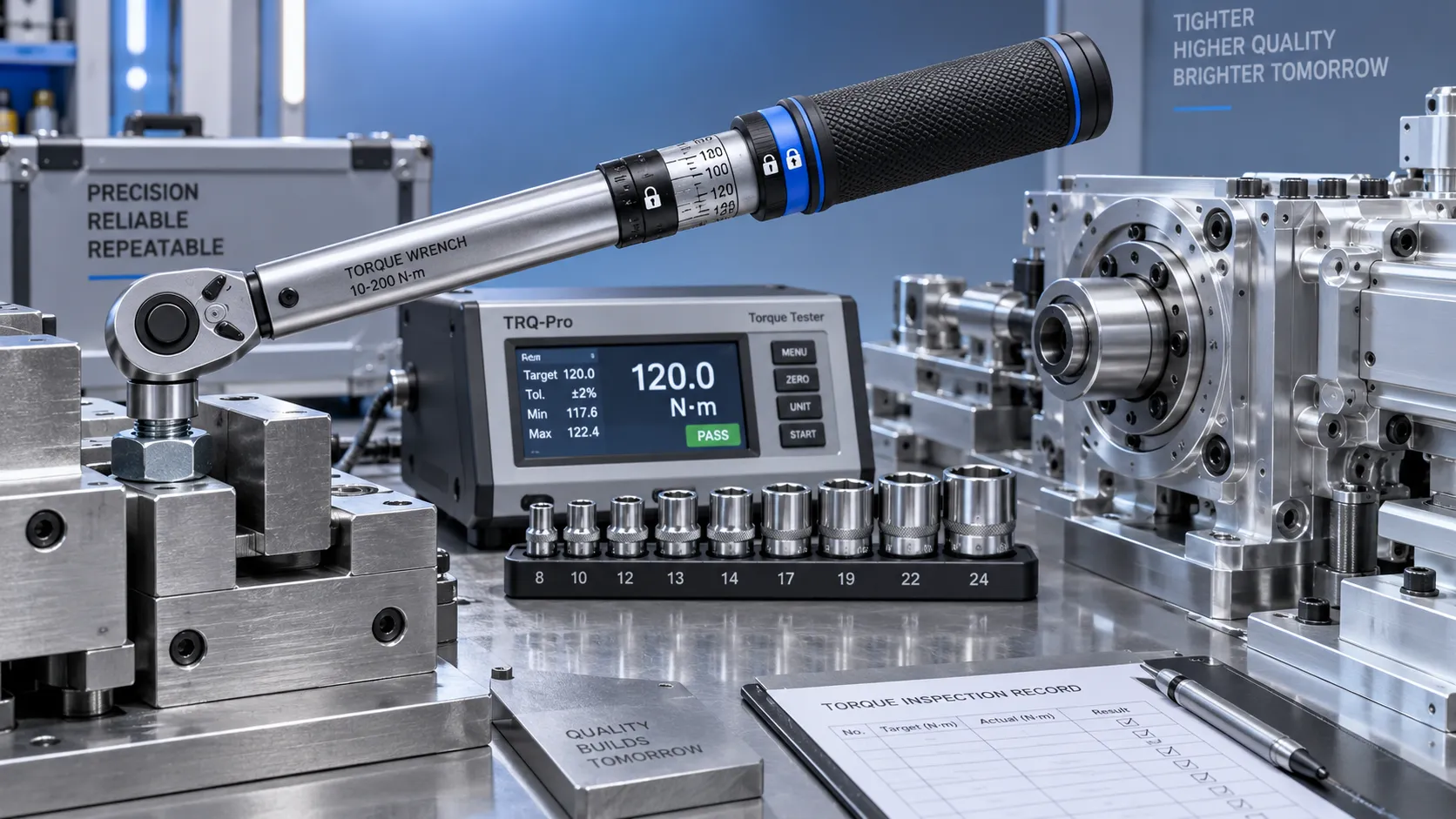
Selecting Adjustable Torque Tools for Repeatable Fastener Assembly
Adjustable torque tools: learn how to match range, accuracy, control methods, calibration, and ergonomics for repeatable, reliable fastener assembly.

How to Select Aerospace Inspection Tools for Aircraft Maintenance Tasks
Aerospace maintenance inspection tools: learn how to select reliable, traceable equipment for aircraft access, accuracy, calibration, and compliant maintenance decisions.

How to Select Wire Bonding Tools for Fine-Pitch Semiconductor Packaging
Explore semiconductor manufacturing tools for wire bonding and learn how to select precision solutions for fine-pitch packaging, reliable loops, accuracy, and yield.
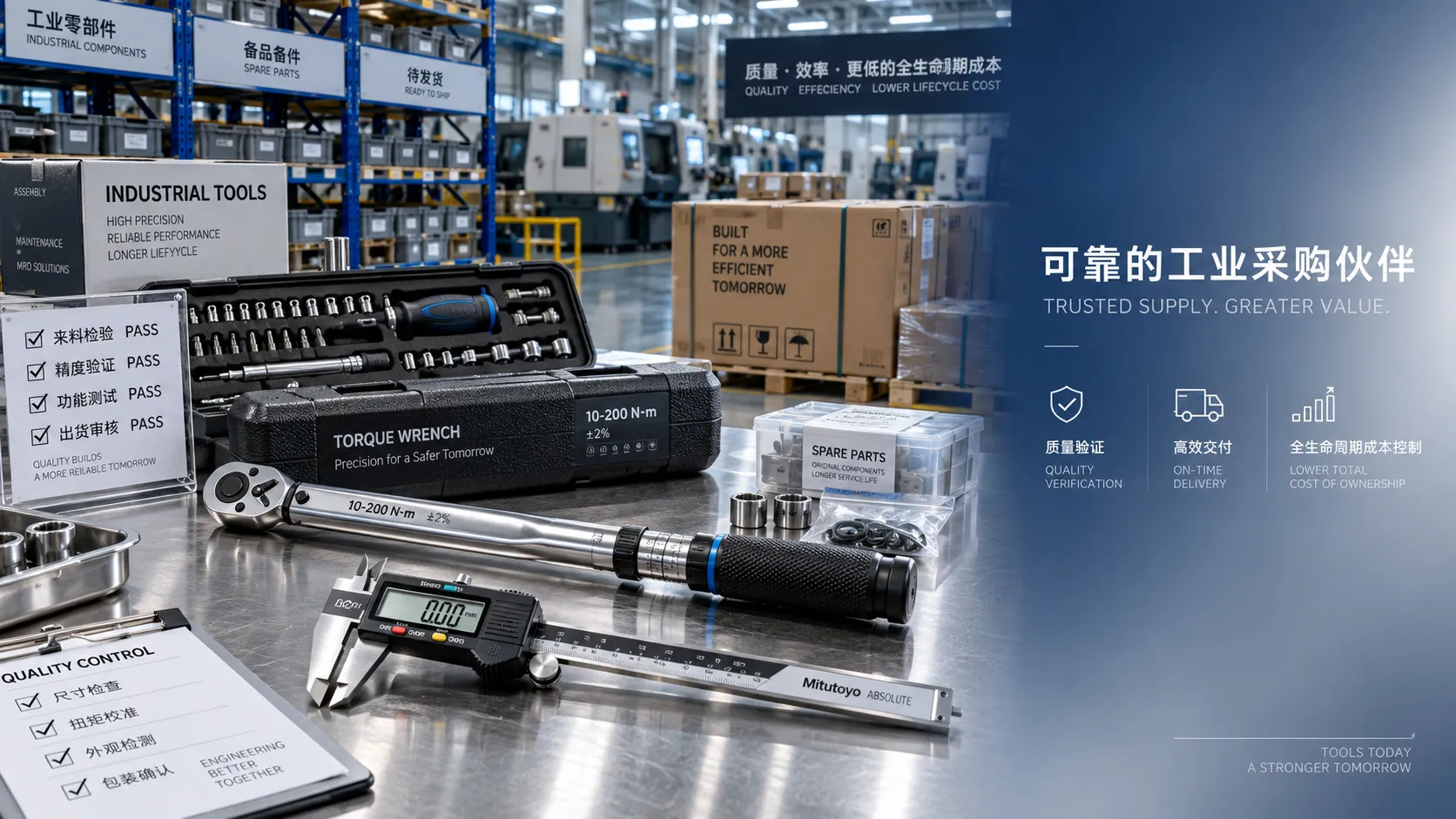
How to Compare Industrial Tool Suppliers for Quality, Lead Time, and Total Cost
Industrial tool selection supplier comparison made simple: evaluate quality, lead times, total cost, service, and supply resilience for confident sourcing decisions.
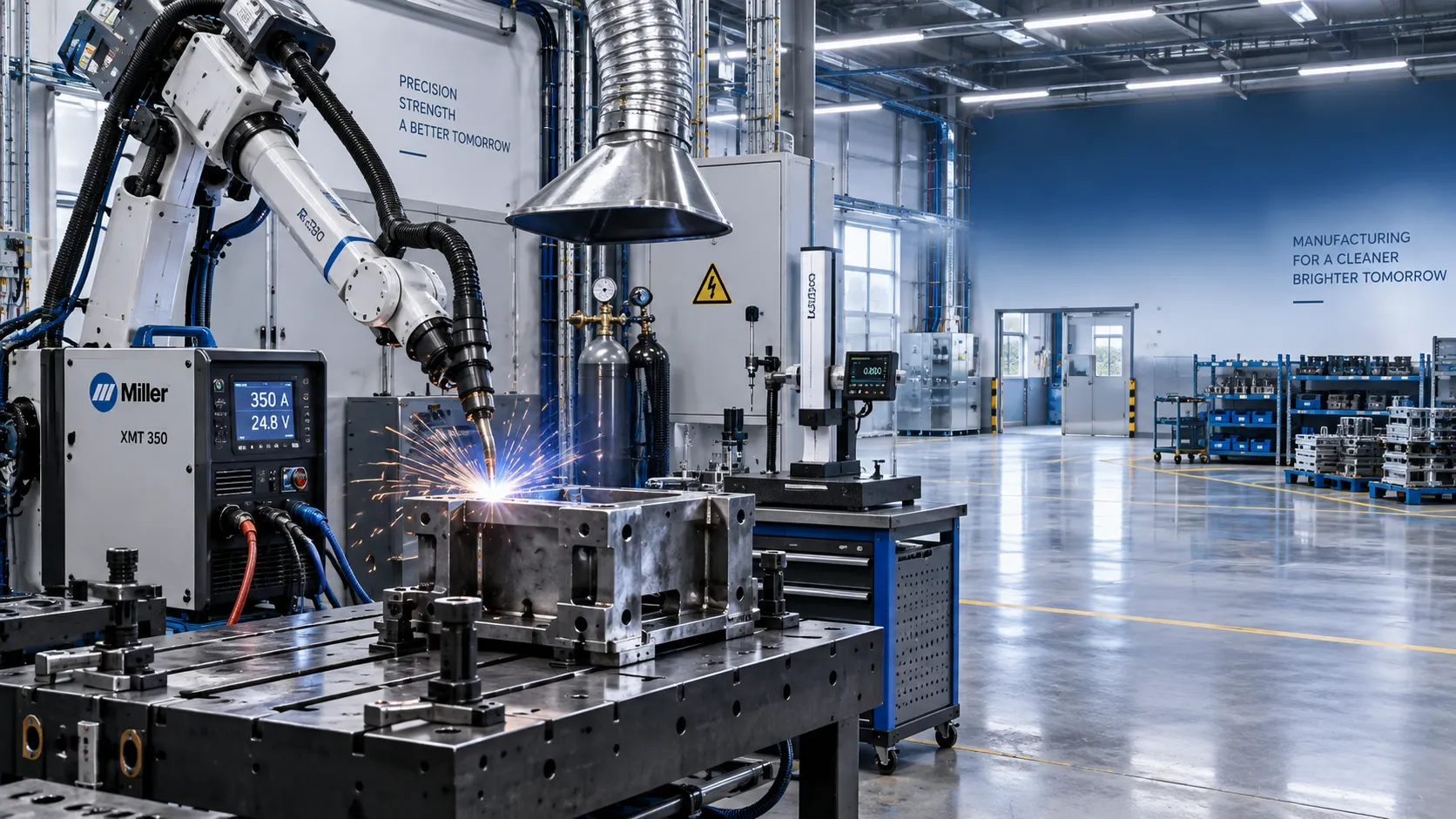
Industrial Equipment Application Guidance: Match Machines to Operating Conditions
Application guidance industrial equipment: match capacity, duty cycle, materials, site conditions, safety, and lifecycle cost to improve reliable output. Read the guide.
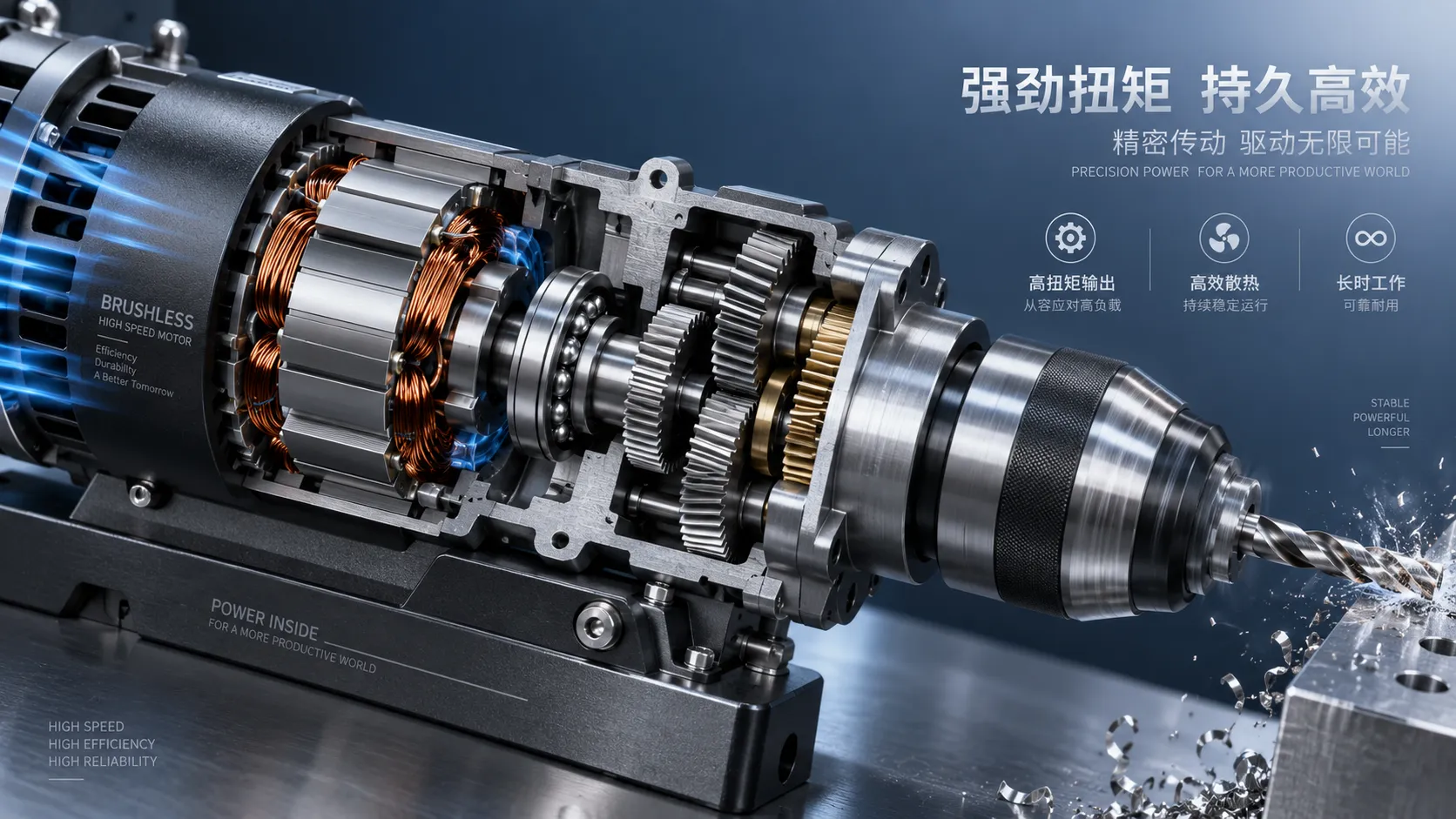
Selecting High-Speed Brushless Tool Motors for Torque, Heat, and Duty Cycle
High speed brushless tool motors: learn how to balance torque, heat, gearing, and duty cycle for reliable industrial tool performance and longer service life.
What Determines Industrial Hydraulic System Price for Heavy-Duty Equipment?
Industrial hydraulic system price depends on duty cycle, pressure, components, cooling, and integration. Compare quotes intelligently to secure reliable heavy-duty performance.
Welding Fume Extraction PPE: When Respirators Are Not Enough for Shop Safety
Welding fume extraction PPE: learn why respirators alone fall short and how source capture, ventilation, and layered controls improve shop safety.

How to Select Optical Metrology Solutions for Tight-Tolerance Manufacturing
Optical industrial metrology solutions for tight-tolerance manufacturing: evaluate accuracy, surface compatibility, workflow, and traceability to select with confidence.
Related News
- 00
0000-00
How to Select Battery Assembly Tools for Torque Control and High-Volume Production - 00
0000-00
How Battery, Torque, and Duty Cycle Affect Cordless Power Tool Efficiency - 00
0000-00
How to Size High-Torque Tool Motors for Continuous-Duty Assembly Lines - 00
0000-00
How to Choose 24V Brushless Tool Motors for Torque, Runtime, and Duty Cycle? - 00
0000-00
Automotive Repair Tools List: What Every Workshop Needs for Daily Service Jobs
Electro-Mech Tool Designer
Weekly Insights
Stay ahead with our curated technology reports delivered every Monday.