
How to Select Battery Assembly Tools for Torque Control and High-Volume Production





How to Select Battery Assembly Tools for Torque Control and High-Volume Production
Selecting battery industrial assembly tools for torque-critical, high-volume production is not a simple comparison of free speed, nominal torque, and battery capacity. Those figures matter, but they do not tell a buyer whether a fastening process will remain stable across shifts, operators, battery states, joint variations, and thousands of repeated cycles.
In a low-volume maintenance setting, a capable cordless nutrunner or screwdriver may be judged mainly by convenience and power. On a production line, the same tool becomes part of a quality-control system. It must deliver the intended clamp load without damaging threads, detect abnormal tightening behavior, document the result when required, and keep pace without creating fatigue or battery-change bottlenecks. The correct selection starts with the joint, not the tool catalogue.
This distinction is particularly important as manufacturers move more assembly stations away from cables and air hoses. Battery tools can improve mobility, reduce hose-management issues, and support flexible line layouts. Yet cordless freedom does not automatically provide process control. A battery-operated tool with a mechanical clutch serves a very different purpose from a transducerized cordless assembly system connected to a controller and manufacturing network.
Begin with the fastening joint and its failure mode
The required torque is only one expression of a fastening specification. Torque is commonly used as a practical control variable because it is measurable at the tool, but the actual engineering concern is usually clamp load. Friction under the fastener head and in the threads can change the relationship between torque and clamp force. Coatings, lubrication, reused fasteners, joint materials, seating conditions, and temperature can all influence the result.
Before evaluating tools, define the joint category. A hard joint reaches its torque threshold over a small angle after seating. A soft joint continues to turn through a larger angle as parts compress or settle. The tool must be able to control the process across the real joint window, rather than performing well only on a laboratory test fixture. If torque is applied too close to the upper end of a tool’s operating range, reaction forces, heat, and control resolution may become less favorable. If the selected range is unnecessarily high, low-end performance and ergonomics can suffer.
The practical question is not simply, “Can this tool reach 40 N·m?” It is, “Can this tool repeatedly manage this 40 N·m joint, with its expected angle, rundown speed, access constraints, and quality requirement?” That question should be tested using representative components, approved fasteners, and the intended socket or bit—not only a generic torque analyzer.
Identify what happens when the fastening process goes wrong
Tool capability should follow risk. A loose fastener, cross-threaded bolt, missing washer, stripped thread, double-hit event, or incorrect component may have very different consequences depending on the assembly. For non-critical covers or brackets, a shut-off clutch tool and disciplined verification may be adequate. For safety-relevant, warranty-sensitive, or highly regulated assemblies, the process may need programmed torque-and-angle control, error-proofing, data capture, and a defined response to a NOK result.
This does not mean every station needs the most complex connected tool. Over-specifying controls can increase commissioning effort, training demands, and lifecycle cost without improving the true risk profile. The goal is proportional control: enough process visibility and containment to prevent a defect from escaping, but no unnecessary layer of technology that operators and maintenance teams cannot support.
Separate torque accuracy from repeatable process performance
Terms such as accuracy, repeatability, and capability are often used loosely in tool discussions. They should be separated during evaluation. Torque accuracy describes how close a measured output is to a reference value under stated conditions. Repeatability concerns how consistently the tool produces comparable results over repeated cycles. A fastening process also depends on the joint itself, the operator’s technique, the reaction arrangement, and the condition of consumables.
A tool can show an acceptable result on a static torque tester but behave differently on a dynamic joint. This is why a supplier’s published performance specification should be read carefully: determine the test method, torque range, joint type, battery condition, and calibration assumptions behind the claim. The relevant question is whether the complete tool-and-joint system meets the plant’s documented acceptance criteria.
For torque-critical work, consider whether the tool supports angle monitoring after seating. Torque-angle signatures can help identify conditions that a final torque value alone may miss, such as cross-threading, a missing component, or an unexpectedly soft joint. However, angle thresholds must be developed from actual joint behavior. Applying a generic angle window without process validation can create false rejects or, worse, a false sense of security.
Choose the right level of intelligence and traceability
Battery industrial assembly tools span several control levels. Basic clutch-driven cordless tools are practical where the fastening is low-risk and simple confirmation is sufficient. Electronic shut-off models can provide tighter control and programmable settings. Advanced cordless nutrunners may use integrated transducers, selectable strategies, barcode or RFID association, and wireless communication with a controller or manufacturing execution environment.
The decision should be driven by what must be proven after the vehicle, machine, panel, or subassembly leaves the station. If a quality team needs to connect each fastening record with a serial number, work order, operator, time stamp, and programmed result, ensure that this full chain is technically possible. A tool that stores a pass/fail signal locally is not equivalent to a traceable fastening record available to the factory’s quality systems.
Integration should also be assessed early. Ask which industrial communication protocols are supported, whether a gateway is required, how programs are managed, and what happens if wireless connectivity drops during a cycle. A sensible design defines the behavior of the station during a network interruption: whether work can continue under controlled local rules, whether results are buffered, and how missed records are reconciled. These details tend to matter more in daily operation than a polished software demonstration.
Battery performance is an uptime question, not a brochure comparison
Battery voltage and amp-hour ratings do not, by themselves, predict useful production uptime. Actual consumption changes with torque level, rundown duration, joint hardness, use of lights or wireless communication, ambient temperature, and battery age. A high-torque, soft-joint application can draw energy very differently from a short fastening sequence at the same nominal torque.
Evaluate the battery ecosystem as part of the station design. How many packs are needed per tool to cover a shift? Can charging be scheduled without leaving a station exposed? Are chargers suitable for the local power supply? Is battery state visible to the operator or line supervisor? What is the replacement process when capacity falls over time? In multi-shift environments, battery identification and rotation discipline may be more useful than purchasing the largest available pack for every tool.
Charging areas require their own risk review. Local workplace rules, battery chemistry, ventilation conditions, physical protection, inspection practices, and damaged-pack handling should be addressed with the site’s safety team. Where tools move between countries or are shipped with batteries, transport and documentation requirements also need confirmation with the relevant suppliers and logistics partners.
Do not treat ergonomics as a secondary purchase criterion
High-volume production magnifies small ergonomic weaknesses. An extra kilogram, an awkward battery position, poor balance at full reach, or difficult trigger access may not be obvious during a short demonstration. Across repeated cycles, these factors can affect posture, tool alignment, speed, and fastening consistency.
The tool should be trialed at the actual work height and approach angle. Check whether the operator has a clear view of the fastener, whether the battery interferes with nearby structures, and whether a pistol-grip, angle-head, inline, or offset configuration is more appropriate. At higher torque, reaction management deserves special attention. A reaction arm, fixture, balancer, or articulating support may be necessary to control torque reaction and reduce strain. A cordless tool does not remove the physical forces created by fastening.
Also examine how the station prevents the wrong tool, program, socket, or sequence from being used. Color coding is helpful but weak as a sole control. Where errors carry meaningful risk, tool enablement, program selection, socket recognition, or guided work instructions may be justified. The right approach depends on the product mix and the consequences of an incorrect fastening.
Validate the complete production system before rollout
A structured pilot is more revealing than a broad feature comparison. Run the proposed tool on representative joints over enough cycles to expose variation. Include the expected fastener and component tolerances, normal production fixtures, realistic operator movement, and the planned battery-change routine. Observe not only successful tightenings but also deliberately introduced abnormal conditions where safe and appropriate: damaged threads, incomplete seating, incorrect components, or out-of-sequence operations. Confirm what the tool recognizes, what it records, and what the station permits after a fault.
Maintenance and metrology teams should participate before approval. They need clarity on calibration or verification intervals, traceability of test equipment, software access rights, spare battery availability, repair turnaround, controller replacement, and version control. A sophisticated fastening system becomes vulnerable if nobody on site can diagnose a communication error, manage program revisions, or distinguish a tool fault from a joint-related issue.
This is where lifecycle thinking is more useful than initial purchase price. A less expensive tool can become costly if it creates frequent stoppages, lacks local service support, or cannot provide the data needed during a quality investigation. Conversely, a high-end connected platform is difficult to justify if its traceability and programming capabilities will never be used.
A disciplined selection path for connected assembly
The Global Precision Tools & Welding Matrix views fastening as part of the manufacturing “last mile,” where engineering intent must survive real production conditions. That perspective links tool design, precision metrology, operator use, digital connectivity, and the economics of line uptime. It is also why torque-tool selection should not be isolated within a purchasing specification.
A sound decision usually combines three records: the fastening-risk assessment, the joint-validation evidence, and the operational support plan. Together, they show whether the selected tool has sufficient control, whether it works on the actual assembly, and whether the plant can sustain its performance after launch. GPTWM’s Strategic Intelligence Center follows the wider shift toward brushless power platforms and IoT-based torque control, but the underlying discipline remains unchanged: digital functions are useful only when they make a real fastening process more visible, controllable, or recoverable.
Before releasing a purchase order, confirm the torque strategy against the approved joint specification, test the tool in the intended station, map the data path, and quantify the battery and service plan for the expected shift pattern. That work may take longer than comparing catalogues, but it is the difference between buying a cordless tool and establishing a dependable fastening process.
Related News
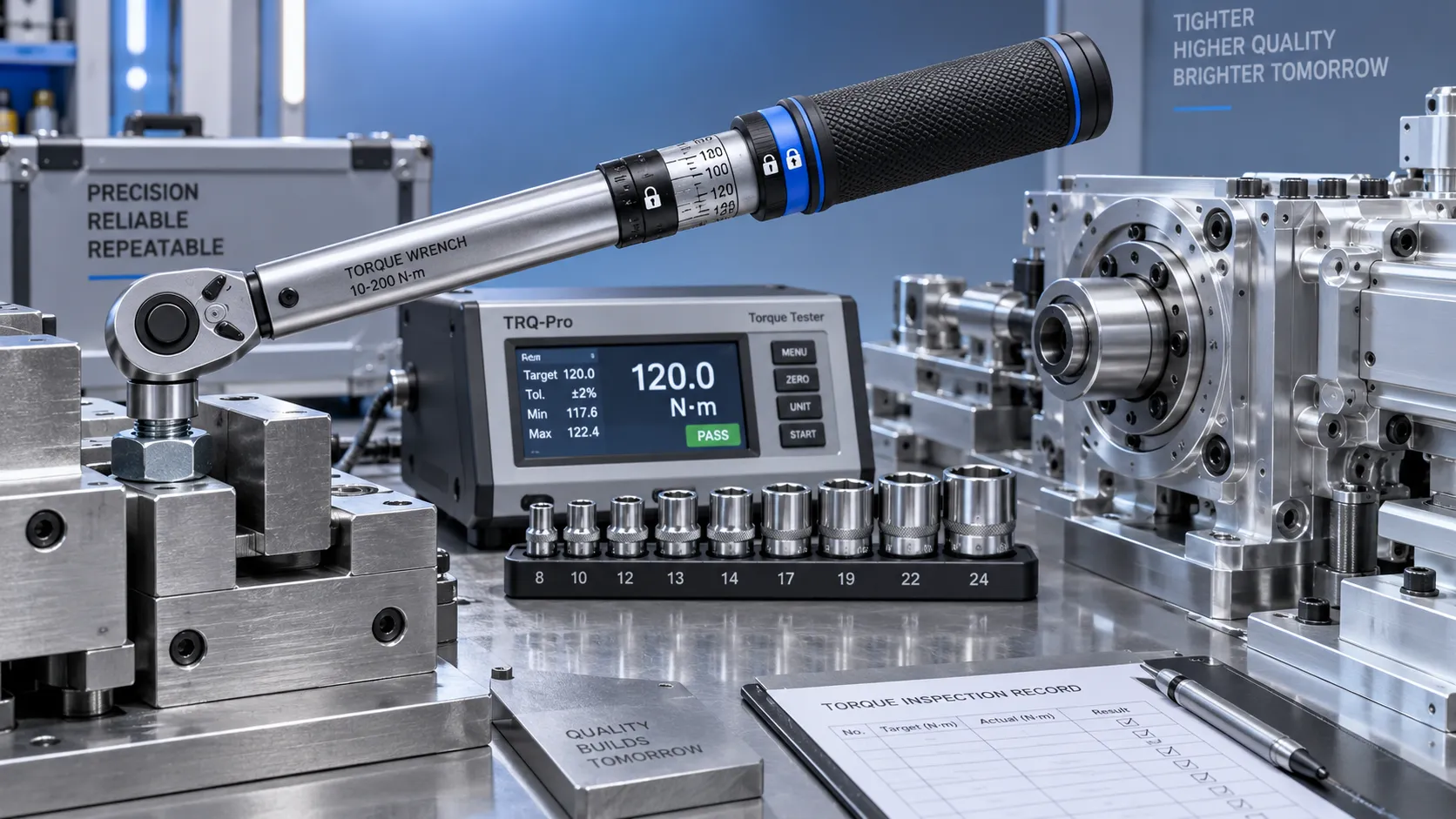
Selecting Adjustable Torque Tools for Repeatable Fastener Assembly
Adjustable torque tools: learn how to match range, accuracy, control methods, calibration, and ergonomics for repeatable, reliable fastener assembly.
How to Select Aerospace Inspection Tools for Aircraft Maintenance Tasks
Aerospace maintenance inspection tools: learn how to select reliable, traceable equipment for aircraft access, accuracy, calibration, and compliant maintenance decisions.

How to Select Wire Bonding Tools for Fine-Pitch Semiconductor Packaging
Explore semiconductor manufacturing tools for wire bonding and learn how to select precision solutions for fine-pitch packaging, reliable loops, accuracy, and yield.
How to Compare Industrial Tool Suppliers for Quality, Lead Time, and Total Cost
Industrial tool selection supplier comparison made simple: evaluate quality, lead times, total cost, service, and supply resilience for confident sourcing decisions.
Industrial Equipment Application Guidance: Match Machines to Operating Conditions
Application guidance industrial equipment: match capacity, duty cycle, materials, site conditions, safety, and lifecycle cost to improve reliable output. Read the guide.
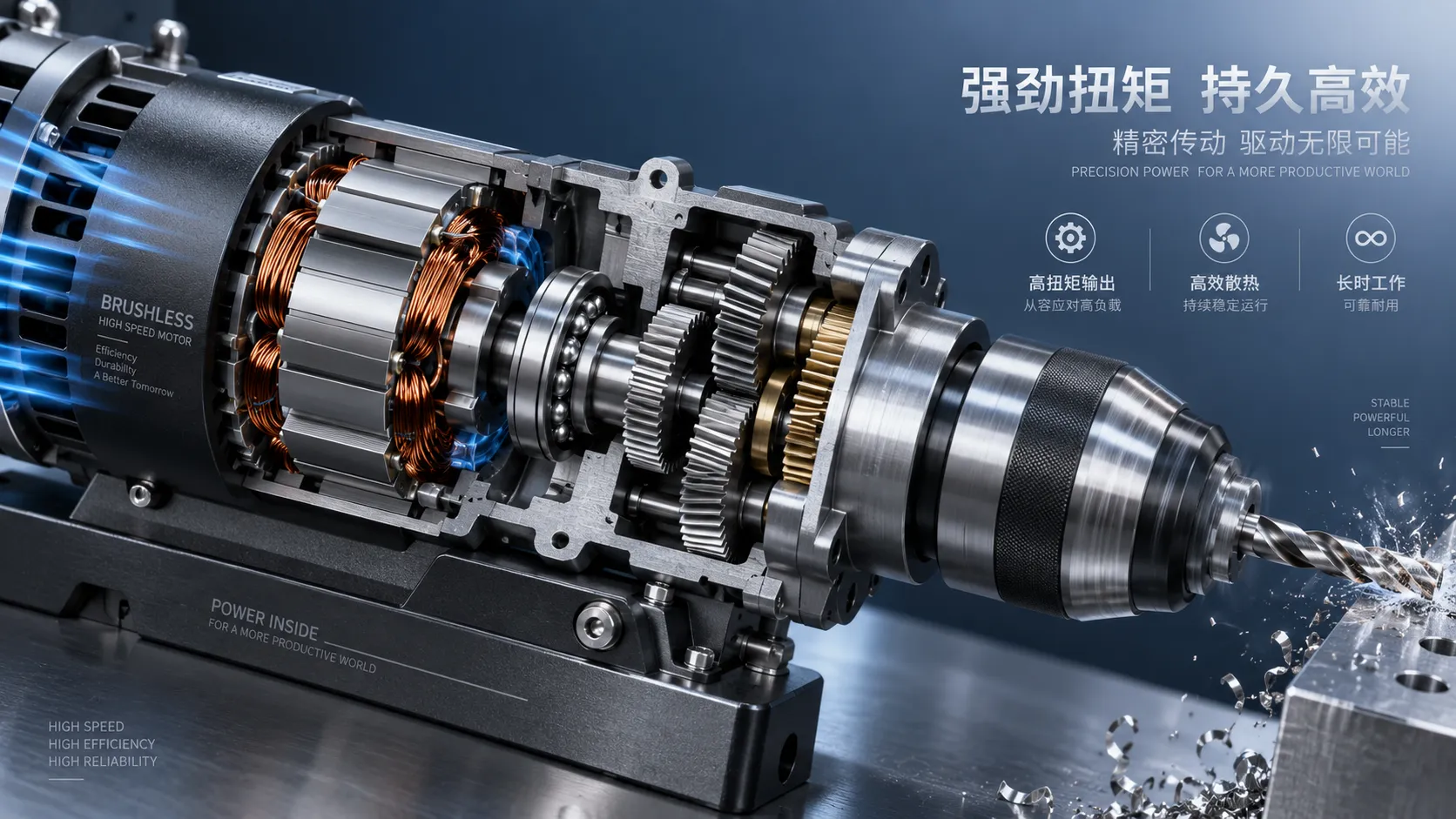
Selecting High-Speed Brushless Tool Motors for Torque, Heat, and Duty Cycle
High speed brushless tool motors: learn how to balance torque, heat, gearing, and duty cycle for reliable industrial tool performance and longer service life.
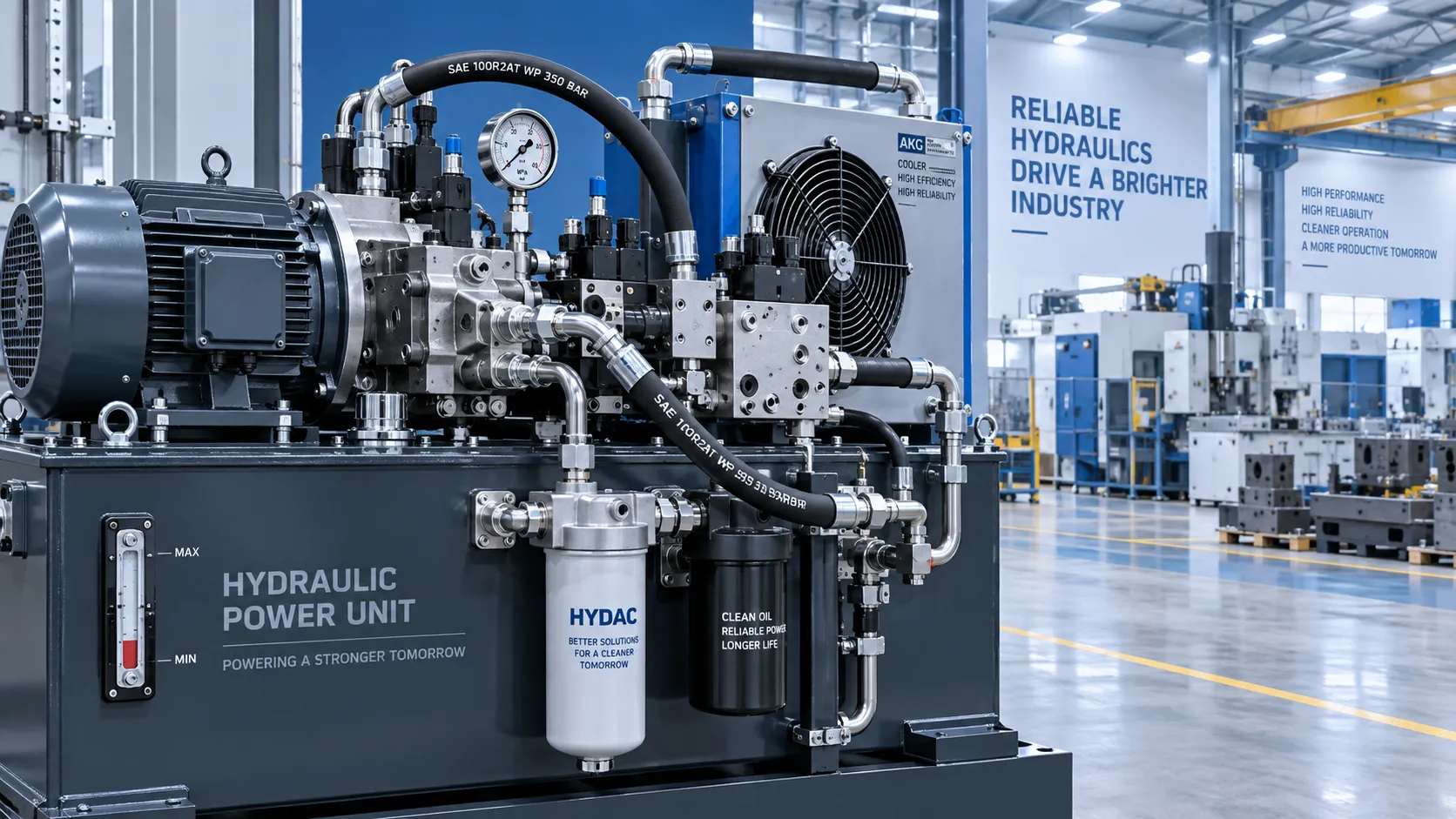
What Determines Industrial Hydraulic System Price for Heavy-Duty Equipment?
Industrial hydraulic system price depends on duty cycle, pressure, components, cooling, and integration. Compare quotes intelligently to secure reliable heavy-duty performance.
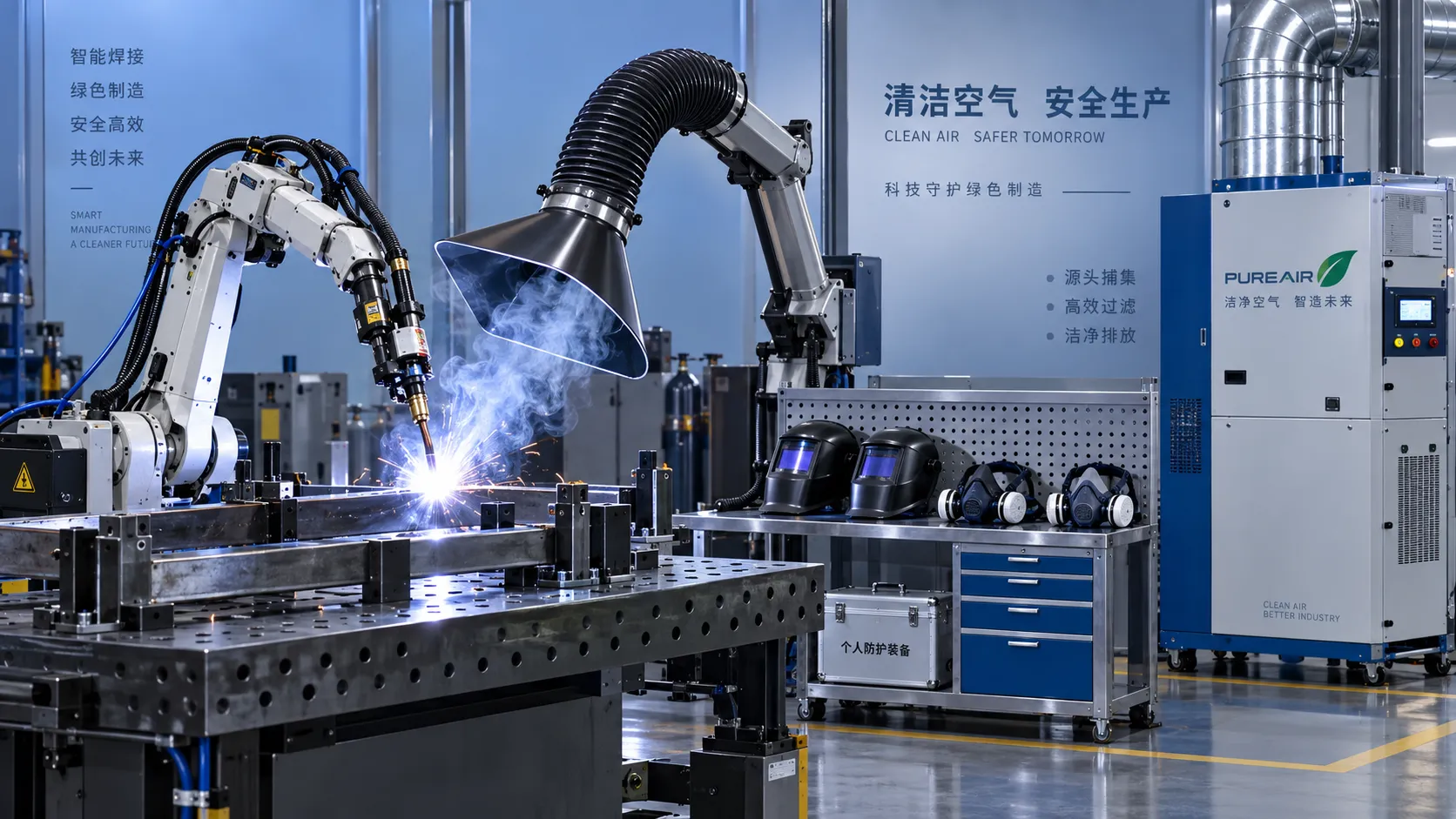
Welding Fume Extraction PPE: When Respirators Are Not Enough for Shop Safety
Welding fume extraction PPE: learn why respirators alone fall short and how source capture, ventilation, and layered controls improve shop safety.

How to Select Optical Metrology Solutions for Tight-Tolerance Manufacturing
Optical industrial metrology solutions for tight-tolerance manufacturing: evaluate accuracy, surface compatibility, workflow, and traceability to select with confidence.
Related News
- 00
0000-00
How to Select Battery Assembly Tools for Torque Control and High-Volume Production - 00
0000-00
How Battery, Torque, and Duty Cycle Affect Cordless Power Tool Efficiency - 00
0000-00
How to Size High-Torque Tool Motors for Continuous-Duty Assembly Lines - 00
0000-00
How to Choose 24V Brushless Tool Motors for Torque, Runtime, and Duty Cycle? - 00
0000-00
Automotive Repair Tools List: What Every Workshop Needs for Daily Service Jobs
Electro-Mech Tool Designer
Weekly Insights
Stay ahead with our curated technology reports delivered every Monday.