
Are aerospace tools worth the higher upfront cost





For finance approvers, the question is not simply whether aerospace tools cost more, but whether they reduce long-term risk, downtime, and compliance failures enough to justify the investment. In high-precision operations, the true value of aerospace tools often lies in tighter tolerances, longer service life, and fewer costly errors—factors that can significantly improve total cost of ownership.
That question matters far beyond the aerospace sector itself. Distributors, MRO providers, contract manufacturers, and industrial service firms often face the same budget tension: a higher upfront purchase price versus a lower lifetime operating cost. For finance teams, the decision becomes clearer when aerospace tools are evaluated through risk-adjusted return, asset life, calibration stability, and the cost of non-compliance.
From the perspective of GPTWM, where precision tools, welding systems, and metrology technologies intersect, aerospace tools are best understood as value-protection assets. They support repeatability, traceability, and process discipline in environments where a deviation of ±0.02 mm, a missed torque window, or one undocumented maintenance cycle can trigger expensive rework, delayed delivery, or audit exposure.
Why aerospace tools carry a premium in the first place
Aerospace tools usually cost more because they are built for narrower tolerances, stricter material control, and more demanding documentation requirements. In many industrial categories, the difference is not cosmetic. It can involve better alloy consistency, lower vibration under continuous load, improved torque repeatability, and calibration intervals that remain stable across 6 to 12 months of use.
For a finance approver, the core issue is whether these performance differences produce measurable savings. In precision assembly, drilling, fastening, cutting, inspection, and metal joining, the answer is often yes when the operational environment includes safety-critical components, traceable repair records, or export-sensitive standards.
What makes aerospace tools different from standard industrial tools
The distinction usually appears in four areas: dimensional accuracy, cycle durability, process traceability, and compliance support. A standard industrial tool may perform well for general fabrication, but aerospace tools are more likely to be specified where precision drift, material contamination, or inconsistent torque results can create downstream liability.
- Dimensional and torque tolerances are often tighter, sometimes by 20% to 50% compared with general-purpose ranges.
- Materials and surface finishes are selected to reduce wear, galling, and corrosion in controlled maintenance environments.
- Documentation, calibration records, and service traceability are usually easier to integrate into audit workflows.
- Lifecycle stability can extend replacement intervals from 12 months to 24 months or longer, depending on usage intensity.
The table below outlines how finance teams can compare aerospace tools with standard alternatives without relying only on purchase price.
The practical takeaway is that aerospace tools should not be benchmarked against commodity tools on unit price alone. They should be judged against the cost of precision failure. In regulated assembly or maintenance environments, one nonconforming result can erase the savings from a cheaper purchase order.
Where the premium is easiest to justify
The premium is usually easiest to defend in operations with three characteristics: high-value parts, narrow rework windows, and mandatory traceability. Examples include aircraft structure repair, engine-adjacent fastening, hydraulic line assembly, composite drilling, and dimensional verification before final release.
If a production or maintenance step affects delivery timing by 24 to 72 hours when errors occur, aerospace tools can quickly shift from “premium” to “cost control.” The same logic applies when a rejected component requires disassembly, repeat inspection, and additional labor from certified technicians.
How finance approvers should measure real value
A solid decision framework starts with total cost of ownership rather than invoice price. For aerospace tools, finance teams should model five cost layers over 12, 24, and 36 months: acquisition, calibration, maintenance, downtime exposure, and quality-related loss. This approach creates a more realistic business case than a simple capital expenditure comparison.
In many organizations, the hidden costs sit outside the procurement line. A lower-cost tool may increase technician adjustment time by 5 to 10 minutes per shift, require recalibration 2 times instead of 1 per year, or create a 1% to 3% increase in rework on precision jobs. Those are financial variables, not just operational inconveniences.
A practical TCO lens for aerospace tools
The table below gives a practical way to organize evaluation criteria before approval. It is especially useful when comparing multiple vendors or deciding whether to standardize across sites.
For many finance approvers, this framework changes the conversation. A tool with a 25% higher purchase price can still be the lower-cost option if it cuts one rework event per quarter or extends service life by 8 to 12 months. Aerospace tools often earn their premium through variance reduction rather than dramatic productivity claims.
The value of fewer errors in regulated environments
In aerospace-linked work, even minor deviations can trigger major administrative and operational consequences. A fastening tool that consistently stays within the required torque window reduces the chance of inspection hold points, repeat documentation, and release delays. That matters when customer contracts or maintenance schedules are tightly sequenced.
Finance teams should also account for indirect costs. If a nonconforming event requires supervisor review, quality sign-off, technician overtime, and a spare part reorder, the full cost can be 4 to 10 times higher than the tool price difference. Aerospace tools help reduce those cascading expenses by delivering more predictable process outcomes.
Three warning signs that the cheaper option may cost more
- The tool is used on assemblies where tolerance, torque, or surface integrity directly affect release approval.
- The maintenance team already loses more than 2 to 3 hours per month to recalibration, troubleshooting, or repeat setup.
- The operation requires documented traceability for internal audit, customer review, or export compliance.
Selection criteria that matter more than sticker price
Not all aerospace tools are worth the premium. Finance approvers need a disciplined filter to separate true performance value from over-specification. The most useful review combines technical need, utilization level, service support, and compliance alignment. This keeps capital spend targeted and prevents paying for features that the workflow will never use.
Four questions to ask before approving purchase
- Will the tool be used in a high-cycle environment, such as daily fastening, drilling, or measurement over 200 shifts per year?
- Does the task require repeatability within a defined threshold, such as torque consistency or measurement accuracy within a narrow band?
- Is there a clear service plan, including spare parts, calibration turnaround, and documented maintenance intervals?
- Can the supplier support compliance documentation, acceptance criteria, and operating guidance suitable for regulated work?
If the answer is yes to three or four of these questions, aerospace tools usually deserve serious consideration. If only one applies, a high-end standard industrial tool may be sufficient. The goal is not to buy the most expensive option. It is to match the tool class to the cost of process failure.
When over-specification becomes waste
Finance teams should be cautious when aerospace tools are proposed for low-frequency, non-critical, or easily reversible tasks. For example, a premium torque system may not produce meaningful return if it is only used twice per month on non-flight-critical assemblies with wide acceptable ranges and simple inspection recovery.
A practical threshold is utilization. If a tool supports fewer than 50 to 80 critical cycles per month, or if rework costs are minimal and fast to correct, the business case weakens. In those cases, the smarter strategy may be rental access, shared tool pools, or selective deployment at one work cell rather than site-wide rollout.
Useful procurement checkpoints
Before issuing approval, request a short technical-commercial review with these 6 checkpoints: application fit, tolerance requirement, expected annual usage, calibration plan, spare parts lead time, and failure-response process. This creates a procurement record that links cost to operational need and reduces future dispute over specification choices.
Implementation, maintenance, and payback in real operations
Even the best aerospace tools underperform if implementation is weak. Real payback depends on setup discipline, training, calibration control, and operator adoption. Many organizations focus on purchase cost but overlook the first 30 to 90 days, which is where value realization either accelerates or stalls.
A simple 5-step rollout approach
- Define the critical tasks where precision, traceability, or downtime risk is highest.
- Set acceptance criteria, including tolerance limits, calibration frequency, and documentation requirements.
- Train operators and supervisors in tool handling, storage, and inspection routines within the first 1 to 2 weeks.
- Track performance for 60 to 90 days, including rework events, downtime minutes, and maintenance incidents.
- Review whether the tool reduced cost per task, shortened release cycles, or improved audit readiness.
This structured rollout is especially relevant for organizations managing industrial assembly, metal joining, and metrology under mixed customer requirements. GPTWM consistently sees stronger investment outcomes when tool adoption is tied to measurable KPIs instead of generic claims about quality improvement.
Expected payback windows
Payback periods vary by tool type and application intensity. In high-use maintenance or assembly cells, a premium aerospace tool may justify itself within 6 to 12 months if it reduces downtime, extends recalibration intervals, or lowers error rates. In medium-use settings, payback may extend to 12 to 24 months. That is still acceptable when compliance risk is material.
For finance teams, the strongest business cases usually combine at least two gains: lower failure risk and longer useful life, or reduced rework and shorter service interruptions. A single benefit is sometimes not enough. A layered benefit profile is what turns a premium purchase into a defendable investment.
Common implementation mistakes
- Buying aerospace tools without defining the exact precision problem they are meant to solve.
- Ignoring calibration logistics, causing avoidable idle periods of 3 to 7 days.
- Failing to train users, which reduces repeatability and weakens the return on investment.
- Applying premium tools to non-critical tasks where a standard industrial option would be sufficient.
Final decision guidance for finance approvers
Aerospace tools are worth the higher upfront cost when the job involves high-value components, tight tolerances, documented compliance, or meaningful downtime exposure. They are less compelling when utilization is low, rework is easy, or the process does not require traceable precision. The key is disciplined matching, not automatic upgrading.
For B2B buyers in industrial assembly, metal joining, and precision measurement, the smartest evaluation combines cost, risk, and lifecycle performance. When aerospace tools reduce one major error, shorten one release delay, or stabilize one critical operation over 12 to 24 months, the higher initial price often becomes financially rational.
If your team is comparing aerospace tools, torque systems, metrology instruments, or precision maintenance equipment, GPTWM can help you assess the decision from both technical and commercial angles. Contact us to discuss application fit, procurement priorities, and long-term value, or explore more solutions tailored to your operational and financial requirements.
Related News
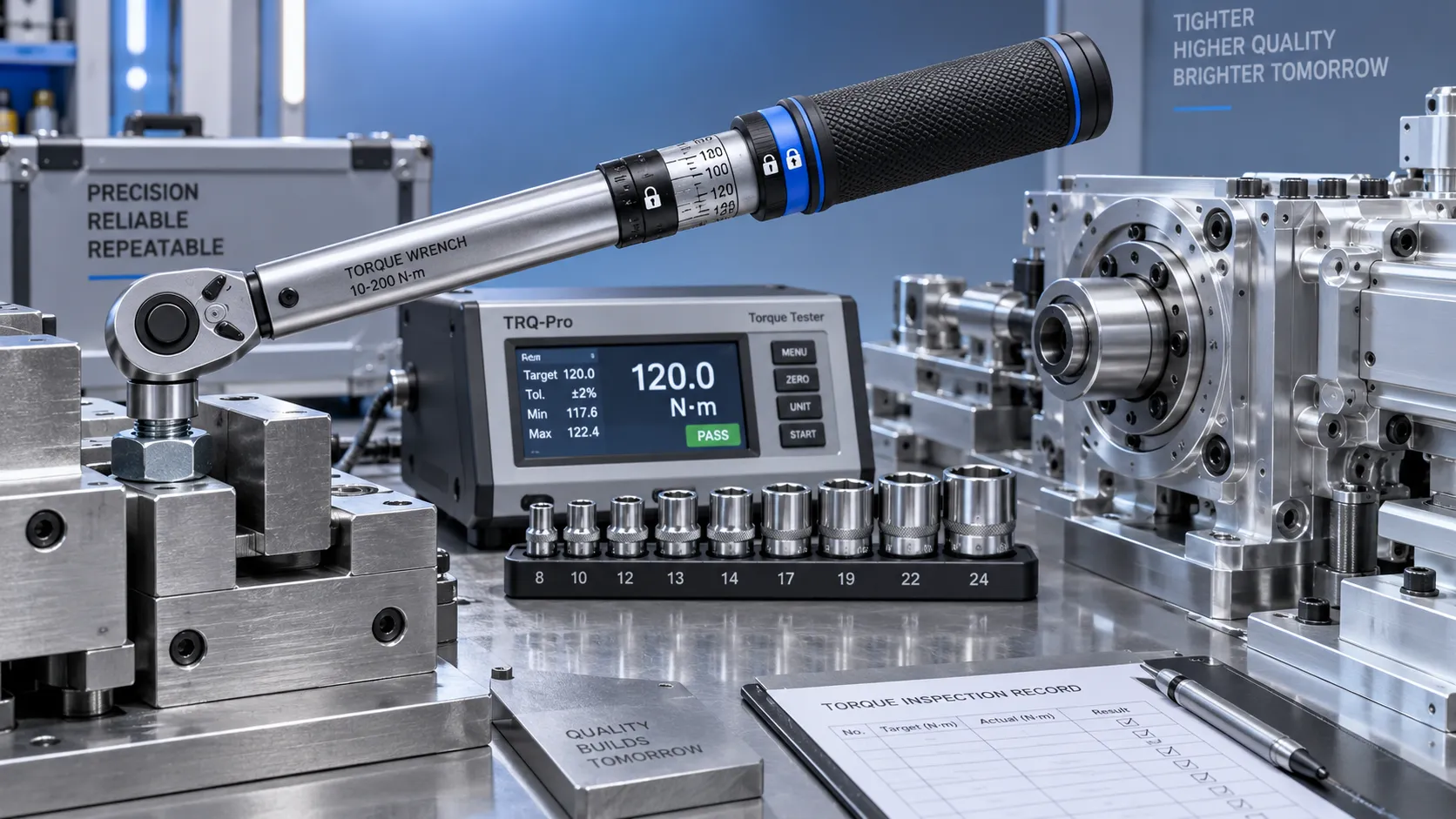
Selecting Adjustable Torque Tools for Repeatable Fastener Assembly
Adjustable torque tools: learn how to match range, accuracy, control methods, calibration, and ergonomics for repeatable, reliable fastener assembly.

How to Select Aerospace Inspection Tools for Aircraft Maintenance Tasks
Aerospace maintenance inspection tools: learn how to select reliable, traceable equipment for aircraft access, accuracy, calibration, and compliant maintenance decisions.

How to Select Wire Bonding Tools for Fine-Pitch Semiconductor Packaging
Explore semiconductor manufacturing tools for wire bonding and learn how to select precision solutions for fine-pitch packaging, reliable loops, accuracy, and yield.
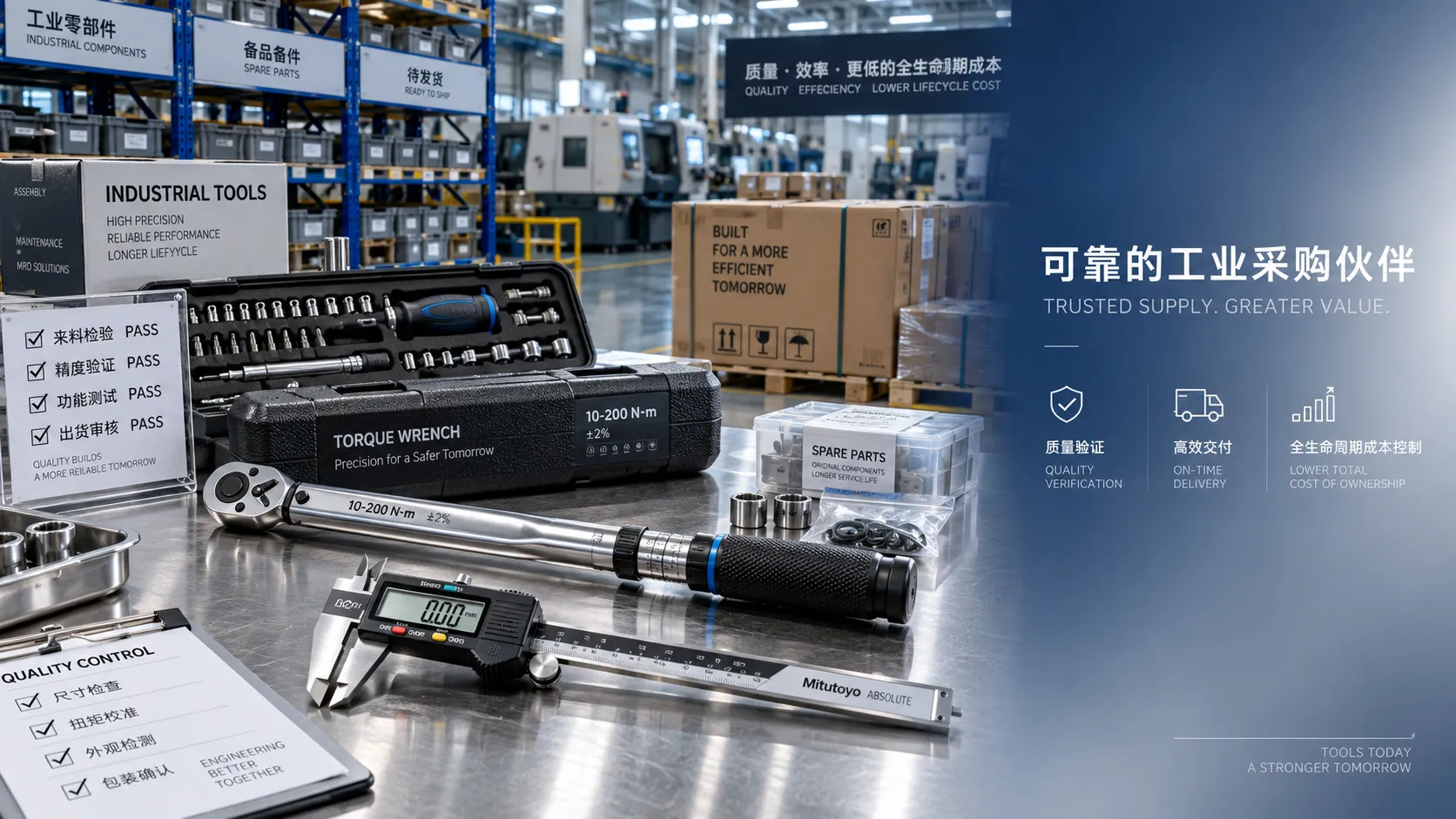
How to Compare Industrial Tool Suppliers for Quality, Lead Time, and Total Cost
Industrial tool selection supplier comparison made simple: evaluate quality, lead times, total cost, service, and supply resilience for confident sourcing decisions.

Industrial Equipment Application Guidance: Match Machines to Operating Conditions
Application guidance industrial equipment: match capacity, duty cycle, materials, site conditions, safety, and lifecycle cost to improve reliable output. Read the guide.
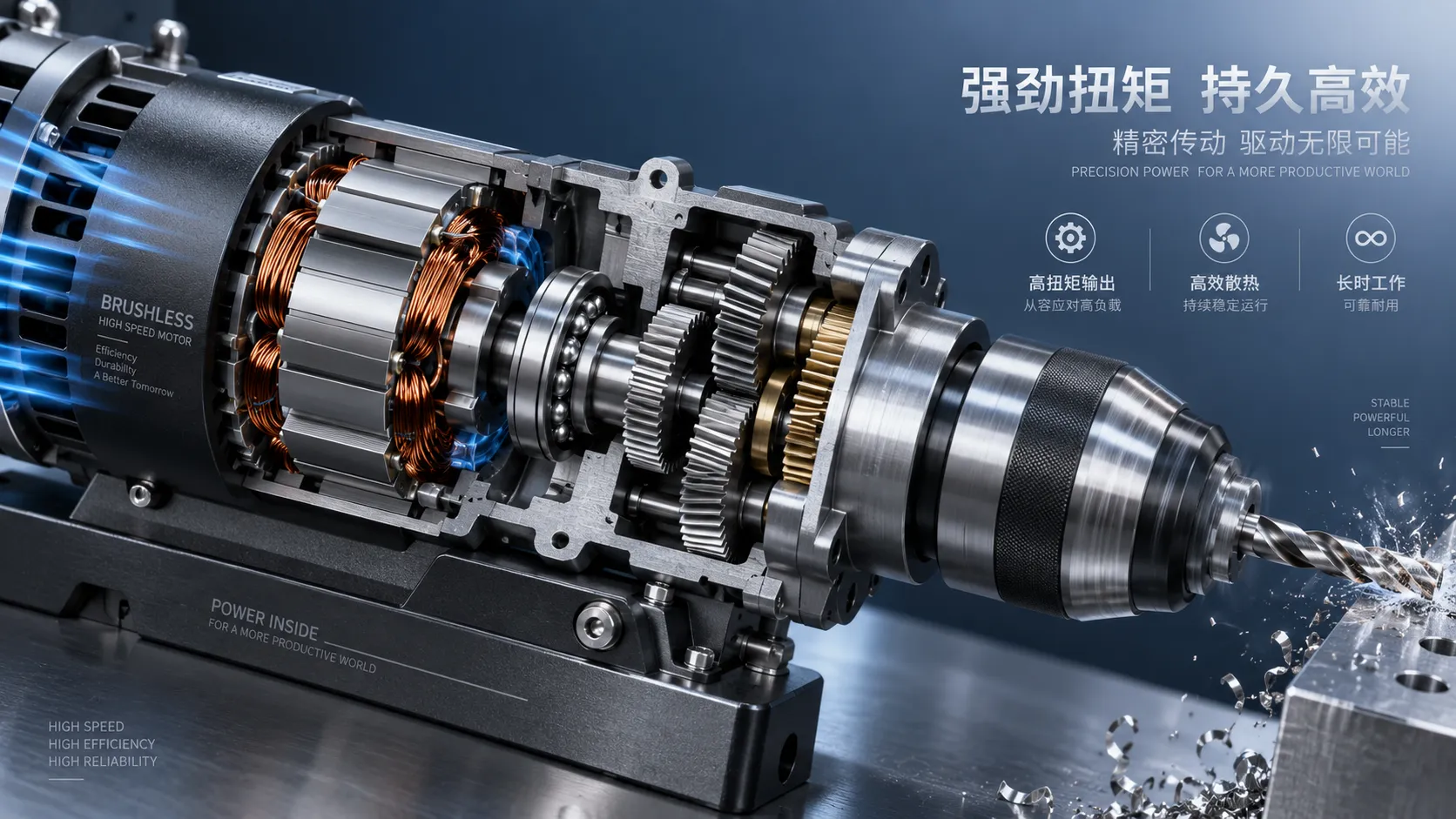
Selecting High-Speed Brushless Tool Motors for Torque, Heat, and Duty Cycle
High speed brushless tool motors: learn how to balance torque, heat, gearing, and duty cycle for reliable industrial tool performance and longer service life.
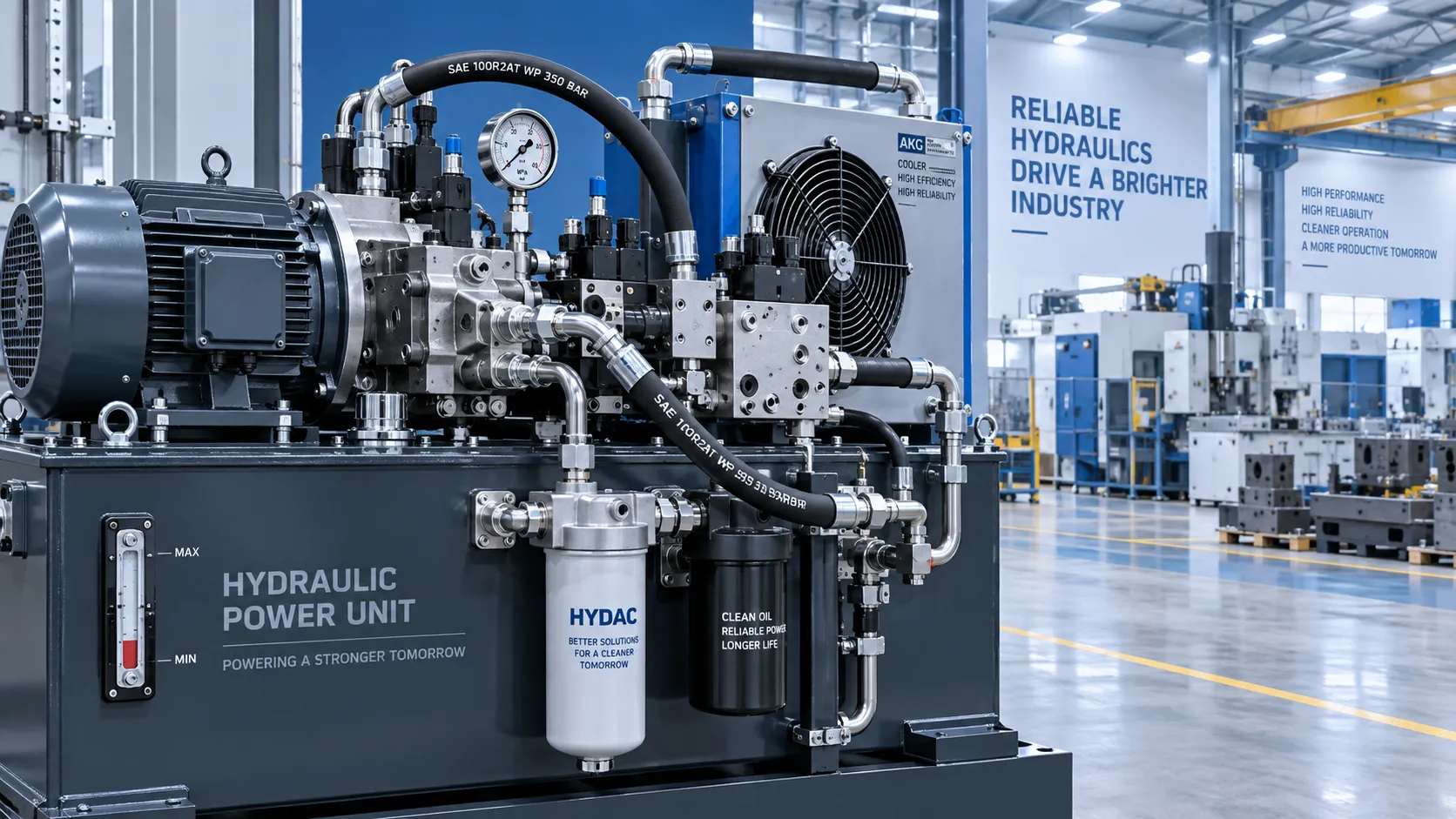
What Determines Industrial Hydraulic System Price for Heavy-Duty Equipment?
Industrial hydraulic system price depends on duty cycle, pressure, components, cooling, and integration. Compare quotes intelligently to secure reliable heavy-duty performance.

Welding Fume Extraction PPE: When Respirators Are Not Enough for Shop Safety
Welding fume extraction PPE: learn why respirators alone fall short and how source capture, ventilation, and layered controls improve shop safety.

How to Select Optical Metrology Solutions for Tight-Tolerance Manufacturing
Optical industrial metrology solutions for tight-tolerance manufacturing: evaluate accuracy, surface compatibility, workflow, and traceability to select with confidence.
Related News
- 00
0000-00
Planning Access, Material Flow, and Clearance Around a 3200mm Sliding Saw - 00
0000-00
How to Select Vernier Precision Calipers for Tight-Tolerance Machining Inspection - 00
0000-00
How to Choose Metalworking Tools for Sheet Metal by Thickness and Forming Tasks - 00
0000-00
Metrology Technology Europe: Which Systems Improve Inspection Accuracy on the Line? - 00
0000-00
How to Choose Precision Measuring Instruments in North America for Tighter Tolerance Work
Metrology Fellow
Weekly Insights
Stay ahead with our curated technology reports delivered every Monday.