
Handheld Laser Welding vs TIG: Which Is Better for Thin Stainless Steel Parts?





Handheld Laser Welding vs TIG: Which Is Better for Thin Stainless Steel Parts?
For thin stainless steel parts, process choice now affects more than appearance.
It influences throughput, distortion, rework rates, training time, and overall manufacturing stability.
That is why the debate around handheld laser welding versus TIG has become sharper in recent years.
For many thin stainless steel applications, handheld laser welding offers a real shift in performance.
Still, TIG remains relevant in certain fit-up conditions, finish requirements, and lower-volume operations.
The better choice depends on part geometry, joint consistency, heat sensitivity, and labor economics.
This comparison focuses on practical selection signals for thin stainless steel parts in modern fabrication.
Why Thin Stainless Steel Changes the Decision
Thin stainless steel reacts quickly to heat.
Even small changes in input energy can create warping, discoloration, burn-through, or edge collapse.
This is especially true for sheet, tube, enclosures, food equipment, and decorative assemblies.
In those cases, the process must control heat while keeping welds repeatable and visually acceptable.
TIG has long been trusted for precision, but it is relatively slow and operator dependent.
Handheld laser welding enters this space with lower heat input, faster travel speed, and narrower weld zones.
Process Basics: Handheld Laser Welding and TIG
TIG uses an electric arc between a tungsten electrode and the workpiece.
It offers strong puddle visibility and precise filler control, especially for experienced welders.
However, arc spread increases the heat-affected zone and often slows production on thin sections.
Handheld laser welding uses a focused beam to join the material with concentrated energy.
Because the beam is highly localized, heat enters the part in a more controlled way.
That usually means less distortion, less post-cleaning, and shorter cycle times.
For thin stainless steel, that difference becomes more meaningful than on heavier sections.
Where Handheld Laser Welding Has the Clear Advantage
The biggest gain is speed.
In many thin stainless steel jobs, handheld laser welding is several times faster than TIG.
That directly improves output for batch work, contract manufacturing, and repeat production cells.
The second advantage is lower heat input.
Less heat reduces panel ripple, weld sink, edge pull, and visible tint on brushed or polished stainless surfaces.
That also lowers the burden on straightening, grinding, pickling, and cosmetic touch-up.
A third benefit is easier consistency across operators.
TIG quality often depends heavily on hand stability, filler timing, and arc-length control.
Handheld laser welding still requires skill, but the learning curve is often shorter for standard joints.
In real production, that can reduce dependence on a small number of highly specialized welders.
Typical gains seen in thin stainless work
- Faster seam completion on covers, cabinets, trays, and light frames.
- Lower rework caused by distortion or overheating.
- Cleaner weld appearance with less discoloration near the seam.
- Reduced finishing time on visible stainless parts.
- More predictable output when part volumes increase.
Where TIG Still Holds Value
TIG is not obsolete, and that matters for balanced process selection.
It still performs well when joints are inconsistent or gaps are difficult to control.
A skilled TIG welder can manage edge mismatch, variable fit-up, and filler-heavy seams more flexibly.
This is useful in repair work, prototypes, or mixed-part workshops with frequent setup changes.
TIG can also remain practical when investment budgets are tight and throughput pressure is limited.
For very small runs, the capital gap may outweigh the productivity upside of handheld laser welding.
So if the work mix is irregular, TIG may still be the safer short-term option.
Thin Stainless Steel Comparison by Decision Factor
Cost Control: Look Beyond Machine Price
This is where many evaluations become too narrow.
TIG often looks cheaper at the equipment level.
But thin stainless steel production rarely lives or dies on machine price alone.
Actual cost comes from labor hours, reject rates, cosmetic correction, and delivery speed.
Handheld laser welding can shift the economics when part volumes are moderate to high.
A faster process with less rework often produces better cost per acceptable part.
That becomes even more visible when stainless surfaces must stay clean and distortion free.
In those environments, handheld laser welding is often a margin protection tool, not just a joining method.
Cost questions worth checking
- How much finishing time follows each meter of weld?
- How often do thin parts require straightening or remake?
- How difficult is it to staff high-skill TIG positions?
- What is the output impact during demand spikes?
- How often do cosmetic defects delay shipment approval?
Risks and Limits of Handheld Laser Welding
Handheld laser welding is not automatically the best answer in every case.
Its advantages depend on process discipline.
Joint preparation, part consistency, shielding setup, and safety management all matter.
If fit-up varies too much, weld stability may fall and expected efficiency may not appear.
There is also a training and safety framework that cannot be treated casually.
Recent market movement shows growing attention to handheld laser welding safety and standardized usage controls.
That means selection should include workflow readiness, not just weld speed claims.
A Practical Selection Framework
A useful decision starts with the part family, not the machine brochure.
For thin stainless steel parts, ask four direct questions.
- Are the joints repeatable and dimensionally stable across production lots?
- Is distortion currently causing rework, scrap, or customer complaints?
- Does output demand justify a faster welding process?
- Can the site support safe handheld laser welding procedures and operator training?
If the answer is yes to most of these, handheld laser welding usually deserves serious priority.
If the work is irregular, gap-heavy, and low volume, TIG may still fit better.
In practice, some shops benefit from keeping both processes for different product classes.
Final Verdict
For most thin stainless steel parts, handheld laser welding is the stronger modern production choice.
It usually wins on speed, heat control, distortion reduction, and repeatable visual quality.
Those gains matter most where stainless appearance, throughput, and cost stability all carry weight.
TIG still has value for variable fit-up, prototype flexibility, and lower-capital workshops.
But if the goal is scalable efficiency on repeat thin-gauge stainless assemblies, the signal is clear.
Handheld laser welding is often better aligned with precision fabrication economics today.
The smartest next step is to compare both methods on real parts, not generic assumptions.
Measure cycle time, distortion, finish effort, and operator repeatability, then decide from evidence.
Related News
How Procurement Teams Can Map the Industrial Value Chain to Reduce Supply Risk
Industrial value chain procurement helps teams map hidden dependencies, qualify resilient sources, and reduce supply risk before disruptions stop production.
How Specification-Driven Articles Improve Precision Measurement System Selection
Specification-oriented articles precision measurement guidance helps teams compare accuracy, repeatability, environment, and data needs to select reliable systems with confidence.

How to Evaluate a Technology Integration Service Provider for Complex Projects
Technology integration service provider selection guide: evaluate interface ownership, delivery discipline, scalable architecture, and risk control for complex projects.
How Battery, Torque, and Duty Cycle Affect Cordless Power Tool Efficiency
Cordless power tool efficiency depends on battery output, torque, and duty cycle. Learn how to match tools to demanding jobs for stronger runtime and productivity.
Product Comparison Resources for Component Compatibility and Lifecycle Risk
Product comparison resources for components: evaluate compatibility, interfaces, service support, and lifecycle risk to reduce downtime, avoid redesigns, and make confident sourcing decisions.
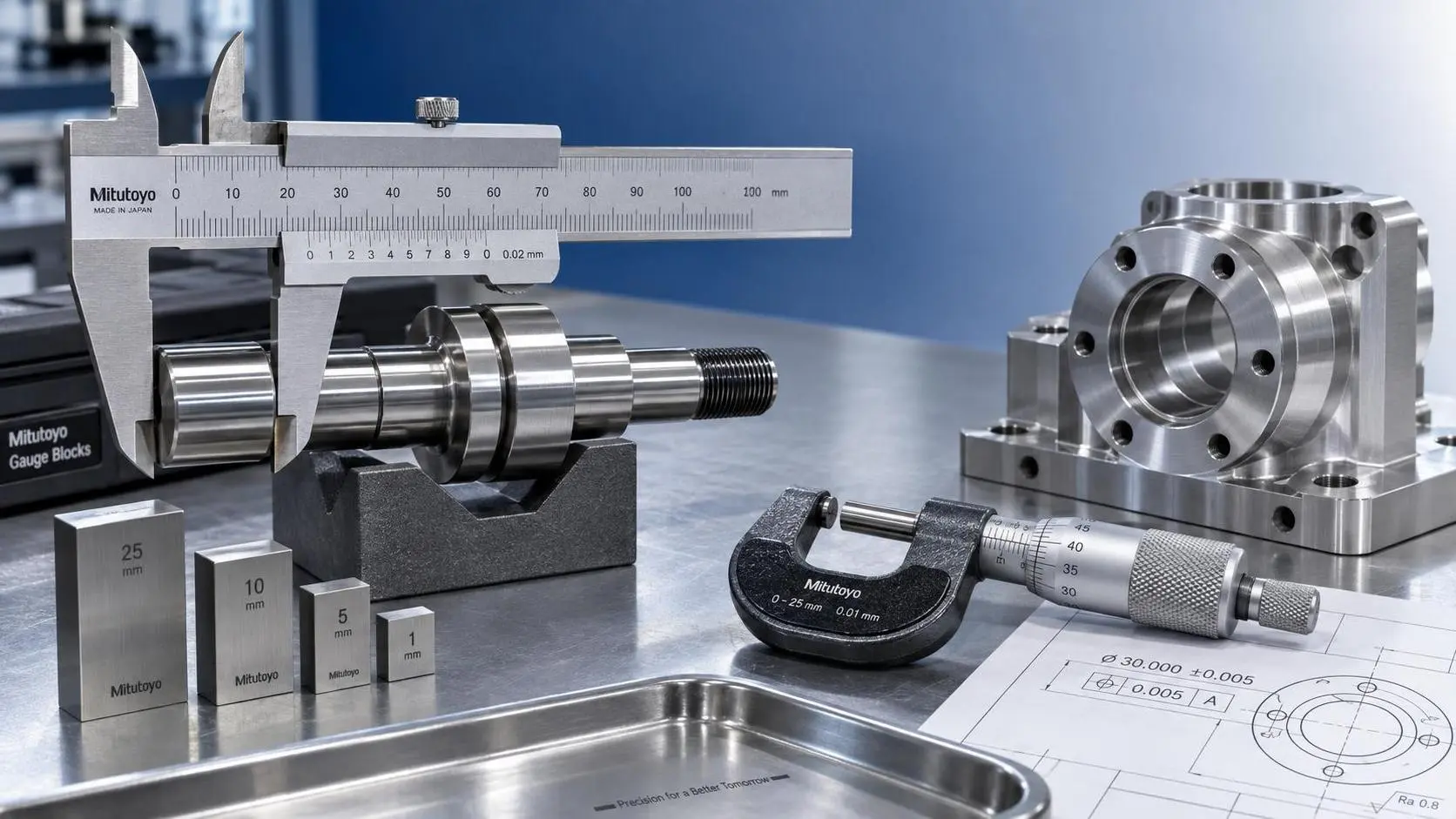
How to Select Vernier Precision Calipers for Tight-Tolerance Machining Inspection
Vernier precision calipers for tight-tolerance machining: learn how to select the right range, jaw design, accuracy, and verification process for reliable inspection.
Product Comparison Resources in Europe: How Buyers Can Verify Specs and Suppliers
Product comparison resources Europe: learn how to verify industrial specs, compliance claims, supplier credibility, and delivery risk for smarter purchasing decisions.

How to Evaluate an Industrial Metrology Solution Manufacturer for Production Use
Industrial metrology solution manufacturer evaluation guide for production: compare accuracy, traceability, automation, software, service, and acceptance testing to reduce risk.
Which ISO Standards Matter Most for Precision Engineering Quality Control?
Precision engineering ISO standards explained: discover how ISO 9001, ISO/IEC 17025, ISO 10012, GPS, and ISO 3834 strengthen quality control, traceability, and compliance.
Related News
- 00
0000-00
North American Welding Innovations Reshaping Automation, Quality, and Labor Productivity - 00
0000-00
How to Choose Handheld Laser Welding Equipment for Thin Metal Fabrication - 00
0000-00
Where Do Energy-Saving Welding Equipment Upgrades Deliver the Best ROI? - 00
0000-00
Low-Spatter Welding Equipment Applications: Best Uses by Material and Production Needs - 00
0000-00
How to Choose Auto Darkening Welding Helmets for Safety, Comfort, and Arc Performance
Welding Metallurgy Expert
Weekly Insights
Stay ahead with our curated technology reports delivered every Monday.