
How to Evaluate a Material Science Supplier for R&D and Production Needs?





How to Evaluate a Material Science Supplier for R&D and Production Needs?
Choosing the wrong material science supplier usually does not fail in the quotation stage. It fails six months later, when pilot lots drift, data packages are thin, or the supplier that looked sharp in R&D cannot hold process discipline once volumes rise. That is why a practical material science supplier guide has to look past price sheets and ISO logos. Technical evaluators need to know whether a supplier can support experimental work, survive scale-up friction, and still deliver repeatable material behavior when production gets real.
If you are screening suppliers for coatings, alloys, ceramics, polymers, composites, powders, specialty consumables, or application-specific material systems, the evaluation should follow the development cycle itself: can they help define the material, characterize it properly, manufacture it consistently, and document it well enough for purchasing, quality, and production teams to live with it later?
Start with the problem definition, not the supplier pitch
Before comparing vendors, lock down what success actually means. Many sourcing exercises go sideways because the internal team asks for “high strength,” “better thermal stability,” or “improved corrosion resistance” without defining test method, operating window, failure mode, or acceptable variation.
- Specify the application environment: temperature range, chemical exposure, humidity, wear profile, electrical load, sterilization cycle, or outdoor aging conditions.
- Tie every important property to a method or standard where applicable, such as ASTM, ISO, IPC, or customer-specific protocols.
- Separate “must-have” requirements from optimization targets. Suppliers can work with tradeoffs; they struggle when every parameter is treated as non-negotiable.
This step sounds basic, but it changes vendor conversations immediately. Strong suppliers ask clarifying questions here. Weak ones move too quickly to samples.
Check whether their technical team can support development, not just fulfillment
A supplier fit for R&D usually has a different operating rhythm from a supplier built only for contract production. You want to know who you will actually work with after onboarding: application engineer, materials scientist, QC manager, process engineer, or just a sales contact relaying answers.
Useful questions include:
- Who owns formulation or process-change decisions?
- Can they interpret failure analysis results and recommend next-step trials?
- Do they have experience moving a material from lab sample to pilot and then to sustained production?
- How fast can they issue revised technical data, COA formats, or controlled specifications?
One practical signal: ask about a past scale-up problem in general terms, without requesting confidential details. Experienced teams can explain what changed between bench performance and production performance. If the answer stays vague, treat that as a warning.
Look hard at lab capability and characterization depth
For technical evaluation personnel, this is usually where real differentiation appears. A supplier may have a solid brochure and still lack the testing discipline needed for development work. The question is not whether they own instruments. The question is whether they can generate decision-grade data.
Review the characterization methods relevant to your application. Depending on the material category, that may include DSC, TGA, FTIR, XRD, SEM, EDS, particle size analysis, rheology, hardness, tensile testing, adhesion testing, salt spray, conductivity, dimensional metrology, or surface roughness measurement. Not every supplier needs every tool in-house. But if a critical property is outsourced, ask who performs it, how often, and whether the method is validated for release or only for occasional troubleshooting.
Also check whether they can correlate material data with process data. That matters more than many buyers expect. A supplier that can show how mixing energy, cure schedule, powder morphology, moisture level, or heat treatment affects final properties is usually more scale-ready than one that only reports endpoint values.
Do not treat sample performance as proof of production stability
This is one of the most common mistakes in supplier selection. A hand-built trial lot can be excellent and still tell you very little about repeatability. Ask how the sample was made. Was it produced on lab equipment, pilot equipment, or the same line intended for commercial lots? Were raw materials from standard production inventory or special-picked inputs?
You need a view of process capability, even if the supplier cannot disclose every internal detail. Useful checkpoints:
- Batch size range from lab to commercial scale.
- Critical process parameters and how they are monitored.
- In-process control points and hold/release criteria.
- Lot-to-lot variation history where shareable.
- Change-control procedure for raw materials, equipment, site, or formulation adjustments.
If your application is sensitive to narrow tolerances, ask for multiple lots for validation, not a single hero sample.
Audit raw material control before you trust the final material
Many performance failures start upstream. Specialty materials often depend on feedstocks with variable purity, particle shape, additive package, or moisture sensitivity. A supplier that cannot control incoming material variability will eventually pass that instability to you.
Ask what incoming inspection looks like, whether approved vendor lists exist, and how substitutes are qualified. In metals and welding-related environments, chemistry control and traceability matter. In polymers, coatings, and composites, storage condition and shelf-life management can matter just as much. If the supplier uses a multi-source strategy for continuity, that can be a strength, but only if equivalency is documented and controlled.
Quality documents should be usable, not ornamental
Technical evaluators often inherit beautiful certificates that do not help production at all. Ask for the actual documentation package you would receive with shipments: specification sheet, safety data sheet where applicable, certificate of analysis, certificate of conformance if offered, traceability format, shelf-life statement, storage instructions, and revision control records.
If you operate in regulated or export-sensitive sectors, verify the specific documentation you need. Do not assume a general quality certification covers product-level compliance. Requirements vary widely by market and application, and some claims need direct document review or third-party confirmation【待核实】.
Check commercialization readiness early
A supplier may be technically strong and still be a bad fit if they cannot support volume ramps, packaging formats, lead-time commitments, or regional logistics. This is where R&D teams and operations teams often diverge. The material works, but the business model around it does not.
Clarify minimum order quantities, standard lead times, packaging options, cold-chain or moisture-control requirements, export restrictions where relevant, and dual-site or backup manufacturing options. For global programs, also ask where final release testing occurs and whether local inventory can preserve lot integrity.
One detail that gets overlooked: can the supplier maintain the same material identity across regions? A material approved in one market but supplied under different manufacturing conditions elsewhere creates avoidable requalification work.
Watch how they handle technical disagreement
Sooner or later, your team and the supplier will see the same test result differently. That moment is informative. Good suppliers do not hide behind generic statements like “within standard tolerance” when the application is clearly failing. They ask for fixture details, operator conditions, substrate state, environmental exposure, and sample history. They propose a controlled retest plan.
This matters because development programs rarely fail on one bad value alone. They fail when nobody can close the loop between test data, process conditions, and field behavior.
Reference checks should target failure modes, not satisfaction scores
If reference conversations are available, avoid broad questions like “Are you happy with them?” Ask narrower ones. How did they manage a spec revision? What happened when a lot was out of trend but still nominally in spec? Were corrective actions timely? Did technical support remain strong after volume business started?
In many cases, specific customer references may be limited for confidentiality reasons. That is normal. Use published technical papers, conference participation, patent activity, and disclosed industry partnerships carefully as supporting signals, not proof of fit.
A short evaluation checklist you can actually use
- The supplier understands the end-use condition in technical terms, not marketing language.
- Critical material properties are tied to clear methods and acceptance logic.
- Lab characterization is relevant, repeatable, and sufficient for decision-making.
- Sample lots are representative or clearly labeled as non-production equivalents.
- Raw material control and traceability are visible and credible.
- Quality documents support release, investigation, and change management.
- Commercial terms do not undermine scale-up or multi-region deployment.
- The technical team can handle root-cause work when results are inconvenient.
A reliable material science supplier guide is less about finding the supplier with the most impressive presentation and more about identifying who can carry technical truth from the lab bench into production without losing control of the material along the way. If you have to choose between polished sales language and transparent process discipline, pick the team that shows you where variability lives and how they contain it. That is usually the supplier you can build with.
Related News
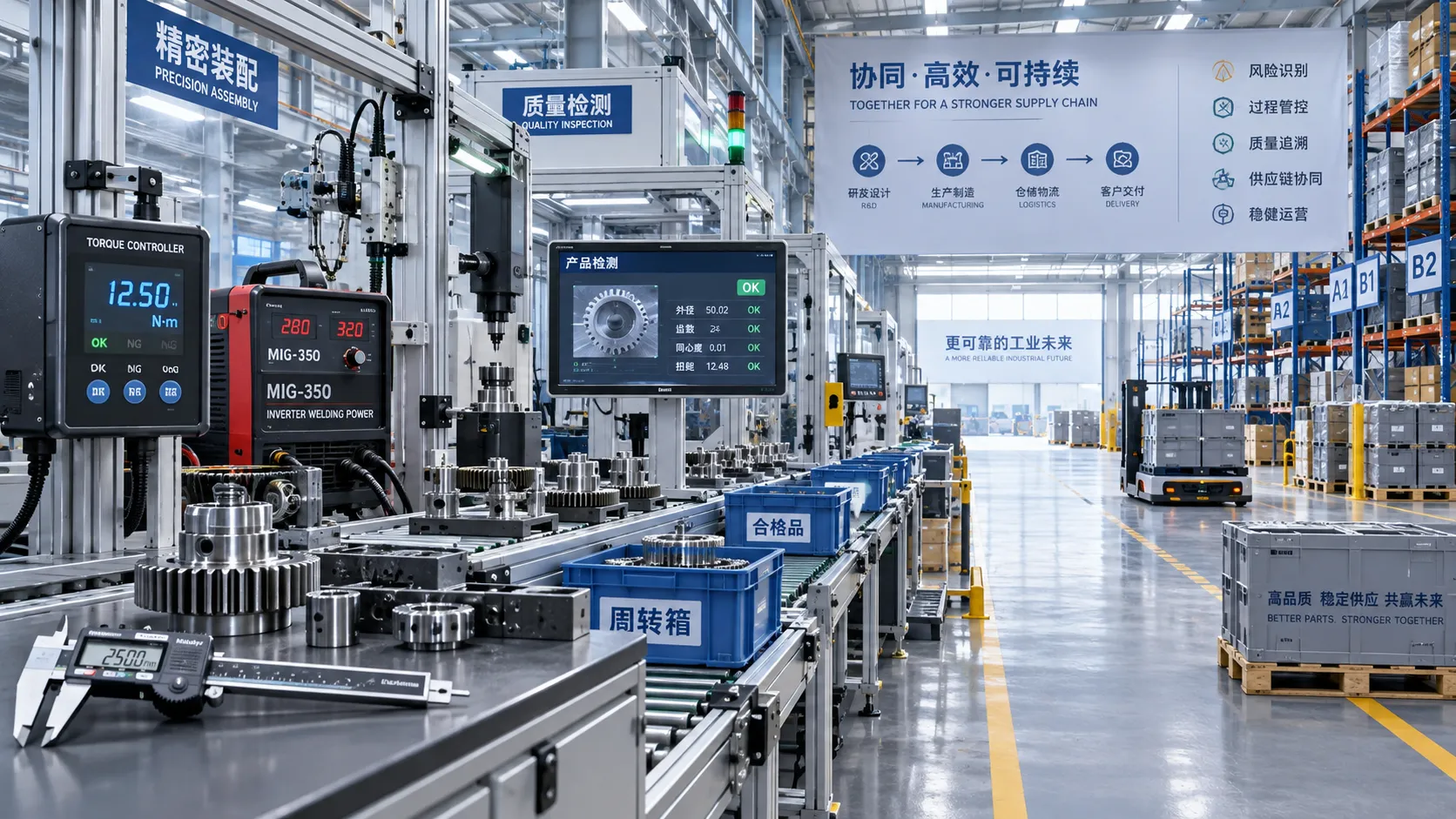
How Procurement Teams Can Map the Industrial Value Chain to Reduce Supply Risk
Industrial value chain procurement helps teams map hidden dependencies, qualify resilient sources, and reduce supply risk before disruptions stop production.

How Specification-Driven Articles Improve Precision Measurement System Selection
Specification-oriented articles precision measurement guidance helps teams compare accuracy, repeatability, environment, and data needs to select reliable systems with confidence.

How to Evaluate a Technology Integration Service Provider for Complex Projects
Technology integration service provider selection guide: evaluate interface ownership, delivery discipline, scalable architecture, and risk control for complex projects.
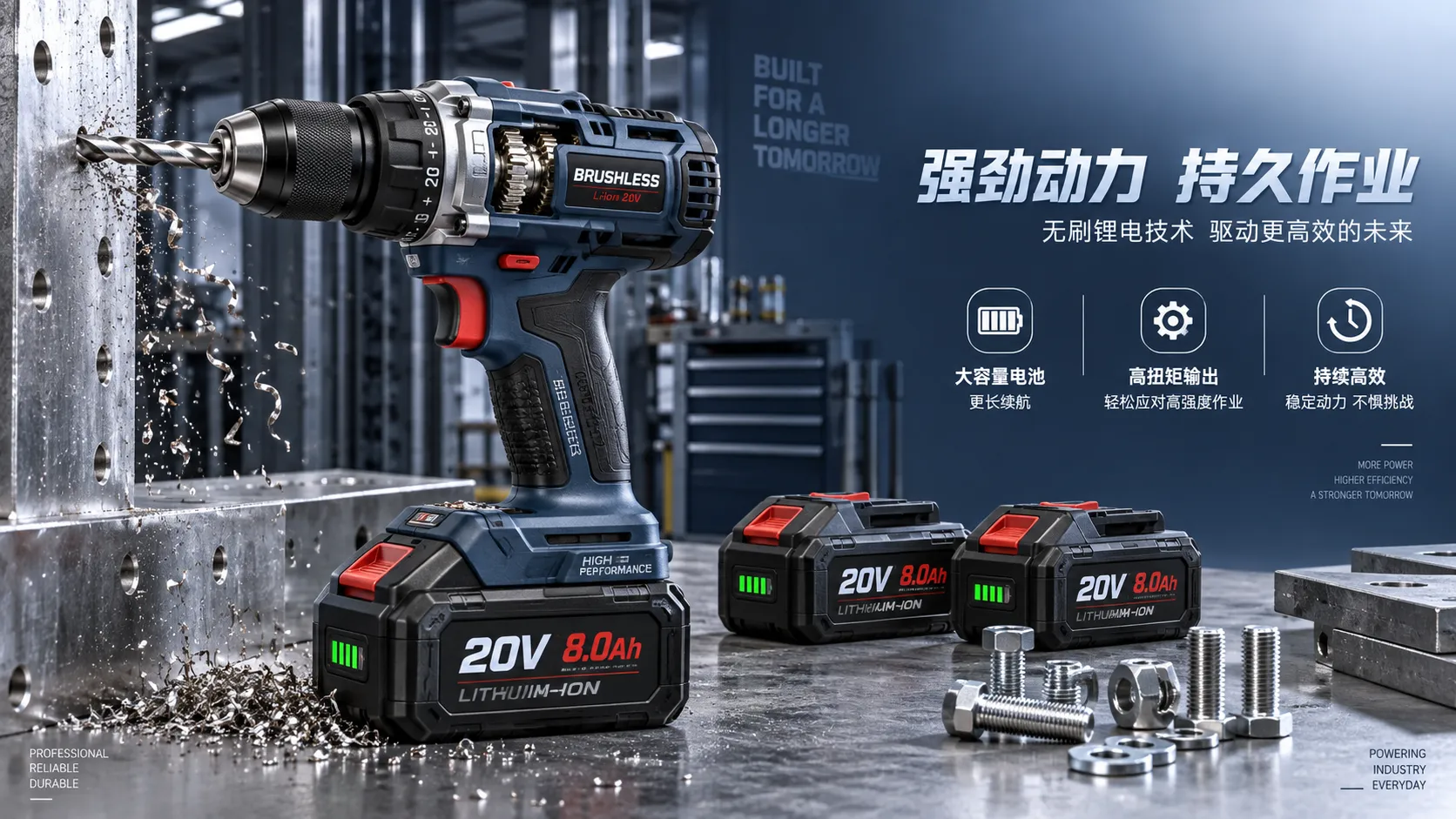
How Battery, Torque, and Duty Cycle Affect Cordless Power Tool Efficiency
Cordless power tool efficiency depends on battery output, torque, and duty cycle. Learn how to match tools to demanding jobs for stronger runtime and productivity.

Product Comparison Resources for Component Compatibility and Lifecycle Risk
Product comparison resources for components: evaluate compatibility, interfaces, service support, and lifecycle risk to reduce downtime, avoid redesigns, and make confident sourcing decisions.
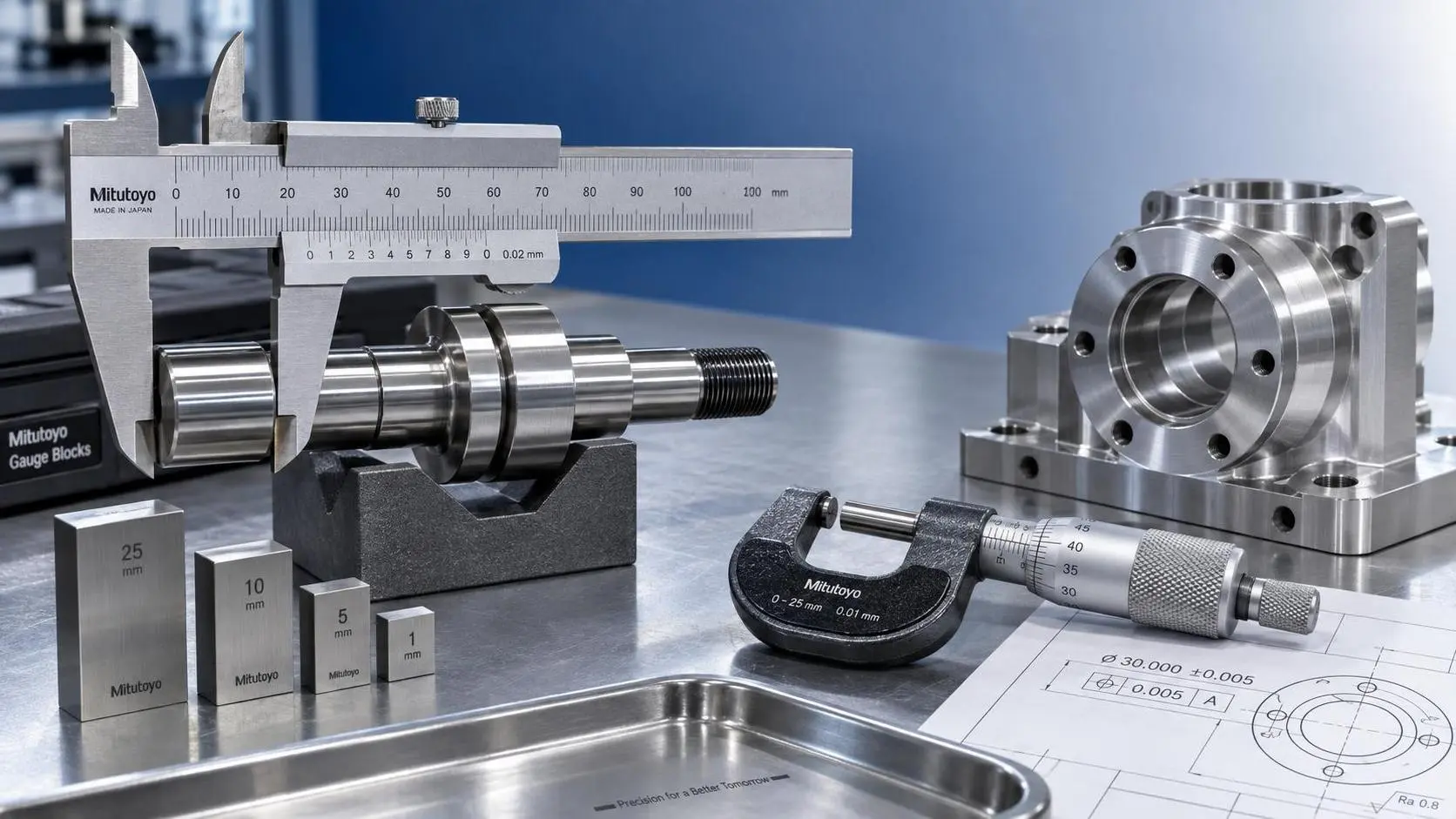
How to Select Vernier Precision Calipers for Tight-Tolerance Machining Inspection
Vernier precision calipers for tight-tolerance machining: learn how to select the right range, jaw design, accuracy, and verification process for reliable inspection.

Product Comparison Resources in Europe: How Buyers Can Verify Specs and Suppliers
Product comparison resources Europe: learn how to verify industrial specs, compliance claims, supplier credibility, and delivery risk for smarter purchasing decisions.

How to Evaluate an Industrial Metrology Solution Manufacturer for Production Use
Industrial metrology solution manufacturer evaluation guide for production: compare accuracy, traceability, automation, software, service, and acceptance testing to reduce risk.

Which ISO Standards Matter Most for Precision Engineering Quality Control?
Precision engineering ISO standards explained: discover how ISO 9001, ISO/IEC 17025, ISO 10012, GPS, and ISO 3834 strengthen quality control, traceability, and compliance.
Related News
- 00
0000-00
How to Evaluate a Technology Integration Service Provider for Complex Projects - 00
0000-00
Product Comparison Resources in Europe: How Buyers Can Verify Specs and Suppliers - 00
0000-00
How to Evaluate an Industrial Metrology Solution Manufacturer for Production Use - 00
0000-00
How to Evaluate a Metal Joining Solutions Factory for Quality, Capacity, and Delivery Risk - 00
0000-00
How to Evaluate OEM Tool Solutions for Reliable Bulk Tool Orders
Dr. Alistair Vaughn
Weekly Insights
Stay ahead with our curated technology reports delivered every Monday.