
What Welding Equipment Documents Should Suppliers Provide?





What Welding Equipment Documents Should Suppliers Provide?
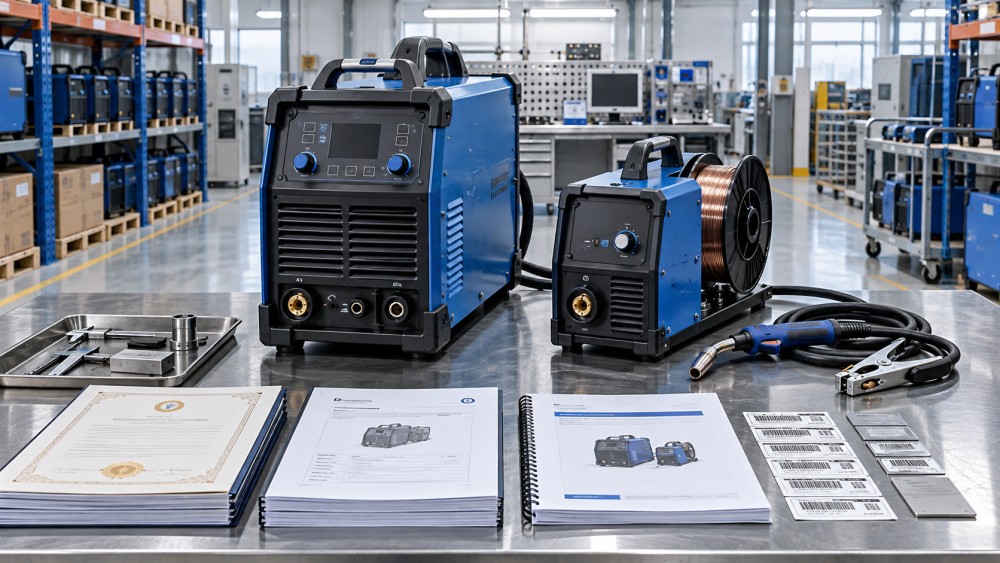
What welding equipment documents should suppliers provide? Buyers need more than a catalog and price list. They need evidence that equipment is compliant, safe, traceable, serviceable, and suitable for intended applications.
For distributors, contractors, fabricators, and procurement teams, documentation reduces avoidable risk before equipment reaches a warehouse, project site, production line, or international market.
The most reliable suppliers provide a structured documentation package before shipment, not after a compliance audit, customer complaint, customs delay, or workplace safety incident occurs.
This guide explains which welding equipment records matter most, how buyers should review them, and which missing documents should trigger further technical or commercial questions.
Start With the Documents That Prove Legal Market Access
Market-access documents should be the first checkpoint because a technically capable welding machine may still be unsuitable for sale or use in a target country.
Suppliers should provide declarations of conformity for applicable regional regulations, including CE documentation for equipment placed on the European Economic Area market.
A valid EU Declaration of Conformity should identify the manufacturer, product model, relevant directives or regulations, applied standards, signature authority, and issue date.
For welding equipment, common compliance areas include electrical safety, electromagnetic compatibility, machinery requirements, hazardous substances, and radio equipment rules when wireless functions are included.
Buyers should not accept a generic certificate that lists broad product categories without clearly identifying the exact welding machine, power source, torch, feeder, or accessory.
Where CE marking applies, suppliers should also explain the technical file availability process. The file itself may be confidential, but responsible manufacturers should retain supporting evidence.
For North American projects, buyers may request UL, ETL, CSA, or other recognized electrical safety certification depending on local codes and customer requirements.
For other markets, relevant records can include UKCA declarations, EAC certificates, GCC conformity documents, SASO requirements, or country-specific import approvals.
Compliance documentation should match the final configuration. A certificate for a basic welding inverter does not automatically cover a bundled water cooler, wireless control unit, or automated feeder.
Ask for Test Reports, Not Only Certificates
Certificates provide a compliance summary, while test reports show how a product was evaluated. Serious buyers should request reports when sourcing high-volume or higher-risk equipment.
Electrical safety reports may address insulation resistance, dielectric strength, protective-earth continuity, leakage current, temperature rise, and input protection performance under specified conditions.
Electromagnetic compatibility reports are especially important for inverter welders, plasma cutters, and automated systems that may operate near sensitive industrial electronics.
Relevant standards often include IEC 60974 series requirements for arc welding equipment, although applicable standard versions depend on equipment type and destination market.
Buyers should verify that reports come from a competent laboratory and identify the tested model. Model-family extensions should be supported by documented technical justification.
A report issued many years ago may remain useful, but buyers should confirm whether the product design, control board, enclosure, software, or rated output changed afterward.
For handheld laser welding systems, documentation should also cover laser classification, protective measures, interlock arrangements, emergency stops, and eyewear compatibility requirements.
When equipment includes lithium batteries, remote controls, or digital connectivity, additional transport, radio, cybersecurity, or battery safety records may be required.
Technical Specifications Must Be Detailed and Comparable
A product specification sheet is not merely marketing material. It is the buyer’s baseline for comparing performance, matching applications, and preventing disputes after delivery.
Suppliers should provide rated input voltage, frequency, phase, input current, power factor, duty cycle, output current range, open-circuit voltage, and protection class.
The duty cycle deserves close attention. Buyers should confirm the rated output current, ambient temperature, test standard, and percentage of operating time behind each claim.
A machine advertised as 500 amperes may only deliver that output briefly. Production users need the continuous or practical duty-cycle capability for their actual workloads.
Technical sheets should specify supported welding processes, such as MIG, MAG, TIG, MMA, flux-cored arc welding, submerged arc welding, plasma cutting, or gouging.
For wire-feed equipment, request wire diameter ranges, spool capacity, feed speed, drive-roll configuration, torch connector type, and supported shielding gas arrangements.
For TIG systems, useful details include AC waveform controls, pulse ranges, high-frequency start, lift start, balance adjustment, slope controls, and foot-pedal compatibility.
For automated or robotic welding equipment, suppliers should document communication protocols, interface signals, software versions, supported robot brands, and integration limitations.
Accurate specifications allow distributors to position products honestly and allow contractors to avoid purchasing equipment that cannot meet jobsite productivity requirements.
Safety Documents Should Support Real Workplace Use
Welding equipment documentation should help employers manage hazards, not simply satisfy a procurement checklist. Safety records need to be clear enough for practical deployment.
Suppliers should provide operating manuals with safety warnings, installation instructions, electrical connection requirements, ventilation guidance, maintenance intervals, and troubleshooting information.
Manuals should identify hazards related to electric shock, arc radiation, fumes, hot surfaces, compressed gas, fire, moving wire-feed parts, and electromagnetic interference.
Where applicable, manuals should describe safe generator use, extension cable selection, grounding requirements, environmental limits, and restrictions on use in wet or explosive areas.
Safety data sheets are generally required for consumables rather than welding machines. Buyers should request them for electrodes, fluxes, welding wire, anti-spatter products, and cleaning chemicals.
Consumable safety data sheets should state chemical composition, exposure hazards, first-aid measures, storage conditions, transport information, and appropriate personal protective equipment.
For laser welding systems, suppliers should provide a risk assessment, laser safety instructions, operator training requirements, controlled-area guidance, and emergency response procedures.
Buyers should also ask whether warning labels, manuals, and safety instructions are available in the language required by the destination market.
Material Certificates Matter for Consumables and Fabricated Components
Material documentation becomes critical when welding consumables or equipment components affect weld integrity, pressure containment, corrosion resistance, or contractual traceability obligations.
Suppliers of filler metals should provide certificates of conformity or inspection certificates that identify product grade, batch number, chemical composition, and mechanical properties.
For many industrial applications, EN 10204 Type 3.1 certificates are requested because they provide manufacturer-validated inspection results linked to the delivered batch.
Buyers should confirm whether certificates cover the exact heat, lot, spool, drum, electrode batch, or flux batch supplied, rather than a representative production sample.
Certificates for stainless, aluminum, nickel alloy, and high-strength consumables deserve particular scrutiny because minor composition variation can affect welding behavior and final service performance.
Equipment buyers may also need material certificates for pressure vessels, gas hoses, lifting frames, welding positioners, structural fixtures, and safety-critical fabricated assemblies.
When documentation includes mechanical test results, review tensile strength, yield strength, elongation, impact values, hardness, and testing conditions in relation to project specifications.
Traceable material records protect buyers when a customer later questions weld quality, alloy identity, product origin, or conformance with an approved welding procedure.
Welding Procedure Documents Are Essential for Process-Critical Work
Not every equipment purchase requires formal welding procedure records. However, contractors and fabricators working under codes often need them before production welding begins.
A Welding Procedure Specification, commonly called a WPS, defines the approved welding variables needed to consistently create welds meeting specified quality requirements.
A WPS commonly identifies the process, base material, joint design, filler metal, preheat, interpass temperature, current, voltage, polarity, shielding gas, and travel speed.
Where procedure qualification is required, suppliers or technical partners may provide a Procedure Qualification Record, or PQR, documenting test results supporting the proposed WPS.
Buyers should understand that a welding machine supplier cannot automatically qualify a customer’s production procedure. Qualification depends on materials, joints, standards, and application variables.
Still, a capable supplier should explain recommended parameter windows, compatible consumables, and practical setup guidance for common materials and welding processes.
For regulated work, request documentation aligned with the governing code, such as AWS, ASME, ISO, EN, API, or customer-specific engineering requirements.
Welder qualification records may also be needed for projects, although these normally belong to the employer or contractor rather than the welding equipment supplier.
Traceability Records Protect Buyers After Delivery
Traceability is the ability to connect delivered equipment and consumables to manufacturing records, inspections, certificates, service history, and corrective actions when problems emerge.
At minimum, suppliers should provide model numbers, serial numbers, manufacturing dates, batch references, packing lists, commercial invoices, and clear product identification labels.
For larger orders, buyers should request serial-number lists linked to shipment documents. This simplifies asset registration, warranty claims, maintenance planning, and recall management.
Consumables should have visible lot numbers that remain identifiable after warehouse receiving. Loose or relabeled packaging creates unnecessary quality-control and liability exposure.
Suppliers should explain their change-control process. Buyers need notice when key components, software versions, factories, material sources, or product specifications change.
A documented nonconformance process is also valuable. It should describe how customers report defects, preserve evidence, receive technical assessment, and obtain replacement or corrective action.
For government, aerospace, energy, or major infrastructure work, traceability requirements can be more demanding and may include origin statements, inspection plans, and retained records.
Warranty, Service, and Spare Parts Documents Influence Total Cost
Warranty terms should be provided in writing before purchase. Verbal assurances are difficult to enforce across borders, distributors, project teams, and changing personnel.
A useful warranty document identifies covered parts, coverage duration, exclusions, claim steps, labor responsibilities, freight responsibilities, and remedies for repeated equipment failures.
Buyers should check whether warranty coverage begins at factory shipment, distributor delivery, installation, commissioning, or final customer purchase. The difference can be commercially significant.
For welding machines, clarify coverage for power modules, control boards, wire feeders, torches, cooling systems, connectors, and wear parts such as contact tips or liners.
Suppliers should also provide recommended spare-parts lists, exploded diagrams, part numbers, maintenance schedules, and expected availability periods for critical components.
For industrial fleets, buyers should ask about repair turnaround targets, remote diagnostics, local service partners, technician training, and availability of calibration or commissioning support.
Low purchase prices can become expensive when replacement boards are unavailable, repair information is restricted, or equipment remains idle during a critical production schedule.
Documentation Quality Reveals Supplier Capability
The quality of welding equipment documents is often an early indicator of supplier maturity. Incomplete, inconsistent, or copied records can signal broader operational weaknesses.
Review whether model names match across quotations, labels, declarations, manuals, test reports, invoices, and packaging. Inconsistency should be resolved before issuing a purchase order.
Check signatures, dates, revision numbers, standard references, laboratory details, and document language. Basic errors can complicate customs clearance, tender submissions, and customer audits.
Buyers should maintain a document checklist tailored to each equipment category, destination market, customer contract, and intended welding application rather than relying on one universal list.
Before approving a supplier, request a sample documentation package for the exact proposed model. Review it with quality, engineering, safety, regulatory, and after-sales stakeholders.
For strategic purchases, include document requirements in the purchase contract. Define submission deadlines, acceptance criteria, language requirements, and consequences for missing or invalid records.
Build a Practical Supplier Documentation Checklist
A practical checklist should distinguish mandatory compliance records from commercially useful support documents. This prevents teams from overlooking critical evidence while avoiding unnecessary administrative burden.
Core documents usually include a quotation, technical specification sheet, declaration of conformity, applicable test reports, operating manual, warranty terms, packing list, and serial-number information.
Depending on the product, buyers may also require material certificates, consumable batch certificates, safety data sheets, WPS guidance, PQR evidence, inspection records, and origin declarations.
For imported equipment, include labeling requirements, customs classifications, country-of-origin information, electrical plug details, packaging specifications, and language versions for mandatory instructions.
For projects with formal quality plans, request inspection and test plans, factory acceptance test records, calibration certificates, commissioning reports, and documented training completion records.
The final package should be organized digitally with searchable filenames and revision control. Documents buried in email threads are difficult to verify during audits or warranty claims.
Conclusion: Buy Documentation as Part of the Equipment
What welding equipment documents should suppliers provide? The answer depends on the market, application, and risk level, but compliance, safety, performance, traceability, and service records are fundamental.
Buyers should treat documentation as part of the delivered product. A machine without credible supporting records may create compliance delays, safety gaps, customer disputes, and unplanned operating costs.
The strongest suppliers provide clear, model-specific, current documentation before shipment and remain able to support technical questions after equipment enters service.
By reviewing documents early and tying requirements to contracts, distributors and industrial buyers can source welding equipment with greater confidence, stronger market access, and better long-term value.
Related News
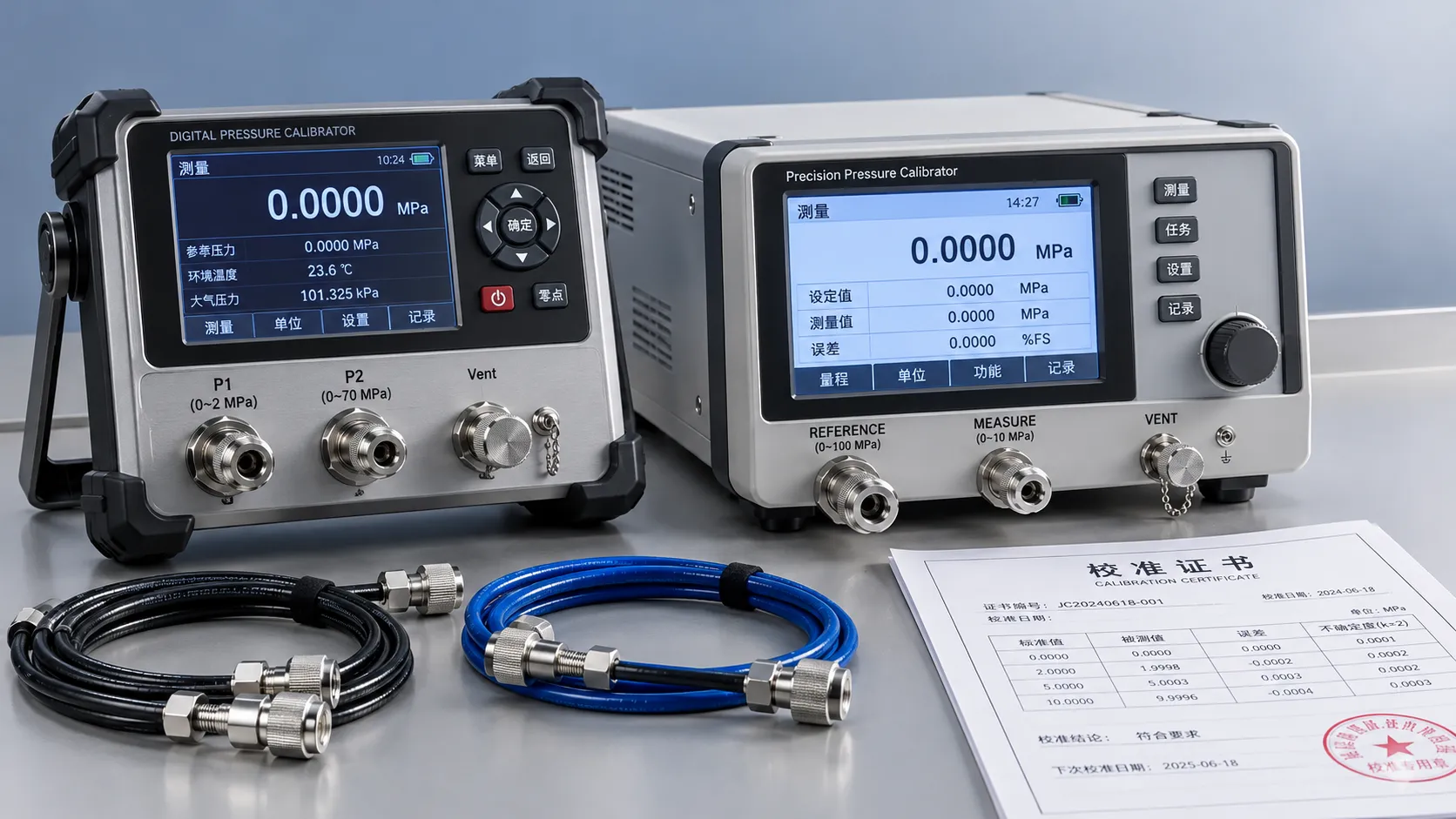
How to Compare Calibration Tools: Range, Uncertainty, and Traceability
Explore product comparison resources for calibration tools. Compare range, uncertainty, and traceability to choose confidently and support defensible measurement decisions.
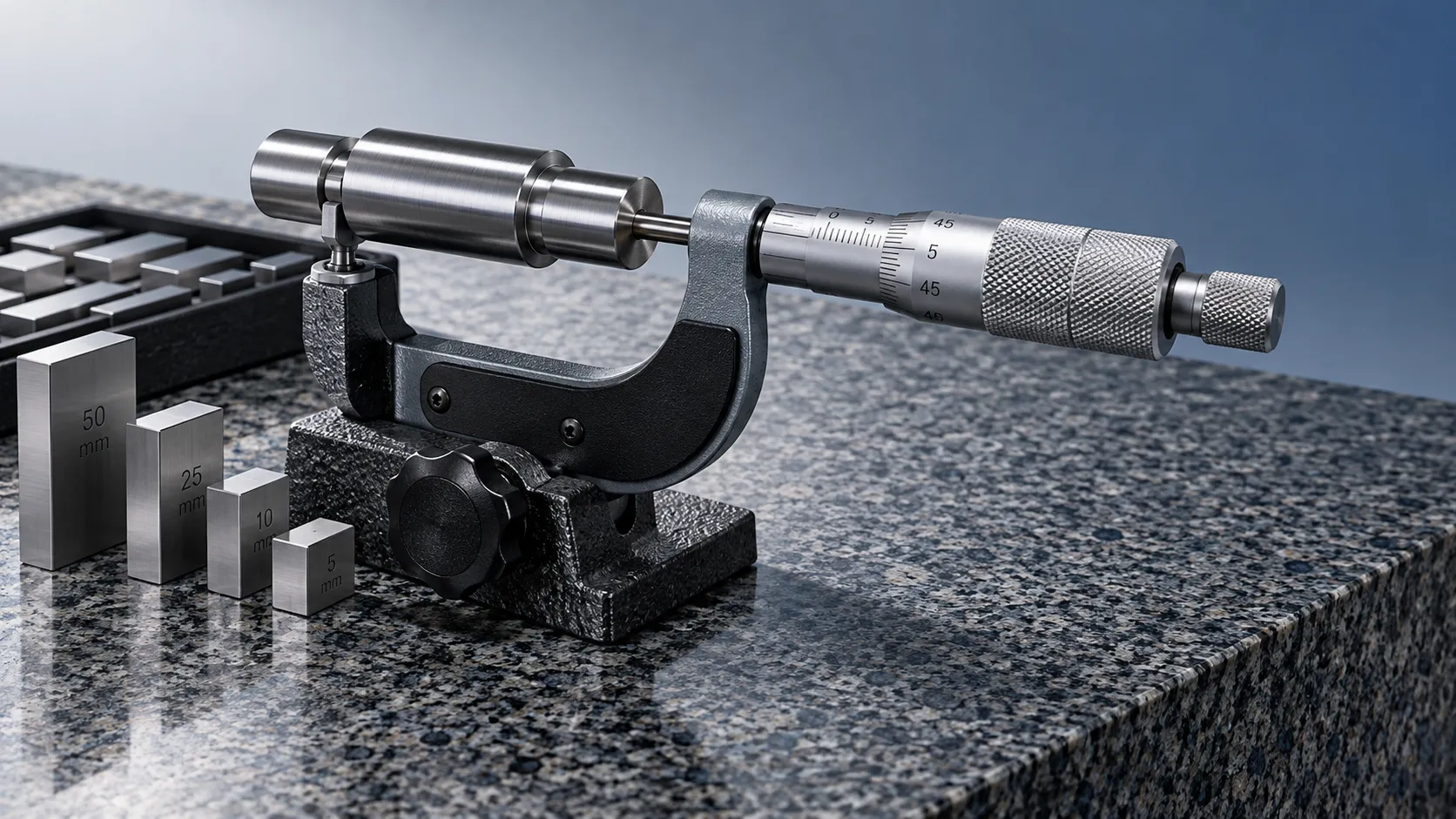
Choosing Industrial Metrology Tools: Matching Measurement Uncertainty to Tolerances
Improve industrial tool selection for metrology by matching measurement uncertainty to tolerances. Learn how to reduce inspection risk and choose equipment with confidence.
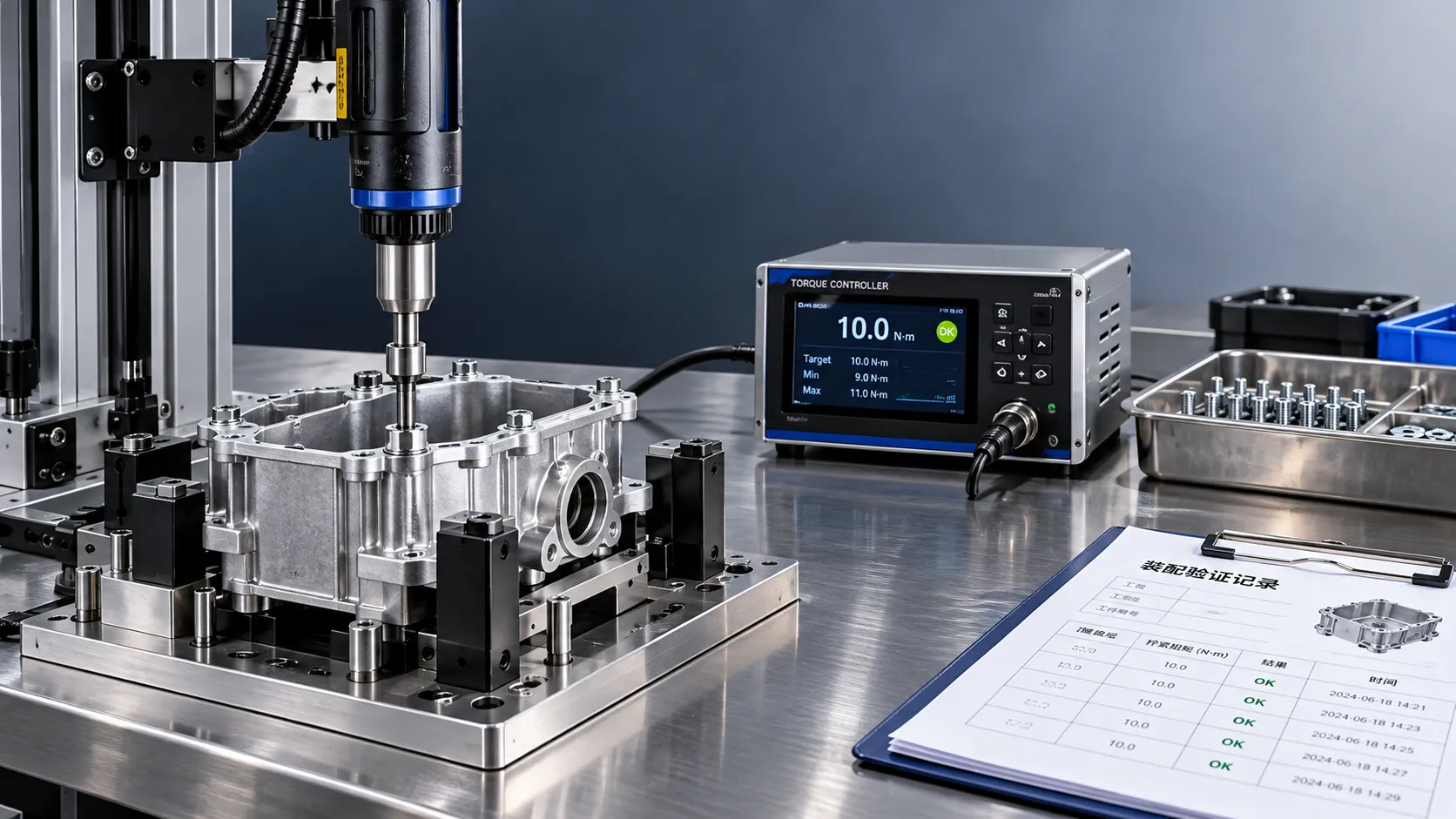
Torque System Suppliers: How to Assess References for Assembly Projects
Explore supplier and solution references torque systems buyers should verify. Assess assembly fit, traceability, and support to reduce risk and choose with confidence.
Equipment Application Guidance for the Middle East: Managing Heat and Dust
Explore application guidance Middle East teams can use to manage heat and dust, protect welding equipment, batteries and precision tools, and reduce downtime. Get practical tips.
Choosing a Handheld Laser Welding Supplier: Weld Trials, Training, and Service
Choose a handheld laser welding supplier with proven weld trials, safety training, and reliable service. Learn what to verify before buying to reduce downtime and protect your investment.

Choosing an Industrial IoT Platform: Key Criteria for Legacy Equipment
Choose an industrial IoT platform for legacy equipment with confidence. Discover key checks for connectivity, data integrity, security, and lifecycle costs before investing.

In-House vs. Outsourced Aircraft Maintenance: Comparing Total Costs
Compare aerospace maintenance cost for in-house vs. outsourced aircraft upkeep. Discover hidden expenses, downtime impacts, and break-even factors to find the best fit for your fleet.

How to Select High-Precision Measuring Instruments for Tight-Tolerance Production?
High-precision measuring instruments are essential for tight-tolerance production. Learn how to evaluate accuracy, repeatability, environment, calibration, and data integration.

How Industrial Innovation Supplier Networks Reduce Sourcing Risk for Manufacturers
industrial innovation supplier network insights help manufacturers reduce sourcing risk, control lifecycle costs, and choose reliable tools, services, and suppliers with confidence.
Related News
- 00
0000-00
What Welding Equipment Documents Should Suppliers Provide? - 00
0000-00
Welding Fume Extraction PPE: When Respirators Are Not Enough for Shop Safety - 00
0000-00
Which ANSI Standards Apply to Welding Equipment in Industrial Fabrication? - 00
0000-00
How Energy-Efficient Welding Equipment Cuts Power Use in High-Volume Fabrication - 00
0000-00
Which ISO Standards Govern Welding Technology Quality Control and Qualification?
Welding Metallurgy Expert
Weekly Insights
Stay ahead with our curated technology reports delivered every Monday.