
In-House vs. Outsourced Aircraft Maintenance: Comparing Total Costs





In-house aircraft maintenance becomes financially attractive when a stable workload keeps qualified staff, facilities, and equipment productive. Outsourcing becomes more attractive when maintenance demand is uneven, the fleet contains several aircraft types, or specialized tasks would leave expensive internal capabilities underused. The cost comparison must cover the same work scope, service availability, and aircraft release requirements. A lower hourly rate alone cannot establish which model costs less.
A useful aerospace maintenance cost assessment separates recurring maintenance expenditure, capital commitments, and the economic effect of unavailable aircraft. It also accounts for the work that remains inside the organization after outsourcing: maintenance planning, technical records, contract administration, and supplier oversight. Treating these retained functions as free creates an artificially favorable outsourcing case.
Establish a comparable maintenance scope
“Aircraft maintenance” covers activities with very different cost structures. Routine line maintenance, scheduled hangar inspections, component repair, engine shop visits, structural repairs, and specialized testing should be evaluated separately. A fleet might support an internal line maintenance team while generating too little demand to justify its own component repair capability.
The comparison starts with a forecast of scheduled tasks and a separate allowance for unscheduled defects. Aircraft age, utilization, operating environment, maintenance history, and configuration influence that forecast. Aircraft count alone is a weak sizing measure: identical fleets with different flying schedules can generate different maintenance demand and require different shift coverage.
Each option needs a defined service boundary. Establish whether the price includes troubleshooting, removal and installation, consumables, technical records, engineering support, and release documentation. For component work, clarify whether the scope ends at repair or includes replacement arrangements and transport. An attractive quotation can lose its advantage when omitted activities become separate charges.
Use the same forecast period and operating assumptions for both models. A short comparison period can make outsourcing appear favorable by placing all internal setup costs against too little output. A long period can overstate internal savings if it assumes unchanged fleet composition and consistently high workload.
The internal cost base extends beyond technician wages
Payroll is only the starting point. Internal maintenance requires sufficient coverage for leave, training, shift handovers, supervision, and workload peaks. Paid hours do not equal productive maintenance hours. Staffing costs should be divided by realistic productive capacity, with allowances for the qualifications and task authorizations needed across the maintenance program.
Facilities introduce another layer of commitment. Hangar access, utilities, ground support equipment, storage controls, maintenance information systems, and equipment upkeep continue to cost money during quiet periods. Where premises or equipment already exist, separate costs that would remain regardless of the decision from costs that disappear if maintenance is outsourced. Allocating unavoidable overhead to the internal option does not represent an achievable saving.
Tooling needs similar scrutiny. General hand tools support a broad workload; aircraft-specific fixtures, test sets, and access equipment serve narrower purposes. Torque tools and measuring instruments also require calibration, serviceability control, and traceable records appropriate to the work. Their economic burden includes unavailable time during calibration, replacement equipment, and investigation when an instrument is found outside tolerance.
Training costs follow the fleet and task scope. Adding an aircraft type or expanding repair capability can require new technical knowledge, supervised experience, and additional authorization processes. These costs belong in the expansion decision even when existing payroll absorbs some of the training time.
Read outsourced pricing through the work package
External pricing transfers some capacity risk to the maintenance provider, which spreads facilities and expertise across multiple customers. That advantage is strongest when the required capability is expensive and used infrequently. However, the commercial structure determines how much cost uncertainty actually transfers.
A fixed-price scheduled inspection does not necessarily include every defect discovered during the inspection. Non-routine findings, corrosion treatment, damaged fasteners, additional testing, and replacement parts can fall outside the base package. Comparing the fixed quotation with a fully burdened internal estimate exaggerates the apparent saving unless both include equivalent allowances for additional work.
Time-and-materials pricing exposes the cost of additional work more directly, but forecasting becomes harder. Contracts need a clear labor basis, material charging rules, approval thresholds, and documentation supporting extra tasks. A spending cap has limited value if significant categories sit outside it or if work stops while approvals are negotiated.
Component exchanges deserve particular attention. The initial exchange charge may be followed by charges linked to the returned unit’s condition, missing records, late return, or failure to meet the agreed acceptance criteria. Freight, packaging, and temporary replacements also affect the total. The relevant figure is the completed transaction cost, including any outstanding liability for the returned component.
Provider oversight remains an operating expense. Reviewing quotations, approving findings, reconciling records, and resolving warranty claims consumes internal capacity. Outsourcing reduces hands-on maintenance work; the amount of coordination it removes depends on contract quality and the stability of the relationship.
Aircraft downtime can change the ranking
Maintenance expenditure and aircraft availability need separate lines in the model. A cheaper maintenance event can produce a higher total economic cost when the aircraft remains unavailable longer. Conversely, paying for expedited work offers little value when the aircraft has no productive use during the saved time.
Measure downtime from operational withdrawal to readiness for the intended service. Workshop labor hours cover only part of that interval. Waiting for a maintenance slot, positioning the aircraft, sourcing parts, obtaining repair instructions, approving findings, and completing records can determine the actual return date.
The financial effect should reflect the operation. For revenue flights, use lost contribution after considering costs avoided when flights do not operate, rather than automatically counting all lost revenue. For other operations, replacement transport, schedule disruption, or a substitute aircraft may provide a more defensible basis. Avoid adding both a full lost-operation estimate and replacement costs when the replacement already restores that activity.
Internal control does not guarantee shorter downtime. An internal team without the required test equipment or specialist capability still waits for external support. Outsourcing does not guarantee delay either: a provider with suitable capacity and parts access can complete work faster than an overloaded internal facility. Compare demonstrated turnaround performance for equivalent work, including the reasons for delays.
Inventory and workload peaks expose hidden commitments
Holding spare components ties up working capital and creates storage, preservation, tracking, and obsolescence costs. The purchase price alone does not capture that burden. Slow-moving aircraft-specific inventory becomes particularly sensitive to fleet retirement or configuration changes.
Access to a supplier’s parts pool can reduce internal holdings, but availability terms matter. A pool arrangement needs a defined eligible component scope, delivery expectations, serviceable-unit availability, and treatment of shortages. Paying a recurring access fee while maintaining substantial duplicate stock can erode the expected saving.
The same issue arises with labor capacity. Sizing an internal team for the busiest maintenance period leaves excess capacity elsewhere in the schedule. Sizing it for average demand creates overtime, queues, or external support requirements during peaks. Staggering scheduled maintenance can improve utilization, but flying commitments and maintenance limits constrain that flexibility.
Fleet commonality helps only where tasks, tooling, qualifications, and spares actually overlap. Similar aircraft with different engines, modifications, or installed systems can require separate capabilities. A utilization estimate based on broad fleet categories can therefore overstate the amount of work an internal team can absorb.
Calculate the break-even workload, then test its assumptions
A basic break-even model separates fixed internal costs from costs that rise with workload. The external alternative must include retained overhead and all charges associated with purchasing equivalent maintenance. Use productive labor hours or consistently defined work packages as the workload unit.
Break-even workload = (annual fixed internal cost − annual fixed cost retained under outsourcing) ÷ (external cost per workload unit − internal variable cost per workload unit).
This expression is useful only when the external unit cost exceeds the internal variable unit cost and both represent comparable work. Materials or other pass-through expenses should be treated consistently. If the external unit cost is equal to or lower than the internal variable cost, increasing volume alone will not recover a higher internal fixed cost within this simplified model.
For the full comparison, extend the calculation to a discounted cash-flow model. Include setup expenditure, transition costs, working capital, recurring cash costs, and defensible residual values over the chosen period. Keep the annual capital charge used in the break-even calculation separate from upfront investment in the cash-flow model to avoid counting the same capital expenditure twice.
Test the result against conditions that could change it: lower aircraft utilization, heavier defect findings, a delayed induction slot, loss of specialist staffing, or retirement of part of the fleet. If internal maintenance wins only when staffing is nearly fully productive throughout the year, the projected saving is sensitive to ordinary operational variation.
A hybrid model needs clear handoffs
Retaining routine line maintenance while outsourcing heavy inspections and specialist repairs can match each activity to an appropriate cost structure. Frequent, predictable tasks support internal capability; occasional work requiring dedicated equipment benefits from shared external capacity. The split should follow task economics and operational response needs.
Handoffs create costs of their own. Internal troubleshooting followed by external diagnosis can duplicate labor when defect history, test results, and removed-component information do not travel with the work package. Clear responsibility for technical instructions, parts ordering, additional-work approval, and records acceptance reduces avoidable waiting and repeated work.
Capability and applicable approval requirements are threshold conditions for every option. A financially attractive arrangement has no operational value if the organization performing the work lacks the scope, qualified personnel, equipment, or documentation needed for that task. Contracting also needs to reflect the responsibilities retained by the aircraft operator under the applicable framework.
The final choice should be supported by a task-level cost model, a credible capacity forecast, and contract terms that explain who pays when the work expands. Where uncertainty remains high, limit long-term commitments to the workload that is dependable and price additional capacity explicitly. That makes the financial exposure visible before facilities, staffing, or supplier commitments become difficult to unwind.
Related News

How to Select High-Precision Measuring Instruments for Tight-Tolerance Production?
High-precision measuring instruments are essential for tight-tolerance production. Learn how to evaluate accuracy, repeatability, environment, calibration, and data integration.
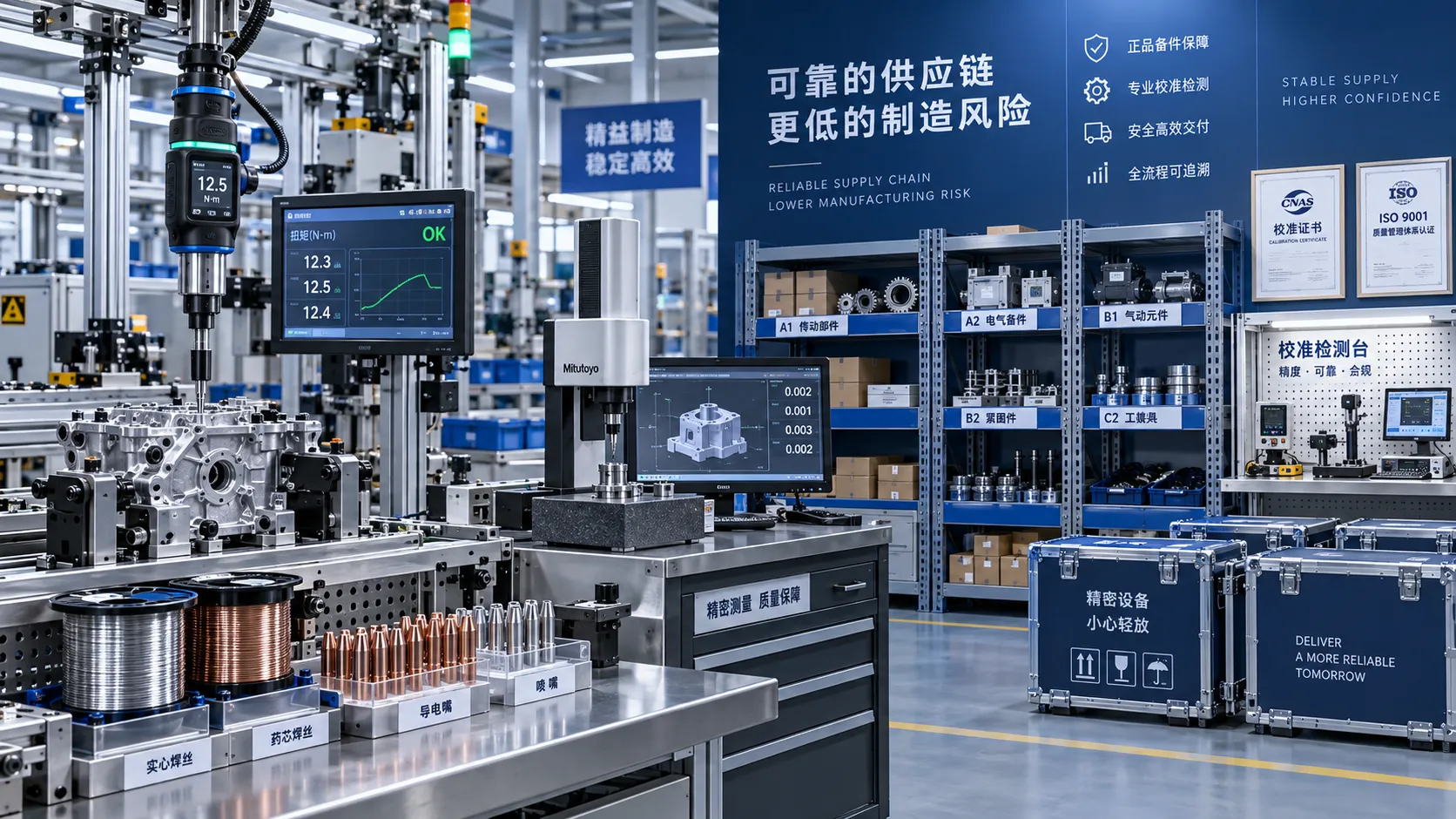
How Industrial Innovation Supplier Networks Reduce Sourcing Risk for Manufacturers
industrial innovation supplier network insights help manufacturers reduce sourcing risk, control lifecycle costs, and choose reliable tools, services, and suppliers with confidence.
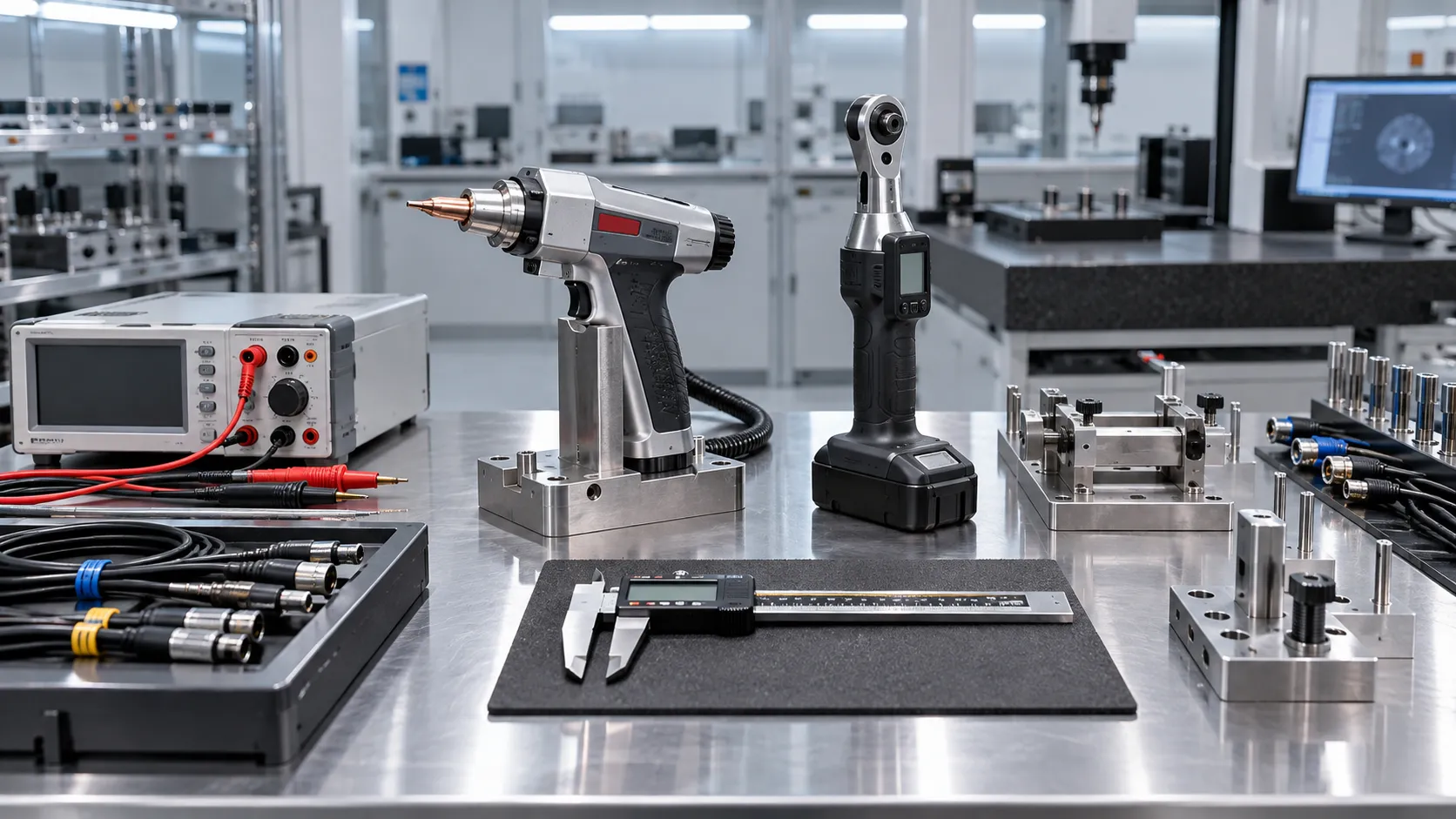
Which Industrial Standards Should Be Checked Before Export?
Which industrial standards should be checked before export? Discover essential compliance steps for industrial tools, welding equipment, laser systems, and metrology products.

What Industrial Automation Exporters Need to Know Before Entering ASEAN Markets
Industrial automation exporter to ASEAN: learn how to navigate compliance, local service, digital readiness, pricing, and market entry for scalable growth.

Prototype PCB Manufacturing Equipment: What Engineers Should Evaluate Before Purchase
Prototype PCB manufacturing equipment: discover the key factors engineers should evaluate—from accuracy and materials to software, safety, and ROI—before buying.

Workplace Ergonomics for Manufacturing: Reducing Repetitive-Strain Risks on Assembly Lines
Workplace ergonomics for manufacturing helps reduce repetitive-strain risks on assembly lines through smarter workstation design, tool selection, task analysis, and quality-focused improvements.

Selecting Adjustable Torque Tools for Repeatable Fastener Assembly
Adjustable torque tools: learn how to match range, accuracy, control methods, calibration, and ergonomics for repeatable, reliable fastener assembly.

How to Select Aerospace Inspection Tools for Aircraft Maintenance Tasks
Aerospace maintenance inspection tools: learn how to select reliable, traceable equipment for aircraft access, accuracy, calibration, and compliant maintenance decisions.

How to Select Wire Bonding Tools for Fine-Pitch Semiconductor Packaging
Explore semiconductor manufacturing tools for wire bonding and learn how to select precision solutions for fine-pitch packaging, reliable loops, accuracy, and yield.
Related News
- 00
0000-00
In-House vs. Outsourced Aircraft Maintenance: Comparing Total Costs - 00
0000-00
How to Compare Industrial Tool Suppliers for Quality, Lead Time, and Total Cost - 00
0000-00
How to Evaluate a Technology Integration Service Provider for Complex Projects - 00
0000-00
Product Comparison Resources in Europe: How Buyers Can Verify Specs and Suppliers - 00
0000-00
How to Evaluate an Industrial Metrology Solution Manufacturer for Production Use
Dr. Alistair Vaughn
Weekly Insights
Stay ahead with our curated technology reports delivered every Monday.