
Why Data-Driven Intelligence Costs Are Reshaping Enterprise Automation Budgets





Enterprise automation budgets are being reshaped by a cost category that is easy to underestimate during procurement: the cost of turning machine, quality, maintenance, and workflow data into decisions people can act on. Hardware remains visible and capital-intensive, but the data-driven intelligence cost often determines whether an automated operation becomes more productive or simply produces more disconnected information.
This shift matters most where the physical process is demanding and variable. A welding cell, torque-controlled assembly station, coordinate measuring workflow, or mobile hydraulic tool fleet does not create value merely by being connected. Value comes from defining which data is reliable, connecting it to production and quality context, detecting meaningful deviations, and giving supervisors or technicians a practical response path. Each of those steps requires investment, and they do not fit neatly into a traditional equipment budget.
For decision-makers, the question is no longer “What does the machine cost?” It is “What will it cost to operate a trustworthy decision system around this machine over its useful life?”
Why intelligence spending is moving into the core automation budget
Earlier automation projects could often be evaluated through relatively clear components: equipment purchase, installation, fixtures, programming, training, spare parts, and maintenance. Connected automation adds a parallel operating layer. Sensors, edge devices, software licenses, integrations, data storage, cybersecurity controls, model maintenance, analytics specialists, and change management all become part of the economic picture.
None of these expenses is automatically wasteful. In the right setting, they reduce rework, shorten diagnosis time, improve traceability, and make maintenance planning less reactive. The budgeting problem arises when intelligence is treated as a small software add-on rather than as a continuing operational capability.
A plant may buy a connected welding system that records current, voltage, wire feed, shielding-gas events, and operator settings. Yet those records are only useful when they can be associated with a weld procedure, part number, material condition, shift, operator authorization, inspection result, and corrective action. Without that context, the system can generate extensive dashboards while leaving quality engineers to investigate issues manually.
That is why spending is moving from isolated departmental projects toward enterprise automation budgets. The costs are shared across operations, engineering, quality, IT, maintenance, supply chain, and compliance. So are the gains and the risks.
The cost is not the data feed
Executives often focus on the visible software subscription or the purchase price of connected equipment. Those line items matter, but they are rarely the full cost. A more realistic view separates intelligence spending into several decisions that should be made together.
The important distinction is between collecting data and operationalizing it. Data collection can be inexpensive in a narrowly defined pilot. Operational intelligence costs more because it must remain accurate when products change, new shifts are added, equipment is serviced, suppliers vary, and production priorities move.
That does not mean every manufacturer needs an expansive data platform. It means the scope of the intelligence layer should match a clearly defined decision problem. A simple rule that flags repeated torque deviations on a critical assembly can be more valuable than an ambitious predictive system with uncertain inputs and no established owner.
Why the budget impact is strongest in precision and joining operations
Industrial assembly, metal joining, and precision metrology expose the limits of hardware-only thinking because process quality is not always visible at the moment a cycle ends. A fast cycle time can coexist with unstable tool performance, drifting measurement capability, incorrect fastening sequences, or weld parameters that are technically within a broad range but producing marginal outcomes.
In these environments, data-driven intelligence is increasingly being funded for three reasons.
Traceability is becoming an operating requirement, not just a quality record
When a defect investigation begins, teams need more than a pass/fail result. They need to reconstruct what happened: which equipment ran the process, what settings were active, whether a tool was calibrated, which material lot was present, whether alarms occurred, and what inspection found later. This creates demand for data structures that can connect production history across systems.
The cost is justified when traceability shortens containment decisions or prevents broad, expensive investigations. It is less justified when data is captured only because it is technically available, with no credible use case for retrieval or analysis.
Predictive maintenance is being judged more critically
Predictive maintenance is often presented as a universal automation benefit. In reality, it works best where failure modes are observable, downtime is consequential, and maintenance teams can change their actions based on early signals. A brushless power tool, robotic welding source, or high-use metrology asset may generate useful indicators of degradation, but an indicator alone does not create a maintenance strategy.
Budget owners should ask whether the business needs prediction, earlier warning, or simply better maintenance discipline. For many assets, condition monitoring combined with clear intervention thresholds is a sound first stage. Advanced prediction becomes sensible only when enough consistent operating history exists and the organization can act on the output.
Safety and compliance data has a wider cost boundary
As handheld laser welding and other advanced industrial processes gain wider use, safety-related controls, authorized-user records, training evidence, maintenance logs, and work-area conditions may all need to be managed more systematically. The intelligence cost is not only the monitoring technology. It includes the process discipline required to make records meaningful and available when needed.
This is a recurring reason automation business cases appear cheaper at approval than in operation. The original project funds the equipment but leaves the ongoing governance work to already stretched teams.
The market is rewarding interoperability, but only where it reduces work
Manufacturers increasingly prefer automation components that can exchange usable data rather than operate as closed islands. That preference is changing vendor evaluations. A machine with strong mechanical performance but inaccessible process data can impose long-term integration costs. Conversely, a highly connected platform can still be a poor fit if it requires complex customization for every change.
Interoperability should not be judged by whether a supplier advertises an interface. The practical tests are more specific:
- Can the operation identify the part, process, tool, and result using consistent identifiers?
- Can data be retrieved at the level needed for a quality or maintenance investigation?
- Can a process change be documented without rebuilding multiple downstream reports?
- Can the organization retain access to its historical data if a vendor relationship changes?
- Can alerts be routed into an existing work process instead of asking people to monitor another screen?
These questions shift the evaluation from feature comparison to lifecycle economics. A lower initial equipment price can lose its advantage quickly if every data connection requires custom work. At the same time, paying for an enterprise-wide platform before core identifiers, workflows, and ownership are stable can lock an organization into complexity it cannot yet use.
The strongest current pattern is phased standardization: choose a data model and integration principles that can scale, then fund intelligence capabilities around the processes where decisions are frequent, costly, and measurable. This avoids both extremes: isolated pilots that never scale and large transformation programs that become disconnected from shop-floor realities.
How to decide what belongs in this year’s budget
Automation leaders need a portfolio view. Not every connected asset deserves the same level of intelligence spending. The most useful starting point is to rank processes by decision value rather than by technical novelty.
A process is a strong candidate for further investment when it has recurring variability, a meaningful cost of delay or defect, data that can be linked to a clear business outcome, and an owner who can respond to the signal. High-volume torque-critical assembly, repeatable welding operations with demanding quality requirements, and measurement workflows that constrain release decisions commonly meet these conditions.
A process is a weaker candidate when it is low-volume, changes constantly, lacks a stable baseline, or produces data that nobody is prepared to use. Connecting it may still be useful for basic visibility, but a sophisticated analytics program is unlikely to deliver proportionate value.
Before approving an intelligence layer, require the project team to answer four operational questions:
- Which decision will improve, and who makes it?
- What action becomes possible that is not practical today?
- What data quality failure would make the output misleading?
- Who owns the system after implementation, including exceptions and process changes?
These questions expose a common mistake: defining success as “having real-time data.” Real-time visibility is an input, not an outcome. A useful outcome might be faster containment of an out-of-control fastening process, fewer unnecessary calibration checks, reduced manual effort to assemble a quality record, or better prioritization of maintenance work. The measure should be tied to that operational change.
Separate scalable foundations from experimental use cases
Budget discipline improves when leaders distinguish between foundational capability and exploratory capability. Foundational work includes asset identity, time synchronization, reliable connectivity, access control, common data definitions, and the integrations needed for essential workflows. These investments are not glamorous, but they prevent repeated reinvention across sites and projects.
Exploratory work includes advanced anomaly detection, generative assistance for technicians, optimization models, and new digital service offerings. These can be worthwhile, but they should have a bounded hypothesis, an accountable operating owner, and a defined point at which the organization decides to expand, redesign, or stop.
Mixing both categories into one business case distorts the decision. Foundation costs can look excessive when charged only to a single pilot. Experimental features can look inevitable when embedded inside a broader infrastructure program. Separating them makes the trade-off visible.
External intelligence can reduce expensive blind spots
Internal machine data explains what is happening inside an operation. It does not automatically explain why a technology choice, supplier position, export restriction, material shift, or safety practice is changing outside the plant. That external context increasingly affects automation timing and total cost.
For organizations working across industrial assembly, metal joining, and precision measurement, specialized market intelligence can help connect these decisions. GPTWM’s Strategic Intelligence Center, for example, tracks sector developments around areas such as handheld laser welding safety, brushless tool efficiency, intelligent torque control, precision measurement demand, and hydraulic equipment markets. Used appropriately, this type of intelligence is not a substitute for plant-level data. It is a way to test assumptions about technology direction, supply conditions, and the practical implications of adopting connected tools.
The benefit is strongest when market intelligence enters planning before equipment specifications are fixed. Once a project is defined around a narrow vendor feature list, it is harder to reconsider data ownership, serviceability, ergonomics, compliance workload, or likely integration demands.
The budget conversation should move from “software cost” to decision capacity
Data-driven intelligence costs are reshaping enterprise automation budgets because automation is being judged less as a one-time equipment purchase and more as a system that must continue to learn, prove quality, recover from variation, and support decisions across functions.
That change should not lead to indiscriminate spending on dashboards, sensors, or artificial intelligence. It should lead to more disciplined investment: fund the data foundations required by important processes, attach each intelligence feature to a specific operational decision, and avoid treating long-term ownership as an afterthought. Enterprises that make those distinctions can use connected automation to improve control and scalability without allowing the intelligence layer to become an unmanaged overhead.
Related News
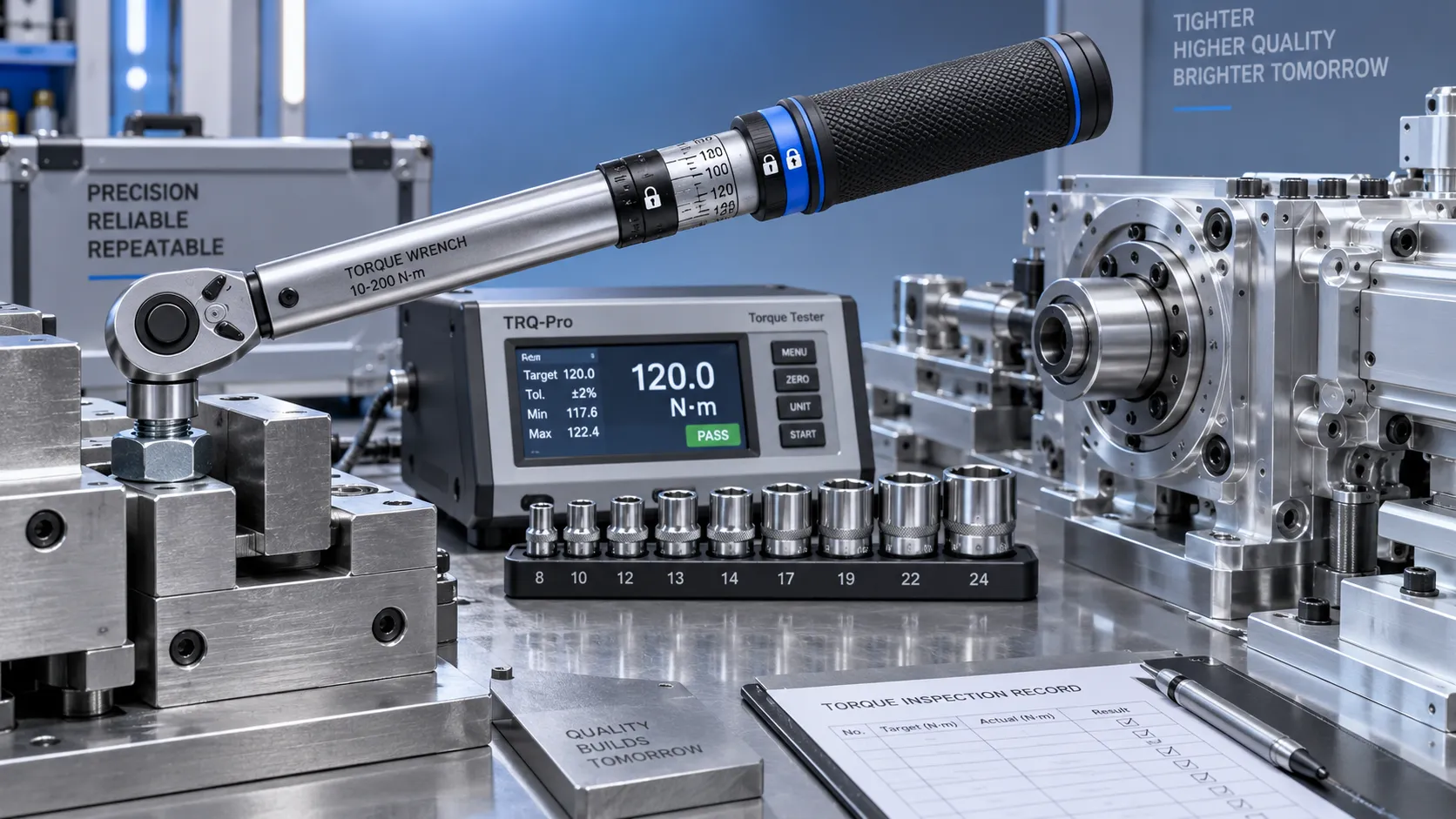
Selecting Adjustable Torque Tools for Repeatable Fastener Assembly
Adjustable torque tools: learn how to match range, accuracy, control methods, calibration, and ergonomics for repeatable, reliable fastener assembly.

How to Select Aerospace Inspection Tools for Aircraft Maintenance Tasks
Aerospace maintenance inspection tools: learn how to select reliable, traceable equipment for aircraft access, accuracy, calibration, and compliant maintenance decisions.

How to Select Wire Bonding Tools for Fine-Pitch Semiconductor Packaging
Explore semiconductor manufacturing tools for wire bonding and learn how to select precision solutions for fine-pitch packaging, reliable loops, accuracy, and yield.
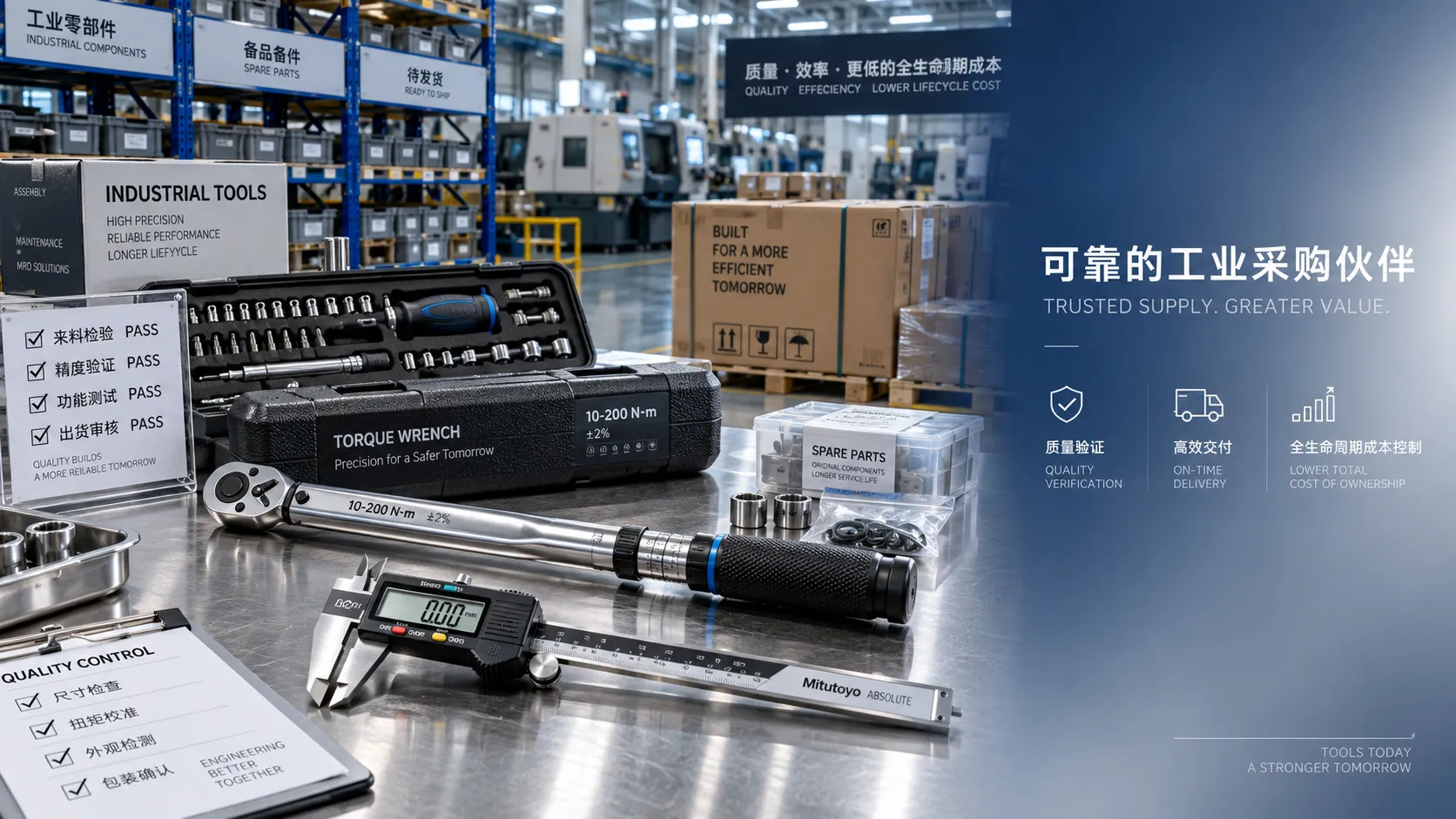
How to Compare Industrial Tool Suppliers for Quality, Lead Time, and Total Cost
Industrial tool selection supplier comparison made simple: evaluate quality, lead times, total cost, service, and supply resilience for confident sourcing decisions.
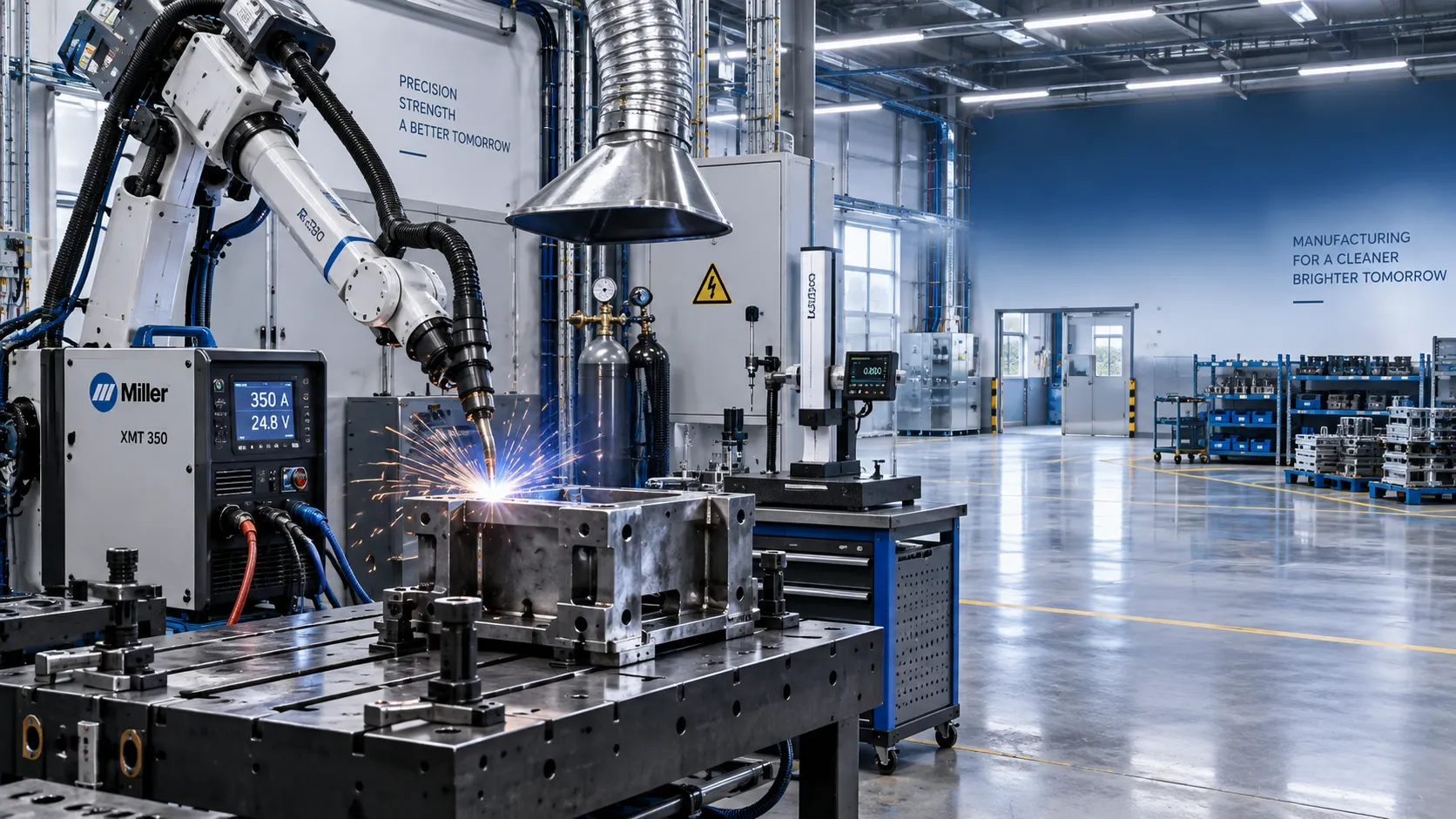
Industrial Equipment Application Guidance: Match Machines to Operating Conditions
Application guidance industrial equipment: match capacity, duty cycle, materials, site conditions, safety, and lifecycle cost to improve reliable output. Read the guide.
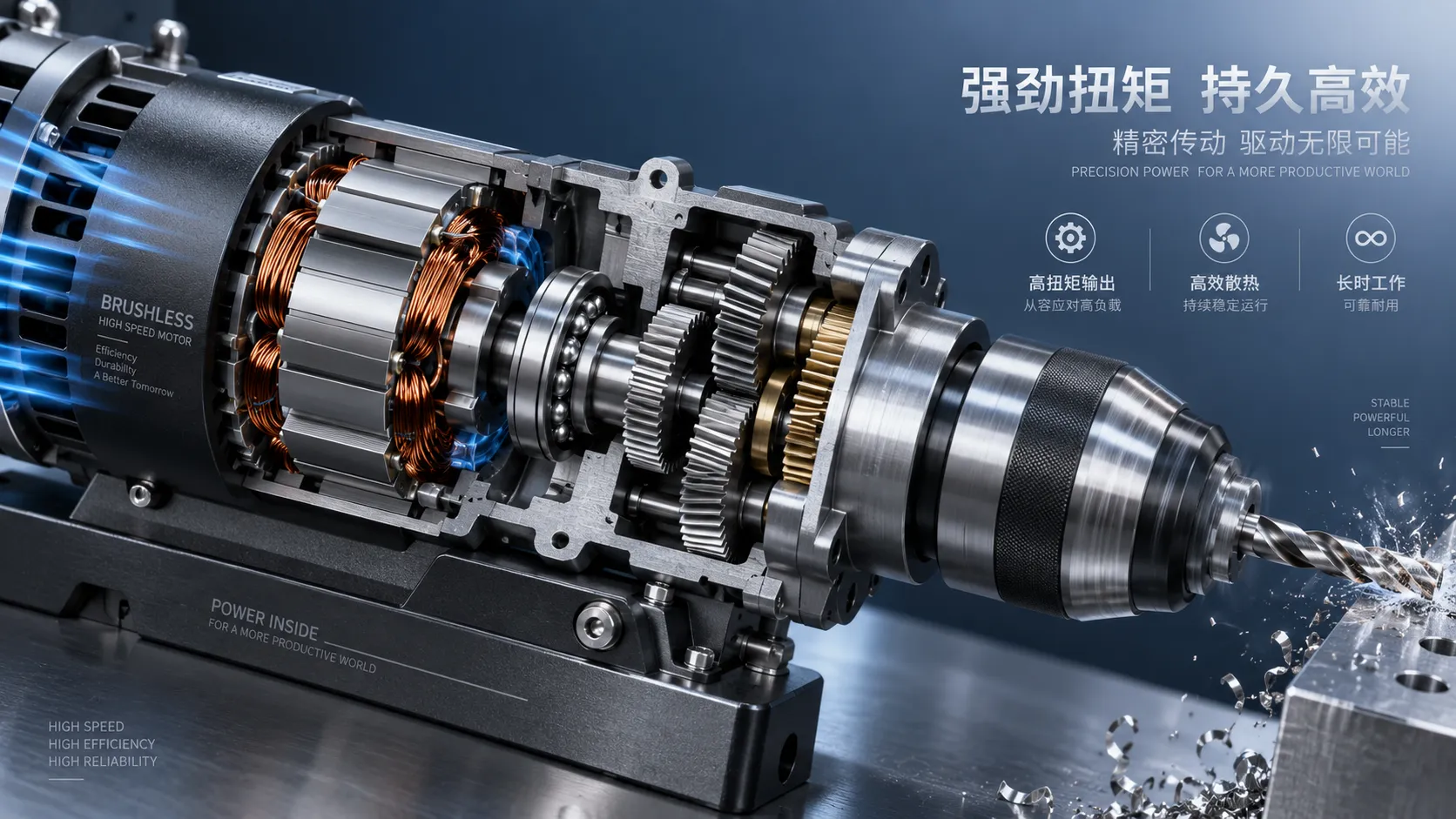
Selecting High-Speed Brushless Tool Motors for Torque, Heat, and Duty Cycle
High speed brushless tool motors: learn how to balance torque, heat, gearing, and duty cycle for reliable industrial tool performance and longer service life.
What Determines Industrial Hydraulic System Price for Heavy-Duty Equipment?
Industrial hydraulic system price depends on duty cycle, pressure, components, cooling, and integration. Compare quotes intelligently to secure reliable heavy-duty performance.
Welding Fume Extraction PPE: When Respirators Are Not Enough for Shop Safety
Welding fume extraction PPE: learn why respirators alone fall short and how source capture, ventilation, and layered controls improve shop safety.

How to Select Optical Metrology Solutions for Tight-Tolerance Manufacturing
Optical industrial metrology solutions for tight-tolerance manufacturing: evaluate accuracy, surface compatibility, workflow, and traceability to select with confidence.
Related News
- 00
0000-00
Why Data-Driven Intelligence Costs Are Reshaping Enterprise Automation Budgets - 00
0000-00
What Does Data-Driven Intelligence Cost? Budgeting for Data, Tools, and Talent - 00
0000-00
What Determines Metrology Technology Prices for Factory Inspection Systems? - 00
0000-00
Welding Tools Price Guide: What Affects Cost and How Buyers Can Compare Options - 00
0000-00
What Drives Industrial Tools Cost? A Buyer’s Guide to Materials, Volume, and Lifecycle Expenses
Ms. Elena Rodriguez
Weekly Insights
Stay ahead with our curated technology reports delivered every Monday.