
Can data-driven intelligence improve forecast accuracy fast





Can data-driven intelligence improve forecast accuracy fast? For business decision-makers in industrial markets, the answer increasingly lies in turning fragmented signals into timely, actionable insight. From raw material volatility and export restrictions to shifting demand in welding, metrology, and assembly technologies, data-driven intelligence helps companies sharpen forecasts, reduce uncertainty, and respond faster to global market changes.
Why forecast accuracy breaks down in industrial decision-making
Many forecast models fail not because companies lack data, but because they rely on delayed, isolated, or incomplete signals. In industrial supply chains, pricing, compliance, technical adoption, and regional demand move at different speeds.
For decision-makers in tool distribution, metal joining, precision measurement, and related sectors, the real challenge is not collecting more spreadsheets. It is connecting commercial, technical, and policy indicators before market shifts become financial losses.
This is where data-driven intelligence becomes practical. It combines sector news, trend analysis, demand mapping, and application-level technical understanding into a forecasting framework that supports faster planning and better risk control.
- Raw material costs can change procurement assumptions in weeks, especially for metal components, motors, precision parts, and industrial consumables.
- Export standards and market access rules may alter product mix, documentation needs, and delivery timing across different regions.
- New technology adoption, such as handheld laser welding safety systems or IoT torque control, can reshape demand faster than conventional annual planning cycles.
What does data-driven intelligence actually mean for industrial forecasting?
In an industrial context, data-driven intelligence is more than dashboard reporting. It means interpreting operational data alongside sector developments to answer a business question: what is likely to happen next, and what should we do now?
For GPTWM, this approach is especially relevant because forecasting in assembly, welding, and metrology depends on details that generic market reports often miss. A change in ergonomic standards, brushless motor efficiency limits, or maintenance demand in aerospace can affect product demand patterns directly.
Core inputs that improve forecast accuracy fast
The table below shows how data-driven intelligence converts scattered market signals into forecasting inputs that decision-makers can use in procurement, inventory planning, channel strategy, and pricing reviews.
The advantage is speed with context. Instead of waiting for quarterly lagging results, companies can respond to directional evidence earlier. That often leads to faster forecast correction, not just more detailed reporting.
Which business scenarios benefit most from data-driven intelligence?
Not every forecasting problem needs the same level of analysis. The highest return usually appears in scenarios where cost pressure, technical complexity, and delivery commitments intersect.
High-impact use cases for decision-makers
- Procurement planning for precision tools and measuring devices when supplier lead times are unstable and component prices are rising.
- Channel allocation for distributors deciding whether to increase inventory for welding safety accessories, brushless power tools, or hydraulic equipment in specific regions.
- Product portfolio adjustment when technical shifts suggest stronger future demand for intelligent, lightweight, or ergonomically standardized industrial tools.
- Compliance-sensitive expansion when export restrictions or local standards can delay shipments and affect forecast reliability.
GPTWM is positioned around the industrial “last mile,” where these choices become operational. That matters because forecast accuracy is not abstract. It influences what gets ordered, stocked, promoted, certified, and delivered.
When intelligence is linked to actual tool categories, usage environments, and maintenance demand, forecasts become more actionable for executives responsible for revenue, service continuity, and brand positioning.
How does data-driven intelligence compare with traditional forecasting methods?
Traditional forecasting often depends on internal sales history, distributor feedback, and periodic management assumptions. These inputs remain useful, but they are often too narrow for fast-moving industrial markets.
The next table compares common forecasting approaches and highlights why data-driven intelligence can improve forecast accuracy fast when volatility is high.
The key difference is signal quality. Traditional methods often tell you what has already happened. Data-driven intelligence helps identify what is changing now, why it matters, and which forecast assumptions should be updated first.
What should executives evaluate before using intelligence-led forecasting?
A fast improvement in forecast accuracy depends on disciplined selection criteria. Decision-makers should not adopt intelligence tools simply because they promise automation. They should ask whether the inputs match their operating reality.
Procurement and planning checklist
- Check signal relevance. Does the intelligence source cover your categories, such as power tools, welding systems, precision metrology, hydraulic equipment, or industrial maintenance demand?
- Check timing. Weekly or event-driven updates are often more useful than static annual summaries when material costs and standards are changing quickly.
- Check application depth. Executive teams need more than macro narratives. They need scenario-level insight that explains which end markets are shifting and how product demand will follow.
- Check decision usability. Intelligence should support product selection, inventory positioning, supplier discussions, and commercial prioritisation, not just produce visual charts.
- Check compliance awareness. In cross-border industrial trade, standards and export limitations can change the forecast as much as sales demand does.
GPTWM’s strength is its ability to connect sector news, evolutionary trend analysis, and commercial insight around specific industrial categories. For executives, this means less time filtering noise and more time validating decisions.
How can companies implement data-driven intelligence without slowing operations?
The fastest results usually come from a phased model. Instead of redesigning every planning system, companies should begin with the forecast areas most exposed to market volatility or margin pressure.
A practical implementation path
The table below outlines a realistic implementation sequence for using data-driven intelligence in industrial planning, sourcing, and commercial review.
This phased approach is useful because it lowers implementation risk. Companies can test the forecasting value of external intelligence on selected categories before expanding to wider portfolio planning.
What risks and misconceptions should decision-makers avoid?
One common mistake is assuming that more data automatically leads to better forecasts. In practice, excess data without industrial interpretation creates slower decisions and internal confusion.
Another risk is treating market intelligence as a one-time report. Forecast accuracy improves when intelligence is refreshed and connected to actual planning checkpoints, not when it sits unused in a presentation archive.
- Do not ignore technical transition signals. Changes in safety practice, automation, or tool design can alter demand before sales history shows it.
- Do not separate compliance from forecasting. For industrial exports, standards, documentation, and restrictions directly affect timing and volume assumptions.
- Do not rely only on macro demand narratives. Forecasting improves when market direction is translated into category-level and application-level choices.
A disciplined intelligence process is less about predicting everything perfectly and more about reducing blind spots faster than competitors do.
FAQ: practical questions about data-driven intelligence
How quickly can data-driven intelligence improve forecast accuracy?
The first gains often come quickly when a company is already tracking internal sales but lacks external market context. In volatile categories, better assumptions around cost, compliance, and demand timing can improve planning quality within one or two review cycles.
Which teams should use data-driven intelligence first?
Start with teams that make decisions under uncertainty: procurement, category management, export sales, operations planning, and executive leadership. These groups are most affected by inaccurate assumptions on supply risk, adoption trends, and channel demand.
Is data-driven intelligence only useful for large manufacturers?
No. Distributors, specialist importers, and industrial solution providers also benefit because forecast errors can damage inventory turnover, margin control, and delivery reliability. Smaller firms often gain even more from targeted intelligence because they have less room for planning mistakes.
What should buyers ask when evaluating an intelligence partner?
Ask whether the source covers your product categories, your target regions, relevant standards, technology transitions, and commercial use cases. Also ask how often insights are updated and whether they can support category-level forecasting rather than only broad industry commentary.
Why GPTWM is relevant for faster, more reliable forecasting
GPTWM is built around industrial assembly, metal joining, and precision metrology technologies, which gives decision-makers a more practical lens than generic business intelligence sources. Its Strategic Intelligence Center connects latest sector news with evolutionary trend analysis and commercial insight.
That combination matters when executives need to assess raw material fluctuations, export standard restrictions, tool technology transitions, and structural demand in construction, automotive, and aerospace maintenance. These are exactly the signals that shape forecast quality in the industrial last mile.
For companies seeking data-driven intelligence, the value is not simply information volume. It is decision clarity: what demand is changing, which categories are exposed, what standards matter, and where commercial opportunity is building.
Why choose us for intelligence-led industrial planning
If your team needs to improve forecast accuracy fast, GPTWM can support decisions that sit between technology, procurement, and market timing. We focus on the industrial categories where fragmented signals create costly uncertainty.
- Discuss category-specific demand signals for welding, precision measurement, assembly tools, and hydraulic equipment.
- Confirm whether current market trends justify a product selection change, portfolio adjustment, or regional inventory shift.
- Review delivery-cycle risks linked to material volatility, export restrictions, and application-specific demand changes.
- Explore tailored intelligence support for compliance review, sourcing strategy, quote preparation, and commercial planning.
If you are evaluating product selection, lead-time exposure, certification requirements, regional demand shifts, or quotation strategy, contact GPTWM for a focused discussion. The right data-driven intelligence can help your team move from reactive forecasting to informed industrial decision-making.
- industrial assembly
- metal joining
- precision metrology
- handheld laser welding
- IoT torque control
- hydraulic equipment
- industrial tools
- ergonomic standards
- precision tools
- sector news
- raw material fluctuations
- export standard restrictions
- commercial insights
- aerospace maintenance
- data-driven intelligence
- laser welding
- tool design
Related News
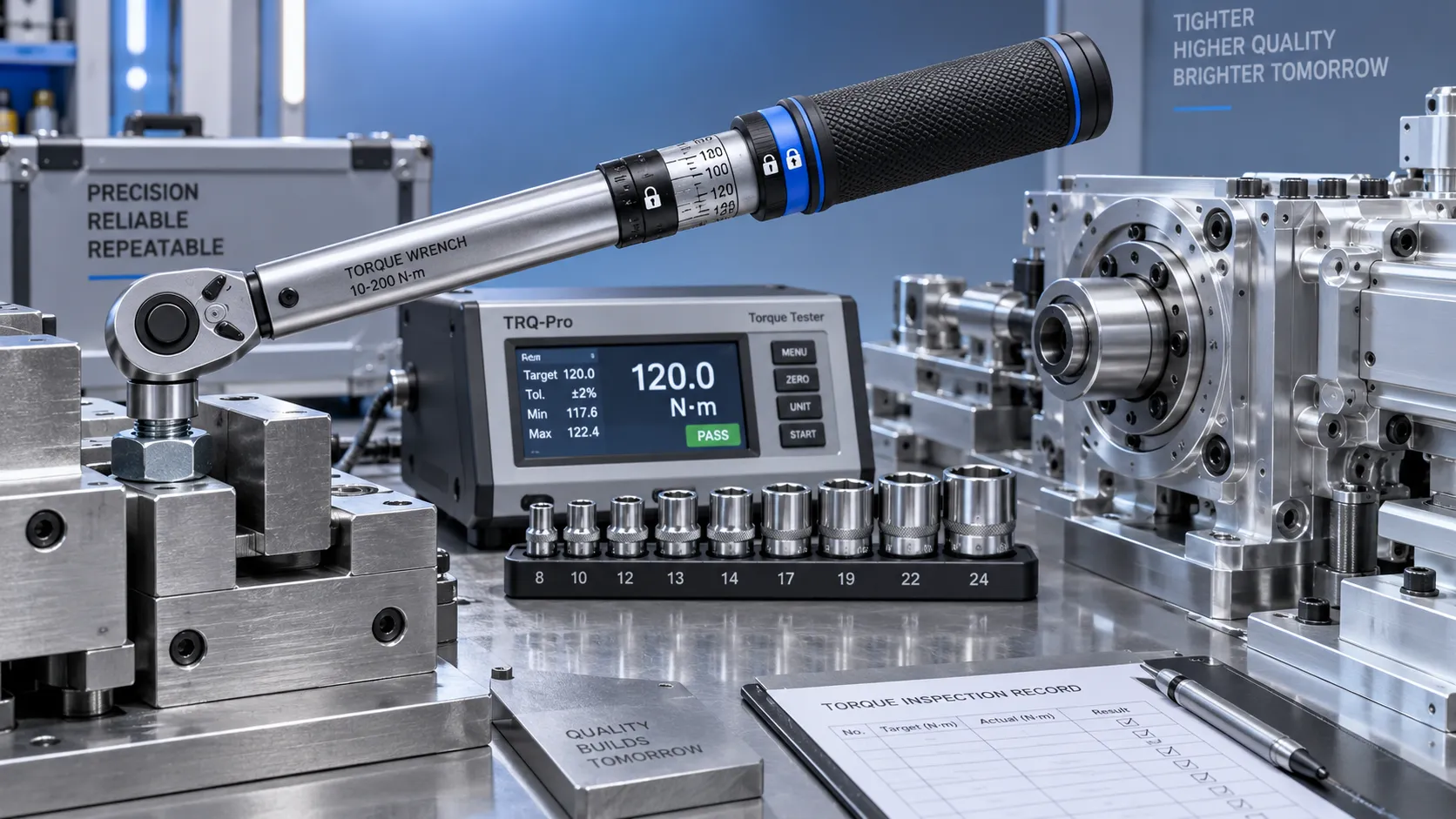
Selecting Adjustable Torque Tools for Repeatable Fastener Assembly
Adjustable torque tools: learn how to match range, accuracy, control methods, calibration, and ergonomics for repeatable, reliable fastener assembly.

How to Select Aerospace Inspection Tools for Aircraft Maintenance Tasks
Aerospace maintenance inspection tools: learn how to select reliable, traceable equipment for aircraft access, accuracy, calibration, and compliant maintenance decisions.

How to Select Wire Bonding Tools for Fine-Pitch Semiconductor Packaging
Explore semiconductor manufacturing tools for wire bonding and learn how to select precision solutions for fine-pitch packaging, reliable loops, accuracy, and yield.
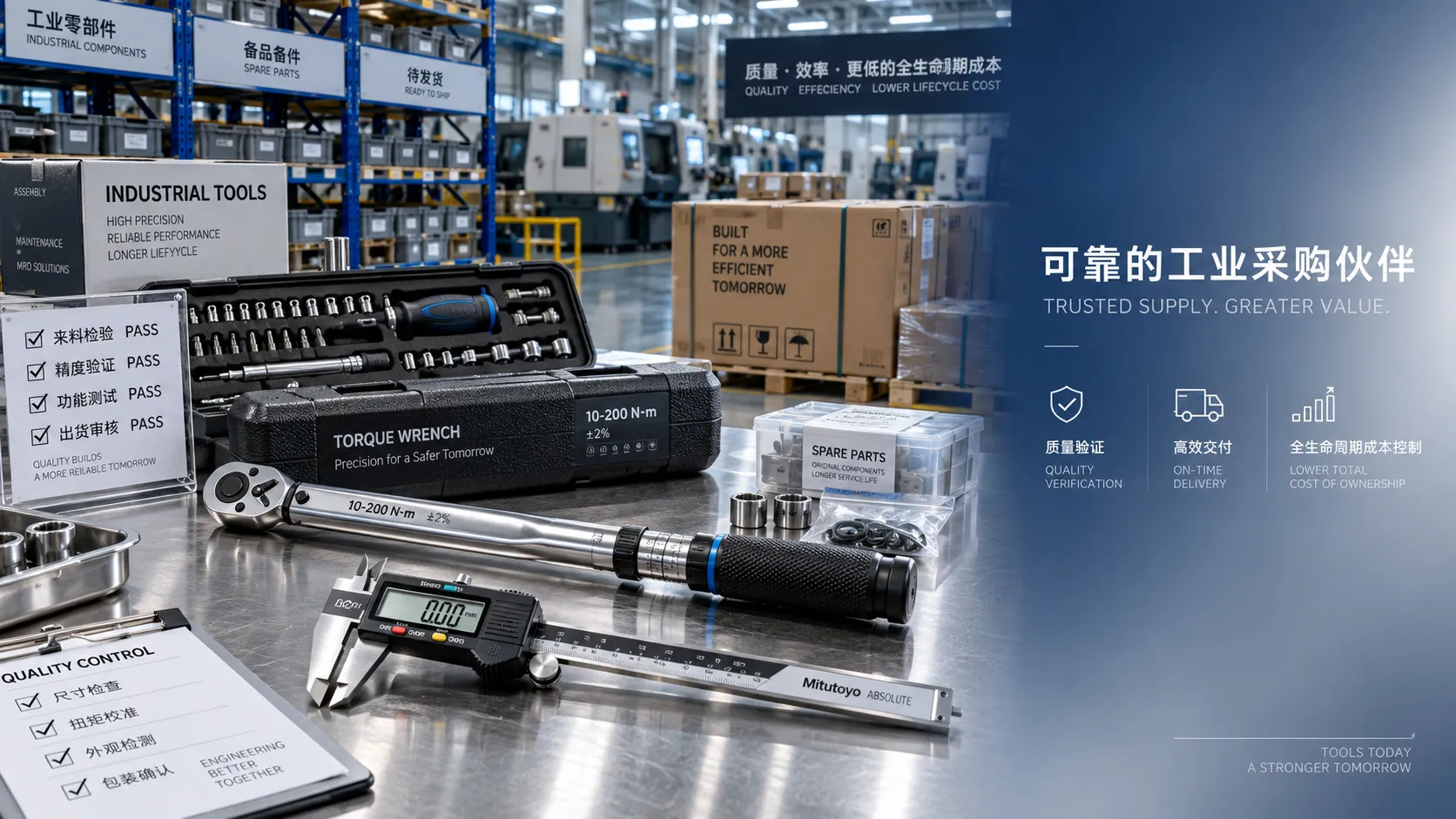
How to Compare Industrial Tool Suppliers for Quality, Lead Time, and Total Cost
Industrial tool selection supplier comparison made simple: evaluate quality, lead times, total cost, service, and supply resilience for confident sourcing decisions.

Industrial Equipment Application Guidance: Match Machines to Operating Conditions
Application guidance industrial equipment: match capacity, duty cycle, materials, site conditions, safety, and lifecycle cost to improve reliable output. Read the guide.

Selecting High-Speed Brushless Tool Motors for Torque, Heat, and Duty Cycle
High speed brushless tool motors: learn how to balance torque, heat, gearing, and duty cycle for reliable industrial tool performance and longer service life.

What Determines Industrial Hydraulic System Price for Heavy-Duty Equipment?
Industrial hydraulic system price depends on duty cycle, pressure, components, cooling, and integration. Compare quotes intelligently to secure reliable heavy-duty performance.

Welding Fume Extraction PPE: When Respirators Are Not Enough for Shop Safety
Welding fume extraction PPE: learn why respirators alone fall short and how source capture, ventilation, and layered controls improve shop safety.

How to Select Optical Metrology Solutions for Tight-Tolerance Manufacturing
Optical industrial metrology solutions for tight-tolerance manufacturing: evaluate accuracy, surface compatibility, workflow, and traceability to select with confidence.
Related News
- 00
0000-00
How Middle East Manufacturers Can Improve Production Efficiency Under Heat and Labor Constraints - 00
0000-00
Why Are Specification-Oriented Articles Gaining Traction in Europe’s B2B Markets? - 00
0000-00
Industrial Solutions in Latin America: Key Growth Sectors and Market Entry Risks - 00
0000-00
What Is Driving Manufacturing Efficiency in Europe’s Industrial Sectors? - 00
0000-00
Industrial Market Trends in 2025: What Buyers Should Watch Across Supply and Demand
Dr. Alistair Vaughn
Weekly Insights
Stay ahead with our curated technology reports delivered every Monday.