
Why global construction demand still looks uneven in 2026





Despite stronger sentiment in selected Asian markets and targeted public spending in North America, global construction in 2026 still shows an uneven pattern.
This matters far beyond headline growth. It affects project timing, equipment replacement, welding demand, metrology needs, and pricing discipline across supply chains.
For GPTWM, the central issue is practical: where is global construction resilient, where is it fragile, and how should industrial decision-making respond?
The answers below organize the key questions behind uneven global construction demand in 2026 and connect them to tool, joining, and measurement markets.
What does uneven global construction demand in 2026 actually mean?
Uneven global construction means growth is not synchronized across countries, segments, or project phases.
One market may expand through transport upgrades, while another weakens under high borrowing costs, delayed housing starts, or soft private investment.
This divergence appears in several layers of global construction activity:
- Residential building may stay weak even when infrastructure improves.
- Large public projects can rise while commercial real estate remains slow.
- Repair and maintenance may outperform new-build construction.
- Imported equipment demand may differ from local labor demand.
For industrial suppliers, uneven global construction creates a mixed order environment rather than a clean boom or downturn.
That is why broad market optimism can be misleading. Strength in one region rarely offsets weakness everywhere else.
Why does global construction still look patchy across regions?
Regional fragmentation comes from financing conditions, policy priorities, labor availability, energy costs, and material price volatility.
In Asia, selective urban infrastructure and industrial relocation support parts of global construction demand.
Yet residential stress, local debt pressure, and cautious developers still limit a broad-based recovery in some economies.
North America offers another split. Public funding supports roads, utilities, energy, and manufacturing-related projects.
However, office development and some private building categories remain restrained by financing costs and uncertain occupancy economics.
Europe faces a different balance. Energy transition projects and renovation needs support medium-term activity.
Still, slower industrial momentum, budget strain, and uneven housing conditions reduce consistency across the region.
Emerging markets add opportunity, but currency swings, import dependence, and political risk can quickly disrupt global construction pipelines.
So the 2026 picture is not weak everywhere. It is uneven because support drivers differ by geography and by funding source.
Which project types support global construction better than others?
The most resilient parts of global construction are often linked to public necessity, industrial modernization, and long-cycle asset renewal.
These segments tend to hold up better in 2026:
- Transport infrastructure, including rail, bridges, and ports.
- Power grid, transmission, and energy storage facilities.
- Water treatment, pipeline rehabilitation, and utility repair.
- Industrial plants linked to reshoring and supply-chain diversification.
- Maintenance, retrofit, and safety compliance work.
By contrast, more cyclical segments face greater pressure.
- Private residential starts in high-rate markets.
- Speculative commercial buildings.
- Projects heavily exposed to refinancing delays.
This difference matters because each segment buys differently. Infrastructure often needs durable joining systems, hydraulic support tools, and compliance-grade measurement.
Residential demand may be broader in volume, but less stable when credit tightens.
How does uneven global construction affect tools, welding, and metrology demand?
Uneven global construction does not reduce all industrial demand equally. It changes the mix of what is needed and when.
When new-build volumes slow, buyers often shift toward lifecycle efficiency, repair productivity, and operator safety.
That supports several categories:
- Portable welding systems for field installation and maintenance.
- Precision measuring instruments for fit-up, tolerance checks, and inspection records.
- Brushless power tools with lower downtime and better energy efficiency.
- Torque control solutions for repeatable assembly quality.
- Hydraulic tools for heavy-duty site operations and structural service work.
In stronger infrastructure markets, demand leans toward ruggedness, traceability, and service support.
In weaker private building markets, value pressure increases. Replacement cycles stretch, and entry-level specifications may gain share.
GPTWM tracks this shift closely because global construction weakness often increases the value of intelligence-led product positioning.
The winning offer is not always the cheapest tool. It is often the one that cuts rework, improves safety, or supports tighter project documentation.
What mistakes appear when reading the global construction outlook?
A common mistake is treating global construction as a single demand curve.
That approach ignores differences between public and private spending, civil and vertical projects, and new-build versus maintenance activity.
Another mistake is overreacting to headline stimulus announcements.
Approved budgets do not always become fast orders. Permits, labor bottlenecks, environmental reviews, and procurement complexity create delays.
A third risk is underestimating standards and compliance effects.
As global construction becomes more technical, welding safety, calibration integrity, and documentation quality matter more than before.
Short-term discounting can also become a trap. Chasing volume in weak segments may erode margins without building strategic share.
A better reading of global construction in 2026 combines macro signals with project-stage visibility and application-specific demand indicators.
How should businesses judge risk, timing, and next moves in global construction?
The most effective response to uneven global construction is disciplined segmentation.
Instead of asking whether global construction is up or down, ask where demand is funded, how soon projects start, and what technical standards apply.
A practical evaluation framework includes five checkpoints:
- Check funding quality, not just project headlines.
- Separate maintenance demand from new-build assumptions.
- Map local standards, import rules, and certification needs.
- Prioritize categories tied to productivity and compliance.
- Build inventory plans around region-specific volatility.
For sectors tied to assembly and metal joining, project timing matters as much as project value.
Delayed starts may postpone equipment orders, but retrofit work can create immediate replacement demand.
This is why precision intelligence remains critical. Global construction in 2026 rewards informed positioning rather than blanket expansion.
FAQ table: how to read global construction conditions in 2026
Conclusion: what does uneven global construction mean for 2026 decisions?
Global construction in 2026 is neither uniformly strong nor uniformly weak.
Its uneven shape reflects financing realities, policy choices, project mix, and regional execution capacity.
That imbalance changes equipment timing, pricing behavior, and demand for precision tools, welding technologies, and metrology systems.
The practical next step is to track global construction by segment, funding source, and technical requirement rather than by headline sentiment alone.
GPTWM supports that approach through strategic intelligence connecting project signals with real industrial demand, helping decisions stay precise in an uneven market.
Related News

Selecting Adjustable Torque Tools for Repeatable Fastener Assembly
Adjustable torque tools: learn how to match range, accuracy, control methods, calibration, and ergonomics for repeatable, reliable fastener assembly.

How to Select Aerospace Inspection Tools for Aircraft Maintenance Tasks
Aerospace maintenance inspection tools: learn how to select reliable, traceable equipment for aircraft access, accuracy, calibration, and compliant maintenance decisions.

How to Select Wire Bonding Tools for Fine-Pitch Semiconductor Packaging
Explore semiconductor manufacturing tools for wire bonding and learn how to select precision solutions for fine-pitch packaging, reliable loops, accuracy, and yield.
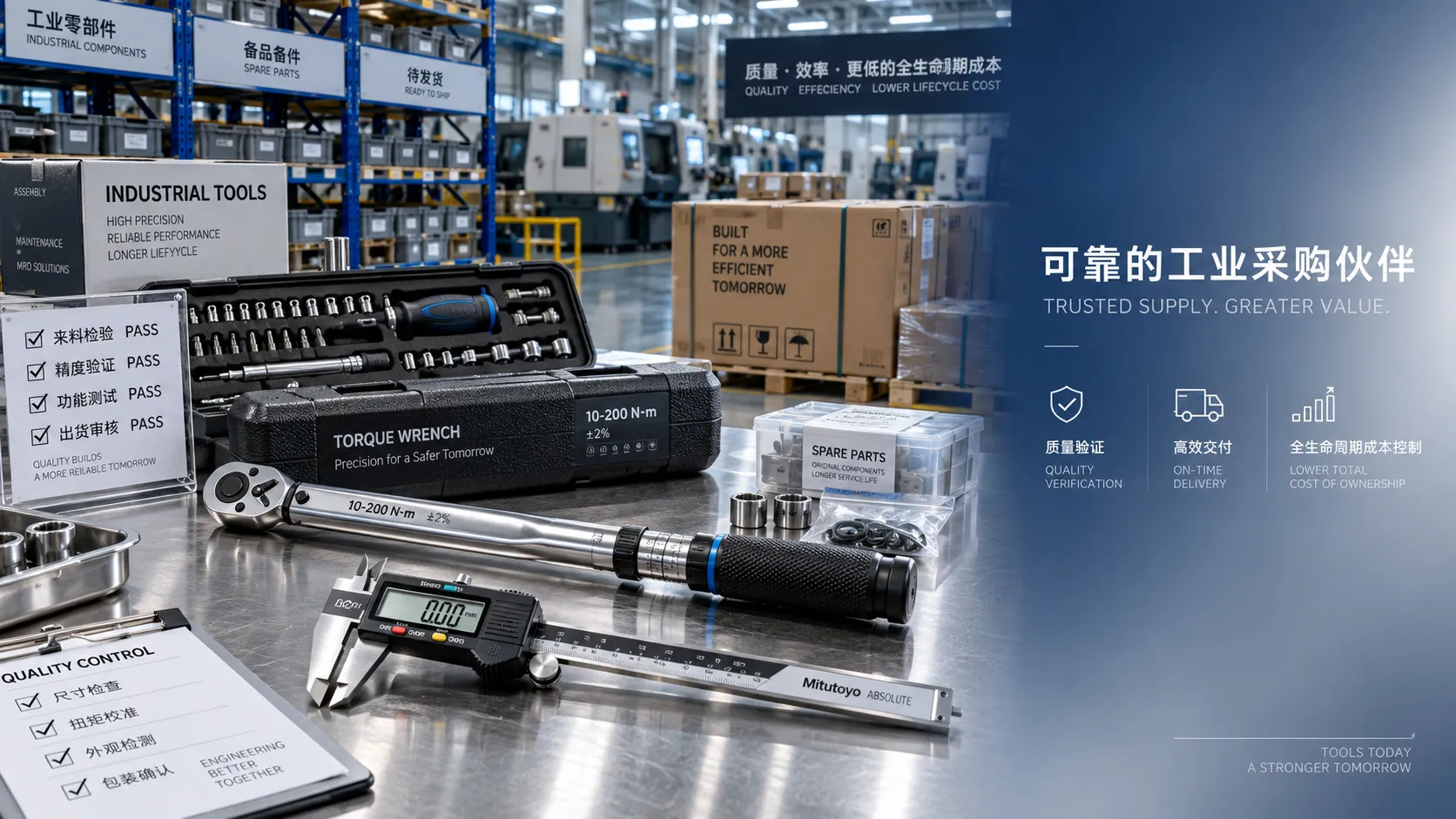
How to Compare Industrial Tool Suppliers for Quality, Lead Time, and Total Cost
Industrial tool selection supplier comparison made simple: evaluate quality, lead times, total cost, service, and supply resilience for confident sourcing decisions.

Industrial Equipment Application Guidance: Match Machines to Operating Conditions
Application guidance industrial equipment: match capacity, duty cycle, materials, site conditions, safety, and lifecycle cost to improve reliable output. Read the guide.

Selecting High-Speed Brushless Tool Motors for Torque, Heat, and Duty Cycle
High speed brushless tool motors: learn how to balance torque, heat, gearing, and duty cycle for reliable industrial tool performance and longer service life.

What Determines Industrial Hydraulic System Price for Heavy-Duty Equipment?
Industrial hydraulic system price depends on duty cycle, pressure, components, cooling, and integration. Compare quotes intelligently to secure reliable heavy-duty performance.

Welding Fume Extraction PPE: When Respirators Are Not Enough for Shop Safety
Welding fume extraction PPE: learn why respirators alone fall short and how source capture, ventilation, and layered controls improve shop safety.

How to Select Optical Metrology Solutions for Tight-Tolerance Manufacturing
Optical industrial metrology solutions for tight-tolerance manufacturing: evaluate accuracy, surface compatibility, workflow, and traceability to select with confidence.
Related News
- 00
0000-00
How Middle East Manufacturers Can Improve Production Efficiency Under Heat and Labor Constraints - 00
0000-00
Why Are Specification-Oriented Articles Gaining Traction in Europe’s B2B Markets? - 00
0000-00
Industrial Solutions in Latin America: Key Growth Sectors and Market Entry Risks - 00
0000-00
What Is Driving Manufacturing Efficiency in Europe’s Industrial Sectors? - 00
0000-00
Industrial Market Trends in 2025: What Buyers Should Watch Across Supply and Demand
Dr. Alistair Vaughn
Weekly Insights
Stay ahead with our curated technology reports delivered every Monday.