
Automotive Tools: How to Build a Reliable Toolkit for Routine Vehicle Service





A reliable set of automotive tools should be built around the jobs you actually perform, not around the largest kit on the shelf. For routine vehicle service, the priority is consistent fit, controlled tightening, safe lifting, and measurements you can trust. A compact toolkit with the right drive sizes, quality sockets, a torque wrench, brake-service equipment, and basic electrical test tools will usually do more useful work than a large assortment of low-value accessories.
The most costly mistakes in routine maintenance are rarely caused by not owning a specialty tool. They usually come from using an ill-fitting socket, tightening a critical fastener by feel, supporting a vehicle improperly, or diagnosing an electrical problem with incomplete information. Select automotive tools to prevent those failures first.
Start With the Service Tasks, Not a Tool Count
Before buying anything, list the work the toolkit must cover. Routine service commonly includes oil and filter changes, wheel removal and rotation, brake inspection, battery replacement, belt and hose checks, fluid inspection, spark plug service where applicable, and basic fault finding. This list determines the tools that must be dependable every time.
A home user maintaining one vehicle may need a flexible general-purpose set plus a few vehicle-specific items. An operator working across several makes and models needs broader coverage, more durable consumables, and tools that reduce repeated setup time. The toolkit should also reflect vehicle age and design. Older vehicles may require more mechanical extraction and adjustment tools; newer vehicles often increase the need for diagnostic access, electrical testing, and carefully controlled torque.
Check the vehicle service information before purchasing specialized items. Fastener sizes, wheel nut or bolt designs, oil-filter access, brake caliper arrangement, and underbody panels can change what is practical. A tool that is excellent in general may still be the wrong choice if it cannot reach the component on the vehicle being serviced.
The Core Automotive Tools Worth Buying Well
Not every item needs premium construction, but the tools that carry load, transmit high torque, or establish a measurement deserve careful selection. These are the foundation of a routine-service toolkit.
For most routine work, a 3/8-inch drive socket system is the most versatile starting point. It handles many engine-bay and general service fasteners without becoming excessively bulky. A 1/2-inch drive system becomes important for wheel fasteners, suspension hardware, and other higher-torque work. A smaller 1/4-inch drive set is valuable in confined areas, but it should not be used as a substitute for a stronger drive where high force is required.
Socket Fit Is More Important Than a Large Size Range
Socket sets are often compared by piece count, but the more useful comparison is fit and coverage. A well-made six-point socket in the sizes used most often will be more valuable than a large set dominated by duplicate bits, adapters, and rarely used accessories. Six-point designs contact the flatter sections of a hex fastener and are generally the safer choice for seized bolts and wheel hardware. Twelve-point sockets can be convenient in tight angles, but they demand more care on worn or corroded fasteners.
Choose both shallow and deep sockets for common sizes. Shallow sockets are more compact and often stronger in restricted spaces. Deep sockets are needed when a nut sits on a long stud or when a component extends beyond the fastener. Extensions and a universal joint help with access, but each added connection reduces direct control. Use them for reach, not as a default solution for heavily tightened fasteners.
A breaker bar is separate from a ratchet for a reason. It is intended to apply controlled leverage to tight fasteners without subjecting the ratchet mechanism to unnecessary shock. Once the fastener is loose, switch to the ratchet. This simple division extends tool life and makes the work more predictable.
Torque Control Is a Selection Requirement, Not an Upgrade
A torque wrench is among the most important automotive tools for routine service because many fasteners must be tightened enough to maintain clamping force without being stretched, stripped, or distorted. Wheel nuts or bolts are the obvious example, but oil drain plugs, spark plugs, brake-caliper fasteners, and aluminum engine components can also be damaged by uncontrolled tightening.
Select the wrench by the torque range you will use most often, not by its maximum capacity. Torque wrenches are generally most practical when the target values sit comfortably within their operating range. A very large wrench may be unsuitable for low-torque engine fasteners, while a small wrench should not be pushed toward high wheel-fastener loads. Operators who cover a wide range of work often benefit from two tools: one for smaller fasteners and another for wheel and chassis work.
Use a torque wrench only for final tightening. Do not use it as a breaker bar, and do not use its reading to compensate for dirty threads, damaged hardware, or incorrect seating surfaces. On wheel fasteners, tighten in the specified pattern so the wheel seats evenly. A correct torque setting cannot repair a wheel that is not properly seated against the hub.
Choose Lifting Equipment as a Complete Safety System
Vehicle lifting is where a toolkit should be judged most strictly. A floor jack or bottle jack is designed to lift, but it is not a long-term support device for work underneath the vehicle. Use correctly positioned jack stands on stable ground, chock the wheels that remain on the ground, and confirm that the vehicle is stable before beginning work.
Capacity alone is not enough when choosing a jack. Consider lifting height, saddle shape, access under the vehicle, and the space available in the work area. A low vehicle may need a low-profile jack; a taller vehicle may need more lifting range. Jack stands must also reach the appropriate support points without forcing an unsafe setup. Avoid improvising height with unstable blocks, stacked materials, or surfaces that can shift.
A creeper, kneeling pad, work light, gloves, and eye protection may seem secondary, but they improve control and reduce fatigue. Better access often prevents rushed handling of clips, fasteners, and brake components.
Brake and Fluid Service Need Tools That Protect Components
Brake work does not require a huge catalog of specialty equipment for basic inspection and pad replacement, but it does require the right tools at the contact points. A suitable caliper piston compressor or rewind tool prevents damage caused by forcing a piston back with an inappropriate lever. The correct design depends on whether the caliper has a simple push-in piston or a piston that must rotate while retracting.
Use dedicated fluid-handling tools for brake fluid, engine oil, coolant, and other service fluids. Keep funnels, drain pans, pumps, and hoses clean and identified by use. Cross-contamination is an avoidable problem, particularly where braking or cooling systems are concerned. For oil service, confirm both the drain-plug drive type and filter access before choosing a filter wrench. Strap, cup, claw, and plier-style filter tools each work best in different access conditions; the best choice is the one that grips the filter without crushing it or obstructing nearby parts.
Electrical Tools Should Help You Diagnose Before Replacing Parts
Basic electrical faults are often approached by swapping parts, especially batteries, fuses, and sensors. A digital multimeter provides a more disciplined starting point. It can help check battery condition, continuity, voltage supply, ground paths, and voltage drop across connections. For routine users, the useful features are clear readings, protected inputs, durable leads, and controls that are difficult to set incorrectly.
A test light remains useful for quick power checks, but it does not replace a meter. It shows that voltage is present; it does not provide the same detail about how much voltage is available or whether a connection is failing under load. Use probe tools carefully around sealed connectors. Enlarging a terminal or piercing insulation can create a later fault that is harder to find than the original problem.
A code reader can be worthwhile for vehicles with onboard diagnostics, but it should be treated as an information tool rather than a repair verdict. A stored code identifies a system or condition that needs investigation. It does not automatically identify the failed part.
Buy Specialty Tools Only When the Job Repeats
Specialty automotive tools are valuable when they prevent damage, improve repeatability, or save meaningful time on work performed regularly. Examples include trim-removal tools, line wrenches, hose-clamp pliers, spark-plug sockets, axle-nut sockets, bearing tools, and scan tools with broader vehicle coverage.
Buying them too early is a common waste. A good rule is to add a specialty item after encountering a real access, safety, or repeatability problem, not because a universal kit includes it. The exception is any tool required to perform a job safely or to follow the vehicle’s specified procedure. In that case, postponing the purchase can turn a simple service task into damaged hardware or incomplete work.
Build the Kit in Three Layers
A practical purchasing order keeps spending aligned with useful work.
- Foundation layer: metric sockets, ratchets, combination wrenches, screwdrivers, pliers, breaker bar, torque wrench, service light, drain pan, and basic lifting equipment.
- Routine-service layer: oil-filter tools, brake piston tools, feeler gauges, multimeter, battery-service tools, funnels, hose-clamp pliers, and measuring gauges.
- Vehicle-specific layer: specialty sockets, scan tools, pullers, fluid adapters, trim tools, and tools required by recurring vehicle platforms.
This approach avoids buying the same function several times in different forms. It also leaves room to upgrade the tools that prove most important in daily use. Ratchets, sockets, torque wrenches, lifting equipment, and electrical meters are usually better places to spend for durability and accuracy than generic accessory packs.
Common Purchasing Errors That Create Problems Later
- Choosing a kit mainly because it has the highest piece count.
- Using adjustable wrenches or pliers on fasteners that need a properly sized socket or wrench.
- Buying only a jack and overlooking stands, chocks, and a stable working surface.
- Using impact tools for every fastener, including small or sensitive threads.
- Buying one torque wrench and expecting it to cover every low- and high-torque task well.
- Ignoring storage, then leaving precision tools exposed to moisture, dirt, and impact damage.
- Assuming a diagnostic code reader can replace mechanical inspection and electrical testing.
Tool storage is part of reliability. A drawer system, fitted case, or organized chest protects cutting edges, keeps measuring tools clean, and makes missing items visible before a job begins. Keep sockets and bits marked, return tools after use, and inspect ratchets, leads, stands, and torque tools for damage before critical work.
When Precision Matters Beyond Routine Service
Routine maintenance does not require industrial metrology equipment, but the selection principle is similar: use a tool whose accuracy, durability, and access match the task. A caliper is useful for checking component dimensions and wear-related conditions; a torque tool supports repeatable assembly; an electrical meter makes diagnosis more evidence-based. GPTWM’s coverage of precision metrology, intelligent torque control, and professional tool design reflects the same practical issue seen at the service bench: reliable outcomes depend on using the correct level of control at the point where the work is done.
Build the toolkit around the vehicles, procedures, and service frequency you have now. Confirm the fastener sizes, lifting points, fluid-access requirements, and torque-controlled tasks before purchasing. Once that foundation is in place, each new automotive tool can solve a defined problem instead of becoming unused weight in a case.
Related News
Choosing Industrial Metrology Tools: Matching Measurement Uncertainty to Tolerances
Improve industrial tool selection for metrology by matching measurement uncertainty to tolerances. Learn how to reduce inspection risk and choose equipment with confidence.
Torque System Suppliers: How to Assess References for Assembly Projects
Explore supplier and solution references torque systems buyers should verify. Assess assembly fit, traceability, and support to reduce risk and choose with confidence.

Equipment Application Guidance for the Middle East: Managing Heat and Dust
Explore application guidance Middle East teams can use to manage heat and dust, protect welding equipment, batteries and precision tools, and reduce downtime. Get practical tips.
Choosing a Handheld Laser Welding Supplier: Weld Trials, Training, and Service
Choose a handheld laser welding supplier with proven weld trials, safety training, and reliable service. Learn what to verify before buying to reduce downtime and protect your investment.
Choosing an Industrial IoT Platform: Key Criteria for Legacy Equipment
Choose an industrial IoT platform for legacy equipment with confidence. Discover key checks for connectivity, data integrity, security, and lifecycle costs before investing.

In-House vs. Outsourced Aircraft Maintenance: Comparing Total Costs
Compare aerospace maintenance cost for in-house vs. outsourced aircraft upkeep. Discover hidden expenses, downtime impacts, and break-even factors to find the best fit for your fleet.
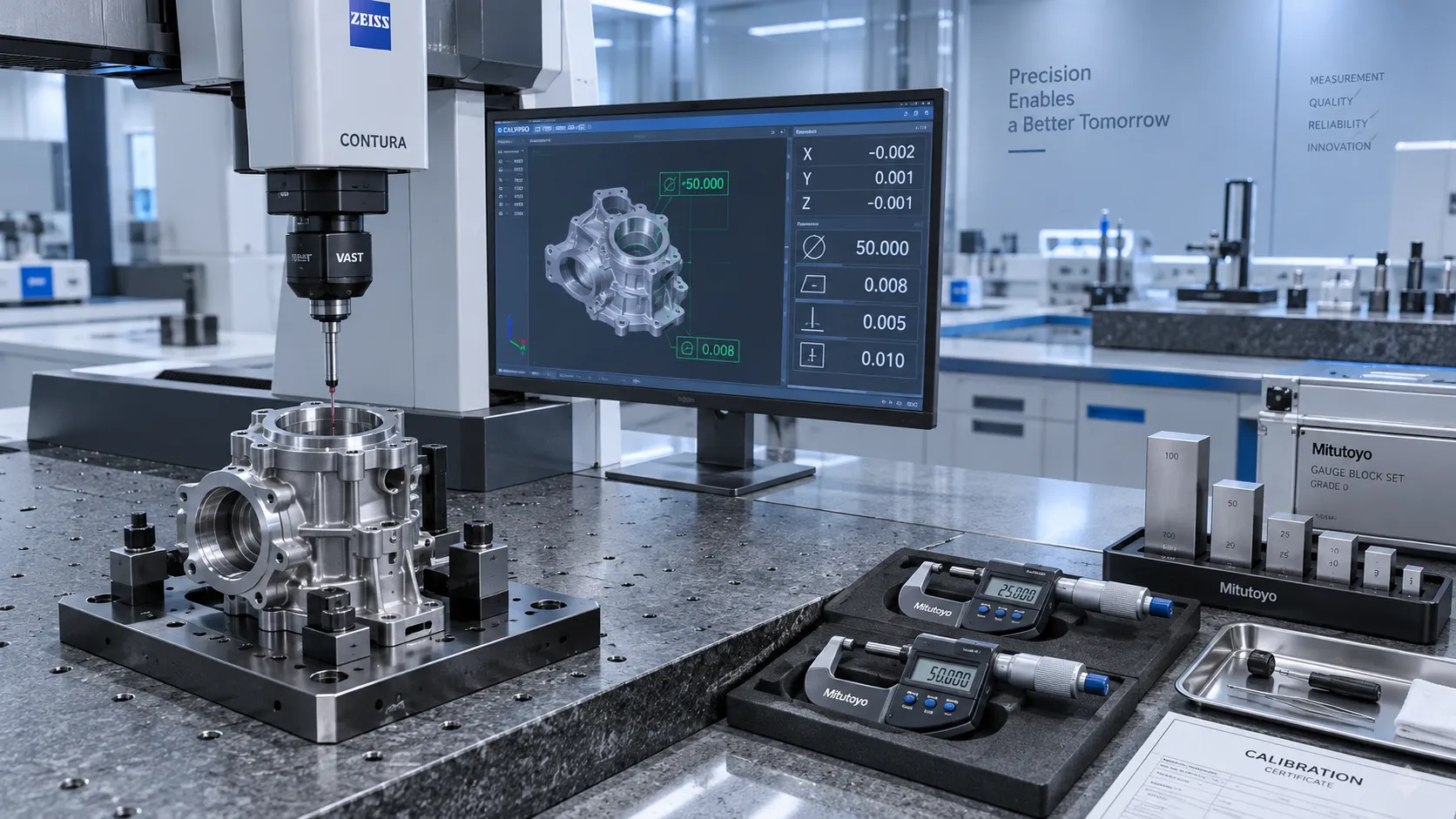
How to Select High-Precision Measuring Instruments for Tight-Tolerance Production?
High-precision measuring instruments are essential for tight-tolerance production. Learn how to evaluate accuracy, repeatability, environment, calibration, and data integration.
How Industrial Innovation Supplier Networks Reduce Sourcing Risk for Manufacturers
industrial innovation supplier network insights help manufacturers reduce sourcing risk, control lifecycle costs, and choose reliable tools, services, and suppliers with confidence.
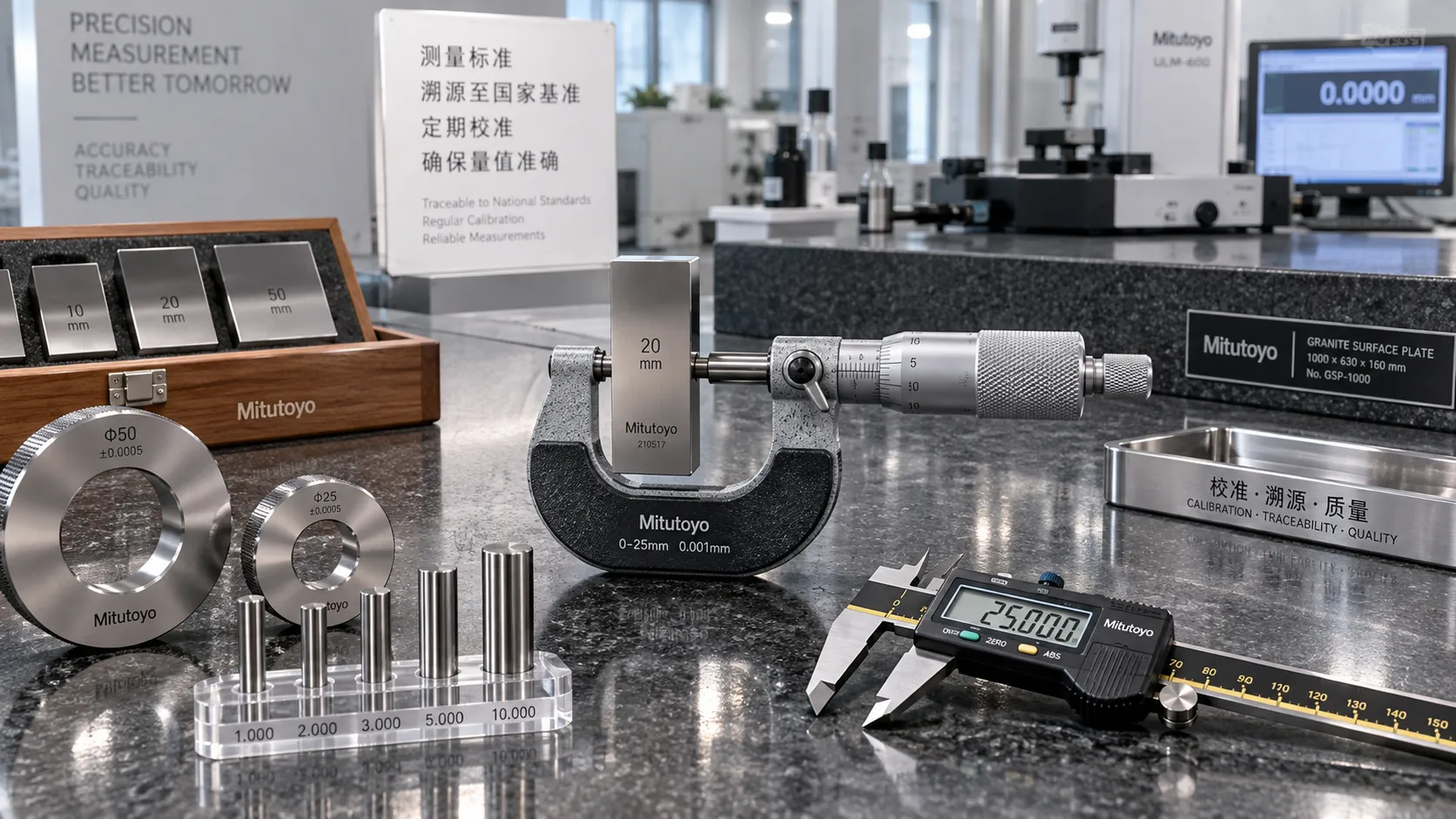
How Often Should Precision Measuring Instruments Be Calibrated?
How often should precision measuring instruments be calibrated? Learn how usage, tolerance, environment, and risk determine a reliable calibration schedule.
Related News
- 00
0000-00
Automotive Tools: How to Build a Reliable Toolkit for Routine Vehicle Service - 00
0000-00
How to Build an Automotive Hand Tool Set for Routine Vehicle Service - 00
0000-00
Construction Maintenance Tools for Site Repair: What to Pack for Concrete, Steel, and Pipe Fixes - 00
0000-00
Product Information Resources for Assembly Tools: What Specs Matter Before You Compare Models? - 00
0000-00
Industrial Applications of Torque Control Wrenches in Assembly Lines and Field Maintenance
Industrial Craft Curator
Weekly Insights
Stay ahead with our curated technology reports delivered every Monday.