
How to Evaluate a Technology Integration Service Provider for Complex Projects





Start With the Integration Problem, Not the Provider’s Capability Deck
A complex project rarely fails because a selected platform, sensor, controller, or software package is inherently inadequate. It fails when the parts that must work together were never defined at the same level of detail as the parts being purchased. A technology integration service provider should therefore be evaluated on its ability to manage dependencies across equipment, controls, software, data, workflows, and people.
For a project manager, the first question is not “Which provider has the broadest technology portfolio?” It is: “Can this provider take responsibility for the interfaces that determine whether the project operates as intended?” In an industrial assembly cell, for example, that may include torque tools, programmable logic controllers, quality records, operator guidance, safety interlocks, and maintenance access. In a welding or metrology environment, it may involve process parameters, measurement traceability, part identification, production data, and reporting requirements.
A provider with strong individual products can still be a weak integration partner if it treats those interfaces as someone else’s scope. The most suitable provider is usually the one that can explain the operational outcome, map the path to it, and identify where ownership must be shared before work begins.
Assess Whether the Provider Understands Your Operating Context
Technical credentials matter, but complex integration is applied engineering. The provider needs to understand how the system will be used after commissioning, including production variability, shift handovers, maintenance practices, quality escalation, cybersecurity rules, and future line changes.
Ask the provider to describe your project in operational terms before discussing its preferred architecture. A credible response should reflect the actual constraints of the site: the mix of legacy and new equipment, required uptime windows, access restrictions, acceptance criteria, available internal engineering resources, and the consequences of a failed interface.
This is especially important where physical processes and digital systems meet. Connecting an intelligent torque tool to a manufacturing execution system may appear straightforward in a demonstration. The project becomes more difficult when tightening programs change by model variant, serial-number traceability is mandatory, offline work must be reconciled, and an operator needs a clear recovery path after a network interruption. The provider should recognize these conditions without treating them as late-stage exceptions.
Questions That Reveal Practical Understanding
- Which process steps are most sensitive to delayed, missing, or incorrect data?
- How will the proposed design handle product variants, rework, manual overrides, and planned maintenance?
- Which existing systems, field devices, data formats, or network constraints could limit the design?
- What must remain operational if a higher-level application or external connection is unavailable?
- Who will diagnose faults at 2 a.m., and what information will they have available?
The value of these questions is not limited to the answers. They show whether the provider is thinking through the whole operating environment or simply describing a nominal implementation path.
Examine Integration Ownership at the Interface Level
The most expensive issues in integration work often appear between suppliers. A robot vendor may confirm that its controller communicates over a standard protocol. A software vendor may confirm that its application accepts the same protocol. Neither statement establishes that the full transaction, error handling, timing, security model, data ownership, and support responsibilities have been resolved.
During evaluation, request an interface register or equivalent working document. It does not need to be complete during a proposal stage, but the provider should be able to demonstrate the discipline behind it. For each interface, the project team should be able to identify the source and destination, data or control signal, communication method, expected frequency, owner, test method, and fallback behavior.
Interface ownership should be explicit in the commercial scope as well as the technical documentation. A proposal that says “integration included” is too vague for a multi-system project. It should identify which systems are included, which interfaces are included, what assumptions apply, and what inputs the provider requires from other parties.
There is a practical distinction between coordinating an interface and owning its outcome. A provider may reasonably depend on another vendor to supply access credentials or proprietary documentation. That does not remove the need for a named party to track the dependency, expose schedule risk, and confirm that the interface passes its test.
Test Delivery Discipline Before Signing
Complex projects need more than engineering skill. They need a delivery method that turns uncertainty into visible decisions early enough to protect cost and schedule. The provider should be able to describe how it moves from discovery through design, build, factory testing, installation, site acceptance, and handover.
Look for evidence that the approach changes as the project matures. Early stages should reduce uncertainty around requirements, architecture, and interfaces. Detailed design should establish configuration control and testability. Commissioning should focus on proving the integrated process under agreed conditions, rather than discovering basic requirements on site.
A useful evaluation exercise is to ask the provider to walk through a likely change: a late addition of a quality data field, a revised safety requirement, a substitute device caused by supply constraints, or a connection to an older control system. The purpose is not to force a fixed price for an imagined problem. It is to understand how the provider evaluates impact, documents the decision, protects the baseline, and communicates cost or schedule consequences.
Evidence Is More Useful Than Reassurance
References can be valuable, but a short list of recognizable customers does not prove that a provider can deliver your particular project. Ask to review sanitized examples of working artifacts instead: a requirements traceability matrix, interface specification, test protocol, commissioning plan, risk register, or handover checklist. These documents reveal how the organization manages complexity when the sales presentation is no longer the main instrument of control.
The documents should be proportionate to project scale. A modest retrofit does not need the documentation burden of a regulated, multi-site deployment. Yet even a smaller project benefits from a clear record of what must work, how it will be tested, who approves it, and what remains open at handover.
Pay attention to whether the provider distinguishes between assumptions, dependencies, and risks. Assumptions are conditions treated as true for planning purposes. Dependencies are inputs controlled by another party. Risks are events that may affect the project. Treating all three as a generic “open item” can hide where action is required.
Evaluate Architecture for Change, Not Just Day-One Functionality
Many integration decisions are made under immediate pressure: replace a failing component, connect a new machine, add traceability, improve process visibility, or meet a launch date. Those needs are valid, but a design that works on day one may become difficult to support when products, workflows, or vendors change.
Scalability should not be reduced to a claim that the system can handle more devices or users. For an engineering project, it includes the ability to add equipment without rewriting core logic, replace a device without losing data continuity, modify workflows under controlled conditions, and understand the consequences of configuration changes.
A capable technology integration service provider should explain the architectural choices that support those outcomes. This may include the use of open and documented interfaces where appropriate, clear separation between device-level controls and business applications, version-controlled configurations, reusable integration patterns, and defined data ownership. The exact design will depend on the environment. A highly centralized architecture may be suitable in one setting and introduce unnecessary operational dependence in another.
Legacy integration deserves direct attention. Existing equipment is often retained for sound commercial reasons, but its limitations must be made visible. Older controllers may expose limited data, use vendor-specific protocols, lack modern security features, or require disruptive downtime for modifications. A provider that quickly promises a seamless connection without first establishing these constraints may be shifting uncertainty into the implementation phase.
Do Not Treat Cybersecurity, Safety, and Quality as Add-Ons
In industrial and operational environments, integration extends the consequences of a fault. A connection that improves visibility can also expose equipment or production data to new failure modes. A system that automates a quality decision can create a larger quality risk if records are mismatched, timestamps are unreliable, or exceptions are silently lost.
The provider does not need to claim expertise in every specialist discipline. It does need to recognize where specialist review is required and coordinate it into the project. For cybersecurity, this may involve network segmentation, identity and access control, remote-access arrangements, patching responsibilities, logging, and incident response. For safety, it may involve control authority, emergency states, validation responsibilities, and the impact of communication loss. For quality-sensitive applications, it may involve calibration status, traceability, audit trails, and treatment of incomplete records.
These issues should appear in design and acceptance criteria, not only in a final compliance review. Project managers should be wary when cyber, safety, or quality topics are described as customer responsibilities without a clear interface to the provider’s technical design.
Compare Commercial Proposals by Risk Allocation
The lowest initial proposal can be costly if important work is excluded, assumptions are fragile, or change management is undefined. Conversely, a higher proposal may include discovery, testing, documentation, and post-launch support that reduces the likelihood of operational disruption. Comparing only the total figure obscures those differences.
Break proposals into the work that creates confidence in the outcome. This includes requirements workshops, site surveys, architecture design, interface development, simulation or factory acceptance testing, installation support, training, documentation, commissioning, and warranty support. Ask what is priced as fixed scope, what is estimated, and what triggers a change request.
A provider should not be penalized merely for identifying uncertainty. In complex work, transparent uncertainty is often more useful than a confident but underdeveloped promise. The concern is whether the provider has a method for reducing uncertainty and whether the commercial model supports that method.
A Short Decision Framework
Before selection, score providers against the factors that will determine project success rather than using a generic vendor checklist. For many complex projects, four areas deserve disproportionate weight:
- Context fit: understanding of the operating process, constraints, and internal capabilities.
- Interface accountability: clear ownership, documentation, and testing for cross-system dependencies.
- Delivery control: credible governance for requirements, changes, risks, commissioning, and handover.
- Supportable design: an architecture that can be maintained and adapted without excessive dependence on the original implementation team.
Technical breadth still matters, but it should be considered through those four lenses. A provider may have impressive expertise in automation, IoT, metrology, or enterprise software, yet remain unsuitable if it cannot coordinate the boundaries between them.
Choose the Provider That Makes Uncertainty Manageable
No technology integration service provider can eliminate every unknown in a complex project. Equipment conditions change, supplier dependencies move, and operational requirements become clearer as teams work through the design. The selection decision should therefore favor the provider that exposes uncertainty early, assigns it to owners, and builds verification into the delivery plan.
That approach produces a more demanding procurement conversation. It also gives project leaders a better basis for deciding what they are buying: not a collection of connected technologies, but a controlled path from technical components to a functioning operational system.
Related News

How Procurement Teams Can Map the Industrial Value Chain to Reduce Supply Risk
Industrial value chain procurement helps teams map hidden dependencies, qualify resilient sources, and reduce supply risk before disruptions stop production.

How Specification-Driven Articles Improve Precision Measurement System Selection
Specification-oriented articles precision measurement guidance helps teams compare accuracy, repeatability, environment, and data needs to select reliable systems with confidence.
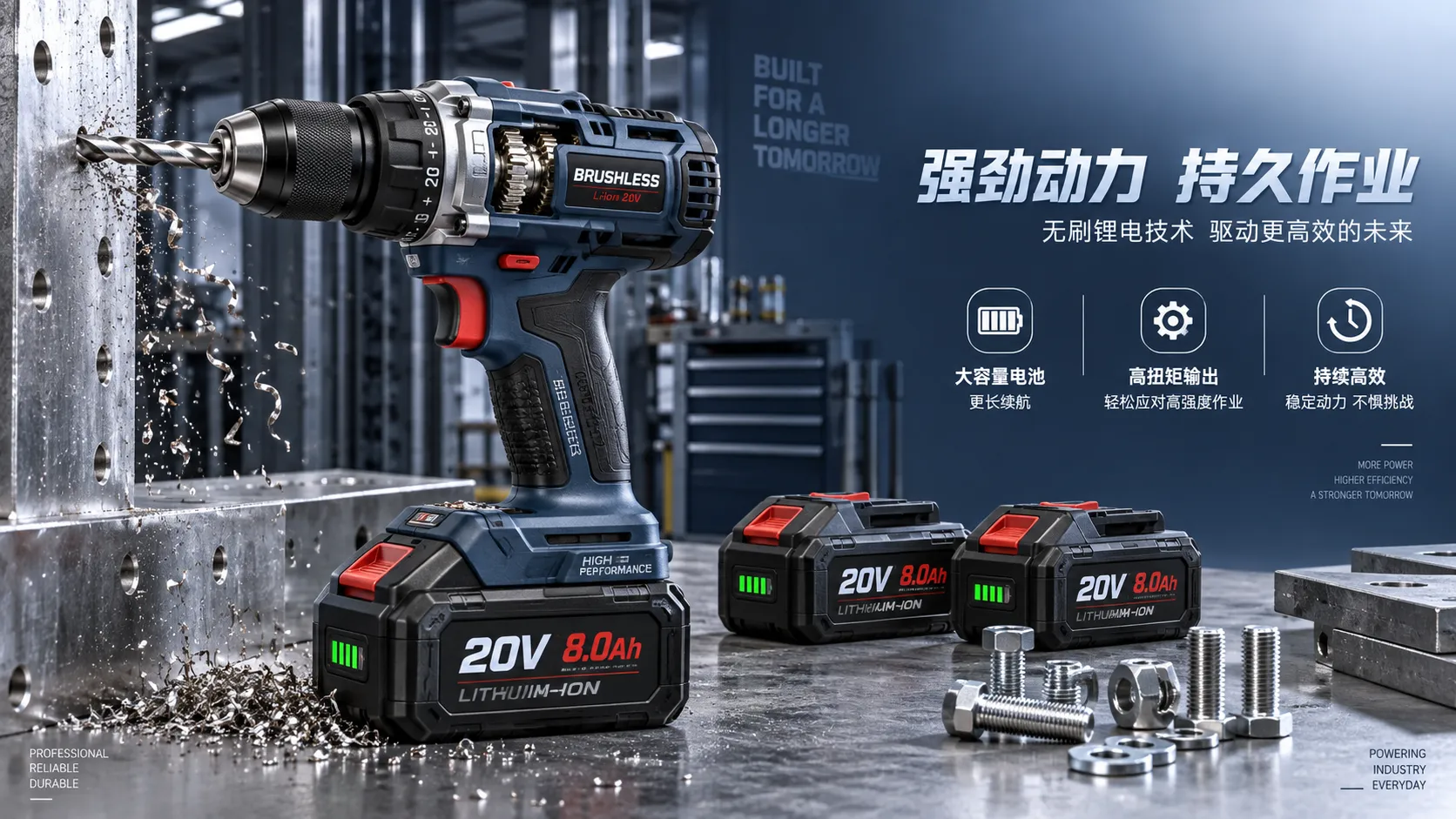
How Battery, Torque, and Duty Cycle Affect Cordless Power Tool Efficiency
Cordless power tool efficiency depends on battery output, torque, and duty cycle. Learn how to match tools to demanding jobs for stronger runtime and productivity.

Product Comparison Resources for Component Compatibility and Lifecycle Risk
Product comparison resources for components: evaluate compatibility, interfaces, service support, and lifecycle risk to reduce downtime, avoid redesigns, and make confident sourcing decisions.

How to Select Vernier Precision Calipers for Tight-Tolerance Machining Inspection
Vernier precision calipers for tight-tolerance machining: learn how to select the right range, jaw design, accuracy, and verification process for reliable inspection.

Product Comparison Resources in Europe: How Buyers Can Verify Specs and Suppliers
Product comparison resources Europe: learn how to verify industrial specs, compliance claims, supplier credibility, and delivery risk for smarter purchasing decisions.

How to Evaluate an Industrial Metrology Solution Manufacturer for Production Use
Industrial metrology solution manufacturer evaluation guide for production: compare accuracy, traceability, automation, software, service, and acceptance testing to reduce risk.

Which ISO Standards Matter Most for Precision Engineering Quality Control?
Precision engineering ISO standards explained: discover how ISO 9001, ISO/IEC 17025, ISO 10012, GPS, and ISO 3834 strengthen quality control, traceability, and compliance.

Selecting Metal Joining Methods for Aluminum-to-Steel Assemblies
Metal joining solutions for dissimilar metals: compare aluminum-to-steel fastening, bonding, hybrid, and thermal methods for corrosion-resistant, reliable assemblies.
Related News
- 00
0000-00
How to Evaluate a Technology Integration Service Provider for Complex Projects - 00
0000-00
Product Comparison Resources in Europe: How Buyers Can Verify Specs and Suppliers - 00
0000-00
How to Evaluate an Industrial Metrology Solution Manufacturer for Production Use - 00
0000-00
How to Evaluate a Metal Joining Solutions Factory for Quality, Capacity, and Delivery Risk - 00
0000-00
How to Evaluate OEM Tool Solutions for Reliable Bulk Tool Orders
Dr. Alistair Vaughn
Weekly Insights
Stay ahead with our curated technology reports delivered every Monday.