
Export Standard Restrictions Explained: How Compliance Rules Affect Industrial Product Sales





Export standard restrictions have moved from compliance departments into the center of industrial sales strategy. In welding tools, precision instruments, hydraulic equipment, and assembly systems, a rule change can alter quoting logic, shipping windows, and market eligibility within weeks.
That is why these restrictions now matter far beyond legal documentation. They influence buyer confidence, distributor planning, warranty exposure, and the long-term competitiveness of industrial brands operating across multiple regulatory environments.
For platforms such as GPTWM, which tracks the last mile of industrial manufacturing, export rule movement is not isolated news. It connects directly with raw material volatility, product design choices, safety expectations, and the commercial direction of global tool demand.
What export standard restrictions really mean in industrial trade
In practical terms, export standard restrictions are regulatory or technical requirements that products must satisfy before entering certain markets. They may come from governments, customs agencies, industry standards bodies, or sector-specific safety frameworks.
They are not limited to tariffs or embargoes. More often, they involve certification, testing, labeling, packaging, material disclosure, traceability, software controls, energy efficiency, or operator safety performance.
A handheld laser welding unit, for example, may face export standard restrictions tied to beam safety, electrical compatibility, operator training requirements, and transport classification. A caliper may face metrology accuracy, calibration, and marking requirements.
The commercial effect is simple. If a product cannot prove compliance quickly and clearly, it becomes harder to sell, harder to insure, and easier for a buyer to replace.
Why the issue has become more urgent
Several forces are tightening export standard restrictions across industrial categories. Safety regulation is becoming more detailed. Digital features are raising cybersecurity questions. Sustainability reporting is expanding into supply chain disclosures.
At the same time, industrial buyers are less willing to absorb compliance uncertainty. Delivery promises now depend on customs predictability, certification validity, and documentation consistency as much as on factory output.
This is especially visible in sectors served by GPTWM intelligence, including construction maintenance, automotive service, aerospace repair, and precision assembly. These sectors use equipment where failure, miscalibration, or unsafe operation creates immediate operational and legal consequences.
More importantly, restrictions are changing faster than many catalogs. A product approved two years ago may now need revised warnings, updated firmware controls, or a different test report set.
How compliance rules affect sales performance
The impact of export standard restrictions is easiest to see in four commercial areas: price, lead time, market access, and trust.
Pricing pressure
Compliance adds direct and indirect cost. Testing fees, certification renewals, documentation support, packaging changes, and engineering modifications all affect margin structure.
When a supplier underestimates those costs, the result is often unstable pricing. That creates risk during evaluation, especially for multi-market distribution programs.
Lead-time variation
A production-ready item is not always export-ready. Missing declarations, expired certificates, or incomplete technical files can delay customs clearance longer than the manufacturing cycle itself.
For industrial tools, delayed arrival can interrupt service networks, maintenance schedules, and project handovers. In this setting, compliance speed becomes a sales capability.
Market access and channel expansion
Export standard restrictions may block entry into one region while allowing access in another. A distributor expanding across borders must therefore compare not just demand, but compliance compatibility.
Products with modular documentation and internationally recognized testing pathways usually scale faster. Products built only for domestic assumptions often stall at the border.
Buyer confidence
Clear compliance records reduce decision friction. If safety files, calibration records, origin data, and labeling standards are easy to verify, the product appears lower risk before any purchase order is signed.
Where export standard restrictions show up most often
Restrictions vary by product class, but some patterns appear repeatedly in industrial sales reviews.
These examples show why export standard restrictions cannot be treated as a single checklist. They are product-specific, region-specific, and often use-case-specific.
What to examine during a business evaluation
The most useful approach is to evaluate compliance as part of commercial quality, not as an attachment at the end of sourcing.
- Check whether certificates match the exact model, not a similar family reference.
- Review expiry dates, test laboratory credibility, and destination-market recognition.
- Confirm whether manuals, labels, and warnings are aligned with shipment destinations.
- Ask how design updates affect prior approvals and whether retesting is required.
- Compare compliance lead time with quoted production lead time.
- Assess the supplier’s ability to provide traceability for critical components.
This is where sector intelligence becomes valuable. GPTWM’s Strategic Intelligence Center approach is useful because it connects export standard restrictions with adjacent signals, such as changing ergonomic standards, tool electrification, and smart control adoption.
That broader view helps explain whether a restriction is temporary, structural, or likely to spread into neighboring markets.
The hidden link between compliance and product positioning
Not every compliance burden is negative. In many industrial categories, strong alignment with export standard restrictions improves product positioning rather than merely protecting shipments.
A measuring tool with reliable calibration traceability can command stronger trust in aerospace maintenance. A welding system with clearer operator safety architecture may gain preference in regulated fabrication environments.
The same logic applies to digitally enabled tools. If torque control systems or connected assembly devices already anticipate security and interoperability requirements, market expansion becomes smoother.
In other words, compliance maturity often acts as a quality signal. It can support brand premium, reduce channel resistance, and strengthen after-sales credibility.
How to respond when restrictions keep changing
A stable response usually starts with segmentation. Separate products by risk level, destination complexity, and documentation intensity. High-exposure categories deserve more frequent review than low-risk spare parts.
Then build a simple monitoring routine. Track regulatory updates, supplier revision notices, and shifts in enforcement practice at customs or channel level.
It also helps to compare compliance claims with real shipment history. Some suppliers present complete-looking files but have limited evidence of successful entry into stricter markets.
The goal is not to eliminate all uncertainty. It is to reduce avoidable surprises that distort landed cost and sales timing.
A practical next step for stronger decisions
Export standard restrictions should be read as business signals, not only legal requirements. They reveal how prepared a product is for cross-border competition, how resilient a supplier is under scrutiny, and how scalable a sales plan may be.
A useful next move is to map current industrial products against destination-market rules, certification status, and documentation readiness. That exercise often exposes where the real sales friction sits.
From there, compare compliance gaps with margin potential, delivery targets, and channel strategy. The result is a clearer basis for deciding which products deserve expansion, redesign, closer monitoring, or delayed entry.
In industrial trade, precision is no longer limited to tools and measurements. It now defines how export standard restrictions are understood, managed, and turned into commercial advantage.
Related News

How Procurement Teams Can Map the Industrial Value Chain to Reduce Supply Risk
Industrial value chain procurement helps teams map hidden dependencies, qualify resilient sources, and reduce supply risk before disruptions stop production.

How Specification-Driven Articles Improve Precision Measurement System Selection
Specification-oriented articles precision measurement guidance helps teams compare accuracy, repeatability, environment, and data needs to select reliable systems with confidence.

How to Evaluate a Technology Integration Service Provider for Complex Projects
Technology integration service provider selection guide: evaluate interface ownership, delivery discipline, scalable architecture, and risk control for complex projects.
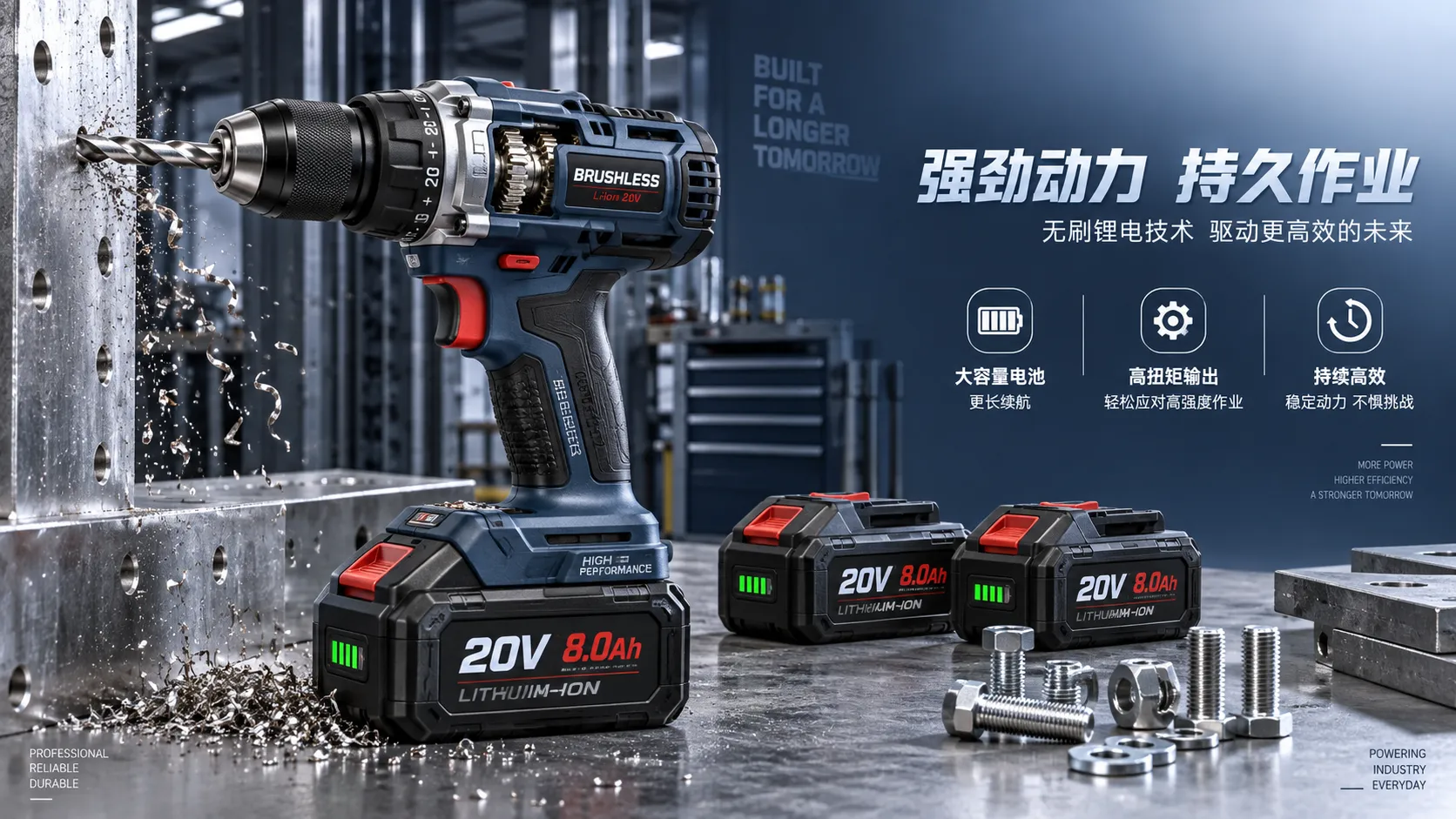
How Battery, Torque, and Duty Cycle Affect Cordless Power Tool Efficiency
Cordless power tool efficiency depends on battery output, torque, and duty cycle. Learn how to match tools to demanding jobs for stronger runtime and productivity.

Product Comparison Resources for Component Compatibility and Lifecycle Risk
Product comparison resources for components: evaluate compatibility, interfaces, service support, and lifecycle risk to reduce downtime, avoid redesigns, and make confident sourcing decisions.
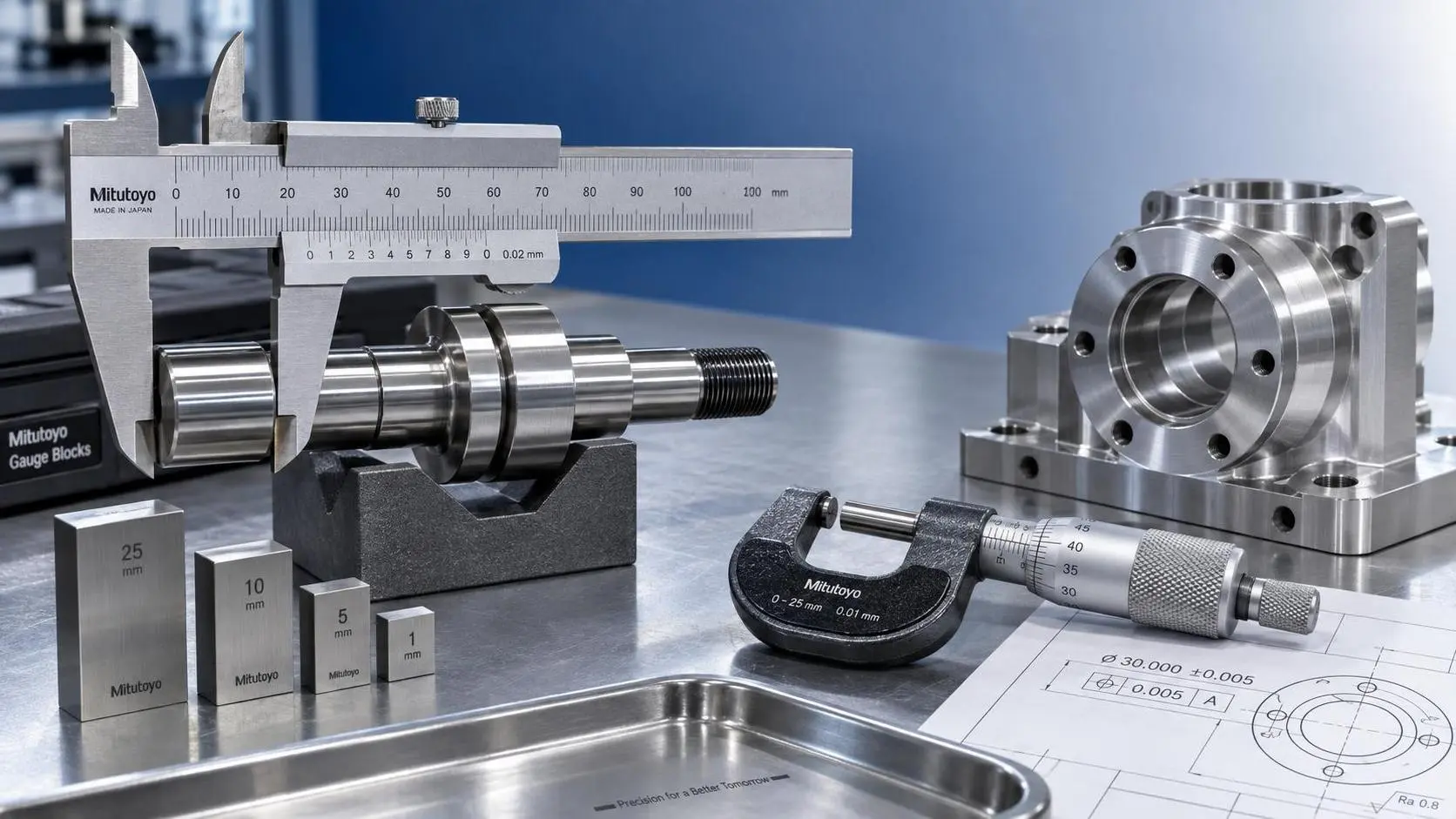
How to Select Vernier Precision Calipers for Tight-Tolerance Machining Inspection
Vernier precision calipers for tight-tolerance machining: learn how to select the right range, jaw design, accuracy, and verification process for reliable inspection.

Product Comparison Resources in Europe: How Buyers Can Verify Specs and Suppliers
Product comparison resources Europe: learn how to verify industrial specs, compliance claims, supplier credibility, and delivery risk for smarter purchasing decisions.

How to Evaluate an Industrial Metrology Solution Manufacturer for Production Use
Industrial metrology solution manufacturer evaluation guide for production: compare accuracy, traceability, automation, software, service, and acceptance testing to reduce risk.

Which ISO Standards Matter Most for Precision Engineering Quality Control?
Precision engineering ISO standards explained: discover how ISO 9001, ISO/IEC 17025, ISO 10012, GPS, and ISO 3834 strengthen quality control, traceability, and compliance.
Related News
- 00
0000-00
How Procurement Teams Can Map the Industrial Value Chain to Reduce Supply Risk - 00
0000-00
How Industry Category Guides Help Global Sourcing Teams Compare Suppliers Faster - 00
0000-00
Intelligent Tools in Southeast Asia: Key Market Trends, Buyers, and Supply Chain Shifts - 00
0000-00
Industrial Value Chain Europe: Where Sourcing Risks and Lead-Time Pressure Are Rising - 00
0000-00
North America's Industrial Value Chain: Key Shifts in Sourcing, Labor, and Logistics
Dr. Alistair Vaughn
Weekly Insights
Stay ahead with our curated technology reports delivered every Monday.