
How Export Standard Restrictions Affect Equipment Certification and Market Access





Export standard restrictions now shape far more than customs paperwork. They influence whether industrial equipment can be certified on time, whether documentation matches local expectations, and whether market entry remains commercially viable.
In sectors tied to assembly, welding, metrology, power tools, and hydraulic systems, technical rules have become part of strategic planning. A delayed conformity review can erode margins as quickly as a material cost spike.
That is why the topic matters across the broader industrial landscape. Export decisions, engineering choices, and certification pathways increasingly depend on how export standard restrictions are interpreted in each target market.
What export standard restrictions actually cover
The phrase sounds narrow, but its practical scope is wide. Export standard restrictions usually combine technical, safety, labeling, testing, traceability, and documentation requirements tied to cross-border trade.
Some restrictions are explicit legal controls. Others appear through mandatory standards, importer obligations, sector-specific safety codes, or testing protocols required before equipment can be sold or installed.
For industrial products, this can affect electrical safety, electromagnetic compatibility, pressure integrity, welding performance, measuring accuracy, software security, ergonomic design, and after-sales traceability.
A torque tool, laser welding unit, digital caliper, or hydraulic device may perform well technically, yet still face barriers if its certification file does not align with destination-market rules.
Why certification is now more exposed to regulatory shifts
Certification used to be treated as a late-stage approval task. That approach is increasingly risky because export standard restrictions often affect design assumptions much earlier than many planning models expect.
A new rule may require different enclosures, revised firmware logs, extra insulation, stronger operator warnings, or alternate test samples. Each change can reopen validation work already considered complete.
This matters especially in industrial categories where precision, safety, and operator interaction are tightly regulated. Handheld welding systems, smart fastening tools, and metrology devices face growing scrutiny from both regulators and buyers.
The result is simple. Export standard restrictions do not only delay approval. They can redefine the cost of compliance, the usable supplier base, and the timing of commercial launch.
Where delays often begin
- Technical files were prepared for one market but reused in another without local adaptation.
- Components from upstream suppliers lack accepted test evidence or material declarations.
- Product labeling, manuals, or safety warnings fail language or format rules.
- Testing standards changed during the commercialization cycle.
- The importer expects certification scope broader than the manufacturer originally planned.
How market access is affected beyond the certificate
A certificate is rarely the final gate. Market access also depends on distributor confidence, insurer acceptance, procurement eligibility, and the ability to pass customer audits without repeated clarification.
When export standard restrictions tighten, buyers tend to favor equipment backed by transparent conformity evidence. They want fewer surprises around installation, worker safety, maintenance liability, and local inspection risks.
This is particularly visible in construction, automotive service, aerospace maintenance, and industrial fabrication. In those settings, even a minor compliance gap can interrupt tenders, slow onboarding, or limit use in regulated sites.
Market access therefore becomes a layered question. It is not only about crossing borders, but about entering channels, winning trust, and remaining operational under local compliance expectations.
Industrial categories feel the pressure differently
Not every product is affected in the same way. Export standard restrictions hit categories differently depending on safety sensitivity, digital content, operator contact, and calibration dependence.
Welding tools may face concerns around arc exposure, laser safety, ventilation guidance, and operator protection. Precision measuring equipment is often judged more heavily on calibration traceability and documentation integrity.
Power tools and electro-mechanical equipment often sit at the intersection of electrical safety, durability, battery transport rules, and EMC compliance. Hydraulic systems may trigger pressure, sealing, and maintenance record expectations.
This is where intelligence-led interpretation becomes valuable. GPTWM closely tracks export standard restrictions alongside sector shifts in handheld laser welding safety, brushless motor limits, and IoT torque control expectations.
That perspective matters because certification is no longer isolated from commercial positioning. Standards, product architecture, and demand trends are increasingly stitched together in the last mile of manufacturing decisions.
Common high-impact scenarios
- A metrology device qualifies technically, but lacks locally accepted calibration references.
- A welding unit meets core performance targets, yet requires revised safety shielding for a new market.
- A connected fastening tool faces software logging requirements not included in the initial design scope.
- A hydraulic product needs extra proof of component origin because export standard restrictions changed during sourcing.
What to evaluate before entering a target market
The most useful approach is to treat market entry as a combined technical and commercial review. Export standard restrictions should be mapped before launch budgets, promised delivery dates, or distributor terms are finalized.
A practical review usually needs more than a pass or fail answer. It should show where restrictions create redesign exposure, documentation gaps, cost escalation, or post-entry service limitations.
Key evaluation points
- Check whether destination standards are harmonized with current product testing, or require fresh evidence.
- Confirm whether critical components carry accepted declarations, traceability records, and compliance markings.
- Review whether manuals, warnings, packaging, and digital interfaces meet local language and safety expectations.
- Estimate the cost of delay if export standard restrictions trigger retesting or certification scope changes.
- Assess whether local distributors or end users demand standards beyond the legal minimum.
This broader assessment often reveals hidden barriers earlier. In many cases, the commercial risk comes not from one regulation, but from several smaller requirements accumulating at the same time.
Why timing and intelligence matter more than ever
Standards do not stand still. Rules shift with safety incidents, geopolitical priorities, supply chain controls, digital security concerns, and changing expectations around sustainability and worker protection.
That makes export standard restrictions a moving target rather than a one-time checklist. A certification strategy built only on historical approvals can become obsolete faster than expected.
Platforms like GPTWM are useful in this environment because they connect sector news with product-level implications. Raw material shifts, evolving safety norms, and demand signals can all affect compliance planning at once.
For internationally traded industrial equipment, that joined-up view supports better timing. It helps determine when to redesign, when to re-source, when to localize documentation, and when a market entry plan needs to pause.
A practical next step for stronger market access
The most effective response is not simply to collect more certificates. It is to build a sharper decision framework around export standard restrictions, product architecture, and target-market expectations.
Start by ranking markets according to certification complexity, channel requirements, and supply chain readiness. Then compare those findings with the technical maturity of each equipment line.
Where uncertainty remains, focus on the issues most likely to change launch economics: retesting risk, documentation gaps, restricted components, and local safety interpretation. That usually produces clearer priorities than a broad compliance checklist.
In a tighter regulatory climate, export standard restrictions are not just barriers to manage. They are signals that help define where a product can compete effectively, how quickly it can enter, and how resilient its market access will be over time.
Related News

How Procurement Teams Can Map the Industrial Value Chain to Reduce Supply Risk
Industrial value chain procurement helps teams map hidden dependencies, qualify resilient sources, and reduce supply risk before disruptions stop production.

How Specification-Driven Articles Improve Precision Measurement System Selection
Specification-oriented articles precision measurement guidance helps teams compare accuracy, repeatability, environment, and data needs to select reliable systems with confidence.

How to Evaluate a Technology Integration Service Provider for Complex Projects
Technology integration service provider selection guide: evaluate interface ownership, delivery discipline, scalable architecture, and risk control for complex projects.
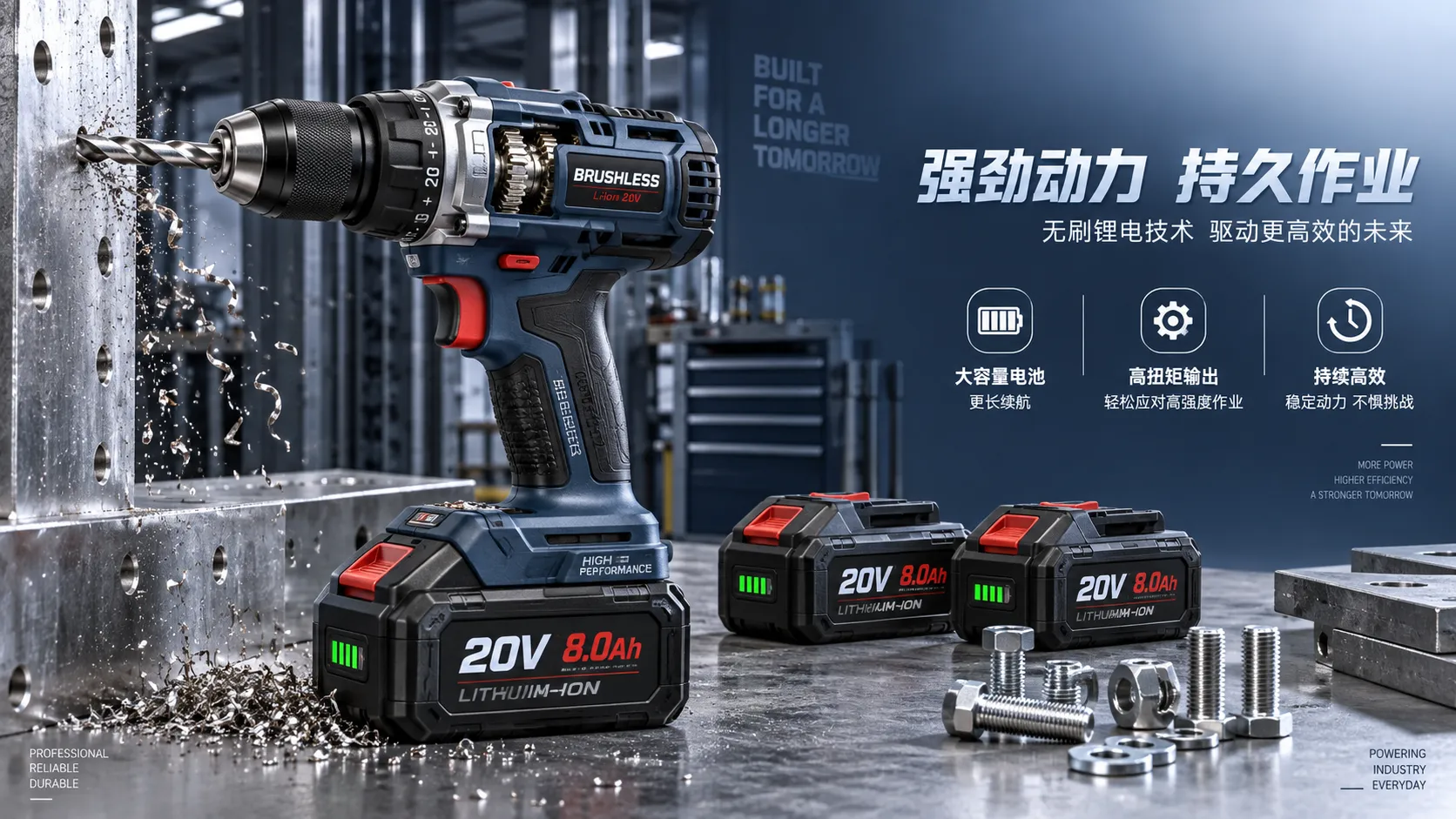
How Battery, Torque, and Duty Cycle Affect Cordless Power Tool Efficiency
Cordless power tool efficiency depends on battery output, torque, and duty cycle. Learn how to match tools to demanding jobs for stronger runtime and productivity.

Product Comparison Resources for Component Compatibility and Lifecycle Risk
Product comparison resources for components: evaluate compatibility, interfaces, service support, and lifecycle risk to reduce downtime, avoid redesigns, and make confident sourcing decisions.
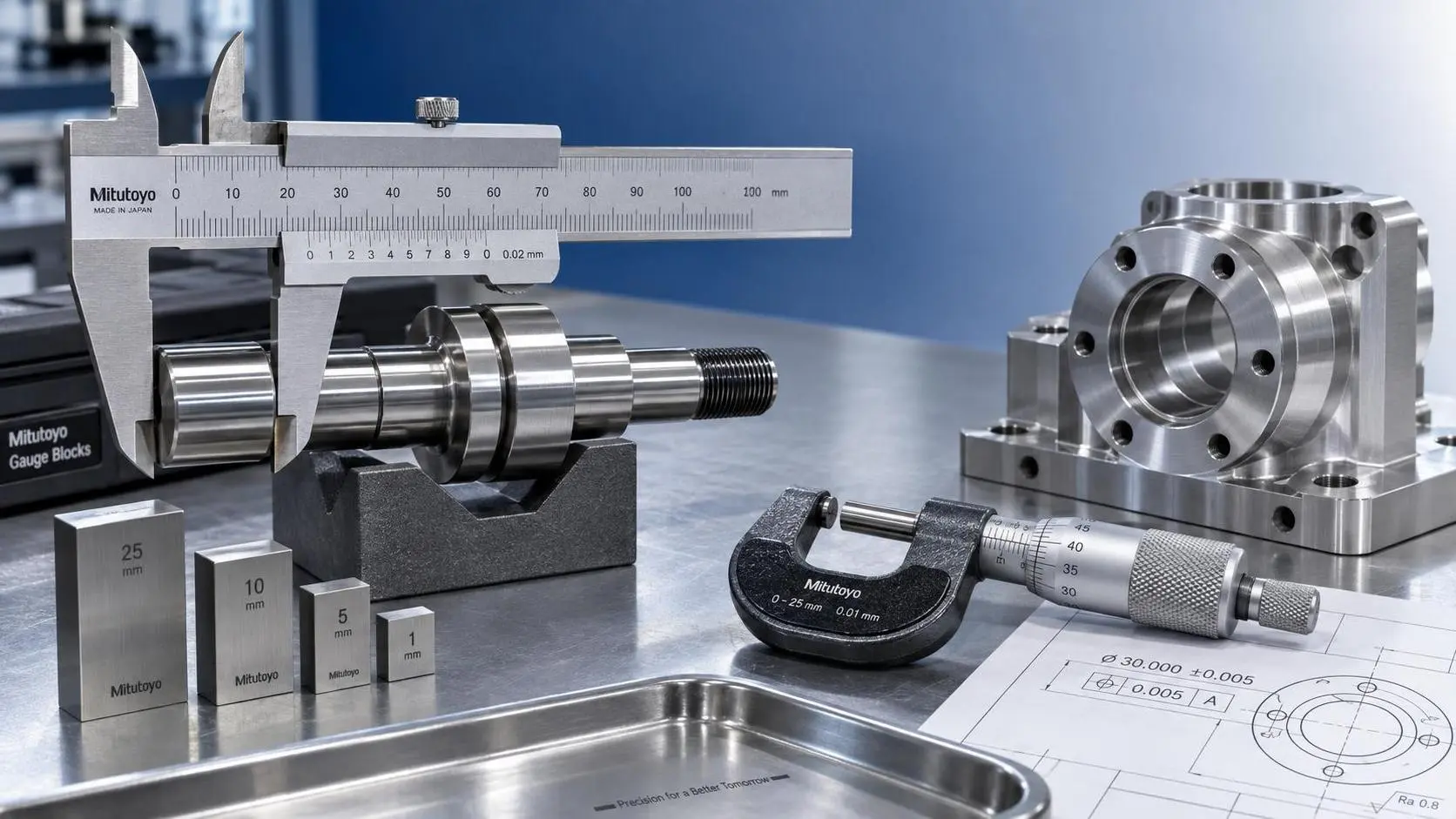
How to Select Vernier Precision Calipers for Tight-Tolerance Machining Inspection
Vernier precision calipers for tight-tolerance machining: learn how to select the right range, jaw design, accuracy, and verification process for reliable inspection.

Product Comparison Resources in Europe: How Buyers Can Verify Specs and Suppliers
Product comparison resources Europe: learn how to verify industrial specs, compliance claims, supplier credibility, and delivery risk for smarter purchasing decisions.

How to Evaluate an Industrial Metrology Solution Manufacturer for Production Use
Industrial metrology solution manufacturer evaluation guide for production: compare accuracy, traceability, automation, software, service, and acceptance testing to reduce risk.

Which ISO Standards Matter Most for Precision Engineering Quality Control?
Precision engineering ISO standards explained: discover how ISO 9001, ISO/IEC 17025, ISO 10012, GPS, and ISO 3834 strengthen quality control, traceability, and compliance.
Related News
- 00
0000-00
How Procurement Teams Can Map the Industrial Value Chain to Reduce Supply Risk - 00
0000-00
How Industry Category Guides Help Global Sourcing Teams Compare Suppliers Faster - 00
0000-00
Intelligent Tools in Southeast Asia: Key Market Trends, Buyers, and Supply Chain Shifts - 00
0000-00
Industrial Value Chain Europe: Where Sourcing Risks and Lead-Time Pressure Are Rising - 00
0000-00
North America's Industrial Value Chain: Key Shifts in Sourcing, Labor, and Logistics
Dr. Alistair Vaughn
Weekly Insights
Stay ahead with our curated technology reports delivered every Monday.