
Are ergonomic standards keeping up with hybrid work?





Hybrid work has moved beyond offices and into quality labs, maintenance planning, supplier audits, and digital production support—raising a critical question for quality control and safety managers: are ergonomic standards evolving fast enough? As teams split time between shop floors, remote workstations, and mobile inspection environments, traditional assumptions about posture, tool handling, fatigue, and risk exposure are being challenged. This article examines how ergonomic standards must adapt to protect workers, sustain measurement accuracy, and support safer, more efficient industrial operations.
For industrial organizations, the issue is no longer limited to office chair height or monitor placement. Ergonomic standards now affect torque tool selection, inspection repeatability, welding posture, mobile device use, and fatigue management across 2 or 3 work locations.
Why hybrid industrial work is testing ergonomic standards
Hybrid work in manufacturing is different from hybrid work in administration. A quality engineer may review SPC data remotely, inspect parts onsite, and support a supplier audit by video within 48 hours.
Safety managers face a similar pattern. They may assess a welding cell, update digital permits, and investigate a near miss from a tablet or home workstation during the same week.
The old workplace boundary has weakened
Traditional ergonomic standards were often written around stable workstations, predictable task cycles, and visible supervision. Hybrid environments introduce mobile setups, temporary benches, shared tools, and uneven lighting conditions.
A 30-minute remote inspection call can become a 3-hour session involving handheld gauges, screenshots, camera positioning, and repetitive neck rotation. The risk is real, even when the task seems digital.
- Quality labs may rotate between standing measurement, microscope review, and remote data approval.
- Maintenance planners may use laptops near machinery, vehicles, tool cribs, or temporary shutdown offices.
- Supplier auditors may depend on mobile cameras, tablets, and portable inspection kits for 4–8 hours.
These scenarios show why ergonomic standards must move from fixed workstation guidance toward task-based risk control. The standard must follow the work, not only the building.
Accuracy and ergonomics are linked
Poor posture is not only a health concern. It can influence measurement pressure, gauge alignment, tool handling, and visual judgment, especially when tolerances reach ±0.05 mm.
In precision metrology, small variations matter. If an inspector supports a part awkwardly for 20 repeated checks, fatigue can affect consistency before pain is reported.
For GPTWM’s industrial audience, the practical question is straightforward: ergonomic standards should protect both people and process capability. Injury reduction and measurement reliability belong in the same conversation.
Where ergonomic standards fall short in quality, welding, and tooling environments
Many companies already reference recognized ergonomic standards, internal risk matrices, and safety checklists. Yet hybrid work exposes gaps that were less visible in single-site operations.
The most common weakness is fragmented responsibility. Facilities may own workstation furniture, safety may own injury prevention, and quality may own inspection repeatability, but hybrid tasks cross all 3 areas.
The table below summarizes typical gaps for quality control and safety teams evaluating industrial hybrid work. It connects ergonomic standards with practical risk points and decision actions.
The key conclusion is that ergonomic standards need operational translation. A policy is useful only when it becomes a checklist, training requirement, tool specification, or audit evidence.
Tool ergonomics needs measurable criteria
Industrial tools should not be judged only by torque, power, or purchase price. Grip diameter, center of gravity, vibration exposure, trigger force, and heat transfer deserve equal attention.
For handheld tools, a grip range around 30–50 mm is commonly more manageable for many users, depending on glove type, task force, and repetition rate.
For brushless power tools, ergonomic evaluation should include cycle time, battery weight, and reaction torque. A lighter tool is not automatically safer if it increases wrist correction.
Metrology tasks need fatigue limits
Inspection work is often treated as low physical demand. In reality, repetitive caliper use, microscope posture, and fixture loading can create cumulative strain over 2–4 hours.
Updated ergonomic standards should define review points for repeated measurements, including task duration, part weight, reach distance, lighting level, and the number of readings per batch.
A practical framework for updating ergonomic standards
Quality control and safety managers do not need to rewrite every policy at once. A staged approach can improve protection within 30–90 days while supporting production continuity.
The strongest programs combine job observation, data review, operator input, and purchasing rules. This prevents ergonomic standards from becoming isolated documents with little shop-floor impact.
Step 1: map hybrid task exposure
Start by listing tasks that move between onsite, remote, and mobile settings. Typical categories include inspection review, maintenance planning, supplier verification, digital work instruction updates, and safety audits.
For each task, capture 5 variables: duration, posture, hand force, visual demand, and tool or device weight. This creates a baseline for targeted ergonomic standards.
Step 2: classify risk by task, not job title
A quality manager may spend 60% of one week on digital review and the next week on supplier inspection. Job titles alone cannot describe exposure accurately.
Use 3 risk levels for practical decision-making: routine control, enhanced review, and immediate intervention. This helps teams prioritize resources without delaying corrective action.
- Routine control: short tasks under 30 minutes, neutral posture, low repetition, and stable workstation support.
- Enhanced review: tasks over 2 hours, repeated gripping, tablet use, or inspection under poor lighting.
- Immediate intervention: pain reports, visible awkward posture, heavy parts, vibration exposure, or repeated measurement inconsistency.
This method aligns ergonomic standards with operational risk. It also gives supervisors a clear basis for deciding when to adjust tools, staffing, or process timing.
Step 3: connect purchasing with ergonomic performance
Procurement teams influence ergonomic outcomes long before a tool reaches the bench. Specifications should include usability criteria, not only output ratings and delivery schedules.
For example, when evaluating torque tools, buyers can request details on tool weight, reaction control, calibration interval, grip material, sound level, and compatible suspension options.
This approach supports safer purchasing and reduces downstream retrofits. It also helps distributors and manufacturers communicate value beyond price per unit.
What quality and safety managers should measure
Modern ergonomic standards should be measurable enough for audits but flexible enough for varied industrial tasks. The goal is not paperwork volume; it is better control.
A useful program includes leading indicators and lagging indicators. Leading indicators reveal exposure early, while lagging indicators show where controls failed or need revision.
The following table offers a practical measurement set for hybrid industrial environments. It can support internal audits, supplier reviews, or continuous improvement meetings.
The strongest insight is that ergonomic data should be reviewed alongside quality data. When fatigue, discomfort, and process variation rise together, corrective action should be cross-functional.
Audit questions that reveal hidden risk
An effective audit goes beyond asking whether employees have adjustable chairs. It examines how real tasks are performed across sites, shifts, and digital workflows.
- Can the operator maintain neutral posture for at least 80% of the task cycle?
- Is the inspection device supported when readings exceed 30 repeated measurements?
- Does the remote workstation meet the same visual requirements as the lab station?
- Are tool changes evaluated for grip, vibration, balance, and reaction force?
- Are ergonomic complaints linked to nonconformance reviews or process drift events?
These questions make ergonomic standards actionable. They also help safety teams speak the language of quality, throughput, and customer confidence.
Common mistakes when adapting ergonomic standards
Many organizations recognize hybrid work risk but respond too narrowly. They add remote work guidelines while leaving industrial inspection, welding support, and mobile maintenance workflows unchanged.
Mistake 1: treating office and industrial ergonomics as separate worlds
A laptop setup affects the quality decision chain. If remote reviewers experience eye strain or fatigue, defect classification and drawing interpretation may become less reliable after several hours.
The better approach is an integrated standard covering screen work, tool use, inspection fixtures, lighting, part presentation, and communication devices in 1 coordinated system.
Mistake 2: ignoring temporary workstations
Temporary stations often become permanent by habit. A shutdown desk, supplier audit bench, or shared calibration table may be used for 6 months without formal assessment.
Safety managers should set a trigger. If a temporary setup is used more than 5 days per month, it should receive a basic ergonomic review.
Mistake 3: selecting tools without operator trials
Catalog specifications rarely capture real handling differences. A tool may meet torque requirements but fail during repetitive use because of grip shape, heat, or balance.
Before standardizing a tool family, run a 2-week trial with operators from different shifts. Capture discomfort scores, task time, defect patterns, and maintenance feedback.
Mistake 4: separating ergonomics from digital transformation
Digital factories increase data visibility, but they can also increase screen time, alerts, and device handling. Ergonomic standards must evolve with IoT tools and smart torque systems.
For connected devices, evaluate notification frequency, display readability, feedback vibration, and the number of manual confirmations required per production batch or inspection lot.
How GPTWM supports better ergonomic decisions
The Global Precision Tools & Welding Matrix focuses on the last mile of industrial manufacturing, where standards, tool design, operator behavior, and quality outcomes meet.
For quality control and safety managers, GPTWM’s value lies in connecting ergonomic standards with practical intelligence on precision metrology, metal joining, power tools, and industrial assembly.
Decision intelligence for safer tool ecosystems
GPTWM’s Strategic Intelligence Center observes sector news, export restrictions, material changes, and tool technology evolution. This context helps teams assess ergonomic impact before procurement decisions are locked.
For example, when handheld laser welding adoption rises, safety teams must evaluate training time, eye protection, stance, cable management, and fatigue exposure across 3 operating conditions.
When intelligent torque control expands, quality teams should review whether digital prompts reduce error or create extra hand movements, screen dependency, and attention switching.
A procurement lens for ergonomic standards
Industrial buyers increasingly need evidence beyond compliance statements. They need usable comparisons that connect performance, safety, calibration, maintenance, and operator acceptance.
GPTWM encourages a 6-factor review: task fit, force demand, measurement reliability, maintainability, training burden, and integration with digital production systems.
This review helps teams avoid buying tools that are powerful on paper but difficult to control in real inspection, assembly, welding, or maintenance environments.
Building a future-ready ergonomic standard
Ergonomic standards are keeping up only where organizations deliberately modernize them. In many facilities, the work has changed faster than the assessment method.
A future-ready standard should cover onsite, remote, and mobile work with equal seriousness. It should define responsibilities across safety, quality, engineering, purchasing, and suppliers.
Recommended 5-step implementation path
- Map hybrid tasks and identify the top 10 exposure points by duration, repetition, or tool force.
- Update ergonomic standards to include mobile inspection, remote review, and shared industrial workstations.
- Add ergonomic criteria to purchasing specifications for gauges, welding tools, torque tools, and digital devices.
- Train supervisors to recognize posture, fatigue, vibration, and measurement inconsistency during routine walks.
- Review indicators every 30 days until controls are stable, then move to quarterly verification.
This path is practical because it does not require a full program reset. It upgrades ergonomic standards through measurable actions tied to industrial risk.
What success looks like
Success is not merely fewer complaints. It is visible in steadier inspection results, smoother audits, better tool acceptance, fewer workarounds, and faster closure of corrective actions.
A mature system also gives suppliers clearer expectations. When ergonomic standards are part of audit and procurement language, vendors can design and support tools more effectively.
Hybrid industrial work will continue to expand across quality labs, welding support, maintenance planning, and supplier collaboration. Ergonomic standards must now address the full operating network.
For quality control and safety managers, the opportunity is clear: protect people, preserve measurement accuracy, and improve manufacturing efficiency through better ergonomic intelligence.
GPTWM helps industrial decision-makers interpret tool trends, safety requirements, and precision workflows with a practical B2B lens. To refine your ergonomic standards or evaluate tool-related risk, contact us to get a tailored solution or learn more about relevant industrial intelligence.
Related News

In-House vs. Outsourced Aircraft Maintenance: Comparing Total Costs
Compare aerospace maintenance cost for in-house vs. outsourced aircraft upkeep. Discover hidden expenses, downtime impacts, and break-even factors to find the best fit for your fleet.
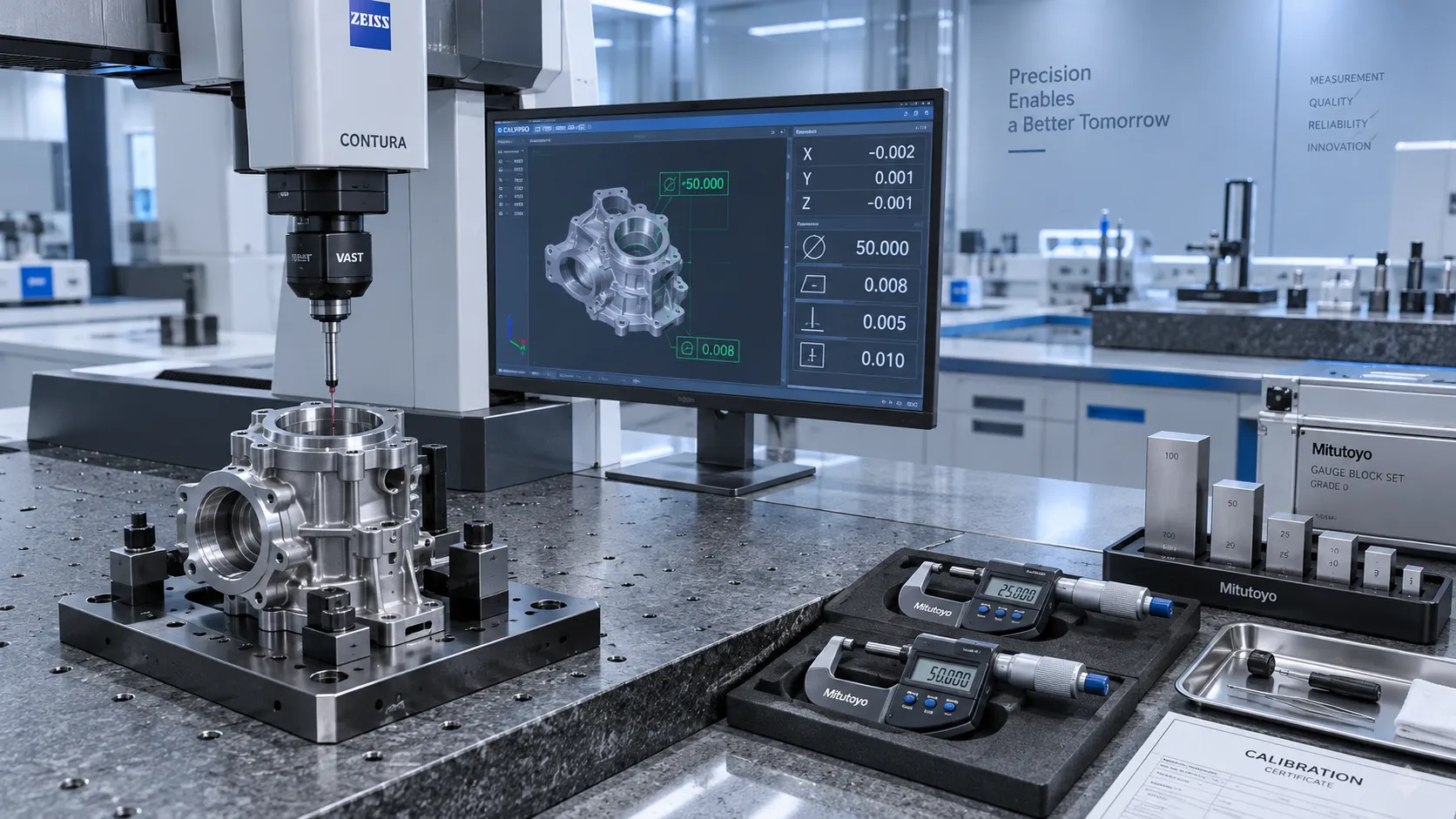
How to Select High-Precision Measuring Instruments for Tight-Tolerance Production?
High-precision measuring instruments are essential for tight-tolerance production. Learn how to evaluate accuracy, repeatability, environment, calibration, and data integration.
How Industrial Innovation Supplier Networks Reduce Sourcing Risk for Manufacturers
industrial innovation supplier network insights help manufacturers reduce sourcing risk, control lifecycle costs, and choose reliable tools, services, and suppliers with confidence.
South East Asia Machine Tools Market: Demand Outlook by Manufacturing Industry
South East Asia machine tools market outlook: explore demand from automotive, electronics, fabrication, and infrastructure, plus smart sourcing priorities for manufacturers.
Which Industrial Standards Should Be Checked Before Export?
Which industrial standards should be checked before export? Discover essential compliance steps for industrial tools, welding equipment, laser systems, and metrology products.
What Industrial Automation Exporters Need to Know Before Entering ASEAN Markets
Industrial automation exporter to ASEAN: learn how to navigate compliance, local service, digital readiness, pricing, and market entry for scalable growth.
PCB Prototyping Equipment Costs: Comparing In-House Machines and Outsourced Builds
PCB prototyping equipment costs compared: discover when in-house machines speed iterations and when outsourced builds deliver better value, quality, and scalability.
Prototype PCB Manufacturing Equipment: What Engineers Should Evaluate Before Purchase
Prototype PCB manufacturing equipment: discover the key factors engineers should evaluate—from accuracy and materials to software, safety, and ROI—before buying.
Workplace Ergonomics for Manufacturing: Reducing Repetitive-Strain Risks on Assembly Lines
Workplace ergonomics for manufacturing helps reduce repetitive-strain risks on assembly lines through smarter workstation design, tool selection, task analysis, and quality-focused improvements.
Related News
- 00
0000-00
South East Asia Machine Tools Market: Demand Outlook by Manufacturing Industry - 00
0000-00
How Middle East Manufacturers Can Improve Production Efficiency Under Heat and Labor Constraints - 00
0000-00
Why Are Specification-Oriented Articles Gaining Traction in Europe’s B2B Markets? - 00
0000-00
Industrial Solutions in Latin America: Key Growth Sectors and Market Entry Risks - 00
0000-00
What Is Driving Manufacturing Efficiency in Europe’s Industrial Sectors?
Dr. Alistair Vaughn
Weekly Insights
Stay ahead with our curated technology reports delivered every Monday.