
Evolutionary Trends in Manufacturing: What They Mean for Capacity Planning and Investment





Why evolutionary trends now shape manufacturing decisions more directly
Manufacturing no longer moves in clean cycles. It now shifts through overlapping waves of demand volatility, technology adoption, trade friction, and performance pressure.
That is why evolutionary trends matter more than headline growth numbers. They reveal how production logic is changing underneath daily operating decisions.
In practical terms, capacity planning is becoming less about adding volume alone. It is increasingly about flexibility, speed of changeover, quality assurance, and investment timing.
The stronger signal is not simply that factories are modernizing. It is that they are rebalancing capacity around uncertainty, precision, and data-backed responsiveness.
Across assembly, metal joining, and precision measurement, these evolutionary trends are already changing how expansion risk is judged and how capital is released.
The current signals are subtle, but they are getting harder to ignore
Recent shifts do not always appear dramatic in isolation. Yet together, they point to a different manufacturing landscape.
Order patterns are less predictable. Product variants are increasing. Tolerance expectations are tighter. Safety and export requirements are also affecting equipment choices earlier in the investment cycle.
This is especially visible in industrial “last mile” operations, where welding quality, fastening consistency, and metrology reliability decide whether upstream investment actually delivers value.
Platforms such as GPTWM have become relevant in this context because they track the operational edge of change, not just broad macro indicators.
When raw material fluctuations, export standard restrictions, handheld laser welding safety adoption, and IoT torque control appear in the same intelligence stream, a more connected picture emerges.
- Demand is shifting from fixed-volume confidence to scenario-based production planning.
- Equipment evaluation is moving beyond output toward adaptability and compliance readiness.
- Quality systems are becoming part of capacity logic, not a separate control function.
- Commercial positioning increasingly depends on technical credibility and intelligence depth.
What is driving these evolutionary trends beneath the surface
Several forces are reinforcing one another. None is entirely new, but their combined effect is changing investment behavior.
A notable point is that evolutionary trends are not being driven by automation alone. They are being shaped by the need to make automation accountable.
That shifts attention toward measurable process control. In welding, fastening, and inspection, hidden variability now carries more financial weight than many expansion models assumed.
Capacity planning is moving from volume logic to resilience logic
Traditional capacity planning often asked a simple question: how much more output is needed? That question is no longer enough.
Today, the better question is how much useful, controllable, and reconfigurable capacity can be created without locking the business into the wrong cost structure.
This changes the investment case for precision tools, welding systems, hydraulic support equipment, and measurement infrastructure.
From recent demand patterns, spare capacity is not always waste. In some operations, it becomes a buffer for schedule shifts, qualification delays, and specification changes.
More importantly, capacity quality matters as much as capacity quantity. A line with unstable torque control or inconsistent weld quality is not truly available capacity.
- Map constraints at the process level, not only at plant level.
- Separate theoretical throughput from certifiable throughput.
- Test whether tool data, inspection data, and maintenance data connect cleanly.
- Model expansion in stages rather than through one irreversible jump.
The investment story is also changing at the last mile of production
In many boardroom models, the final assembly and finishing stages once looked like execution details. That view is becoming expensive.
The last mile is where quality escapes appear, where ergonomic limits affect consistency, and where digital traceability either exists or breaks.
This explains why evolutionary trends in manufacturing are drawing more attention toward handheld laser welding safety, brushless motor efficiency limits, and intelligent torque systems.
These are not niche technical topics anymore. They affect labor productivity, compliance readiness, warranty exposure, and brand credibility across global supply relationships.
GPTWM’s intelligence approach is useful here because it connects market movement with operating detail. It treats precision not as a feature, but as an economic variable.
Where the impact appears first
The first impact often appears in quoting accuracy. The second appears in rework and downtime. The third shows up in delayed investment payback.
That sequence matters because it shows why evolutionary trends should be read early, before cost overruns are visible in financial reporting.
Different sectors feel the same trend through different pressures
Although the pattern is broad, its impact is not identical across sectors. The pressure points vary by application intensity, service expectations, and compliance exposure.
Construction-related demand often emphasizes durability, hydraulic reliability, and field service readiness. Automotive supply chains place greater weight on repeatability and traceable fastening data.
Aerospace maintenance raises the bar further through documentation discipline, precision verification, and process risk control.
What connects them is the need for better judgment about where capacity truly sits and what kind of investment will stay relevant longer.
Signals worth watching over the next planning cycle
- Whether demand growth comes from volume recovery or specification complexity.
- Whether export standards tighten around safety, traceability, or ergonomic compliance.
- Whether connected tools improve decision speed or only add unused data layers.
- Whether precision equipment demand reflects replacement cycles or structural upgrading.
What deserves attention before the next round of capital allocation
The most useful response to evolutionary trends is not to chase every new technology signal. It is to sharpen the link between operational evidence and investment logic.
That starts with a clearer view of bottlenecks that live inside quality-sensitive steps. It also requires a more disciplined reading of technology maturity.
Some solutions are already shaping structural advantage, especially where data, ergonomics, and repeatability reinforce one another. Others still look better in demonstrations than in sustained production.
A grounded planning approach can follow several tracks at once without overcommitting.
- Review capacity assumptions against real defect, changeover, and maintenance patterns.
- Rank investments by flexibility, compliance resilience, and measurable process stability.
- Use sector intelligence to test whether demand is cyclical noise or structural shift.
- Build phased decision gates for higher-risk equipment or layout changes.
The broader lesson is clear. Evolutionary trends reward organizations that translate industrial signals into staged decisions, rather than waiting for certainty that never fully arrives.
A useful next step is to compare current capacity models with intelligence from the last mile of manufacturing, where precision, safety, and connected performance increasingly determine real competitiveness.
Related News
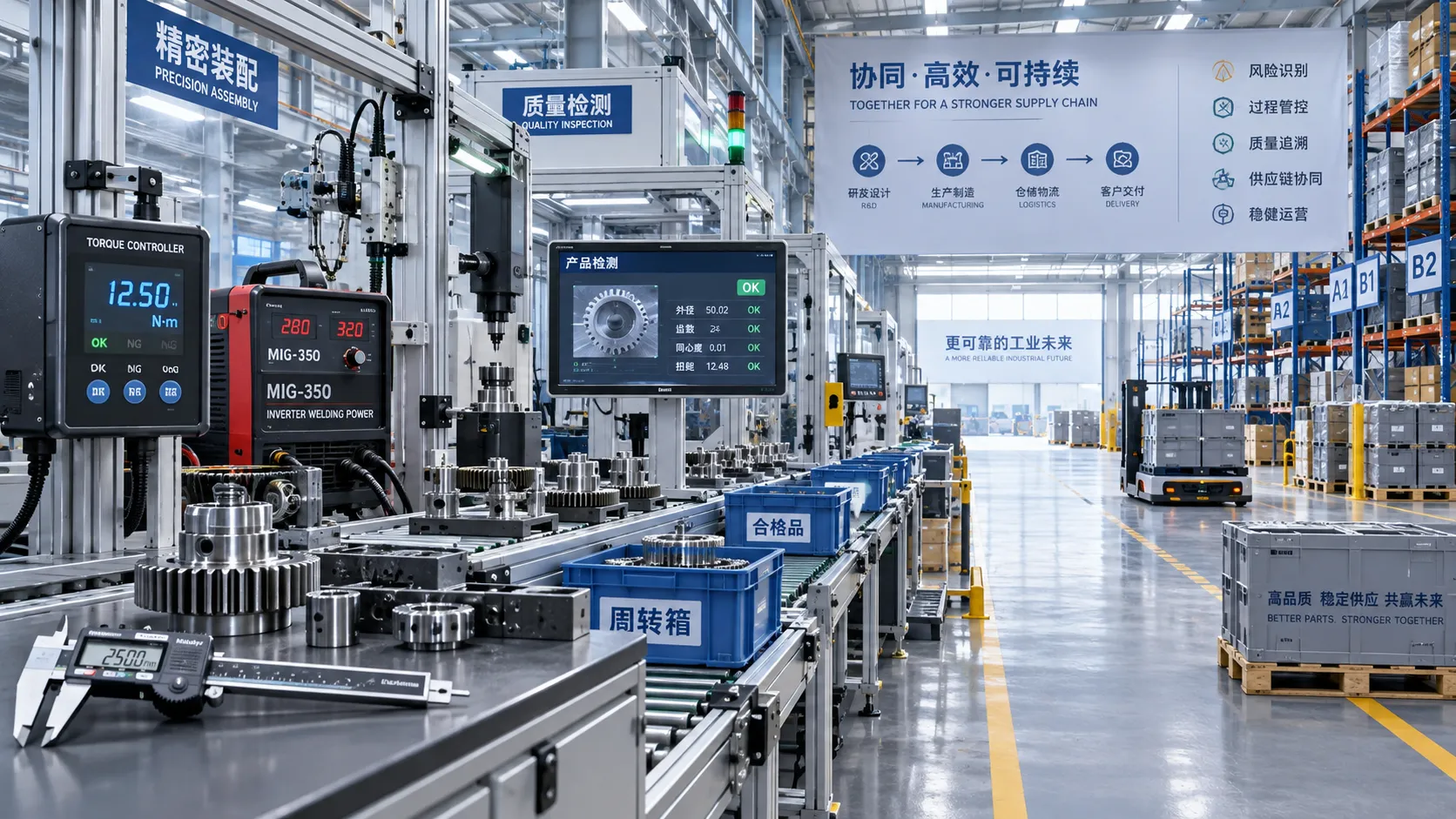
How Procurement Teams Can Map the Industrial Value Chain to Reduce Supply Risk
Industrial value chain procurement helps teams map hidden dependencies, qualify resilient sources, and reduce supply risk before disruptions stop production.

How Specification-Driven Articles Improve Precision Measurement System Selection
Specification-oriented articles precision measurement guidance helps teams compare accuracy, repeatability, environment, and data needs to select reliable systems with confidence.

How to Evaluate a Technology Integration Service Provider for Complex Projects
Technology integration service provider selection guide: evaluate interface ownership, delivery discipline, scalable architecture, and risk control for complex projects.
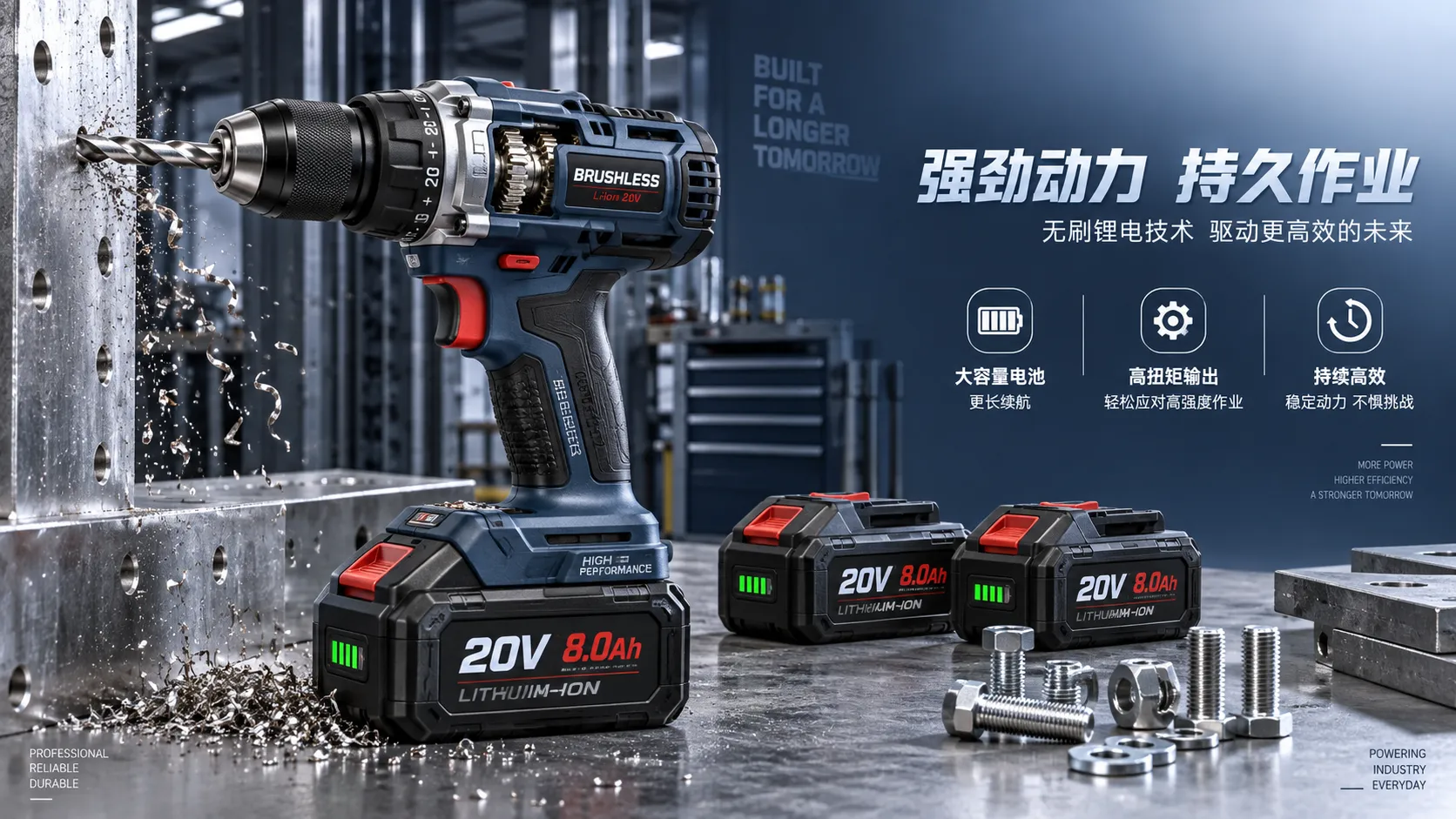
How Battery, Torque, and Duty Cycle Affect Cordless Power Tool Efficiency
Cordless power tool efficiency depends on battery output, torque, and duty cycle. Learn how to match tools to demanding jobs for stronger runtime and productivity.

Product Comparison Resources for Component Compatibility and Lifecycle Risk
Product comparison resources for components: evaluate compatibility, interfaces, service support, and lifecycle risk to reduce downtime, avoid redesigns, and make confident sourcing decisions.
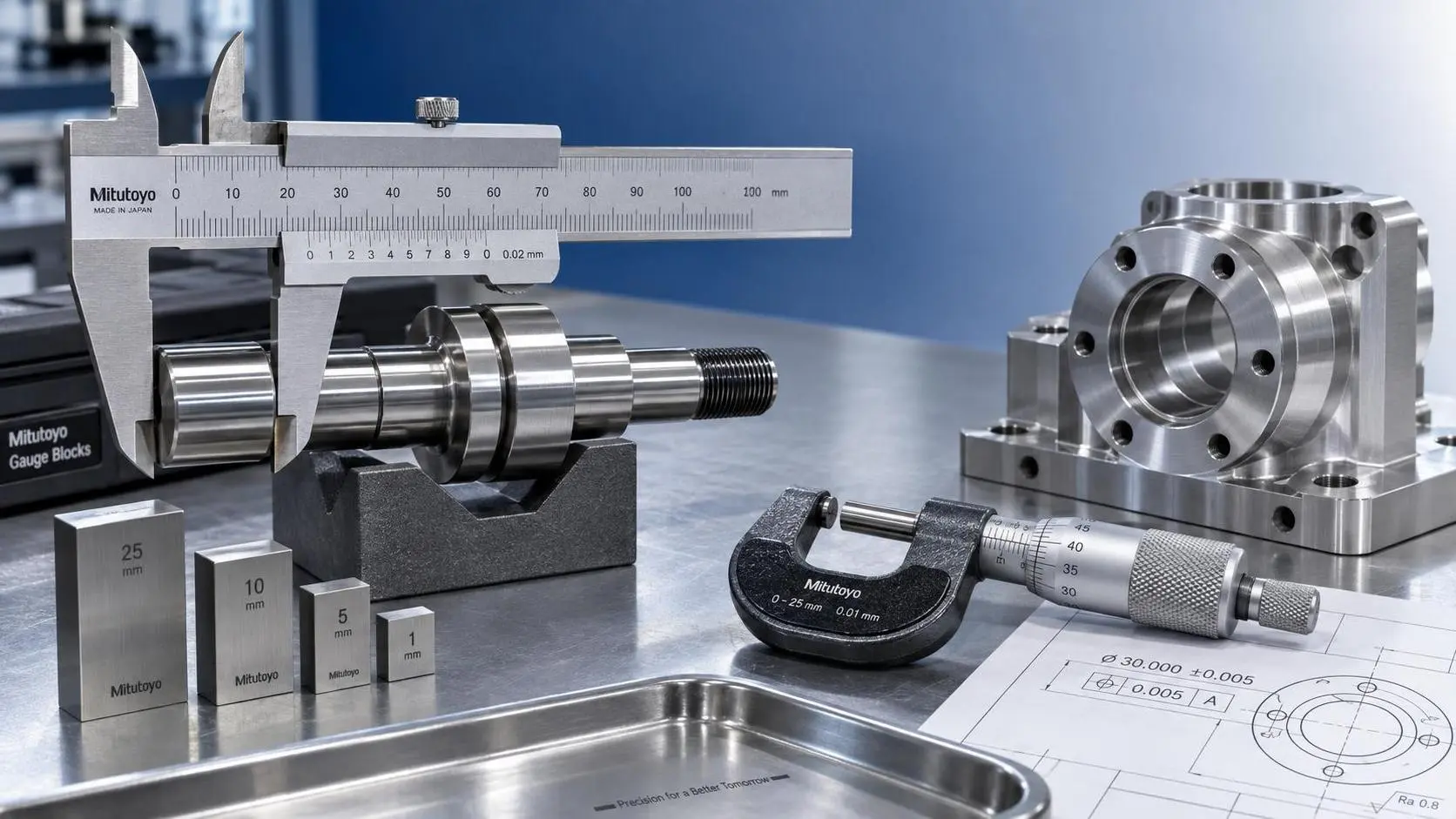
How to Select Vernier Precision Calipers for Tight-Tolerance Machining Inspection
Vernier precision calipers for tight-tolerance machining: learn how to select the right range, jaw design, accuracy, and verification process for reliable inspection.

Product Comparison Resources in Europe: How Buyers Can Verify Specs and Suppliers
Product comparison resources Europe: learn how to verify industrial specs, compliance claims, supplier credibility, and delivery risk for smarter purchasing decisions.

How to Evaluate an Industrial Metrology Solution Manufacturer for Production Use
Industrial metrology solution manufacturer evaluation guide for production: compare accuracy, traceability, automation, software, service, and acceptance testing to reduce risk.

Which ISO Standards Matter Most for Precision Engineering Quality Control?
Precision engineering ISO standards explained: discover how ISO 9001, ISO/IEC 17025, ISO 10012, GPS, and ISO 3834 strengthen quality control, traceability, and compliance.
Related News
- 00
0000-00
Why Are Specification-Oriented Articles Gaining Traction in Europe’s B2B Markets? - 00
0000-00
Industrial Solutions in Latin America: Key Growth Sectors and Market Entry Risks - 00
0000-00
What Is Driving Manufacturing Efficiency in Europe’s Industrial Sectors? - 00
0000-00
Industrial Market Trends in 2025: What Buyers Should Watch Across Supply and Demand - 00
0000-00
Production Efficiency in North America: What Is Changing for Manufacturers in 2025?
Dr. Alistair Vaughn
Weekly Insights
Stay ahead with our curated technology reports delivered every Monday.