
Why industrial solutions now matter more in cost control





As margins tighten and supply chains remain volatile, industrial solutions have become a critical lever for cost control. For enterprise decision-makers, the real advantage lies not only in cutting expenses, but in improving precision, uptime, and resource efficiency across operations. This article explores why industrial solutions now play a central role in building resilient, competitive manufacturing and service strategies.
Across assembly, welding, inspection, maintenance, and tool management, the cost question has changed. Leaders are no longer asking only how to buy at a lower unit price. They are asking how to reduce total cost over 12 to 36 months, how to limit rework to within acceptable thresholds, and how to maintain output even when labor, materials, and logistics fluctuate.
For organizations following sectors such as construction equipment, automotive service, aerospace maintenance, and industrial fabrication, this shift is especially clear. Precision tools, metal joining systems, torque control, and metrology are now directly tied to procurement efficiency, defect prevention, and production continuity. That is where industrial solutions matter most.
Why Cost Control Now Depends on Operational Precision
In many industrial environments, only 10% to 20% of visible costs come from the initial purchase of tools, welding equipment, or measuring devices. The larger share often sits in hidden areas: downtime, scrap, calibration drift, repeat inspections, operator fatigue, delayed delivery, and inconsistent assembly quality.
This is why industrial solutions have moved from a support function to a board-level concern. A decision that improves tightening accuracy from a broad manual range to a controlled tolerance window, or reduces weld correction cycles from 3 passes to 1, can have a greater financial effect than a nominal discount from a low-cost supplier.
The hidden cost categories many firms still underestimate
When enterprise teams review cost control, they typically focus on purchase price, freight, and labor rate. Yet in industrial assembly and metal joining, four additional categories often shape the real result: quality loss, response time, maintenance frequency, and compliance exposure.
- Quality loss: dimensional deviation, porosity, weak joints, or over-torque events that trigger rework.
- Response time: delays in spare parts, tool replacement, or recalibration that stop output for 4 to 24 hours.
- Maintenance frequency: equipment requiring weekly intervention instead of monthly checks increases technician load.
- Compliance exposure: export restrictions, safety requirements, or documentation gaps can delay shipment by 7 to 15 days.
For this reason, industrial solutions should be evaluated as systems, not isolated products. A torque tool without digital traceability, a welding unit without process stability, or a caliper without repeatable measurement discipline may look economical at first but create avoidable downstream cost.
Where GPTWM-style intelligence becomes practical
Decision-makers increasingly need a structured view of industrial technology trends before investing. Intelligence on raw material volatility, export standard changes, ergonomic shifts, handheld laser welding safety practices, or brushless motor efficiency ceilings helps buyers avoid short-cycle decisions that become expensive within 6 to 12 months.
This is especially relevant in the “last mile” of manufacturing, where final assembly precision, joining reliability, and inspection quality determine whether a product ships, fails audit, or returns for correction. In that zone, industrial solutions directly influence cash flow speed and brand credibility.
The table below shows how cost control shifts when industrial decisions are assessed through total operating impact instead of purchase price alone.
The key point is straightforward: industrial solutions create savings by reducing failure points before they become invoice items. For decision-makers, that means fewer disruptions, tighter quality control, and better cost predictability quarter after quarter.
Which Industrial Solutions Deliver the Fastest Cost-Control Impact
Not every upgrade produces the same return. In most industrial settings, the fastest gains come from solutions that improve repeatability, reduce unplanned stops, and lower manual variation. These are usually found in four areas: assembly control, welding consistency, metrology discipline, and connected maintenance.
1. Precision assembly and torque management
A tightening process that varies by even a small amount can create cumulative risk across hundreds or thousands of assemblies per week. Intelligent torque control systems help keep fastener performance within defined limits, often with digital records for every cycle, every station, or every batch.
For buyers, the advantage is not just technical. It cuts warranty risk, reduces operator dependency, and supports root-cause analysis in less time. A plant that moves from paper-based checks to connected torque verification can often shorten investigation cycles from several hours to under 30 minutes.
Key evaluation points
- Required torque range and tolerance band
- Number of shifts, stations, and fastening cycles per day
- Need for traceable records for customer or audit requirements
- Battery, brushless motor, and maintenance interval expectations
2. Welding systems with process stability and safety control
In metal joining, cost losses often come from inconsistency rather than obvious equipment failure. Poor penetration control, unstable heat input, fume exposure, consumable waste, and repeated finishing work all increase per-unit cost. Industrial solutions in welding should therefore be judged on process stability, operator safety, and training efficiency.
For example, in handheld laser welding or advanced arc-based joining, decision-makers need to assess not only speed but also guard requirements, operating discipline, and acceptable material thickness range. A faster weld that raises safety risk or increases downstream inspection burden does not improve total cost control.
3. Metrology tools that prevent expensive mistakes early
Inspection is often treated as a checkpoint, but in cost terms it is a prevention layer. A measuring instrument with stable repeatability and a clear calibration schedule can stop dimensional drift before batches fail. In high-mix production, even a common tolerance target such as ±0.02 mm or ±0.05 mm can determine whether parts proceed or return for correction.
That is why high-precision measuring instruments matter in sectors with critical fit, wear, alignment, or sealing performance. The cost of a better metrology routine is usually lower than the cost of one rejected shipment, one field complaint, or one maintenance call caused by a tolerance miss.
4. IoT-enabled maintenance and asset visibility
Connected industrial solutions allow managers to track usage, service intervals, and abnormal behavior across distributed tools or stations. This matters when operations span 2, 5, or 20 sites and manual oversight becomes slow. With basic usage visibility, teams can schedule intervention before breakdown, improving parts planning and technician allocation.
The result is better control over downtime frequency, fewer emergency purchases, and more predictable budgeting for consumables and replacement tools.
The table below outlines where different industrial solutions tend to create the most immediate value for cost control.
For most enterprises, the strongest early wins come from combining at least two of these areas instead of optimizing only one. Better measurement without better assembly control, for instance, can reveal defects without actually reducing them.
How Decision-Makers Should Select Industrial Solutions
A strong buying framework prevents underperforming investments. The right industrial solutions should match process needs, operator capability, compliance demands, and support expectations. In practice, enterprise buyers should score options against 4 to 6 core dimensions before final approval.
Build the evaluation around total operating fit
- Define the exact failure cost: scrap, delay, downtime, repair, or customer return.
- Set the required process window: tolerance, cycle time, material range, safety threshold.
- Check support structure: spare availability, service response, calibration or maintenance schedule.
- Validate adoption difficulty: training hours, interface simplicity, changeover impact.
- Review future compatibility: digital records, IoT integration, site expansion potential.
This method is more reliable than comparing quotes line by line. A lower purchase price loses value quickly if retraining takes 3 extra weeks, if spare delivery runs beyond 10 business days, or if the system cannot integrate with current quality documentation.
Common buying mistakes that weaken cost control
There are several recurring mistakes in industrial procurement. One is choosing equipment based on peak specification instead of daily operating range. Another is overlooking ergonomics, which can affect fatigue, error rate, and shift consistency. A third is failing to plan calibration, software updates, or preventive service from day one.
For sectors relying on precision tools and welding systems, these errors can compound quickly. A mismatched tool may still function, but if it increases handling time by 8 to 12 seconds per cycle across high volume, the cost impact becomes material over a quarter.
A practical checklist for enterprise buyers
- Can the supplier explain performance under actual shift conditions, not only lab conditions?
- Is the maintenance interval realistic for your operating intensity?
- Are training, safety guidance, and documentation included in the rollout plan?
- Can the solution support export, quality, or customer audit needs?
- What is the fallback plan if one critical component is delayed for 2 to 4 weeks?
Implementation: Turning Industrial Solutions into Measurable Savings
Even strong technology will not control cost without disciplined rollout. The implementation phase should connect procurement, production, quality, maintenance, and finance. In most organizations, a 3-stage approach is the most practical path: baseline assessment, pilot validation, and scaled deployment.
Stage 1: Baseline assessment
Start by measuring current conditions over a defined window, often 2 to 6 weeks. Track downtime events, rejection causes, operator variation, maintenance frequency, and consumable use. Without this baseline, later savings claims remain subjective and hard to defend internally.
Stage 2: Pilot validation
Run a pilot on one line, one shift, or one product family. Set no more than 3 to 5 success indicators, such as reduced rework hours, tighter torque consistency, shorter weld finishing time, or fewer out-of-tolerance measurements. A pilot should usually last long enough to include multiple operators and normal production variation.
Stage 3: Scaled deployment and governance
Once validated, deployment needs governance. That means training records, service intervals, spare planning, and clear ownership. A common mistake is scaling too quickly without assigning who reviews performance at 30, 60, and 90 days. Industrial solutions generate more value when the management routine is as strong as the hardware.
For organizations operating across regions, strategic market intelligence also supports this stage. Visibility into regulatory shifts, tool standardization, ergonomic expectations, and technology adoption trends helps keep the rollout aligned with both operational needs and external market conditions.
Why intelligence-led sourcing improves resilience
Industrial solutions are most effective when paired with informed sourcing. This is where an intelligence platform focused on assembly, welding, and metrology creates real value. Decision-makers benefit from timely updates on material fluctuations, export restrictions, tool technology evolution, and structural demand in sectors such as automotive, construction, and aerospace maintenance.
In volatile markets, better timing can matter as much as better equipment. Knowing when to standardize, when to diversify suppliers, and when to invest in higher-precision tools can protect margins far more effectively than waiting for visible cost pressure to appear on financial statements.
What Enterprise Leaders Should Do Next
Industrial solutions now matter more in cost control because cost itself has become more operational, more technical, and more interconnected. Procurement decisions influence uptime. Measurement discipline influences warranty risk. Welding stability influences throughput. Maintenance visibility influences cash flow and service reliability.
For enterprise decision-makers, the most effective next move is to review critical production and service steps where small deviations create large downstream cost. Focus first on the last mile of manufacturing: fastening, joining, inspection, and maintenance response. These are the points where precision improvements often produce the fastest and most durable financial results.
GPTWM’s focus on industrial assembly, metal joining, and precision metrology reflects this exact need. With intelligence on technology shifts, market demand, and implementation priorities, enterprises can make more confident decisions about where industrial solutions will create measurable value.
If you are evaluating cost-control priorities across tools, welding systems, metrology, or connected maintenance, now is the time to refine the decision framework. Contact us to explore tailored industrial solutions, request deeper market intelligence, or learn more about practical strategies that strengthen efficiency, resilience, and long-term competitiveness.
Related News

In-House vs. Outsourced Aircraft Maintenance: Comparing Total Costs
Compare aerospace maintenance cost for in-house vs. outsourced aircraft upkeep. Discover hidden expenses, downtime impacts, and break-even factors to find the best fit for your fleet.
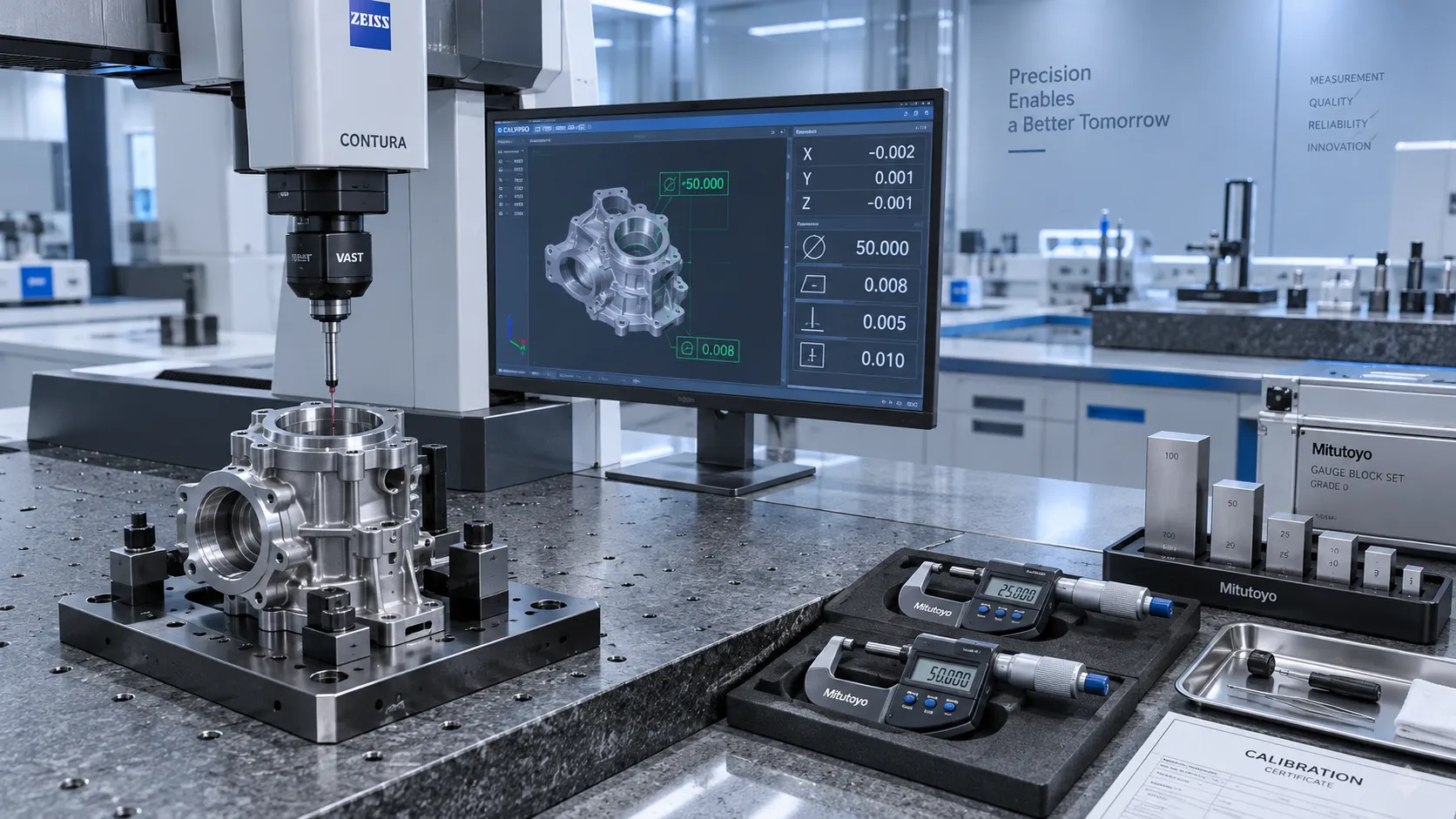
How to Select High-Precision Measuring Instruments for Tight-Tolerance Production?
High-precision measuring instruments are essential for tight-tolerance production. Learn how to evaluate accuracy, repeatability, environment, calibration, and data integration.
How Industrial Innovation Supplier Networks Reduce Sourcing Risk for Manufacturers
industrial innovation supplier network insights help manufacturers reduce sourcing risk, control lifecycle costs, and choose reliable tools, services, and suppliers with confidence.
Which Industrial Standards Should Be Checked Before Export?
Which industrial standards should be checked before export? Discover essential compliance steps for industrial tools, welding equipment, laser systems, and metrology products.
What Industrial Automation Exporters Need to Know Before Entering ASEAN Markets
Industrial automation exporter to ASEAN: learn how to navigate compliance, local service, digital readiness, pricing, and market entry for scalable growth.

Prototype PCB Manufacturing Equipment: What Engineers Should Evaluate Before Purchase
Prototype PCB manufacturing equipment: discover the key factors engineers should evaluate—from accuracy and materials to software, safety, and ROI—before buying.

Workplace Ergonomics for Manufacturing: Reducing Repetitive-Strain Risks on Assembly Lines
Workplace ergonomics for manufacturing helps reduce repetitive-strain risks on assembly lines through smarter workstation design, tool selection, task analysis, and quality-focused improvements.
Selecting Adjustable Torque Tools for Repeatable Fastener Assembly
Adjustable torque tools: learn how to match range, accuracy, control methods, calibration, and ergonomics for repeatable, reliable fastener assembly.

How to Select Aerospace Inspection Tools for Aircraft Maintenance Tasks
Aerospace maintenance inspection tools: learn how to select reliable, traceable equipment for aircraft access, accuracy, calibration, and compliant maintenance decisions.
Related News
- 00
0000-00
How Middle East Manufacturers Can Improve Production Efficiency Under Heat and Labor Constraints - 00
0000-00
Why Are Specification-Oriented Articles Gaining Traction in Europe’s B2B Markets? - 00
0000-00
Industrial Solutions in Latin America: Key Growth Sectors and Market Entry Risks - 00
0000-00
What Is Driving Manufacturing Efficiency in Europe’s Industrial Sectors? - 00
0000-00
Industrial Market Trends in 2025: What Buyers Should Watch Across Supply and Demand
Dr. Alistair Vaughn
Weekly Insights
Stay ahead with our curated technology reports delivered every Monday.