
What drives automotive maintenance costs higher today?





What Drives Automotive Maintenance Costs Higher Today?
Automotive maintenance is becoming more expensive as vehicles integrate advanced electronics, precision sensors, specialized materials, and software-driven systems that require skilled diagnostics and specialized tools.
For everyday drivers, the rising cost is not only about labor or parts. It reflects a changing repair ecosystem shaped by inflation, supply chain pressure, safety standards, and complex vehicle design.
Understanding what drives automotive maintenance higher can help reduce avoidable repairs, support smarter service decisions, and protect long-term vehicle value.
Basic View of Automotive Maintenance Costs
Automotive maintenance covers inspections, fluid changes, wear-part replacement, diagnostics, calibration, software updates, and preventive service required to keep a vehicle safe and efficient.
The cost structure has changed because modern vehicles are no longer mainly mechanical systems. They are integrated platforms combining electronics, software, materials science, and precision assemblies.
A simple repair can now involve sensor verification, scan-tool analysis, torque-controlled fastening, electrical testing, and post-service validation.
This shift makes automotive maintenance more dependent on calibrated tools, technical data, trained labor, and reliable parts availability.
Routine service still matters, but the knowledge required behind routine work has expanded significantly.
Industry Signals Behind Rising Service Expenses
Several market forces are lifting automotive maintenance costs at the same time. These forces affect independent workshops, dealer networks, parts distributors, insurers, and vehicle owners.
These signals explain why automotive maintenance does not always follow past pricing patterns. The service environment is more technical and less forgiving.
Vehicle Electronics and Software Complexity
Modern vehicles rely on dozens of electronic control units. These modules manage braking, steering, lighting, comfort systems, powertrains, batteries, and driver assistance functions.
When one system fails, technicians may need to trace fault codes, wiring behavior, voltage stability, sensor communication, and software compatibility.
This increases diagnostic time, even when the physical repair appears small.
Automotive maintenance now often includes software updates, module resets, relearning procedures, and cybersecurity-related access steps.
A battery replacement, steering repair, or brake service may require scan-tool registration or calibration.
The cost is partly labor, but it also reflects licensed data, technical subscriptions, and controlled access to manufacturer repair information.
Advanced Safety Systems and Calibration Requirements
Advanced driver assistance systems have raised safety expectations. Cameras, radar units, ultrasonic sensors, and lidar-related components require accurate positioning and verification.
After collision repair, suspension work, wheel alignment, bumper removal, or windshield replacement, calibration may be required.
This adds cost because calibration demands controlled space, targets, measurement accuracy, and trained procedures.
Poor calibration can compromise braking support, lane keeping, adaptive cruise control, and emergency warning systems.
In this context, automotive maintenance becomes a safety-critical process rather than a simple replacement task.
Precision tools and measurement discipline matter more, especially where sensor angles, torque values, and alignment geometry affect performance.
Parts, Materials, and Supply Chain Pressure
Parts prices have increased due to metals, plastics, semiconductors, shipping costs, packaging, and warehousing expenses.
Specialized parts can be harder to source, especially for newer models, imported vehicles, hybrid systems, and electric platforms.
Automotive maintenance becomes more expensive when workshops must wait longer, hold more inventory, or pay premium prices for urgent components.
Lightweight materials also affect repair methods. Aluminum, high-strength steel, composites, and bonded structures may need dedicated joining and fastening procedures.
Welding, riveting, adhesive bonding, and heat-control practices must match manufacturer specifications.
Platforms such as GPTWM track these industrial shifts by connecting precision tools, welding intelligence, and metrology insight with maintenance economics.
Labor Skill, Shop Equipment, and Compliance Costs
Technician shortages have made skilled labor more valuable. Vehicles demand knowledge of mechanics, electronics, thermal systems, diagnostics, and safety protocols.
Training is continuous because vehicle platforms, battery architectures, sensor suites, and repair standards change quickly.
Automotive maintenance pricing therefore includes more than wrench time. It also includes education, certification, software access, insurance, and safe working environments.
Service centers must invest in scan tools, insulated tools, torque-control systems, lifts, battery handling equipment, and calibration fixtures.
These investments protect repair quality, but they increase overhead.
For electric and hybrid vehicles, high-voltage safety procedures add additional steps before, during, and after service.
Common Maintenance Categories Affected Most
Not every service item rises at the same pace. Some categories are more exposed to technology, parts scarcity, or precision requirements.
These examples show why automotive maintenance estimates often include diagnostic lines, calibration fees, and specialized labor charges.
Business Meaning Across the Repair Ecosystem
Rising automotive maintenance costs are not only a consumer issue. They influence insurers, fleet operators, parts suppliers, tool developers, and industrial service networks.
Fleets must plan downtime, lifecycle budgets, tire strategies, diagnostic capacity, and technician availability more carefully.
Parts distributors need better forecasting because vehicle complexity creates fragmented demand across models, trims, and electronic configurations.
Tooling providers must support accuracy, durability, data capture, and ergonomic safety.
For industrial intelligence platforms, the key value lies in identifying where precision equipment, welding methods, and measurement standards affect repair economics.
This is why automotive maintenance increasingly intersects with manufacturing quality, metrology, digital workflow, and global supply chain intelligence.
Practical Ways to Control Automotive Maintenance Spending
Cost increases cannot be avoided completely, but disciplined service behavior can reduce unnecessary spending and prevent minor issues from becoming major failures.
- Follow the service schedule instead of waiting for warning lights.
- Use quality fluids, filters, and parts that match vehicle specifications.
- Request diagnostic documentation before approving complex repairs.
- Check whether calibration is required after glass, suspension, or body work.
- Maintain tire pressure, alignment, and rotation intervals to reduce wear.
- Keep software updates and recall campaigns under review.
- Compare estimates by procedure quality, not only by the lowest price.
Reliable automotive maintenance should balance cost control with safety, traceability, and correct repair procedure.
Decision Checklist Before Approving Repairs
A structured review helps separate necessary work from optional recommendations. It also improves communication with service providers.
- Confirm the symptom, inspection result, and fault code evidence.
- Ask whether the repair affects sensors, alignment, software, or calibration.
- Review the difference between original, aftermarket, and remanufactured parts.
- Check labor time, diagnostic charges, shop supplies, and warranty coverage.
- Keep records for resale value, fleet reporting, and future troubleshooting.
This approach makes automotive maintenance more transparent and reduces the risk of repeated repairs.
Long-Term Outlook for Maintenance Economics
The long-term direction is clear. Vehicles will continue to become more connected, electrified, sensor-rich, and software-defined.
Some traditional maintenance items may decline, especially in electric vehicles. However, diagnostics, tires, thermal systems, electronics, and calibration may offset those savings.
Automotive maintenance will reward preventive planning, accurate tools, technical data, and service providers that follow verified procedures.
Industrial intelligence can help the market understand where material trends, tool innovation, and repair standards are moving.
GPTWM observes these intersections through precision tools, welding technologies, metrology systems, and efficiency-focused manufacturing intelligence.
Action Path for Smarter Service Decisions
The best response to higher automotive maintenance costs is informed action. Start with preventive service, documented diagnostics, and awareness of technology-specific requirements.
Evaluate repairs through safety, reliability, calibration needs, parts quality, and lifecycle value rather than immediate price alone.
As vehicles become more precise, maintenance decisions must become more precise as well.
For ongoing insight into tools, joining technologies, measurement systems, and industrial trends shaping automotive maintenance, follow GPTWM’s intelligence-driven coverage.
Precision Tools, Intelligence Connecting Industry.
Related News
In-House vs. Outsourced Aircraft Maintenance: Comparing Total Costs
Compare aerospace maintenance cost for in-house vs. outsourced aircraft upkeep. Discover hidden expenses, downtime impacts, and break-even factors to find the best fit for your fleet.
How to Select High-Precision Measuring Instruments for Tight-Tolerance Production?
High-precision measuring instruments are essential for tight-tolerance production. Learn how to evaluate accuracy, repeatability, environment, calibration, and data integration.
How Industrial Innovation Supplier Networks Reduce Sourcing Risk for Manufacturers
industrial innovation supplier network insights help manufacturers reduce sourcing risk, control lifecycle costs, and choose reliable tools, services, and suppliers with confidence.
South East Asia Machine Tools Market: Demand Outlook by Manufacturing Industry
South East Asia machine tools market outlook: explore demand from automotive, electronics, fabrication, and infrastructure, plus smart sourcing priorities for manufacturers.
Which Industrial Standards Should Be Checked Before Export?
Which industrial standards should be checked before export? Discover essential compliance steps for industrial tools, welding equipment, laser systems, and metrology products.
What Industrial Automation Exporters Need to Know Before Entering ASEAN Markets
Industrial automation exporter to ASEAN: learn how to navigate compliance, local service, digital readiness, pricing, and market entry for scalable growth.
PCB Prototyping Equipment Costs: Comparing In-House Machines and Outsourced Builds
PCB prototyping equipment costs compared: discover when in-house machines speed iterations and when outsourced builds deliver better value, quality, and scalability.
Prototype PCB Manufacturing Equipment: What Engineers Should Evaluate Before Purchase
Prototype PCB manufacturing equipment: discover the key factors engineers should evaluate—from accuracy and materials to software, safety, and ROI—before buying.
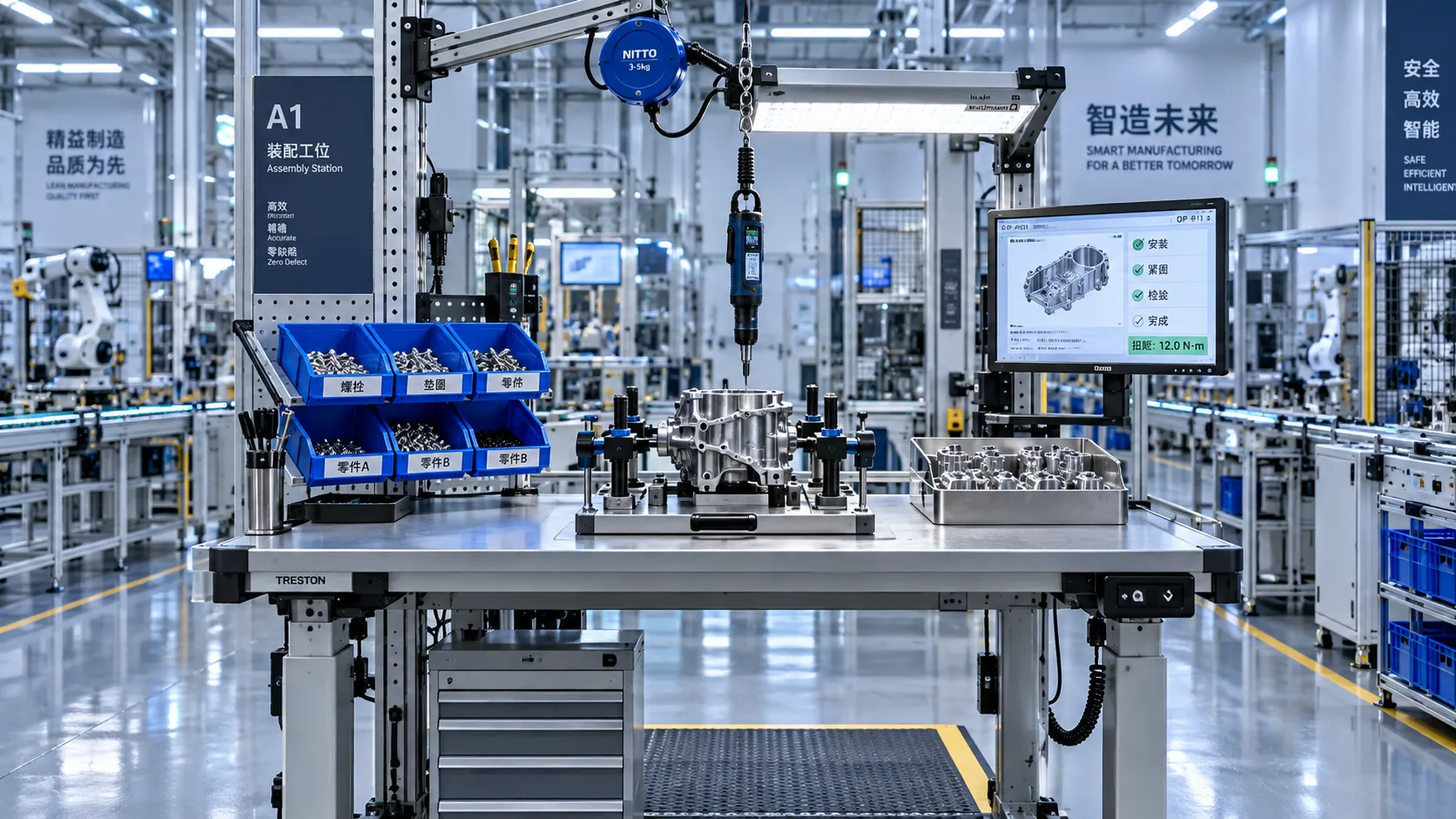
Workplace Ergonomics for Manufacturing: Reducing Repetitive-Strain Risks on Assembly Lines
Workplace ergonomics for manufacturing helps reduce repetitive-strain risks on assembly lines through smarter workstation design, tool selection, task analysis, and quality-focused improvements.
Related News
- 00
0000-00
PCB Prototyping Equipment Costs: Comparing In-House Machines and Outsourced Builds - 00
0000-00
Why Data-Driven Intelligence Costs Are Reshaping Enterprise Automation Budgets - 00
0000-00
What Does Data-Driven Intelligence Cost? Budgeting for Data, Tools, and Talent - 00
0000-00
What Determines Metrology Technology Prices for Factory Inspection Systems? - 00
0000-00
Welding Tools Price Guide: What Affects Cost and How Buyers Can Compare Options
Ms. Elena Rodriguez
Weekly Insights
Stay ahead with our curated technology reports delivered every Monday.