
Manufacturing Technology Cost Breakdown: Hardware, Software, Training, and ROI





Why does manufacturing technology cost more than the quoted price?
The visible price is only the entry point. Real manufacturing technology cost sits across equipment, licenses, integration, training, support, and downtime risk.
That matters because cash flow pressure rarely comes from one invoice. It usually comes from staggered spending and delayed performance gains.
In practical terms, a laser welding cell, smart torque platform, or metrology system may look affordable at purchase. The operating model often changes that picture.
Software subscriptions, calibration cycles, safety upgrades, and operator learning curves can shift total cost by a meaningful margin.
This is why manufacturing technology should be reviewed as a cost stack, not as a standalone asset. The stronger question is not, “What does it cost?”
A better question is, “What does it cost to become productive, compliant, and stable?” That framing leads to better approval decisions.
Across industrial assembly, metal joining, and precision measurement, GPTWM often highlights this last-mile gap between procurement and usable value.
The same pattern appears in construction equipment service, automotive maintenance, aerospace repair, and factory production lines.
Where do hardware costs usually expand after the initial budget?
Hardware is the largest line item, but rarely the final one. Most manufacturing technology projects add cost through peripherals and site readiness.
For example, a welding or fastening system may require power upgrades, extraction, shielding, fixtures, guarding, and inspection tools.
A metrology investment may also need controlled environments, certified masters, vibration control, or compatible workholding.
Replacement parts also deserve attention. Consumables, lenses, torque transducers, batteries, probes, and hydraulic seals create recurring spend.
More important, not all hardware ages at the same rate. High-duty assets in rough environments may need faster service intervals than expected.
The most reliable budgeting approach is to separate hardware into four buckets:
- Core equipment purchase
- Installation and site preparation
- Safety and compliance upgrades
- Maintenance, spares, and consumables
When these are priced separately, manufacturing technology costs become easier to compare across vendors and across deployment models.
Is software really a major cost driver in manufacturing technology?
In many cases, yes. Software has moved from a supporting tool to a core layer of manufacturing technology value.
That includes machine control, data logging, torque traceability, quality reporting, preventive maintenance, remote diagnostics, and ERP or MES connections.
The catch is that software cost is often spread across license tiers, users, modules, APIs, storage, and cybersecurity requirements.
A lower hardware quote can hide a heavier software burden later. This is common when analytics, recipe control, or audit trails are sold separately.
In connected tools, the question is not just whether software exists. It is whether the selected package supports the operating discipline required.
GPTWM’s strategic coverage of IoT torque control and precision inspection trends shows why this matters. Data quality now influences warranty exposure and export readiness.
A useful comparison table helps expose the hidden spread:
If the software layer is unclear at approval stage, the manufacturing technology budget is not actually complete.
Why does training deserve its own line in the investment case?
Training is not a soft add-on. It is one of the strongest predictors of whether manufacturing technology reaches planned throughput and quality.
A capable system can still underperform if setup errors, safety habits, or measurement routines are inconsistent.
This is especially true in processes where precision matters. Examples include handheld laser welding, torque-critical assembly, and inspection-driven release decisions.
Training cost usually includes more than course fees. It may include trainer travel, shift coverage, scrap during ramp-up, and refresher sessions.
There is also a sequencing issue. Training delivered too early is forgotten. Training delivered too late delays launch.
A more realistic model splits training into stages:
- Pre-install familiarization for supervisors and technical leads
- Commissioning training tied to actual equipment
- Application-specific validation on live parts or representative samples
- Follow-up refreshers after 30 to 90 days
In sectors tracked by GPTWM, organizations that treat training as operating infrastructure, not overhead, tend to stabilize faster.
How should ROI be calculated when benefits arrive at different speeds?
The simplest ROI formula often misses the real timing of gains. Some benefits appear immediately, while others depend on adoption and process maturity.
A good manufacturing technology model separates fast returns from delayed returns. That keeps projections credible.
Fast returns may include lower rework, reduced manual handling, faster changeovers, or less outsourced inspection.
Delayed returns often involve warranty reduction, better compliance records, stronger export readiness, or improved labor redeployment.
More cautious reviewers also test downside cases. That means asking what happens if utilization reaches only 70 percent of plan.
The most useful ROI view usually includes:
- Payback period under base, cautious, and upside scenarios
- Annual operating cost after year one
- Expected productivity or quality lift by phase
- Sensitivity to utilization, scrap, and maintenance rates
This matters across broad industrial settings. The economics of manufacturing technology are rarely identical between construction service, automotive assembly, and aerospace maintenance.
What hidden risks make a strong proposal turn weak after approval?
The most common mistake is approving capability without confirming adoption conditions. A system may be technically sound but operationally fragile.
Another issue is overestimating standardization. Multi-site manufacturing technology programs often face different utilities, skills, part variation, and compliance rules.
Raw material volatility also matters. GPTWM’s market intelligence repeatedly shows that component cost and supply timing can shift lifecycle economics.
A short pre-approval check can reduce these surprises:
These checks do not slow decisions. They make manufacturing technology approvals more defensible and more resilient after deployment.
So what is the smartest next step before committing budget?
Start with a decision sheet that separates acquisition cost from readiness cost and performance cost. That alone improves visibility.
Then test the manufacturing technology proposal against actual process conditions, not brochure claims. Include downtime exposure, skill availability, and integration effort.
It also helps to compare two timelines: time to install and time to stable output. The second number is usually more meaningful.
For sectors involving precision tools, welding, and metrology, market intelligence can sharpen these assumptions. GPTWM’s coverage is useful because it connects technical change with commercial impact.
That includes shifts in safety expectations, export standards, brushless motor efficiency limits, and demand patterns for high-precision instruments.
A sound approval process usually ends with five confirmed items:
- The full manufacturing technology cost stack is visible
- Required software and integration are fully scoped
- Training supports real operating conditions
- ROI includes phased benefits and downside cases
- Implementation risks are priced, not ignored
When those items are clear, manufacturing technology stops being a vague capital request. It becomes a measurable operational investment with traceable logic.
Related News
Selecting Adjustable Torque Tools for Repeatable Fastener Assembly
Adjustable torque tools: learn how to match range, accuracy, control methods, calibration, and ergonomics for repeatable, reliable fastener assembly.

How to Select Aerospace Inspection Tools for Aircraft Maintenance Tasks
Aerospace maintenance inspection tools: learn how to select reliable, traceable equipment for aircraft access, accuracy, calibration, and compliant maintenance decisions.

How to Select Wire Bonding Tools for Fine-Pitch Semiconductor Packaging
Explore semiconductor manufacturing tools for wire bonding and learn how to select precision solutions for fine-pitch packaging, reliable loops, accuracy, and yield.
How to Compare Industrial Tool Suppliers for Quality, Lead Time, and Total Cost
Industrial tool selection supplier comparison made simple: evaluate quality, lead times, total cost, service, and supply resilience for confident sourcing decisions.
Industrial Equipment Application Guidance: Match Machines to Operating Conditions
Application guidance industrial equipment: match capacity, duty cycle, materials, site conditions, safety, and lifecycle cost to improve reliable output. Read the guide.

Selecting High-Speed Brushless Tool Motors for Torque, Heat, and Duty Cycle
High speed brushless tool motors: learn how to balance torque, heat, gearing, and duty cycle for reliable industrial tool performance and longer service life.
What Determines Industrial Hydraulic System Price for Heavy-Duty Equipment?
Industrial hydraulic system price depends on duty cycle, pressure, components, cooling, and integration. Compare quotes intelligently to secure reliable heavy-duty performance.
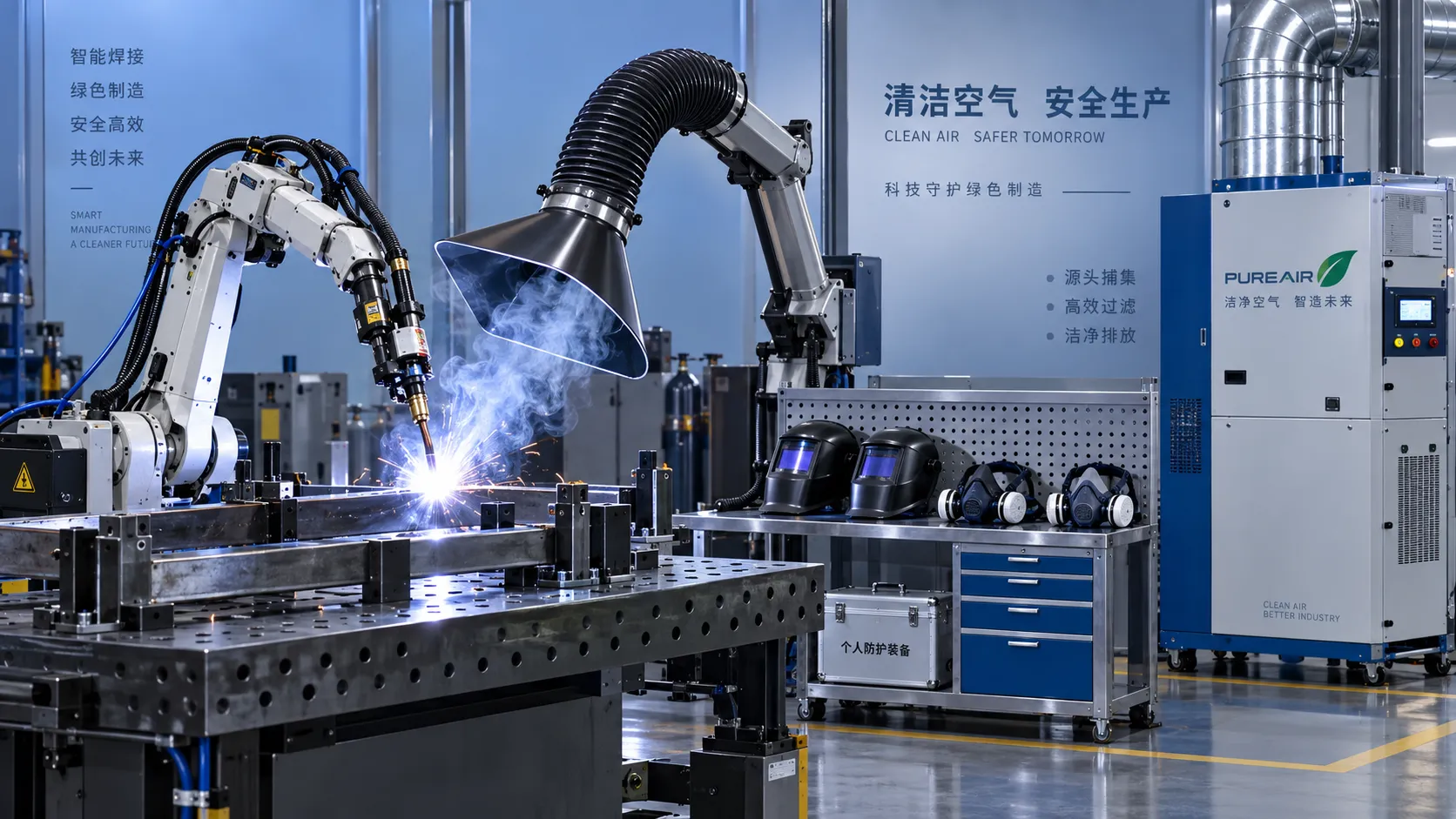
Welding Fume Extraction PPE: When Respirators Are Not Enough for Shop Safety
Welding fume extraction PPE: learn why respirators alone fall short and how source capture, ventilation, and layered controls improve shop safety.

How to Select Optical Metrology Solutions for Tight-Tolerance Manufacturing
Optical industrial metrology solutions for tight-tolerance manufacturing: evaluate accuracy, surface compatibility, workflow, and traceability to select with confidence.
Related News
- 00
0000-00
Why Data-Driven Intelligence Costs Are Reshaping Enterprise Automation Budgets - 00
0000-00
What Does Data-Driven Intelligence Cost? Budgeting for Data, Tools, and Talent - 00
0000-00
What Determines Metrology Technology Prices for Factory Inspection Systems? - 00
0000-00
Welding Tools Price Guide: What Affects Cost and How Buyers Can Compare Options - 00
0000-00
What Drives Industrial Tools Cost? A Buyer’s Guide to Materials, Volume, and Lifecycle Expenses
Ms. Elena Rodriguez
Weekly Insights
Stay ahead with our curated technology reports delivered every Monday.