
Are aerospace tools worth the higher price for precision





For procurement teams, the real question is not whether aerospace tools cost more, but whether their precision, traceability, and durability justify the investment. In industries where tolerances, safety compliance, and long-term performance directly affect operational risk, choosing the right aerospace tools can influence far more than unit price. This article explores how buyers can evaluate value beyond upfront cost and make smarter sourcing decisions.
In aerospace maintenance, assembly, and inspection, a tool is rarely just a consumable. It is part of a controlled process that may involve torque validation, dimensional verification, calibrated measurement, documented maintenance cycles, and strict operator accountability.
That is why procurement decisions in this category often require more than comparing 3 quotations or selecting the lowest landed cost. Buyers need to assess precision capability, calibration intervals, material stability, service support, and the downstream cost of failure.
Why aerospace tools command a premium price
The higher price of aerospace tools usually comes from tighter manufacturing tolerances, stronger documentation requirements, and more demanding quality control. In many cases, these tools are expected to perform within narrower error bands, such as torque repeatability or measurement accuracy suited to regulated maintenance environments.
A standard industrial tool may be acceptable for general fabrication, but aerospace tools often need traceable calibration, consistent metallurgy, and predictable wear behavior over 12 to 24 months of repeated use. That reduces variation in critical operations.
What buyers are really paying for
The premium is not only in the hardware itself. Buyers are often paying for process reliability. This includes batch traceability, calibration certificates, serial-level identification, controlled packaging, and support for audit-ready documentation across multiple maintenance sites.
- Higher dimensional consistency across production batches
- Calibration support with 6- or 12-month verification cycles
- Improved resistance to corrosion, fatigue, and repeated sterilized cleaning where applicable
- Lower risk of fastener damage, rework, or undocumented tool drift
The table below compares common cost drivers between general industrial tools and aerospace tools, giving procurement teams a clearer picture of where the price gap usually comes from.
For procurement, the key takeaway is simple: the premium often reflects risk reduction. When one inaccurate torque event or one out-of-spec measurement can trigger rework, inspection delays, or grounding decisions, the price difference becomes easier to justify.
Where the cost of a cheaper tool shows up later
The hidden cost of lower-grade tools typically appears in four places: rework, downtime, replacement frequency, and audit exposure. A cheaper tool that drifts after 3 months instead of holding performance for 12 months may create recurring calibration disruptions across multiple teams.
If a buyer manages 5 to 10 maintenance stations, even a small tool inconsistency can multiply quickly. Additional labor, delayed task closeout, and emergency replenishment often erase any savings from the initial unit discount.
How to evaluate value beyond upfront price
The best way to assess aerospace tools is to calculate total procurement value over the expected service window. In most industrial environments, that window is not 30 days but 12, 24, or even 36 months depending on usage intensity and calibration schedule.
A useful evaluation model looks at five dimensions at the same time: precision, traceability, uptime, compliance support, and replacement cost. If one supplier performs well in only 2 of those 5 areas, the apparent savings may be misleading.
Five procurement checkpoints
- Verify the operating accuracy or repeatability range required by the task.
- Confirm whether the tool includes calibration records or supports third-party calibration workflows.
- Review the recommended maintenance or recalibration interval, often 6 or 12 months.
- Assess spare parts availability and service response time, ideally within 48 to 72 hours for critical tools.
- Map tool failure impact to operational risk, not just replacement expense.
Precision must match the application
Not every aerospace operation requires the same level of tool performance. Buyers should avoid both under-specification and over-specification. For example, a routine noncritical access task may not require the same control level as a fastening operation tied to structural integrity.
This is where category-based procurement helps. Measurement tools, torque tools, cutting tools, and joining equipment should be assessed separately because their value drivers differ. A one-size-fits-all sourcing rule rarely works well.
The following table can help teams compare value criteria in a more structured way when sourcing aerospace tools from different suppliers.
This comparison framework helps procurement move from price negotiation to cost control. It also supports better internal alignment between purchasing, maintenance, quality, and engineering teams.
When aerospace tools are worth the premium
Aerospace tools are usually worth the higher price when the application involves critical tolerances, repeatable torque control, regulated documentation, or high-cost downtime. In these conditions, reliability has measurable financial value.
For buyers, the strongest business case appears when a tool affects one or more of the following: flight safety, structural fastening, inspection release, component interchangeability, or maintenance turnaround time measured in hours instead of days.
Typical high-value use cases
- Torque-critical assembly where repeatability matters across hundreds of fastening cycles
- Dimensional inspection requiring stable measurement over repeated calibration periods
- Composite or thin-wall material work where tool inconsistency can damage expensive parts
- Maintenance environments where documentation and traceability are inspected regularly
A practical threshold for buyers
If a failed tool can trigger more than 2 hours of unplanned downtime, damage a high-value component, or force repeated verification steps, the premium for aerospace tools often becomes commercially reasonable. This is especially true for distributed operations with multiple technicians and shift changes.
By contrast, if the task is low-risk, noncritical, and easy to rework, a buyer may choose a more cost-balanced industrial option. Smart procurement is not about buying the most expensive tool everywhere. It is about matching tool quality to process consequence.
Common sourcing mistakes procurement teams should avoid
Even experienced buyers sometimes make avoidable errors when sourcing aerospace tools. The most common issue is focusing on unit price without mapping the operational context. Another is treating all supplier documentation as equivalent when the level of traceability can vary significantly.
Four frequent mistakes
- Comparing tools without matching calibration scope or service package
- Ignoring replacement lead times, which may range from 2 to 8 weeks depending on category
- Assuming all precision claims mean the same thing without verifying use conditions
- Failing to involve quality or maintenance teams before final award
Documentation is part of the product
In aerospace-related work, documentation should be evaluated as a deliverable, not an accessory. A tool with incomplete calibration records or unclear serial traceability may create administrative delays even if the mechanical quality is acceptable.
This is where intelligence-driven sourcing platforms such as GPTWM add value. Procurement teams benefit from broader visibility into sector trends, service expectations, metrology practices, and the commercial signals shaping tool demand across aerospace maintenance and adjacent industries.
A smarter procurement framework for aerospace tools
A practical sourcing framework should combine commercial control with technical validation. For many buyers, the most effective process has 4 steps: define application risk, set tool performance criteria, compare lifecycle support, and validate supplier responsiveness before contract award.
This approach is especially useful when sourcing across borders, where lead times, export restrictions, and service capacity can differ by region. A supplier with a lower initial price but weak after-sales capability may increase total cost over a 12-month period.
Recommended decision workflow
- Classify tools into critical, controlled, and general-use categories.
- Assign technical thresholds for each category, including accuracy and service intervals.
- Request complete commercial and documentation packages from shortlisted suppliers.
- Review support capacity for calibration, repairs, and urgent replenishment.
For procurement professionals, this method creates a repeatable policy that can be used across multiple business units. It also makes supplier conversations more precise, reducing ambiguity around quality expectations and post-purchase support.
Aerospace tools are worth the higher price when they reduce operational risk, support compliance, extend useful service life, and protect productivity in critical tasks. The strongest buying decisions come from evaluating precision, traceability, and lifecycle performance together rather than treating price as the only metric.
For teams that need better visibility into industrial assembly, metrology, tool performance trends, and sourcing strategy, GPTWM provides decision-grade intelligence that connects technical detail with commercial reality. Contact us today to discuss your sourcing priorities, request a tailored evaluation framework, or learn more solutions for smarter aerospace tool procurement.
Related News
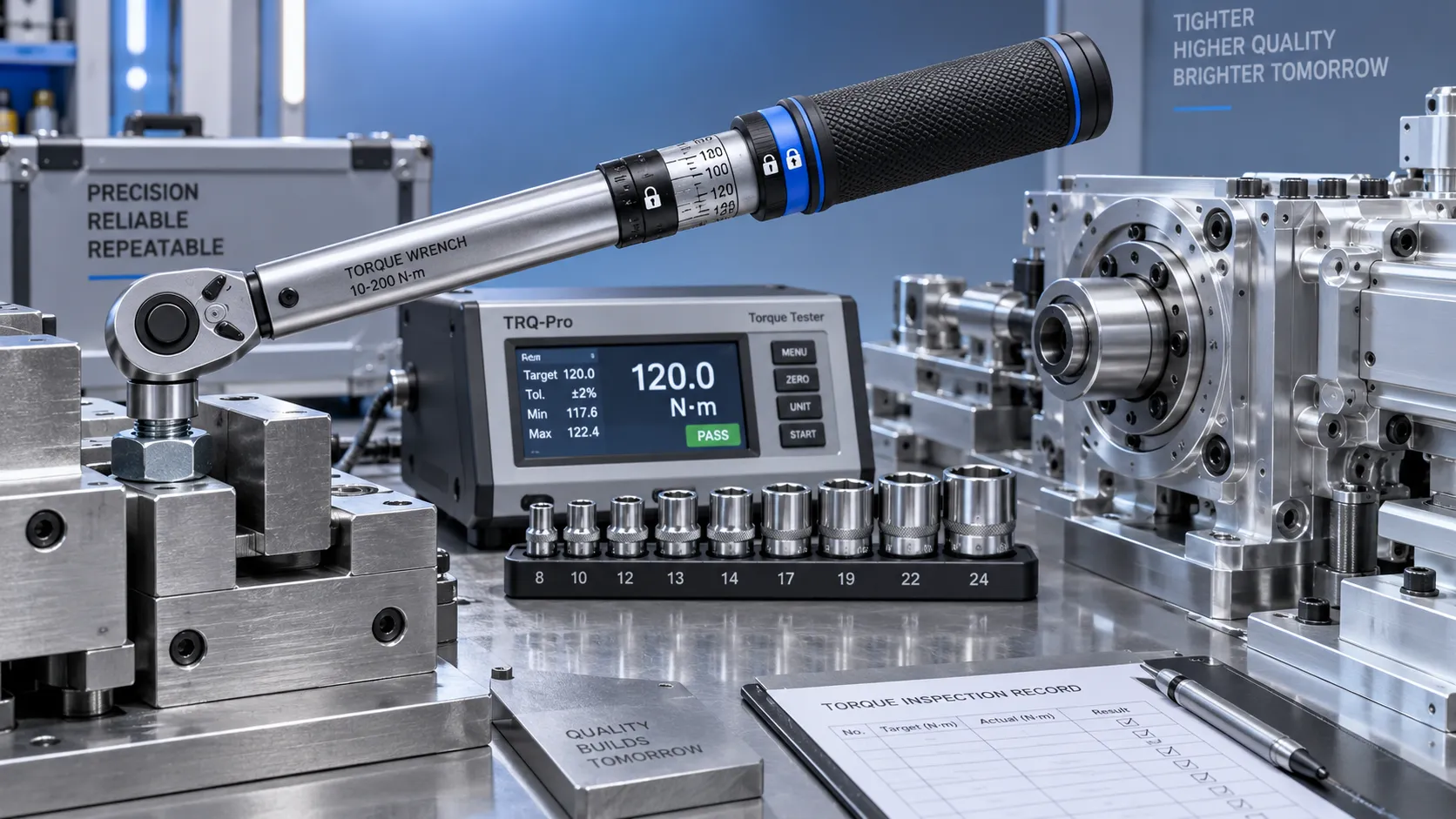
Selecting Adjustable Torque Tools for Repeatable Fastener Assembly
Adjustable torque tools: learn how to match range, accuracy, control methods, calibration, and ergonomics for repeatable, reliable fastener assembly.

How to Select Aerospace Inspection Tools for Aircraft Maintenance Tasks
Aerospace maintenance inspection tools: learn how to select reliable, traceable equipment for aircraft access, accuracy, calibration, and compliant maintenance decisions.

How to Select Wire Bonding Tools for Fine-Pitch Semiconductor Packaging
Explore semiconductor manufacturing tools for wire bonding and learn how to select precision solutions for fine-pitch packaging, reliable loops, accuracy, and yield.
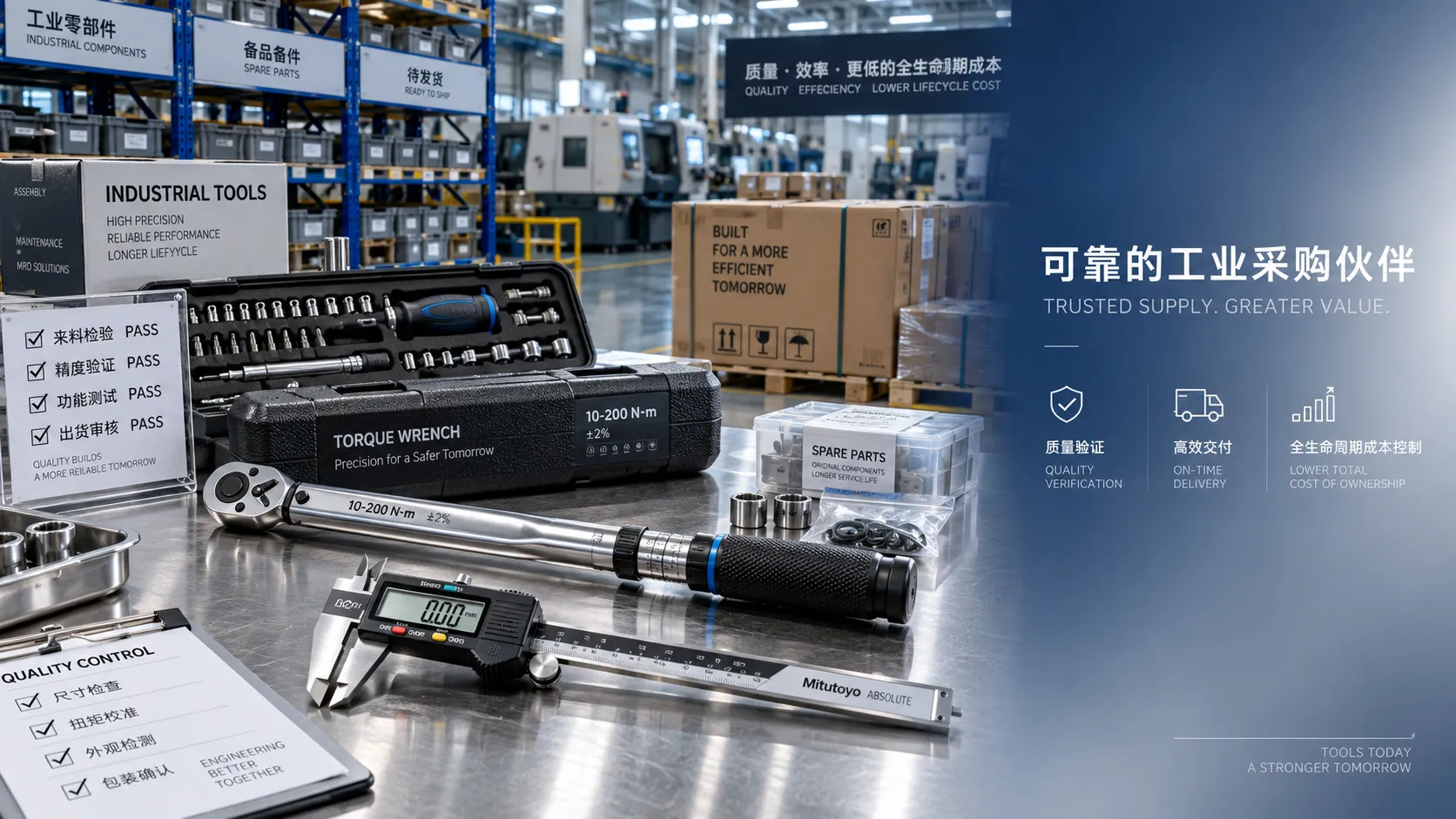
How to Compare Industrial Tool Suppliers for Quality, Lead Time, and Total Cost
Industrial tool selection supplier comparison made simple: evaluate quality, lead times, total cost, service, and supply resilience for confident sourcing decisions.

Industrial Equipment Application Guidance: Match Machines to Operating Conditions
Application guidance industrial equipment: match capacity, duty cycle, materials, site conditions, safety, and lifecycle cost to improve reliable output. Read the guide.
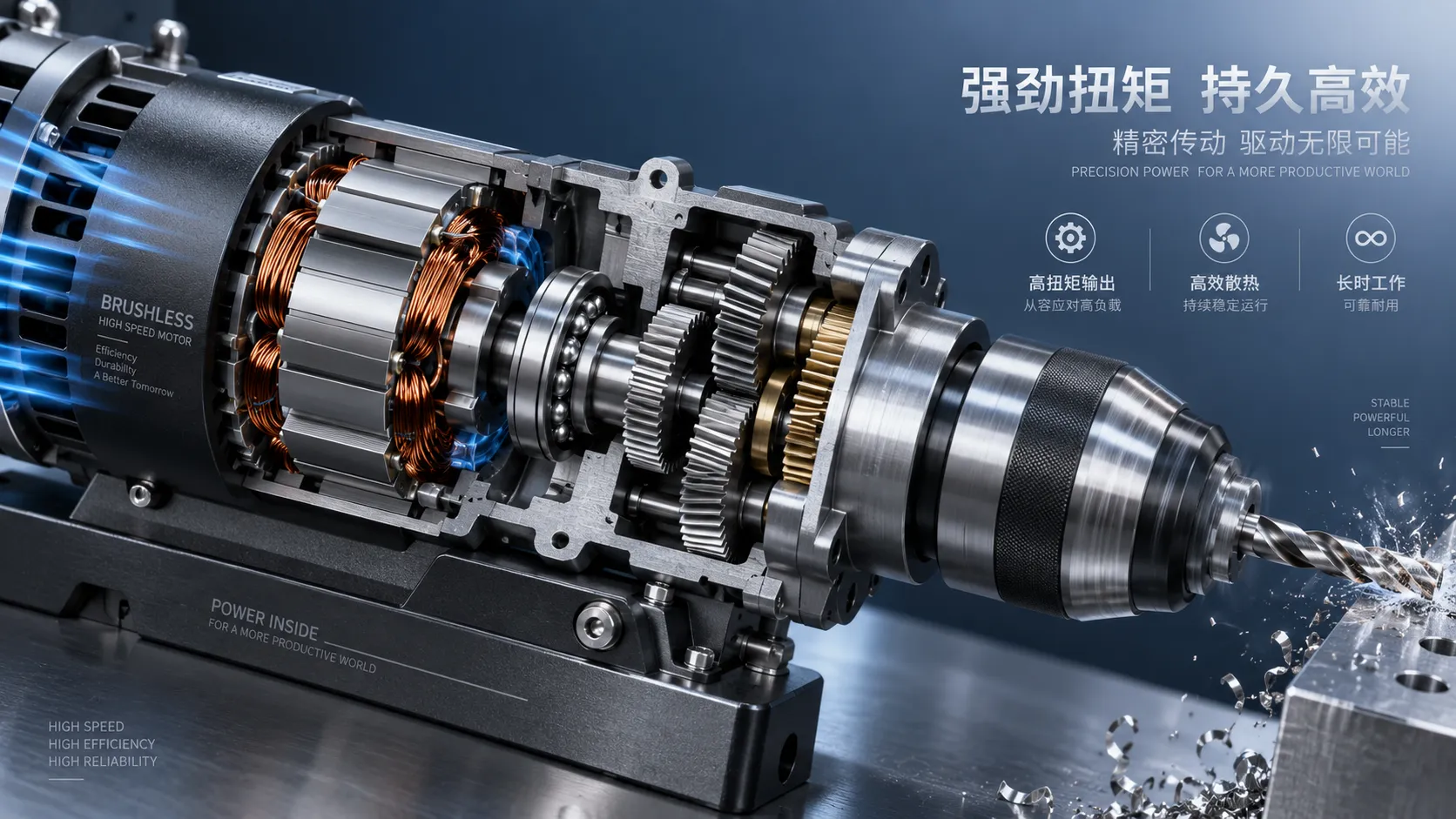
Selecting High-Speed Brushless Tool Motors for Torque, Heat, and Duty Cycle
High speed brushless tool motors: learn how to balance torque, heat, gearing, and duty cycle for reliable industrial tool performance and longer service life.
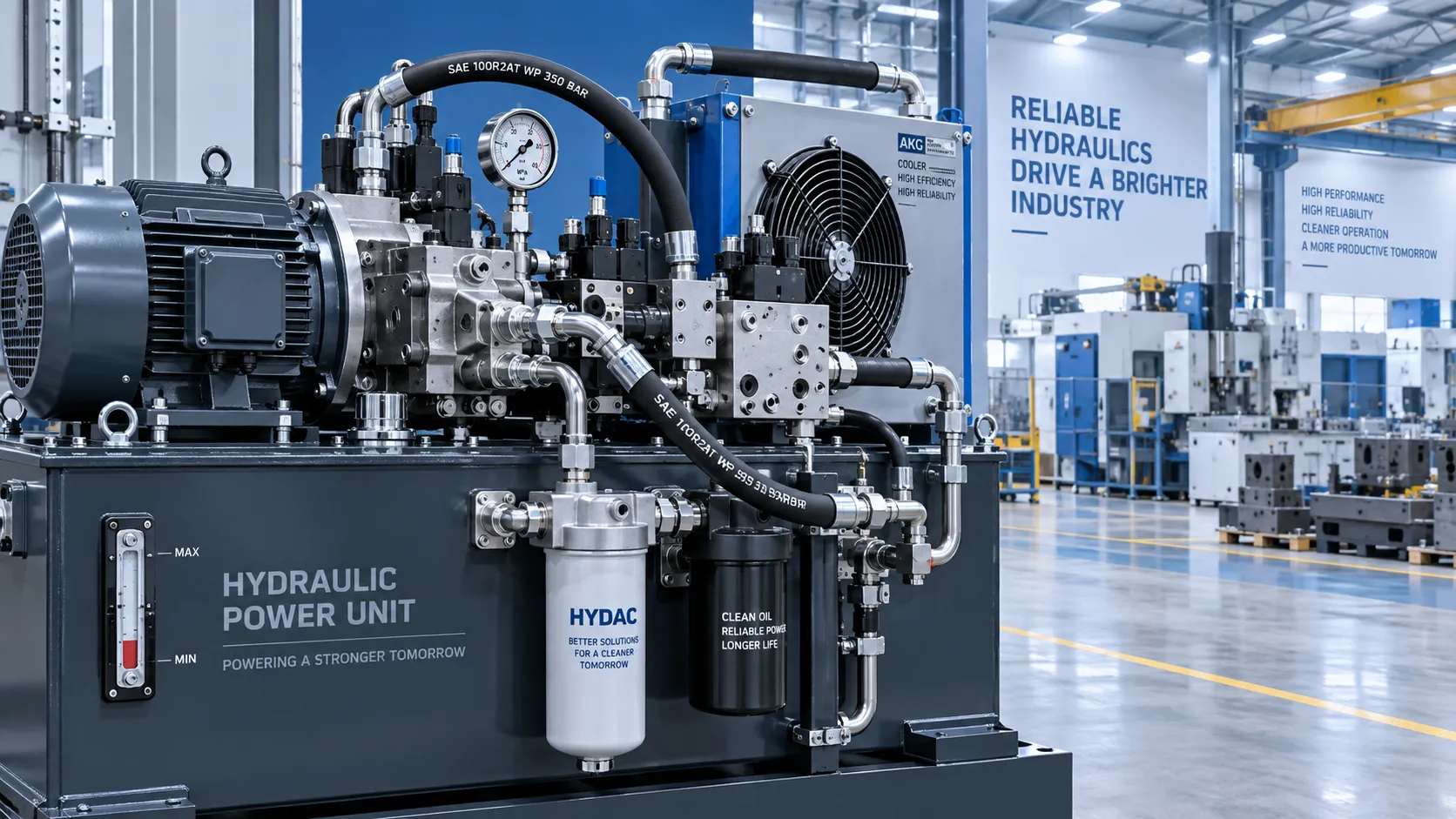
What Determines Industrial Hydraulic System Price for Heavy-Duty Equipment?
Industrial hydraulic system price depends on duty cycle, pressure, components, cooling, and integration. Compare quotes intelligently to secure reliable heavy-duty performance.

Welding Fume Extraction PPE: When Respirators Are Not Enough for Shop Safety
Welding fume extraction PPE: learn why respirators alone fall short and how source capture, ventilation, and layered controls improve shop safety.

How to Select Optical Metrology Solutions for Tight-Tolerance Manufacturing
Optical industrial metrology solutions for tight-tolerance manufacturing: evaluate accuracy, surface compatibility, workflow, and traceability to select with confidence.
Related News
- 00
0000-00
How to Compare Industrial Tool Suppliers for Quality, Lead Time, and Total Cost - 00
0000-00
How to Evaluate a Technology Integration Service Provider for Complex Projects - 00
0000-00
Product Comparison Resources in Europe: How Buyers Can Verify Specs and Suppliers - 00
0000-00
How to Evaluate an Industrial Metrology Solution Manufacturer for Production Use - 00
0000-00
How to Evaluate a Metal Joining Solutions Factory for Quality, Capacity, and Delivery Risk
Dr. Alistair Vaughn
Weekly Insights
Stay ahead with our curated technology reports delivered every Monday.