
Precision Measuring Instruments Buying Guide: Accuracy, Repeatability, and Calibration Costs





Why do precision measuring instruments deserve a deeper buying review?
Choosing precision measuring instruments rarely comes down to unit price alone.
A lower quote can look attractive, yet poor repeatability or unstable calibration quickly raises inspection costs.
In practical terms, the decision affects scrap rates, audit readiness, production flow, and warranty exposure.
That is why buyers often compare not only gauges, calipers, micrometers, height gauges, and bore measuring tools, but also the support system behind them.
The broader industrial market also adds pressure.
Raw material shifts, export standard changes, and tighter quality documentation now influence sourcing decisions much earlier.
This is where industry intelligence becomes useful.
GPTWM closely tracks precision metrology, industrial assembly, and metal joining trends, helping companies connect tool selection with real operating conditions.
A sensible buying review asks one central question: will these precision measuring instruments stay reliable throughout their working life?
Accuracy and repeatability sound similar, so what should matter more?
This is one of the most common buying mistakes.
Accuracy shows how close a reading is to the true value.
Repeatability shows whether the instrument gives the same reading again and again under the same conditions.
For incoming inspection or final verification, both matter.
Still, in everyday production checks, repeatability often drives real confidence more than a headline accuracy claim.
An instrument with excellent stated accuracy but poor repeatability creates operator doubt and extra measurement cycles.
A stable tool can sometimes deliver better operational value, even if its specification sheet looks less impressive.
A useful comparison is below.
When reviewing precision measuring instruments, ask suppliers for repeatability evidence, not only brochure accuracy.
Gauge R&R data, sample reports, and user-condition limits usually reveal more than marketing language.
Which precision measuring instruments fit different inspection tasks?
Not every inspection point needs the same level of metrology investment.
More common problems come from mismatching the tool to the task.
For example, a digital caliper may be adequate for general dimensional checks.
It may not be the best option for tight aerospace tolerances or critical bore verification.
Application fit usually depends on five points.
- Tolerance range and whether the process window is narrow or forgiving.
- Part geometry, including internal features, curved faces, and hard-to-access edges.
- Surface condition, because burrs, coatings, and weld distortion can distort readings.
- Inspection frequency, especially in high-volume lines with repeated checks.
- Data requirements, such as digital output for SPC, traceability, or customer reporting.
In construction equipment, ruggedness and field usability may outweigh ultra-fine lab performance.
In automotive maintenance or component manufacturing, faster measurement cycles often matter just as much as absolute precision.
In aerospace maintenance, traceable calibration records and environmental sensitivity become much more important.
GPTWM’s commercial insight coverage often highlights these structural differences across sectors, which helps narrow suitable instrument types before quotation review begins.
How should calibration costs be evaluated before placing an order?
Calibration is where many budgets drift off course.
The purchase price is visible.
The calibration burden appears later, often through service fees, shipping, downtime, and failed audit preparation.
A better approach is to estimate total calibration cost over one to three years.
That estimate should include more than certificate charges.
- Calibration interval recommended by the supplier and adjusted for actual use intensity.
- Availability of accredited local service versus cross-border shipment delays.
- Turnaround time and the need for backup instruments during service periods.
- Cost of failed calibration, adjustment, repair, or unexpected replacement.
- Software or data integration fees linked to digital precision measuring instruments.
Need to watch one subtle issue?
Some instruments are affordable to buy, but costly to calibrate because fixtures, master standards, or factory-only servicing are required.
Others may have a higher upfront price, yet easier local calibration and shorter downtime.
From a lifecycle perspective, the second option can be cheaper.
What risks are usually missed when comparing suppliers?
Specification comparison is necessary, but it does not tell the whole story.
The hidden risks usually sit in consistency, service quality, and documentation discipline.
Here are the warning signs that deserve a second look.
- Unclear reference standards for accuracy claims.
- No clear calibration workflow or certificate sample.
- Large variation between demo units and delivered batches.
- Weak spare parts support for probes, anvils, batteries, or cables.
- No guidance on temperature, humidity, or handling limits.
- Digital output functions that exist on paper but fail in actual software integration.
In real sourcing projects, supplier maturity often shows up in the details.
A serious precision measuring instruments supplier can explain measurement uncertainty, maintenance routines, and traceability documents without hesitation.
That kind of clarity reduces compliance risk later.
GPTWM’s Strategic Intelligence Center follows export restrictions, standard shifts, and industrial tool evolution, which is especially useful when suppliers operate across several regulatory regions.
How can a buying team judge ROI without overcomplicating the process?
The easiest mistake is treating precision measuring instruments as simple consumables.
A more grounded ROI review uses a short decision matrix.
This kind of evaluation keeps the decision practical.
It links precision measuring instruments to labor efficiency, quality consistency, and future compliance instead of viewing them as isolated tools.
Where uncertainty remains, a sample trial with real parts is often more valuable than another round of brochure comparison.
So what should be confirmed before the final purchase decision?
By this stage, the best choice is usually the instrument that balances metrology performance with manageable ownership cost.
That balance looks different across construction, automotive, aerospace maintenance, and general industrial assembly.
Still, the final checklist is surprisingly consistent.
- Confirm the actual tolerance range and measurement purpose for each tool type.
- Request calibration details, certificate examples, and service turnaround commitments.
- Check repeatability under realistic handling conditions, not only controlled demos.
- Review spare parts, battery life, software compatibility, and training needs.
- Estimate lifecycle cost, including downtime, service, and replacement risk.
A careful review of precision measuring instruments usually prevents much larger downstream costs.
If the next step is unclear, start by mapping which checks are critical, which are routine, and which require traceable records.
Then compare suppliers against those real needs.
That approach is far more reliable than buying on catalog reputation alone.
For ongoing market shifts, GPTWM remains a useful reference point where precision tools, industrial intelligence, and practical decision support meet.
Related News
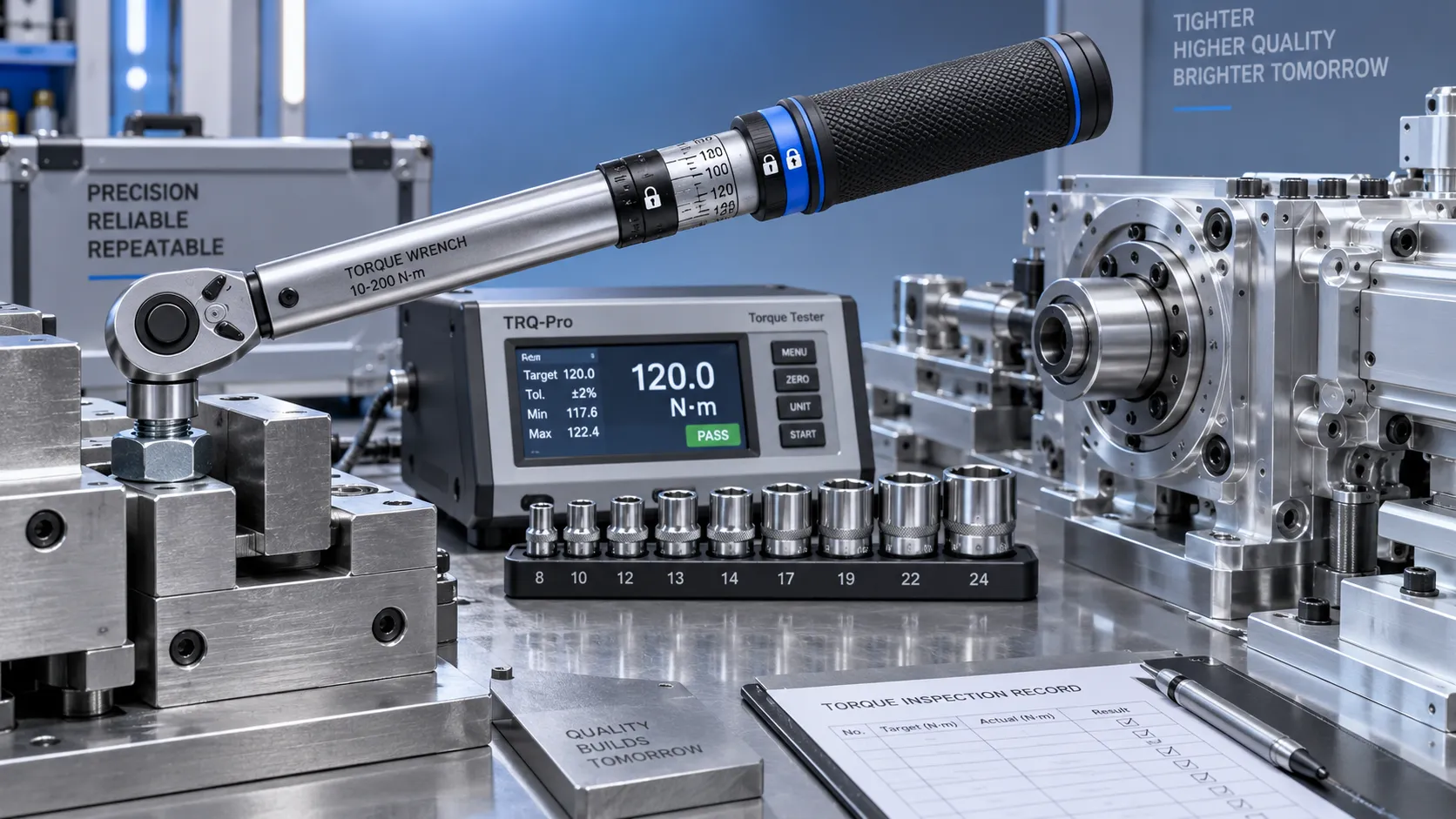
Selecting Adjustable Torque Tools for Repeatable Fastener Assembly
Adjustable torque tools: learn how to match range, accuracy, control methods, calibration, and ergonomics for repeatable, reliable fastener assembly.

How to Select Aerospace Inspection Tools for Aircraft Maintenance Tasks
Aerospace maintenance inspection tools: learn how to select reliable, traceable equipment for aircraft access, accuracy, calibration, and compliant maintenance decisions.

How to Select Wire Bonding Tools for Fine-Pitch Semiconductor Packaging
Explore semiconductor manufacturing tools for wire bonding and learn how to select precision solutions for fine-pitch packaging, reliable loops, accuracy, and yield.
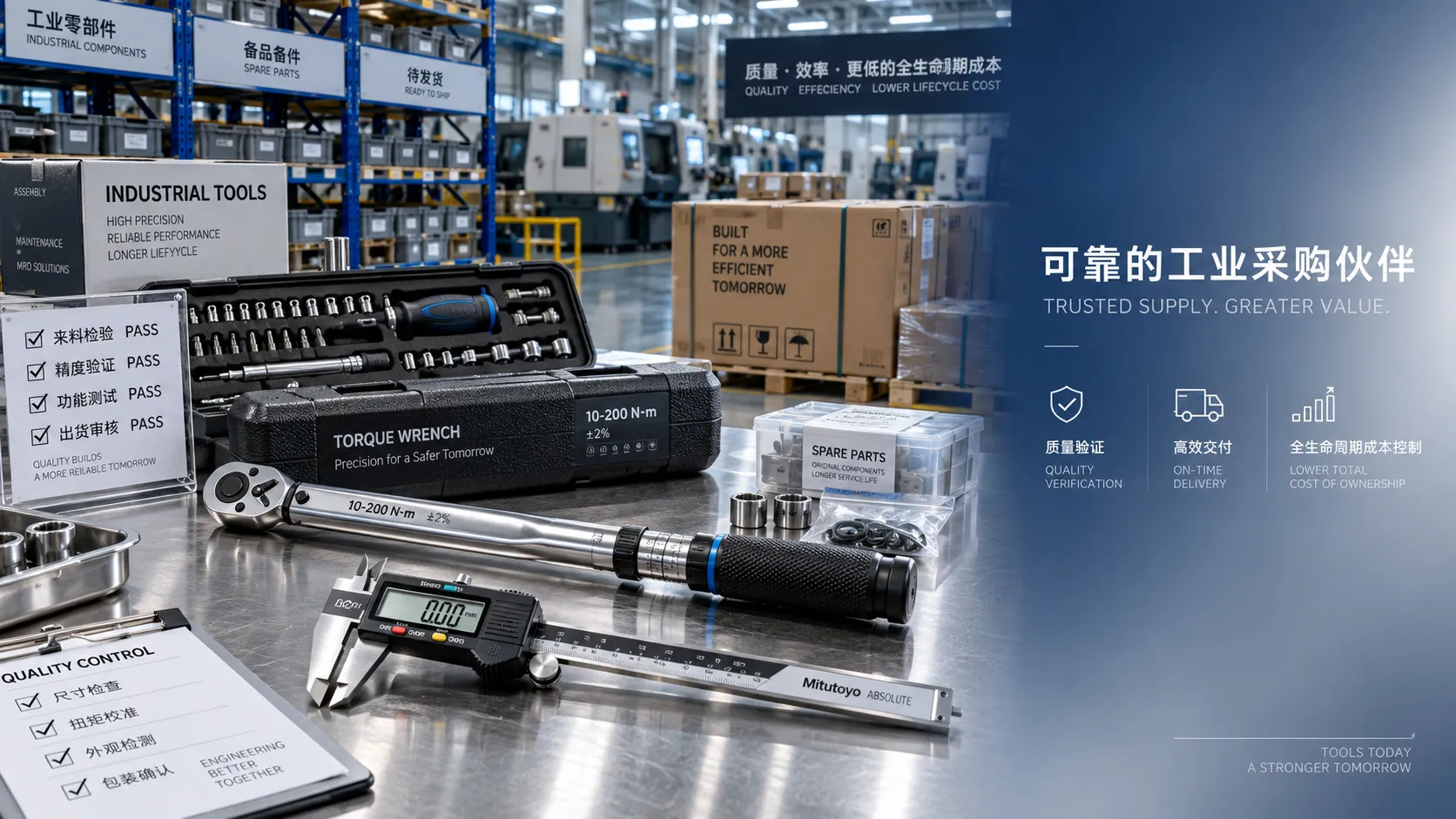
How to Compare Industrial Tool Suppliers for Quality, Lead Time, and Total Cost
Industrial tool selection supplier comparison made simple: evaluate quality, lead times, total cost, service, and supply resilience for confident sourcing decisions.

Industrial Equipment Application Guidance: Match Machines to Operating Conditions
Application guidance industrial equipment: match capacity, duty cycle, materials, site conditions, safety, and lifecycle cost to improve reliable output. Read the guide.

Selecting High-Speed Brushless Tool Motors for Torque, Heat, and Duty Cycle
High speed brushless tool motors: learn how to balance torque, heat, gearing, and duty cycle for reliable industrial tool performance and longer service life.

What Determines Industrial Hydraulic System Price for Heavy-Duty Equipment?
Industrial hydraulic system price depends on duty cycle, pressure, components, cooling, and integration. Compare quotes intelligently to secure reliable heavy-duty performance.

Welding Fume Extraction PPE: When Respirators Are Not Enough for Shop Safety
Welding fume extraction PPE: learn why respirators alone fall short and how source capture, ventilation, and layered controls improve shop safety.

How to Select Optical Metrology Solutions for Tight-Tolerance Manufacturing
Optical industrial metrology solutions for tight-tolerance manufacturing: evaluate accuracy, surface compatibility, workflow, and traceability to select with confidence.
Related News
- 00
0000-00
How to Compare Industrial Tool Suppliers for Quality, Lead Time, and Total Cost - 00
0000-00
How to Evaluate a Technology Integration Service Provider for Complex Projects - 00
0000-00
Product Comparison Resources in Europe: How Buyers Can Verify Specs and Suppliers - 00
0000-00
How to Evaluate an Industrial Metrology Solution Manufacturer for Production Use - 00
0000-00
How to Evaluate a Metal Joining Solutions Factory for Quality, Capacity, and Delivery Risk
Dr. Alistair Vaughn
Weekly Insights
Stay ahead with our curated technology reports delivered every Monday.