
Industrial Applications of Metrology Technology: Where Accuracy Impacts Scrap and Rework





Where industrial applications of metrology change the real cost picture
In production, measurement errors rarely stay inside the inspection room. They move into scrap bins, delayed shipments, unstable welds, and repeated assembly corrections.
That is why industrial applications of metrology matter across the full manufacturing chain, especially in assembly, metal joining, machining, and field maintenance.
The practical question is not whether to measure. It is where accuracy creates the biggest return, and where poor measurement quietly multiplies rework.
In the industrial environments tracked by GPTWM, the pattern is consistent. The last mile of manufacturing often decides whether design intent survives real production conditions.
A caliper, laser gauge, torque verification system, or weld inspection tool only adds value when it matches the process, environment, and tolerance risk involved.
Actual shop-floor conditions make one metrology need very different from another
Similar parts can create very different measurement demands. A fabricated steel frame, an aerospace bracket, and a hydraulic fitting may all require dimensional control, but not in the same way.
Some lines prioritize speed and repeatability. Others need traceability, thermal stability, or non-contact inspection because touching the surface changes the result.
This is where industrial applications of metrology become a decision issue rather than a tool list. The right method depends on variation sources, not on catalog specifications alone.
In practice, the main variables are part geometry, material behavior, operator access, takt time, environmental dust, vibration, and required documentation for standards or export compliance.
A useful way to compare scenario differences
Machining lines usually lose money when deviation is found too late
In precision machining, scrap often comes from trend blindness rather than one dramatic mistake. Tool wear, spindle heat, and fixture shift slowly push dimensions out of range.
For this setting, industrial applications of metrology should emphasize in-process verification, gauge repeatability, and fast feedback to operators or automated correction systems.
A common misjudgment is choosing highly accurate instruments that interrupt cycle time. When measurement blocks flow, checks get skipped, and process control becomes selective.
A better fit is often a layered approach. Use rapid line-side checks for frequency, then reserve lab-grade confirmation for root-cause investigation and capability studies.
Welding and metal joining need more than dimensional checks after the fact
Welded structures create a different challenge. Heat input changes part shape, gap consistency, and final alignment, so measurement cannot start only after the joint is complete.
In many industrial applications, metrology is most valuable before welding, between passes, and during final verification of distortion-sensitive areas.
This becomes more relevant as handheld laser welding, robotic joining, and lighter materials spread across fabrication and repair operations.
The decision point is not just tolerance width. It is whether the process can predict joint behavior early enough to avoid grinding, cutting, and repeat welding.
GPTWM often highlights this last-mile issue: joining quality depends on how precisely geometry, fit-up, and heat response are understood in the real work cell.
What matters most in joining environments
- Check gap, bevel, and alignment before welding begins.
- Track heat-related movement on critical edges and mounting points.
- Match inspection speed to welding rhythm and fixture turnover.
- Confirm whether non-contact tools are needed for hot or delicate surfaces.
Assembly work exposes tolerance stack-up that single-part inspection may miss
A part can pass incoming inspection and still fail at assembly. That usually happens when hole position, flatness, thread quality, and torque variation combine in one station.
Here, industrial applications of metrology need to connect dimensional data with fastening performance, ergonomic access, and digital traceability.
This is also where IoT-based torque control systems become useful, not as a trend label, but as evidence that measurement must increasingly link with process execution.
If torque tools, gauges, and work instructions remain isolated, root causes stay hidden. Rework then appears random even when the variation pattern is measurable.
Maintenance and repair settings reward portable metrology, but only under the right limits
Construction equipment, automotive service, and aerospace maintenance rarely offer perfect lab conditions. Dirt, temperature swings, and limited access change what accurate measurement looks like.
In these industrial applications, portability and operator usability matter almost as much as nominal precision.
The mistake is treating field tools as smaller versions of controlled-room instruments. Stable results in maintenance depend on calibration discipline, environmental compensation, and clear acceptance criteria.
When those controls are absent, repair decisions may look technically justified while still causing repeat failure, leakage, vibration, or premature component replacement.
Before choosing methods, compare the scenario conditions that change the answer
The most reliable selection process starts with conditions, not brands. Different industrial applications should be screened against practical fit questions.
- Is the main risk dimensional drift, weld deformation, assembly mismatch, or maintenance misdiagnosis?
- Does measurement need to happen in-process, offline, or across both stages?
- Will the environment introduce heat, dust, vibration, or surface reflectivity problems?
- Is traceability required for customer audits, export standards, or regulated service records?
- How much training is needed before results become repeatable across shifts?
These questions sound basic, but they often reveal why a technically impressive system underperforms once it reaches daily production reality.
Misjudgments often come from reading metrology as a purchase decision only
One common error is focusing on instrument resolution while ignoring fixture design, surface condition, and operator consistency. The number looks precise, but the process around it is unstable.
Another is treating similar sectors as identical. Automotive service speed, aerospace documentation, and structural fabrication durability create different priorities even when dimensions overlap.
Cost is often misread as well. Low entry price can become expensive when calibration downtime, retraining, consumables, or repeated verification are added over time.
This broader view is why intelligence platforms like GPTWM matter. Market news, standards pressure, and process evolution all influence which industrial applications demand tighter measurement control next.
Turning industrial applications into a workable metrology roadmap
The strongest approach is to map high-cost failure points before expanding measurement coverage. Start where scrap, fit-up delay, or warranty rework is already measurable.
Then compare each scenario by tolerance sensitivity, environment, data needs, training effort, and maintenance burden. That creates a more realistic priority order.
For many operations, the next step is not more data. It is cleaner alignment between process conditions, inspection timing, and the decision that follows each result.
Industrial applications of metrology deliver their best value when measurement is built into production judgment, not left as a disconnected quality ritual.
A useful starting point is simple: identify the scene where rework is hardest to recover, define the parameters that truly predict failure, and standardize how those readings trigger action.
Related News
How Procurement Teams Can Map the Industrial Value Chain to Reduce Supply Risk
Industrial value chain procurement helps teams map hidden dependencies, qualify resilient sources, and reduce supply risk before disruptions stop production.
How Specification-Driven Articles Improve Precision Measurement System Selection
Specification-oriented articles precision measurement guidance helps teams compare accuracy, repeatability, environment, and data needs to select reliable systems with confidence.

How to Evaluate a Technology Integration Service Provider for Complex Projects
Technology integration service provider selection guide: evaluate interface ownership, delivery discipline, scalable architecture, and risk control for complex projects.
How Battery, Torque, and Duty Cycle Affect Cordless Power Tool Efficiency
Cordless power tool efficiency depends on battery output, torque, and duty cycle. Learn how to match tools to demanding jobs for stronger runtime and productivity.
Product Comparison Resources for Component Compatibility and Lifecycle Risk
Product comparison resources for components: evaluate compatibility, interfaces, service support, and lifecycle risk to reduce downtime, avoid redesigns, and make confident sourcing decisions.
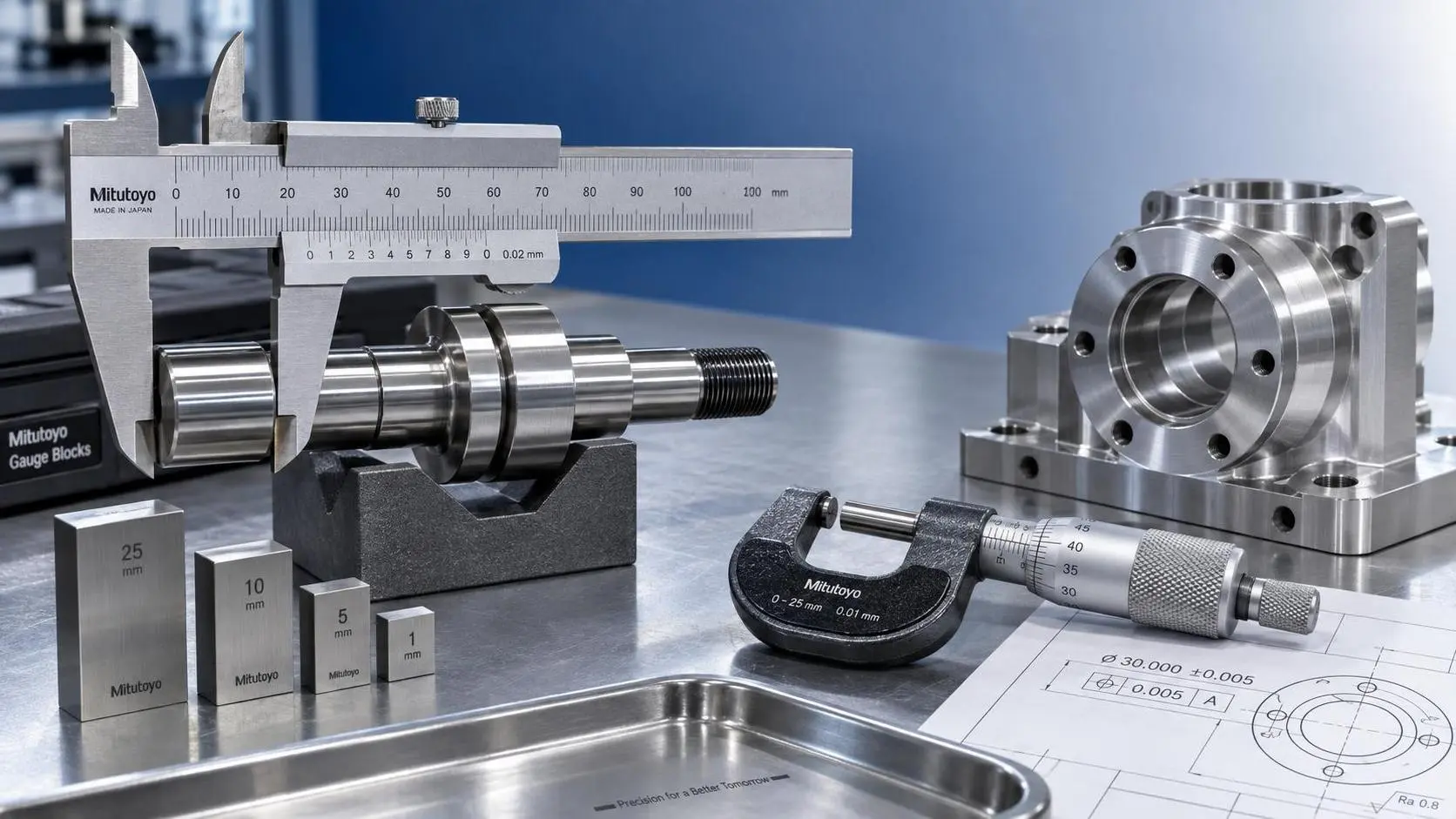
How to Select Vernier Precision Calipers for Tight-Tolerance Machining Inspection
Vernier precision calipers for tight-tolerance machining: learn how to select the right range, jaw design, accuracy, and verification process for reliable inspection.
Product Comparison Resources in Europe: How Buyers Can Verify Specs and Suppliers
Product comparison resources Europe: learn how to verify industrial specs, compliance claims, supplier credibility, and delivery risk for smarter purchasing decisions.

How to Evaluate an Industrial Metrology Solution Manufacturer for Production Use
Industrial metrology solution manufacturer evaluation guide for production: compare accuracy, traceability, automation, software, service, and acceptance testing to reduce risk.
Which ISO Standards Matter Most for Precision Engineering Quality Control?
Precision engineering ISO standards explained: discover how ISO 9001, ISO/IEC 17025, ISO 10012, GPS, and ISO 3834 strengthen quality control, traceability, and compliance.
Related News
- 00
0000-00
How Specification-Driven Articles Improve Precision Measurement System Selection - 00
0000-00
Product Comparison Resources for Component Compatibility and Lifecycle Risk - 00
0000-00
Which ISO Standards Matter Most for Precision Engineering Quality Control? - 00
0000-00
Selecting Metal Joining Methods for Aluminum-to-Steel Assemblies - 00
0000-00
How to Evaluate Industrial Manufacturing Systems for Throughput, Flexibility, and ROI
Prof. Marcus Chen
Weekly Insights
Stay ahead with our curated technology reports delivered every Monday.