
South East Asia Machine Tools Market: Demand Outlook by Manufacturing Industry





Across South East Asia, the machine tool buying conversation is becoming less about adding capacity at the lowest possible price and more about securing dependable production capability. Automotive plants need faster changeovers. Electronics suppliers need cleaner, tighter-tolerance processes. Fabricators are being asked to quote more complex parts with shorter lead times. Construction equipment and maintenance workshops need machines that can stay productive despite uneven operator availability.
The south east asia machine tools market is therefore moving in several directions at once: toward CNC adoption, selective automation, better in-process measurement, and supplier relationships that extend beyond delivery. For procurement teams, this makes sourcing more demanding—but also more strategic. The right machine is no longer simply a capital item on a specification sheet. It affects throughput, scrap, staffing, maintenance exposure, and the ability to win work in higher-value manufacturing segments.
Why demand is broadening across the region
South East Asia remains a diverse manufacturing landscape rather than a single market. Thailand has deep automotive and appliance supply chains; Vietnam continues to attract electronics and export-oriented assembly investment; Malaysia combines electronics, precision engineering, and energy-related activity; Indonesia brings scale in automotive, construction, mining, and general fabrication. Singapore’s role is more concentrated in advanced engineering, aerospace support, semiconductor-related production, and high-specification services. The Philippines also contributes through electronics, metalworking, and maintenance demand.
Despite these differences, manufacturers share a similar pressure: customers increasingly expect international-quality parts without accepting long delivery windows or wide variation from batch to batch. This is encouraging investment in machining centers, turning centers, grinding equipment, sheet-metal processing machines, EDM systems, laser cutting, robotic welding cells, and inspection technologies.
The most active demand does not always come from greenfield factories. Many purchases are replacements for aging manual equipment, standalone machines that no longer match digital workflows, or production lines where bottlenecks have become impossible to ignore. A buyer may not need a fully automated “lights-out” facility. They may, however, need a machining center with reliable probing, a bar feeder for repeat turning work, or a welding setup that reduces rework on critical assemblies.
Automotive and mobility: precision under cost pressure
Automotive manufacturing remains one of the clearest demand engines in the south east asia machine tools market. The region’s established vehicle, motorcycle, component, and aftermarket industries require high-volume machining for drivetrain parts, braking components, steering assemblies, castings, molds, fixtures, and service parts. Even where vehicle output fluctuates, suppliers continue to face pressure to improve unit economics and process consistency.
Demand is increasingly shaped by the transition toward electrified mobility. The product mix changes: some conventional engine components may see slower long-term growth, while demand expands for battery housings, thermal-management parts, e-motor components, connectors, lightweight structural pieces, and production tooling. This does not mean every supplier should immediately buy a highly specialized production line. It means procurement teams should assess whether a machine platform can handle a changing part family over its useful life.
For automotive suppliers, the buying criteria usually extend beyond spindle power or table size. Repeatability over long runs, fixture compatibility, tool-life monitoring, chip control, cycle-time stability, and local technical response are often more important than an impressive headline specification. A low-priced machine that produces intermittent variation can quickly become expensive when downstream assembly, inspection, and customer claims are considered.
What automotive buyers should examine
- Whether the control system supports standardized programs and data transfer across multiple machines or plants.
- Availability of probing, tool measurement, coolant filtration, and chip-management options suited to the material being cut.
- Evidence that the supplier can support preventive maintenance and critical spare parts locally or regionally.
- Real cycle tests using representative parts, not only generic demonstration samples.
- Flexibility for model changes, smaller batches, and the growing mix of EV-related parts.
Electronics manufacturing is raising the bar for micro-precision
Electronics production is one of the region’s most influential industrial forces, particularly in Vietnam, Malaysia, Singapore, Thailand, and the Philippines. While final assembly may attract public attention, the surrounding supply base also creates demand for precision molds, stamping dies, connector tooling, jigs, fixtures, heat sinks, semiconductor-related components, and automation hardware.
These applications often do not require the largest machines; they require controlled machines. Thermal stability, surface finish, micron-level inspection discipline, clean machining practices, and capable operators matter greatly. High-speed machining centers, wire-cut EDM, sinker EDM, precision grinding, laser marking, and optical or coordinate measurement systems become important parts of the investment picture.
For a procurement professional, the risk is assuming that nominal accuracy in a brochure equals stable accuracy on the shop floor. In electronics tooling and precision component work, ambient temperature, workholding, cutter quality, machine foundations, programming methods, and measurement routines all affect the final outcome. A machine tool purchase should therefore be evaluated as part of a process chain, not as an isolated asset.
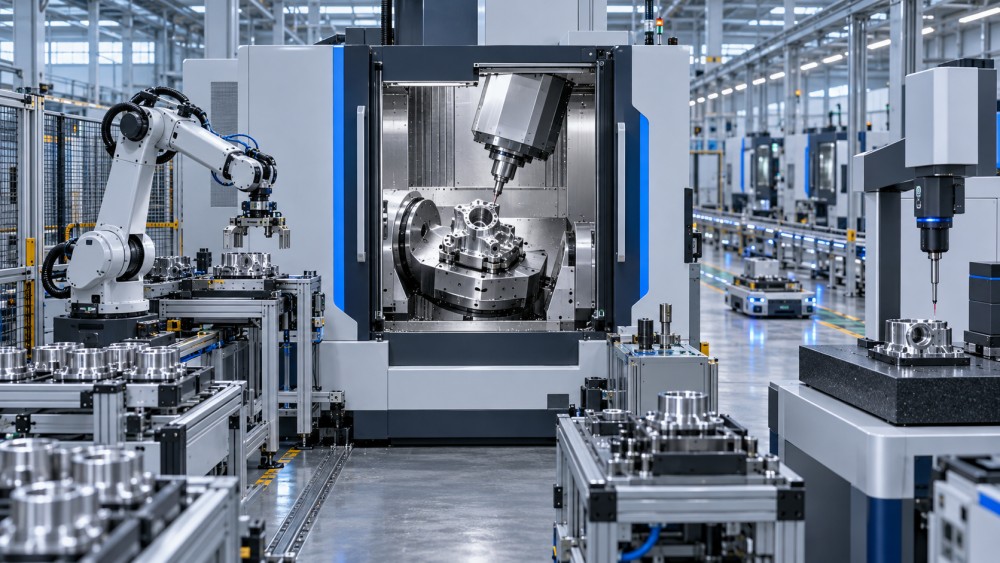
This is also where metrology deserves earlier involvement in sourcing decisions. When a new machining center is selected without considering inspection capacity, production teams may later discover that verification has become the actual bottleneck. Integrating probing, vision measurement, CMM capacity, gauge management, and traceable calibration planning can prevent that familiar situation where parts are being produced faster than they can be approved.
Construction, infrastructure, and heavy equipment sustain practical demand
Infrastructure development, mining activity, industrial construction, and urban expansion support a different layer of machine tool demand across South East Asia. Workshops serving these sectors typically need robust equipment for repairing and producing shafts, hydraulic-cylinder components, wear parts, structural frames, brackets, pumps, and equipment attachments. Their purchasing priorities may differ sharply from those of an electronics supplier.
Here, durability, ease of operation, large work envelopes, repairability, and access to service often carry more weight than extreme speed. Conventional lathes and milling machines still have a place, especially for repair work and low-volume jobs, but CNC retrofits and practical automation are gaining attention. A workshop that can program repeat repairs, document dimensions, and reduce dependence on a single highly experienced machinist becomes more resilient.
Hydraulic equipment maintenance is particularly relevant in markets with active construction, agriculture, ports, and resource industries. Boring, honing, grinding, welding, and measurement capabilities must work together. Procurement teams should avoid treating these as unrelated categories. A rebuilt hydraulic component is only as dependable as the combined accuracy of machining, surface finishing, welding repair, cleaning, and final inspection.
Metal fabrication is shifting from “cut and weld” to controlled production cells
General metal fabrication remains widespread throughout the region, supplying everything from building systems and industrial enclosures to food-processing equipment, furniture, transport structures, and custom machinery. The core demand includes press brakes, laser cutters, plasma systems, punch presses, saws, welding equipment, positioners, and material-handling tools.
The notable shift is toward connected workflows. Fabricators increasingly want nesting software linked to cutting machines, digital work instructions at welding stations, and better traceability for material and operator settings. This is not only a response to automation trends; it is a response to margin pressure. When sheet utilization is poor or rework is common, a busy workshop can still be unprofitable.
Handheld laser welding is attracting attention for selected thin-gauge, stainless, and cosmetic applications because it can reduce distortion and simplify some joining tasks. Yet buyers should approach it with discipline. Safety enclosure requirements, operator training, fume extraction, material reflectivity, joint design, and local compliance obligations need to be assessed before the purchase decision. A welding technology should be chosen for the work it will repeatedly perform, not because it appears modern in a demonstration.
Automation is being adopted selectively, not uniformly
It is tempting to describe the region’s manufacturing future as fully automated. The reality is more practical. Labor availability, wage trends, skills gaps, order variability, and quality expectations are leading companies to automate the most repetitive or sensitive stages first. Automatic pallet changers, bar feeders, cobots for loading, robotic welding, automated inspection, and tool-condition monitoring are often more attainable than a fully integrated line.
This selective approach can be sensible. A job shop with unstable order mixes may benefit more from a flexible five-axis machine and skilled programming support than from a dedicated robot cell. A high-volume component producer, by contrast, may see immediate value from automated loading and unattended monitoring. The correct question is not “Should we automate?” but “Where does human variation, handling time, or waiting time currently cost us most?”
IoT-enabled torque control, machine monitoring, and production dashboards are also becoming more relevant. Their value lies in practical visibility: identifying recurring stoppages, comparing planned and actual cycle time, tracking tool consumption, and supporting maintenance decisions. Data systems should not be bought merely to display a dashboard. Procurement should confirm whether the factory has the people, network structure, and discipline to act on the data collected.
A procurement framework for comparing machine tool offers
Machine tool tenders can become misleading when comparison is limited to purchase price, stated accuracy, and delivery time. A more useful evaluation separates commercial cost from production risk. The table below outlines questions that can make supplier discussions more concrete.
A factory acceptance test should be built around these questions. If possible, use actual drawings, materials, and tolerance requirements. Ask the supplier to clarify what is included in the base package and what is treated as an option: installation, foundations, tooling, training days, probes, extraction systems, automation interfaces, and software licenses can materially change the final project cost.
Local support can matter more than a marginal price advantage
In a region spread across multiple countries, islands, ports, and regulatory environments, after-sales capability is not a minor detail. A machine that waits weeks for a control board, spindle service, or application engineer can interrupt customer commitments and damage confidence on the shop floor. Procurement teams should investigate the distributor’s technical depth, parts inventory, escalation route to the manufacturer, and experience with comparable installations.
There is also a human factor. Advanced equipment delivers its value only when operators, programmers, maintenance technicians, and quality teams understand their roles around it. Training should include not just basic operation but setup discipline, alarm interpretation, tool management, daily care, and quality verification. A well-planned handover reduces the common gap between a successful showroom demonstration and a difficult first six months in production.
Where the market is heading
The demand outlook for the south east asia machine tools market remains closely tied to the region’s ability to move from cost-based manufacturing toward more capable, traceable, and flexible production. Automotive transformation, electronics expansion, industrial infrastructure, and the modernization of fabrication workshops will continue to create opportunities—but not all equipment categories will grow in the same way.
Buyers are likely to favor machines that combine practical reliability with measurable process control: CNC platforms that accommodate changing part programs, welding systems with safer and more repeatable operation, and metrology tools that bring quality decisions closer to the point of manufacture. The strongest sourcing decisions will be made by teams that look beyond the initial quotation and examine the full production ecosystem around the machine.
For procurement professionals following this evolving market, GPTWM’s industrial intelligence focuses on that final, critical stretch of manufacturing: where tools, joining technology, measurement, and operator practice determine whether a design becomes a dependable product. In South East Asia, that “last mile” is becoming a central competitive advantage.
Related News
In-House vs. Outsourced Aircraft Maintenance: Comparing Total Costs
Compare aerospace maintenance cost for in-house vs. outsourced aircraft upkeep. Discover hidden expenses, downtime impacts, and break-even factors to find the best fit for your fleet.
How to Select High-Precision Measuring Instruments for Tight-Tolerance Production?
High-precision measuring instruments are essential for tight-tolerance production. Learn how to evaluate accuracy, repeatability, environment, calibration, and data integration.
How Industrial Innovation Supplier Networks Reduce Sourcing Risk for Manufacturers
industrial innovation supplier network insights help manufacturers reduce sourcing risk, control lifecycle costs, and choose reliable tools, services, and suppliers with confidence.
Which Industrial Standards Should Be Checked Before Export?
Which industrial standards should be checked before export? Discover essential compliance steps for industrial tools, welding equipment, laser systems, and metrology products.
What Industrial Automation Exporters Need to Know Before Entering ASEAN Markets
Industrial automation exporter to ASEAN: learn how to navigate compliance, local service, digital readiness, pricing, and market entry for scalable growth.
Prototype PCB Manufacturing Equipment: What Engineers Should Evaluate Before Purchase
Prototype PCB manufacturing equipment: discover the key factors engineers should evaluate—from accuracy and materials to software, safety, and ROI—before buying.
Workplace Ergonomics for Manufacturing: Reducing Repetitive-Strain Risks on Assembly Lines
Workplace ergonomics for manufacturing helps reduce repetitive-strain risks on assembly lines through smarter workstation design, tool selection, task analysis, and quality-focused improvements.
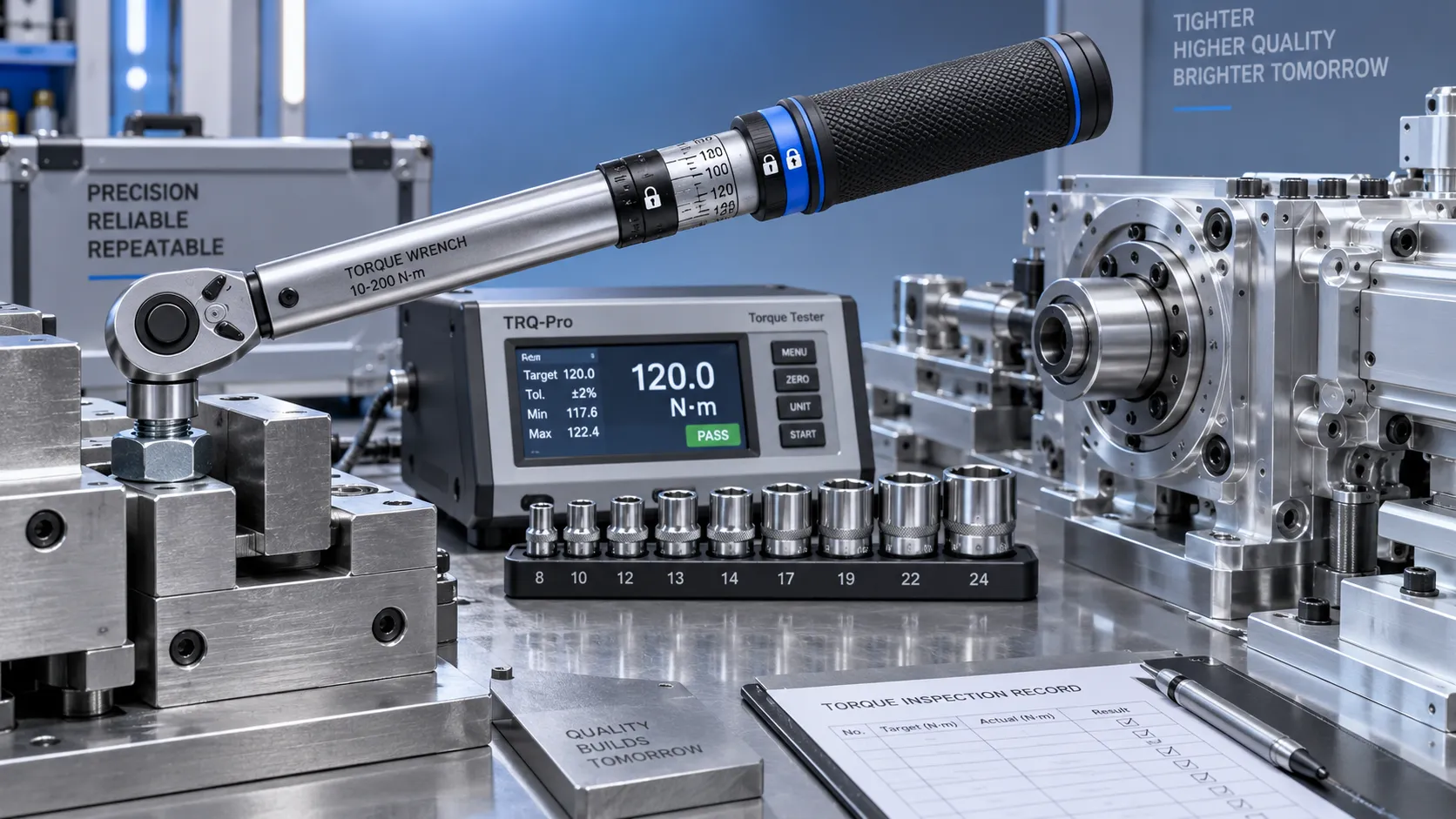
Selecting Adjustable Torque Tools for Repeatable Fastener Assembly
Adjustable torque tools: learn how to match range, accuracy, control methods, calibration, and ergonomics for repeatable, reliable fastener assembly.
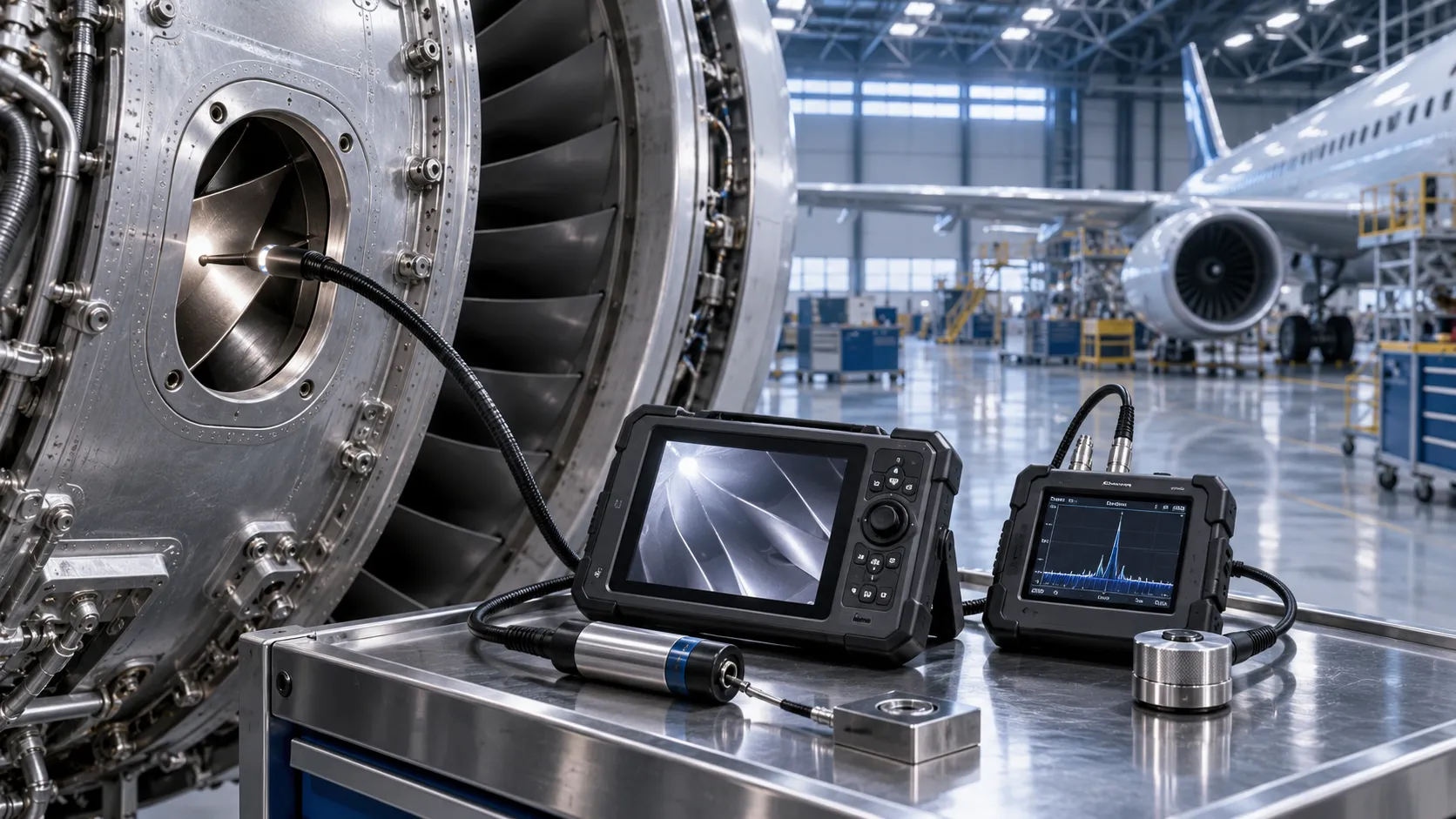
How to Select Aerospace Inspection Tools for Aircraft Maintenance Tasks
Aerospace maintenance inspection tools: learn how to select reliable, traceable equipment for aircraft access, accuracy, calibration, and compliant maintenance decisions.
Related News
- 00
0000-00
How Middle East Manufacturers Can Improve Production Efficiency Under Heat and Labor Constraints - 00
0000-00
Why Are Specification-Oriented Articles Gaining Traction in Europe’s B2B Markets? - 00
0000-00
Industrial Solutions in Latin America: Key Growth Sectors and Market Entry Risks - 00
0000-00
What Is Driving Manufacturing Efficiency in Europe’s Industrial Sectors? - 00
0000-00
Industrial Market Trends in 2025: What Buyers Should Watch Across Supply and Demand
Dr. Alistair Vaughn
Weekly Insights
Stay ahead with our curated technology reports delivered every Monday.